
Hawaii Travel Faces a Stunning Affordability Crunch as One Week Can Consume a Year’s Travel Budget

Published
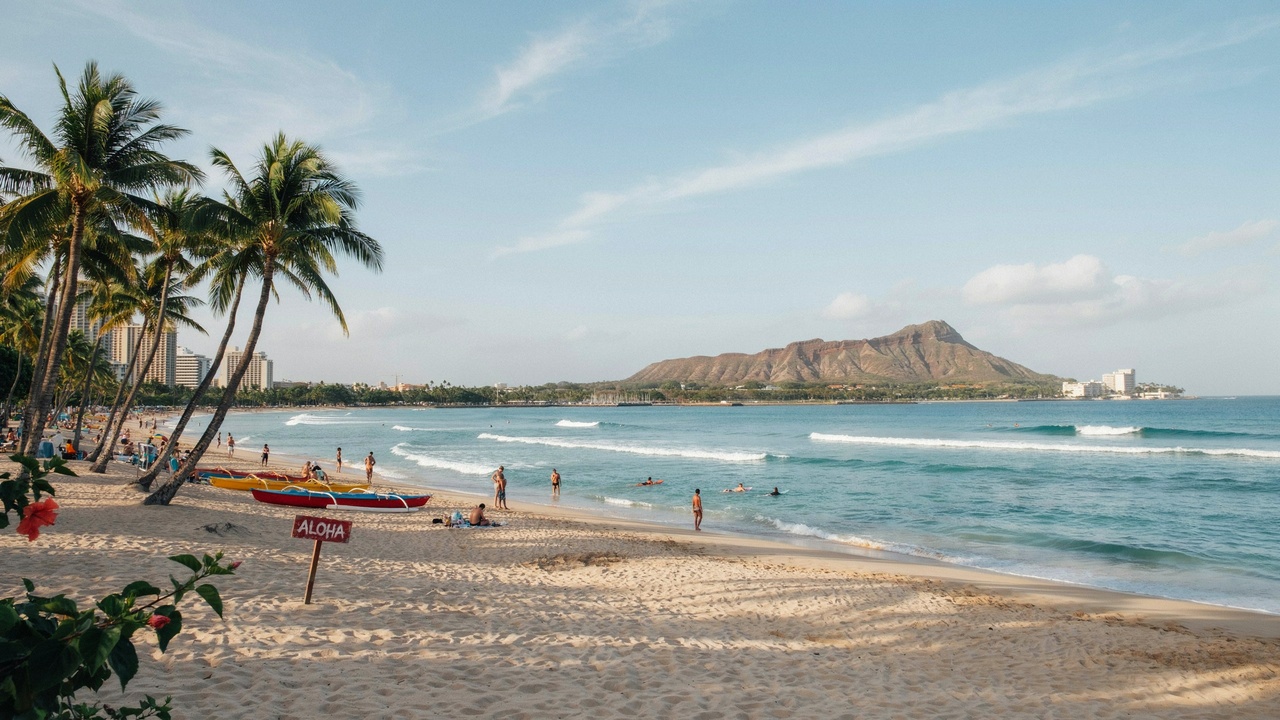
Image generated with Ai
Hawaii Travel is facing a striking affordability challenge as the cost of reaching and staying on the islands can consume a large share of an American household’s annual holiday budget. The supplied Beat of Hawaii analysis cites survey data showing Americans expect to take an average of 3.9 leisure trips over the next year and spend about $5,655 on travel, while estimating that a basic week in Hawaii for two people can reach roughly $5,000 to $6,000 before higher-end resort costs. Yet Hawaii is far from losing its appeal. Official state figures show 6.69 million visitors arrived during the first eight months of 2026, generating $15.21 billion in visitor spending. The emerging story is therefore not collapsing demand. It is a destination becoming increasingly premium, forcing travellers to make sharper choices about flights, accommodation, length of stay and daily spending.
Hawaii Travel Is Becoming a Premium Holiday Choice
Hawaii has a built-in cost challenge that many mainland destinations do not.
For most mainland US visitors, reaching the islands requires a flight.
That creates a significant expense before accommodation, food, transport or activities enter the holiday budget.
Advertisement
Advertisement
The Beat of Hawaii analysis cites survey research indicating that airfare was the largest deterrent for 44% of people who considered an island holiday but ultimately changed their plans.
Package prices were identified by 29%, while hotel costs were cited by 28%.
Advertisement
Advertisement
That creates a difficult equation.
Travellers may strongly want to visit Hawaii but hesitate when the total price becomes clear.
The result is a destination where demand remains powerful but affordability increasingly determines who can make the journey.
A Week in Hawaii Can Consume a Major Travel Budget
The affordability argument becomes especially striking when Hawaii is compared with the wider American travel market.
The supplied research estimates that a seven-day trip for two people can cost around $5,000 to $6,000, before moving into luxury accommodation and premium experiences.
That figure can effectively absorb an average household’s entire annual leisure-travel allocation.
Advertisement
Advertisement
Families face even greater pressure.
Four airfares can substantially increase the initial cost.
A family may also require a larger room or multiple rooms.
Food, rental cars, parking and activities then add to the final bill.
A holiday that initially appears manageable can therefore become significantly more expensive once all expenses are included.
Hawaii’s Most Likely Visitors Are More Affluent
The affordability challenge is also reflected in the profile of people considering Hawaii.
Advertisement
Advertisement
The supplied survey data show 49% of likely Hawaii visitors reported household incomes of at least $150,000, compared with 32% among US leisure travellers overall.
Only 20% of likely Hawaii visitors reported household incomes below $75,000, compared with 39% of the broader US leisure-travel market.
The research also found that 30% of likely Hawaii visitors identify as luxury travellers, compared with 19% among US leisure travellers overall.
These figures describe prospective travellers rather than every visitor who actually reaches Hawaii.
However, they point towards an increasingly important characteristic of the market.
Hawaii attracts travellers who are, on average, more financially capable of absorbing premium holiday costs.
Advertisement
Advertisement
Official Data Show Demand Remains Strong
The affordability debate should not be mistaken for a tourism collapse.
Hawaii’s official tourism figures tell a different story.
The state recorded 6.69 million visitors during the first eight months of 2026, an increase of 1.8% from the same period in 2025.
Visitor spending reached $15.21 billion, up 4.1%.
That demonstrates continuing demand.
Hawaii remains a powerful global tourism brand.
Advertisement
Advertisement
Its beaches, volcanoes, marine environments, culture and landscapes continue to attract visitors despite the cost.
The bigger issue is how visitors are adjusting their behaviour once prices rise.
That change is particularly visible in trip length and daily spending.
Visitors Are Staying for Fewer Days
One of the clearest shifts in Hawaii tourism is the shortening average stay.
Official data cited in the supplied research show that the average visitor stay fell to 7.60 days in May 2026, compared with 8.47 days a year earlier.
At the same time, average daily visitor spending rose 13.1% to $292.
Advertisement
Advertisement
The trend continued in April, when average stays fell from 8.33 to 7.69 days while daily spending increased 14.1% to $278.
August data showed the average stay at 7.55 days, compared with 8.47 days in August 2025.
The pattern is significant.
Visitors are spending more per day while spending fewer days on the islands.
A shorter holiday, therefore, does not automatically mean a cheaper holiday.
Weather Also Added Pressure During 2026
Hawaii’s tourism market faced additional disruption during August.
Advertisement
Advertisement
The state experienced severe weather, including Hurricane Lala and Tropical Storm Moke, with flight disruptions, flooding, landslides and infrastructure impacts reported during the period.
Despite those challenges, visitor numbers remained substantial.
The first eight months still produced 6.69 million visitors and $15.21 billion in spending.
For travellers, the episode reinforces the importance of checking weather conditions and airline updates before departure.
Hawaii may offer tropical conditions, but its islands can experience significant weather disruptions.
Families Face the Sharpest Cost Challenge
The price pressure becomes more obvious when travelling with children.
Advertisement
Advertisement
A couple has two airfares.
A family of four has four.
Accommodation requirements can also change dramatically.
Food costs rise with each additional traveller.
Activities, rental cars and attraction fees multiply.
This makes Hawaii particularly challenging for families trying to stay within a fixed annual travel budget.
Advertisement
Advertisement
The island geography creates another limitation.
Mainland families can often drive to alternative destinations if airfares become too expensive.
For Hawaii, air travel is normally unavoidable.
That makes airfare a structural component of the holiday rather than an optional expense.
Travellers Are Changing How They Experience Hawaii
The affordability pressure does not necessarily mean travellers are abandoning Hawaii.
Instead, they are redesigning their holidays.
Advertisement
Advertisement
Some shorten their trips.
Others prepare meals instead of eating at restaurants for every meal.
Some limit car rental to specific days.
Others reduce the number of paid excursions.
Another increasingly practical strategy is choosing one island rather than several.
This reduces inter-island flights, accommodation changes and additional transportation.
Advertisement
Advertisement
The strategy can also make a holiday less rushed.
Rather than attempting to experience multiple islands in a week, travellers can focus on one destination and explore it more deeply.
Choosing the Right Island Can Save Money
Hawaii’s islands offer very different travel experiences.
Oahu can suit visitors seeking beaches, Honolulu, history, food, shopping and outdoor activities.
Maui offers beaches, scenic drives and resort experiences.
Kauai is particularly attractive to nature-focused travellers.
Advertisement
Advertisement
Hawaii Island provides volcanoes, varied landscapes and outdoor adventures.
Matching the island to the purpose of the trip can reduce unnecessary spending.
Travellers do not need to visit every island to experience Hawaii.
For a first visit, concentrating on one island can create a more manageable itinerary while reducing transportation costs.
Accommodation Choices Can Change the Final Price
Accommodation is another major part of the Hawaii budget.
Travellers can compare hotels, condominiums, timeshares and legally permitted vacation rentals.
Advertisement
Advertisement
Official state data show that visitors already use a broad mix of accommodation types.
In June 2026, 55.5% of US West visitors stayed in hotels, while others used condominiums, timeshares, rental homes or stayed with friends and relatives.
That variety gives travellers some flexibility.
However, vacation-rental rules vary by location.
Visitors should verify that a property is legally permitted before booking.
A cheaper-looking rental can create problems if it does not comply with local regulations.
Advertisement
Advertisement
Hawaii’s Tourism Economy Is Still Producing Strong Spending
The spending figures show why Hawaii continues to attract major tourism investment.
During the first seven months of 2026, visitors generated $13.63 billion in spending, up 5.6% year on year.
US West visitors spent $6.63 billion during that period, with daily spending averaging $278.
US East visitors averaged $316 per person per day.
These figures suggest that higher costs have not eliminated demand among travellers who can afford Hawaii.
Instead, the market is becoming more selective.
Advertisement
Advertisement
Visitors are spending strongly, but the composition of demand may increasingly favour higher-income households.
Canadian Demand Is Also Facing Pressure
The affordability issue extends beyond mainland US travellers.
Hawaii’s Canadian visitor market weakened during 2026.
The state recorded 252,907 Canadian visitors during the first eight months, down 5% from 266,309 during the same period in 2025.
Canadian visitor spending fell 2.2% to $669.2 million.
Airfare, accommodation costs and currency conditions can all influence Canadian demand.
Advertisement
Advertisement
This matters because Canada is an established international market for Hawaii.
A weaker Canadian market adds another reason for Hawaii’s tourism industry to pay attention to value.
How Travellers Can Make Hawaii More Affordable
Travellers can take several practical steps to control costs.
Choosing less expensive travel periods can reduce pressure on airfares and accommodation.
Comparing several flight dates can reveal significant price differences.
Staying on one island can eliminate inter-island transportation and additional hotel changes.
Advertisement
Advertisement
Accommodation with kitchen facilities can reduce restaurant spending.
Visitors can also combine free beaches, scenic drives and hiking with selected paid attractions.
On Oahu, public transportation can replace a rental car for some itineraries.
Where a car is necessary, travellers can rent it only for the days they need it.
The most important step is to create a complete budget before booking.
Airfare and hotel prices are only the beginning.
Advertisement
Advertisement
Taxes, parking, resort fees, food, activities and transportation can materially change the final cost.
Hawaii Travel Is Becoming a Value-Conscious Market
The affordability story ultimately reflects a broader transformation.
Hawaii remains highly desirable.
But visitors are becoming more conscious of what they receive for every dollar spent.
The shorter average stay combined with higher daily spending is one of the clearest indicators.
Travellers appear willing to spend significantly when the experience justifies the price.
Advertisement
Advertisement
They are less likely, however, to spend without considering value.
That creates an opportunity for tourism businesses.
Hotels can compete through packages.
Restaurants can offer varied price points.
Tour operators can create flexible experiences.
Destinations can promote free and low-cost attractions alongside premium products.
Advertisement
Advertisement
What This Means for Hawaii Tourism
Hawaii is not facing a simple affordability crisis.
It is facing a value and accessibility challenge within a strong tourism market.
The islands continue to attract millions of visitors and generate billions of dollars in spending.
At the same time, shorter stays suggest visitors are adapting to higher costs.
That creates a delicate balance.
Hawaii needs tourism spending to support hotels, restaurants, attractions and local businesses.
Advertisement
Advertisement
But the destination also needs to remain accessible enough to maintain a broad visitor base.
The future may therefore depend increasingly on how the industry manages the relationship between price, quality and visitor experience.
Conclusion
Hawaii Travel remains one of the world’s most coveted holidays, but the economics are becoming impossible for many travellers to ignore. The supplied analysis estimates that a basic week for two can approach $5,000 to $6,000, potentially consuming much of an average American household’s annual travel budget. Yet official state data show that Hawaii continues to attract millions of visitors, with 6.69 million arrivals and $15.21 billion in spending during the first eight months of 2026. The more revealing change is behavioural: average stays have shortened while daily spending has risen. For travellers, the smartest response is not necessarily to abandon Hawaii but to travel more strategically. Choosing one island, comparing accommodation, limiting car rental, mixing free outdoor experiences with paid activities and building a realistic full-trip budget can make the difference. Hawaii remains an extraordinary destination. But increasingly, the dream comes with a price tag that demands careful planning.
Advertisement
