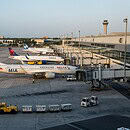
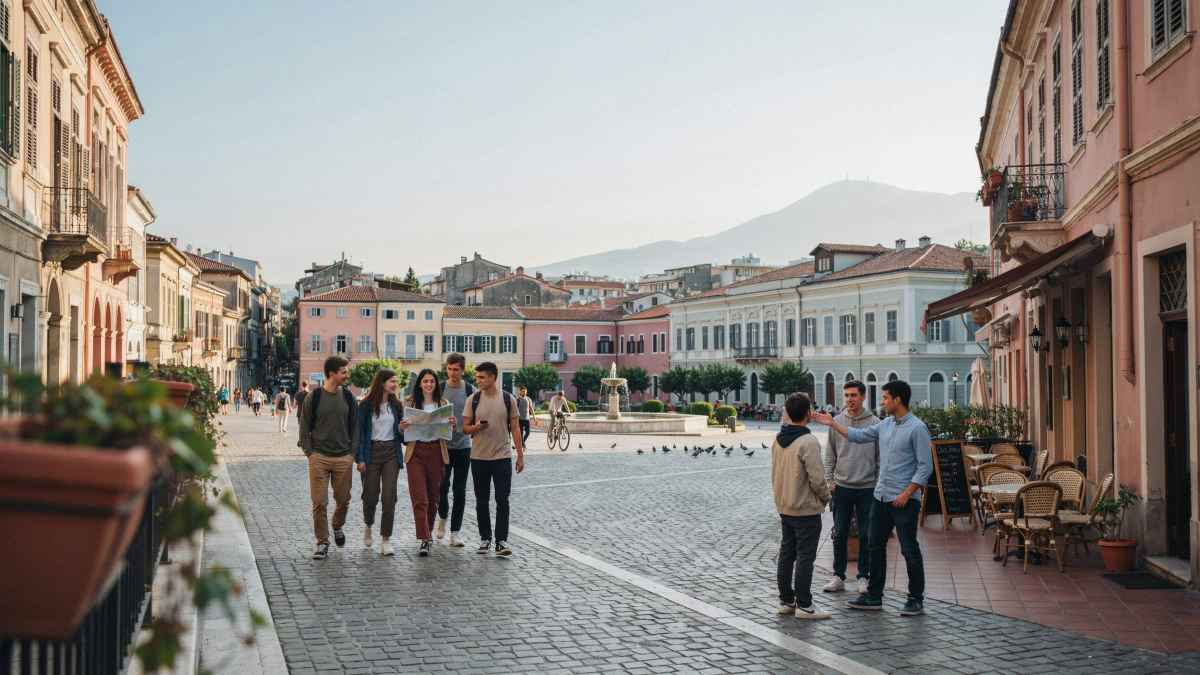
Image generated with Ai
The city of Tirana in Albania is fast becoming one of the major bases for education-driven tourism in the Western Balkans due to the growth of the College of Europe in Tirana and the development of digital entry and stay processes by the Albanian government for foreign tourists and students. The connection combines learning, tourism within the city, and even staying with tourism journeys to the coast along the Adriatic and Ionian Sea. The College of Europe campus in Tirana is the first branch of the college operating outside of the European Union. This college campus in Tirana is based in a student city called Qyteti Studenti in the local language.
Tirana’s travel appeal is closely linked to its position between urban attractions and outdoor destinations. The city provides access to Skanderbeg Square, the National History Museum, the National Gallery of Arts, Bunk’Art 1 and Bunk’Art 2, the House of Leaves and Et’hem Bey Mosque. Dajti Mountain and Dajti National Park are accessible from the capital, while Petrela Castle, Bovilla Lake and Pëllumbas Cave provide additional day-trip options. The city’s restaurants and traditional food venues also support culinary tourism based on Albanian dishes and regional produce. The capital’s education expansion also intersects with travel between Albania and other Western Balkan destinations. Academic and youth mobility initiatives associated with European integration connect Tirana with North Macedonia, Kosovo, Montenegro and Serbia. These corridors can support multi-destination travel, with students and visiting academics combining periods in Tirana with trips across neighbouring Balkan cities and resort areas.
Travel connections also extend towards European education centres. The College of Europe maintains established campuses in Bruges in Belgium and Natolin in Poland, while Italy forms part of the wider European academic network surrounding the Tirana campus. Students, diplomats, researchers and exchange participants travelling for academic programmes create a visitor segment that can combine institutional stays with leisure trips around Albania.
For international visitors, Albania’s visa framework remains an important part of the travel picture. The Ministry for Europe and Foreign Affairs states that short-stay Type C visas cover stays of up to 90 days within 180 days, while Type D visas cover longer stays and categories linked to residence permits. The ministry also maintains an online electronic visa process for eligible foreign nationals. Current entry rules include visa-free provisions for several groups, while specific temporary arrangements apply to citizens of Saudi Arabia and Qatar travelling for tourism during 2026. Travellers should check the latest requirements before departure through Albania’s Ministry for Europe and Foreign Affairs.
Advertisement
Advertisement
The country’s Unique Permit framework is also relevant to longer international stays. Applications for categories such as employment, self-employment and other qualifying activities can be submitted online through Albania’s electronic administration system. For people spending extended periods in the country, such procedures connect travel with residence, work and study-related mobility rather than short holiday visits.
Tirana’s education ecosystem is also being complemented by tourism and hospitality training. Albanian universities are introducing or expanding English-medium programmes connected with International Tourism and Hospitality Management, creating an academic route into the country’s accommodation, food service, destination management and visitor economy. Such programmes can support workforce preparation for coastal tourism along the Adriatic and Ionian shores, as well as city tourism in Tirana and cultural tourism in destinations such as Berat, Gjirokaster, Kruja and Shkodra.
The Adriatic and Ionian coastline provides a natural extension to an education-focused stay in the capital. Durrës offers beaches and coastal attractions close to Tirana, while Vlorë provides access to the southern coast and routes towards the Llogara area. Further south, Sarandë serves as a base for exploring the Albanian Riviera and nearby archaeological and natural attractions. Inland routes add Berat and Gjirokastër for heritage travel, while Korçë provides a different cultural and mountain setting.
International students and academic visitors can therefore use Tirana as a starting point for broader travel across Albania. A study period can incorporate weekend journeys to coastal destinations, day trips into mountain areas and longer cultural itineraries through historic towns. The capital’s airport connections and road network further support movement between the city, coastal resorts and inland destinations.
Advertisement
Advertisement
For travellers planning extended itineraries, the capital also offers practical access to transport services, accommodation, restaurants, museums and guided excursions. Student and academic visitors can move from central Tirana towards coastal towns within the same trip, while regional travellers can continue overland towards neighbouring Balkan destinations. This creates a travel pattern that combines study schedules with flexible tourism periods, particularly during weekends, academic breaks and summer months.
The project is also going to put Tirana into an overall travel scheme of the Western Balkans. Students from countries in the region will be able to combine educational mobility with cross-border tourism, while travellers from Europe and elsewhere can use Albania as a base for tours in the wider region. India, Turkey, and other international sources of tourists will be among those audiences interested in higher education of European standard, while Albania’s relatively easy travel and visa procedures are another factor worth considering for long-term stays in the country. Alongside the development of Tirana’s educational infrastructure, visa and residence procedures and tourism and hospitality education in Albania, Tirana is getting connected with a number of different types of tourist flows.
Advertisement
Tags: Adriatic coast, Adriatic tourism, Albania education tourism, Albania hospitality tourism, Albania student travel
Advertisement
Advertisement












Monday, September 7, 2026
Monday, September 7, 2026
Monday, September 7, 2026

Monday, September 7, 2026
Sunday, September 6, 2026
Monday, September 7, 2026
Monday, September 7, 2026