
Saudi Arabia Follows GCC Countries In Hammering Bahrain Tourism Over 35% Amid Safety Concerns and Flight Disruptions

Published
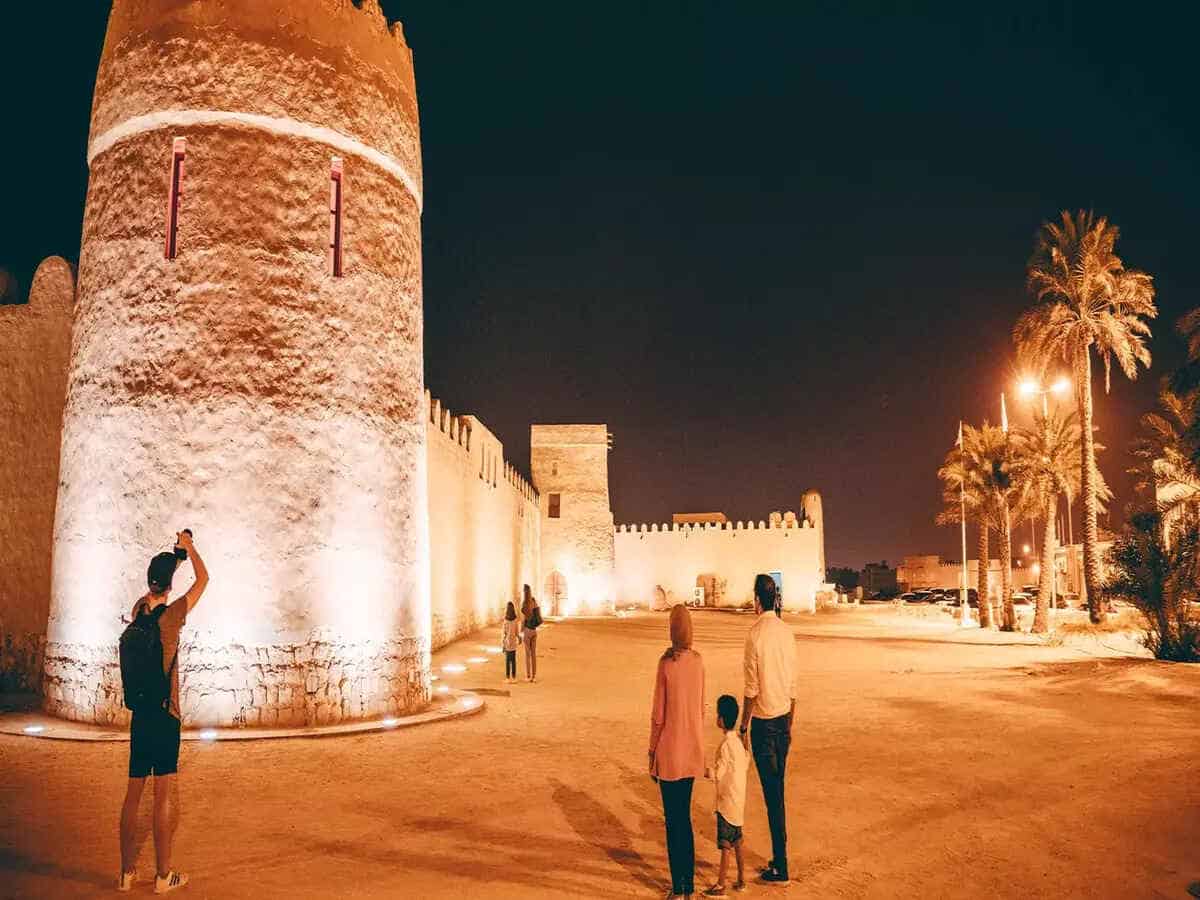
Tourism in Bahrain sees drop of more than 35% amid security fears, flight disruptions and lower GCC tourists. The tourism industry in Bahrain was optimistic to see a growing year of GCC tourism, but for the first half of 2026, the scenario is totally different. The number of international visitors is reported to have seen a decline of more than 35% in the first half of 2026, amid concerns about security fears, flight disruptions, low traveler confidence and the loss of demand for major events. Of the nearest countries, Saudi Arabia accounts for the largest share of GCC visitors to Bahrain, followed by Kuwait, Qatar, UAE and Oman.
Bahrain Tourism Faces A Sharp Reversal After Stronger Regional Growth
Bahrain’s tourism decline in the first half of 2026 stands out because it followed a period of expanding regional travel.
Advertisement
Advertisement
The Kingdom had benefited from rising GCC movements, strong Saudi demand, improving aviation connectivity, major sporting events and an established short-break market. That momentum weakened sharply when regional geopolitical tensions intensified.
The reported 35.8% fall in international tourist arrivals shows the scale of the change.
Advertisement
Advertisement
This was not simply a hotel problem or a temporary drop in one visitor market. Pressure emerged across aviation, accommodation, business travel, leisure trips and event tourism.
Bahrain’s experience demonstrates how quickly tourism can change when access and traveller confidence deteriorate at the same time.
Advertisement
Advertisement
How Is Bahrain Tourism Declining In 2026?
The downturn can be seen through several indicators.
International tourist arrivals reportedly dropped by more than 35% during January to June. Bahrain’s hotel market also experienced a severe contraction.
Advertisement
Advertisement
Average hotel occupancy declined from 57.3% during the first half of 2025 to only 36.8% in the same period of 2026.
Revenue per available room, commonly known as RevPAR, fell by roughly 43%.
Gulf Hotels Group also recorded a steep financial decline. Revenue fell from BD18.69 million during H1 2025 to BD12.81 million in H1 2026.
Net profit declined from BD5.22 million to BD2.81 million.
Advertisement
Advertisement
These figures indicate that fewer visitors were arriving, fewer hotel rooms were being occupied and tourism businesses were earning considerably less.
Bahrain Tourism Decline At A Glance
| Tourism Indicator | Earlier Position | H1 2026 Position | Approximate Change |
|---|---|---|---|
| International tourist arrivals | Previous-year comparison | Lower in H1 2026 | More than 35% decline |
| Hotel occupancy | 57.3% | 36.8% | About 36% lower |
| Hotel RevPAR | Higher H1 2025 level | Sharply weaker | About 43% lower |
| Gulf Hotels Group revenue | BD18.69 million | BD12.81 million | About 31% lower |
| Gulf Hotels Group net profit | BD5.22 million | BD2.81 million | About 46% lower |
| Gulf Air network restoration in May | Normal network before disruption | Around 75% restored | Connectivity still recovering |
The numbers point towards one conclusion. Bahrain’s tourism shock spread through almost every commercial layer of the visitor economy.
Saudi Arabia Remains The Most Important Market For Bahrain Tourism
Saudi Arabia deserves the closest attention because it overwhelmingly dominates Bahrain’s GCC visitor market.
Bahrain recorded approximately 10.44 million Saudi arrivals during 2025. That was far above every other GCC source country.
The King Fahd Causeway gives Saudi travellers direct road access to Bahrain, making the Kingdom especially important for weekend breaks, restaurants, shopping, hotels, family visits, entertainment and short leisure stays.
This creates a major advantage during normal conditions. However, it also creates exposure.
Advertisement
Advertisement
When regional uncertainty discourages discretionary travel or changes consumer behaviour, even a relatively modest slowdown in Saudi movements can significantly influence Bahrain’s tourism totals.
There is not yet sufficient country-specific H1 2026 data to state that Saudi arrivals themselves declined by 35%. However, Saudi Arabia’s enormous share of Bahrain’s regional visitor base means any weakening in Saudi demand would have substantial consequences.
Kuwait Adds Another Important Layer Of GCC Travel Demand
Kuwait represents Bahrain’s second-largest GCC source market among the available official figures.
Around 424,997 Kuwaiti arrivals were recorded during 2025, compared with approximately 373,112 the previous year.
Kuwaiti visitors contribute to Bahrain’s short-haul leisure market, particularly through family travel, weekend visits, hospitality, entertainment and shopping.
Travel between Kuwait and Bahrain also depends strongly on convenient regional aviation.
Advertisement
Advertisement
When Middle Eastern air connectivity weakened during 2026, short-haul tourism became more vulnerable to schedule changes and traveller uncertainty.
Kuwait’s importance is therefore not simply about total visitor volume. It forms part of a broader Gulf travel system that supports Bahrain during weekends, holidays and major events.
A reduction in regional confidence can quickly weaken these frequent, discretionary trips.
Qatar Plays A Smaller But High-Value Tourism Role
Qatar generated approximately 151,940 arrivals to Bahrain during 2025, placing it behind Saudi Arabia and Kuwait among the five GCC markets examined.
Qatar’s absolute volume is considerably smaller than Saudi Arabia’s, yet geographical proximity keeps it commercially important.
Qatari residents can reach Bahrain quickly for leisure, hotels, restaurants, shopping and entertainment.
Advertisement
Advertisement
The two markets are also connected through aviation and wider Gulf business networks.
Regional tensions in 2026 therefore created additional friction for this kind of travel.
Again, currently available figures do not justify claiming that Qatari visitors individually fell by a particular percentage during H1 2026.
The stronger interpretation is that Qatar formed part of the GCC demand base exposed to the same combination of disrupted connectivity, uncertainty and weaker short-term regional travel confidence.
United Arab Emirates Travel Is Closely Connected To Bahrain
The United Arab Emirates contributed approximately 114,499 arrivals to Bahrain in 2025, up substantially from around 85,213 in 2024.
This growth reflected the close commercial and aviation links connecting Bahrain with Dubai, Abu Dhabi and the wider UAE market.
Advertisement
Advertisement
The UAE matters not only for leisure tourism.
Business travellers, corporate visitors, event delegates, aviation passengers and hospitality customers also move frequently between the two countries.
That creates an important relationship for Bahrain’s hotels.
When business activity weakened and regional flight schedules came under pressure in 2026, this market became more exposed.
Bahrain’s hotel sector itself identified weaker business activity as one of the factors weighing on trading conditions.
That makes UAE-Bahrain travel particularly relevant when examining why both leisure and corporate hotel demand weakened simultaneously.
Advertisement
Advertisement
Oman Adds To Bahrain’s Wider Intra-Gulf Visitor Economy
Oman is a smaller source market but still contributes to Bahrain’s regional tourism ecosystem.
Approximately 70,196 arrivals from Oman were recorded during 2025, compared with about 63,342 in 2024.
Omani visitors support regional leisure trips, family movements, short stays and business travel.
The market does not have the scale of Saudi Arabia, but its importance becomes clearer when all GCC countries are viewed collectively.
Bahrain’s tourism model benefits from receiving travellers from several geographically close markets.
When the whole Gulf region experiences instability, reduced aviation capacity or changing traveller sentiment, losses across several smaller markets can accumulate.
Advertisement
Advertisement
Therefore, Oman forms part of the wider regional exposure behind Bahrain’s tourism downturn even though it is not the largest contributor.
Flight Disruptions Became One Of Bahrain’s Biggest Tourism Problems
Air connectivity was one of the most significant factors behind Bahrain’s weaker tourism performance.
During May 2026, Gulf Air reported that roughly 75% of its global network had been restored, covering around 40 destinations across 24 countries.
That statement demonstrated how heavily connectivity had been affected earlier in the year.
Bahrain depends on aviation for international tourists, business travellers, event visitors and connecting passengers.
Reduced frequencies make travel less convenient. Cancelled routes reduce available seats. Uncertainty encourages some travellers to delay or cancel trips.
Advertisement
Advertisement
The result can spread quickly from airports to hotels, restaurants, attractions and retail.
For an island country with a tourism economy closely connected to aviation, sustained network disruption can create an immediate decline in inbound demand.
Safety Concerns Weakened Traveller Confidence Across The Region
Traveller confidence became another central problem.
Regional geopolitical tensions intensified around the end of February 2026. Hospitality companies operating in Bahrain later identified the situation as a significant factor affecting tourism demand, aviation and business activity.
Safety concerns do not always need to involve incidents at a visitor attraction to damage tourism.
Travellers frequently respond to broader perceptions.
Advertisement
Advertisement
Some postpone discretionary trips. Others choose destinations perceived as less exposed to regional instability.
Businesses may reduce corporate travel. Airlines can alter schedules. Tour operators may change itineraries.
These decisions can collectively reduce arrivals even when hotels, attractions and tourism services remain available.
Bahrain’s 2026 tourism downturn therefore reflects both physical connectivity constraints and psychological effects on travel decision-making.
Bahrain Grand Prix Loss Removed A Major Tourism Demand Generator
The disruption to Formula One created another major blow.
The Bahrain Grand Prix normally generates concentrated demand for flights, hotels, restaurants, taxis, car hire, entertainment, retail and premium hospitality.
Advertisement
Advertisement
Formula One confirmed in March that the Bahrain and Saudi Arabian races would not proceed as originally scheduled in April because of the regional situation.
For Bahrain, this meant losing one of its most powerful annual tourism periods.
The hospitality sector specifically identified the absence of Formula One demand as an additional pressure during the second quarter.
This matters because major events attract visitors who often spend far more than ordinary day visitors.
Their absence affects room rates, occupancy, restaurant spending, premium services and international exposure.
The race was later associated with Malaysia for 2026, meaning Bahrain retained branding connections but lost the immediate domestic tourism expenditure normally generated by hosting the event.
Advertisement
Advertisement
Bahrain Hotels Reveal The True Scale Of The Tourism Shock
Hotel performance provides some of the clearest evidence of the downturn.
Occupancy falling from 57.3% to 36.8% represents a dramatic deterioration.
This was accompanied by a roughly 43% fall in RevPAR, showing that hotels were not only selling fewer rooms but generating less revenue from available inventory.
Gulf Hotels Group’s revenue fell approximately 31%, while net profit declined around 46%.
Such figures suggest that the crisis moved quickly from visitor numbers into business performance.
Hotels are particularly sensitive to sudden changes because rooms cannot be stored for future sale.
Advertisement
Advertisement
An empty room tonight represents permanently lost revenue.
That explains why a rapid drop in regional arrivals, event traffic and aviation demand can create such substantial financial pressure within only a few months.
Bahrain’s Tourism Weakness Should Not Be Seen As A Permanent Collapse
Despite the scale of the H1 decline, the evidence does not suggest that Bahrain suddenly became fundamentally unattractive as a tourism destination.
The Kingdom entered 2026 following several years of stronger regional travel.
Its location, causeway connection with Saudi Arabia, airline network, entertainment industry, hotels and GCC accessibility remain major competitive strengths.
The key difference in 2026 was the external operating environment.
Advertisement
Advertisement
Regional tensions intensified. Flights were disrupted. traveller confidence weakened. Business movement slowed. Formula One demand disappeared from Bahrain’s spring calendar.
These pressures arrived together.
That combination helps explain why tourism indicators deteriorated so sharply.
As air connectivity normalises and regional confidence improves, Bahrain has the structural infrastructure required to rebuild demand.
What Bahrain’s Tourism Decline Means For The Wider Gulf
Bahrain’s experience offers an important lesson for Gulf tourism.
Regional integration creates enormous opportunity. Travellers can move quickly between neighbouring countries. Airlines connect major cities within hours. GCC residents regularly take weekend and short-break trips.
Advertisement
Advertisement
However, that same integration creates shared exposure.
Disruption in one part of the regional travel system can affect airlines, hotels and visitor flows elsewhere.
Saudi Arabia, Kuwait, Qatar, the UAE and Oman remain essential components of Bahrain’s visitor economy.
Bahrain therefore needs both strong GCC travel and diversified international demand.
The H1 2026 decline shows how reliance on interconnected regional markets can magnify the impact of geopolitical and aviation shocks.
For Bahrain tourism, recovery will depend heavily on restored connectivity, improved confidence, returning events and renewed GCC travel demand.
Advertisement
Advertisement
More than 35% drop in tourists in Bahrain due to safety fears, air disruption, and decreased tourism from the GCC region.
While this could mark the first half of 2026 for Bahrain, the real challenge is how the kingdom transforms its new stability into revived tourism.
Advertisement
