
Royal Caribbean and Carnival Turn Caribbean Islands Into Private Cruise Destinations Worth Millions

Published
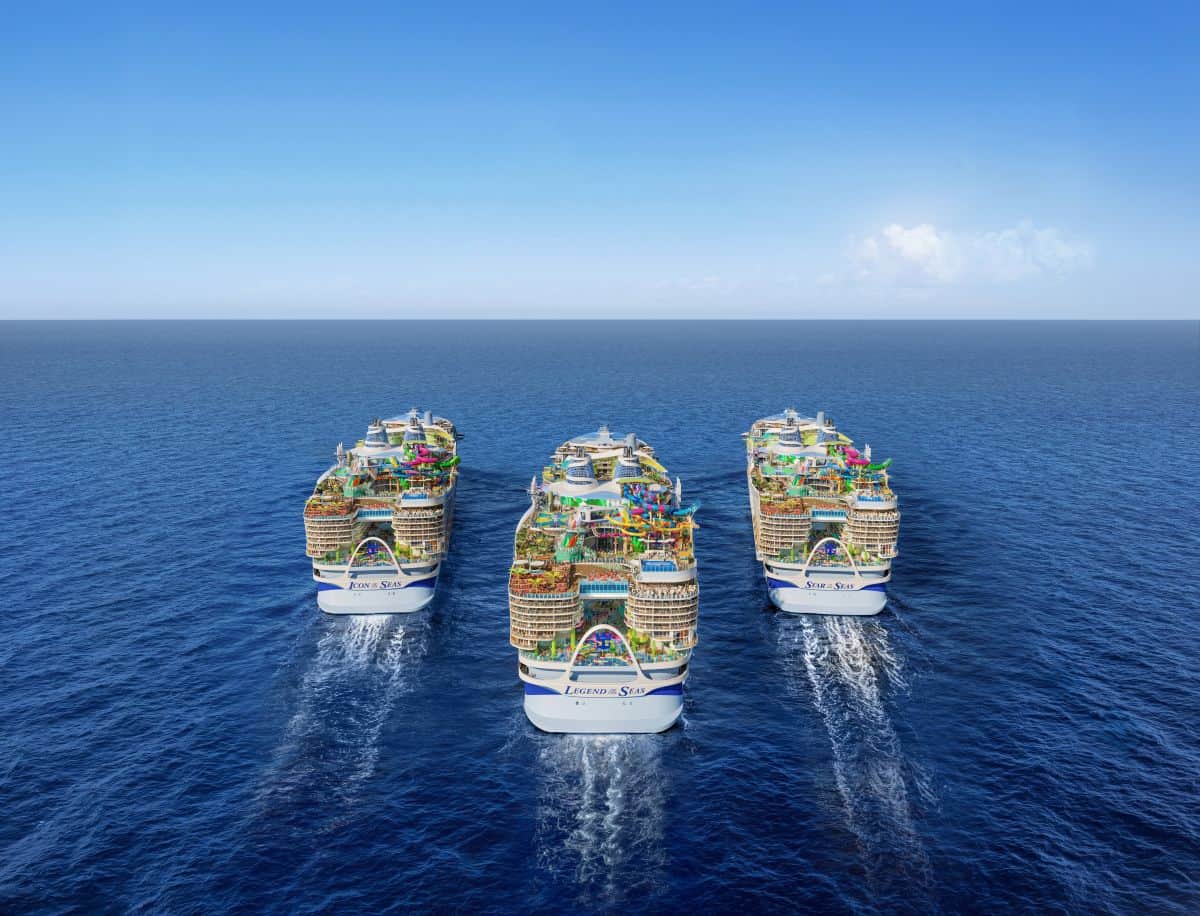
The cruise industry is entering a new phase in which private destinations are becoming strategic assets, not merely beach-day attractions. Global cruise passenger volume reached 37.2 million in 2025, setting a record as operators continue adding ships, attractions and destination infrastructure. At the same time, cruise companies are investing heavily in places they can control, from Royal Caribbean’s Perfect Day portfolio to Carnival’s Celebration Key and MSC Cruises’ expanding Ocean Cay complex.
The economics explain much of the shift. Cruise passengers and crew generated $27.1 billion in spending in 2024, while the average transit passenger spent $89 during a destination visit. By contrast, embarkation passengers spent an average $322. This widening commercial opportunity is encouraging cruise operators to control more of the holiday experience beyond the ship.
Advertisement
Advertisement
The Cruise Holiday Is Moving Ashore
For decades, the conventional cruise proposition was straightforward. A ship transported passengers between several destinations, while local ports supplied the attractions, restaurants, shops and excursions. Increasingly, however, the cruise company itself is becoming the destination architect.
Royal Caribbean now expects its portfolio of exclusive destinations to grow from three to eight by 2028. Its network includes Perfect Day at CocoCay, Royal Beach Club Paradise Island and planned projects in locations including Mexico, Cozumel, Santorini and Vanuatu.
Advertisement
Advertisement
This strategy changes the economics of a shore visit. Instead of simply delivering passengers to an independently operated port, the cruise company can design the beach, pier, restaurants, entertainment, retail areas and premium experiences around its own customer base.
The result is a more integrated holiday model. The ship becomes the first commercial layer, while the private destination becomes the second.
Advertisement
Advertisement
Bigger Ships Are Altering Port Economics
The industry’s fascination with private destinations also reflects the extraordinary scale of modern cruise vessels. Royal Caribbean’s Icon-class ships can carry thousands of guests, creating intense demand for berths, transport systems and visitor infrastructure.
The World Bank has identified a structural problem for Caribbean destinations. Larger cruise ships can carry more passengers and amenities, but fewer ports can accommodate them effectively. Congestion can also intensify when large vessels arrive simultaneously at popular destinations.
This creates an operational dilemma. Cruise companies want larger ships because they spread enormous capital investments across more passengers. Yet those ships require suitable berths and destination infrastructure capable of handling their scale.
Private destinations offer a controlled solution. A cruise line can build the pier, passenger pathways, restaurants, attractions and transport system around its own vessels rather than adapting a ship to an existing public environment.
That distinction matters for travellers. A purpose-built destination can offer smoother disembarkation and predictable facilities. However, it can also make the shore experience feel less connected to the wider country.
The $27.1 Billion Spending Question
The most revealing numbers come from destination spending. Global cruise-related economic output reached $198.8 billion in 2024, supporting approximately 1.8 million jobs worldwide, according to CLIA’s latest economic-impact research. Passenger spending rose 23% that year, while cruise-line purchases increased 17%.
Advertisement
Advertisement
The average transit passenger spent $89 per destination visit in 2024. That figure varies considerably between markets, but it provides a useful benchmark for understanding why cruise companies want greater control over shore-based spending.
The commercial opportunity becomes clearer when combined with onboard spending. Carnival Corporation reported $9.2 billion in onboard and other revenue in 2025, representing 35% of its total revenue. Guest onboard spending alone increased by $466 million.
Therefore, the private destination fits neatly into a wider strategy. Cruise operators can create additional opportunities for passengers to purchase drinks, meals, cabanas, attractions, excursions and premium experiences after leaving the vessel.
| Indicator | Latest figure | Why it matters |
|---|---|---|
| Global cruise passengers, 2025 | 37.2 million | Record demand |
| Cruise passenger and crew spending, 2024 | $27.1bn | Destination economic opportunity |
| Average transit passenger spend, 2024 | $89 | Typical port-visit benchmark |
| Average embarkation passenger spend, 2024 | $322 | Higher-value homeport economics |
| Carnival onboard and other revenue, 2025 | $9.2bn | Importance of ancillary spending |
| Carnival total revenue, 2025 | $26.6bn | Scale of the operator |
CocoCay Turned Islands Into Assets
Royal Caribbean’s Perfect Day at CocoCay provides perhaps the clearest illustration of the transformation. The destination combines beaches with water attractions, pools, restaurants and premium experiences, creating something closer to a resort than a conventional cruise stop.
The strategy has since expanded beyond one island. Royal Caribbean acquired the Port of Costa Maya and adjacent land in Mexico in July 2025 for its planned Perfect Day Mexico development. The company has also opened Royal Beach Club Paradise Island and plans additional beach-club developments.
However, the Mexican project also demonstrates that private-destination expansion faces regulatory and environmental scrutiny. In May 2026, Mexico’s environmental authority indicated it would deny Royal Caribbean’s initial application for permits required for Perfect Day Mexico. Royal Caribbean said it would continue engaging with authorities and stakeholders.
Advertisement
Advertisement
That development is significant for the wider industry. Private destinations may provide greater commercial control, but they still operate within national environmental, planning and community frameworks.
Carnival Is Building Its Own Beach Economy
Carnival’s Celebration Key demonstrates how quickly this strategy is spreading across major operators. The first phase represented a $600 million investment, while a further pier extension is designed to accommodate as many as four ships simultaneously from summer 2026.
The destination opened with a 65-acre developed area, a 1.5-mile beach, freshwater lagoons, more than 30 food and beverage outlets and multiple entertainment zones. Carnival says the destination is designed to welcome two million guests annually, rising to four million by 2028.
That scale changes the meaning of a “port call”. Celebration Key is not merely a place where passengers disembark for a few hours. It is infrastructure engineered around Carnival’s network, fleet and customer base.
For Carnival, the destination also becomes an itinerary-building tool. More than 20 ships from 10 US homeports were already offering itineraries featuring Celebration Key shortly after its opening.
MSC Is Building A Destination Cluster
MSC Cruises is following a slightly different path. Ocean Cay MSC Marine Reserve already operates as a private island destination in The Bahamas, and the company is now expanding its infrastructure.
Advertisement
Advertisement
MSC announced in January 2026 that it would extend Ocean Cay’s pier to accommodate two ships simultaneously, with completion planned for late 2027. The expansion also includes new food and beverage facilities, an adults-only beach and a family lagoon.
The company has gone further by announcing Sandy Cay, a luxury private island next to Ocean Cay. The new destination is scheduled to open in 2028 for MSC Cruises and Explora Journeys guests.
This points towards a broader industry development. Cruise companies are no longer simply purchasing or leasing isolated islands. They are beginning to assemble destination portfolios with different experiences for different customer segments.
Great Stirrup Cay Shows How Old Assets Evolve
Norwegian Cruise Line provides another revealing case. The company has owned Great Stirrup Cay since 1977, making its private-island strategy one of the industry’s longest-running examples. Yet the island is now undergoing another major transformation.
New infrastructure includes a multi-ship pier, tram service, a large lagoon, an adults-only area and additional premium facilities. NCL is also introducing the nearly six-acre Great Tides Waterpark, with 19 slides, an approximately 800-foot dynamic river and a large children’s splash area.
The commercial lesson is important. Private destinations are not necessarily static assets. Cruise companies can continually add attractions and monetised experiences as passenger expectations evolve.
Advertisement
Advertisement
For travellers, that can mean more activities without leaving the cruise company’s ecosystem. It can also mean additional charges for attractions such as waterparks, cabanas and premium experiences.
What Travellers Gain From The Shift
There are genuine advantages for passengers. Purpose-built destinations can offer predictable infrastructure, direct ship access, organised transport and attractions designed around cruise schedules.
Families can benefit from waterparks, pools and dedicated children’s areas. Couples can choose adults-only beaches or premium cabanas. Travellers with limited mobility may also find purpose-built infrastructure easier to navigate than older urban ports.
There is another practical advantage. A private destination can reduce the complexity of a short shore visit. Passengers do not necessarily need to arrange taxis, research restaurants or navigate an unfamiliar city simply to enjoy a beach day.
Yet convenience comes with a trade-off. Travellers seeking local culture, independent restaurants, historic districts and community-run excursions may receive a narrower destination experience.
The Local Tourism Equation Is More Complicated
The rise of private destinations matters beyond cruise-company balance sheets. The World Bank has warned that Caribbean tourism does not always retain enough of the value generated by visitors within local communities. It has called for stronger local sourcing, employment links and policies that increase community participation.
Advertisement
Advertisement
That creates an important distinction between visitor volume and visitor value. A destination can receive large numbers of cruise passengers while capturing a smaller share of their total holiday spending.
A passenger spending a day at a cruise-owned destination may still generate local employment and procurement. However, the spending structure can differ from a passenger who leaves the port and uses independently owned restaurants, shops and attractions.
| Traveller choice | Potential benefit | Potential limitation |
|---|---|---|
| Cruise-controlled destination | Convenience and predictable facilities | Less exposure to local businesses |
| Public port exploration | Cultural and commercial immersion | More planning required |
| Cruise excursion | Organised and time-efficient | Often higher cost |
| Independent excursion | Greater local interaction | Greater responsibility for timing |
| Private beach club | Controlled resort-style experience | Less destination diversity |
Private Ports Could Change Itineraries
The biggest strategic implication may not be the islands themselves. It may be the future design of cruise itineraries.
A traditional itinerary often depends on securing access to multiple external ports. A cruise company with its own destination portfolio gains more flexibility because it can schedule controlled experiences alongside conventional port calls.
That does not mean public ports will disappear. Far from it, because cultural destinations remain central to many cruise products. Instead, private destinations can become reliable anchors within an itinerary.
The model could therefore become more hybrid. A seven-night voyage might combine a major cultural port, a private beach destination, another public port and an additional cruise-controlled experience.
Advertisement
Advertisement
The Destination May Become The Product
The most consequential shift is therefore commercial rather than geographical. Cruise companies increasingly operate ships, sell experiences, manage excursions and develop destination infrastructure within one connected ecosystem.
Royal Caribbean’s own corporate strategy explicitly describes its private destinations as part of a broader vacation ecosystem. Its 2025 results included $17.9 billion in total revenue and 9.4 million guests, demonstrating the scale at which the company can deploy that model.
For travellers, this means the question “Which ports does this cruise visit?” may become less revealing. A better question could be, “Who controls the experiences at those ports?”
The answer increasingly matters because control determines where passengers spend time and money. It also influences how much contact travellers have with the wider destination.
The Cruise Map Is Being Rewritten
Cruise lines are not abandoning public ports. Instead, they are building a second layer of destinations that gives them greater control over infrastructure, passenger flow and spending.
The commercial logic is powerful. Record passenger numbers, larger vessels and rising onboard spending create incentives to own more of the holiday experience. Meanwhile, public destinations face congestion, infrastructure pressure and the challenge of ensuring that tourism revenue reaches local communities.
Advertisement
Advertisement
For travellers, the result will be a more varied cruise landscape. Some holidays will prioritise authentic city exploration, while others will lean towards polished, resort-style experiences. The important development is that the cruise destination itself is becoming part of the product, rather than simply the place between one ship departure and another.
Advertisement
