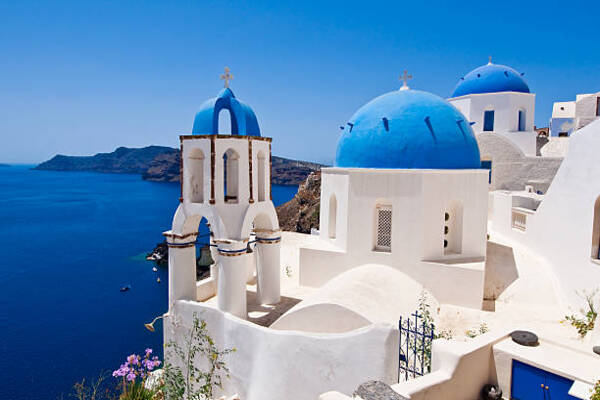
Image generated with Ai
South Aegean and more Greece islands are facing a major tourism surge as millions of visitors flood these iconic islands. The South Aegean stands at the centre of Greece’s tourism growth, while more Greece islands continue attracting global travellers with beaches, culture, heritage and unforgettable Mediterranean experiences. Moreover, rising visitor demand is reshaping travel across these iconic islands and increasing attention on tourism pressure. Therefore, travellers should understand the changing conditions before planning Greece holidays. Travel And Tour World urges readers to read the entire story for essential insights into the South Aegean, Greece islands, tourism surge, visitor numbers and smarter ways to explore these iconic islands.
Greece is facing a striking tourism imbalance, with the South Aegean emerging as one of Europe’s most tourism-intensive regions.
Advertisement
New regional data shows that the South Aegean recorded 127.2 tourist overnight stays for every resident in 2024. The region registered more than 41.5 million overnight stays, compared with a permanent population of approximately 326,000 people.
The statistic does not mean that 127 tourists stay alongside every resident simultaneously. Instead, it compares the total number of tourist nights accumulated during the year with the resident population.
Advertisement
For travellers, however, the calculation provides an important indication of tourism pressure.
The South Aegean includes some of Greece’s most internationally recognised islands, including Santorini, Rhodes and Kos.
The South Aegean’s result is particularly notable when tourism intensity is measured against local populations.
The Ionian Islands, another major Greek tourism region, recorded approximately 102.6 tourist nights per resident, placing it among Europe’s most tourism-intensive areas as well.
Advertisement
Advertisement
Eurostat’s regional tourism statistics show that tourism intensity varies dramatically across Europe. In 2023, the EU average stood at 6,574 tourist accommodation nights per 1,000 inhabitants, equivalent to about 6.6 nights per resident.
The South Aegean’s 2024 figure therefore illustrates an exceptionally concentrated tourism model.
Across the European Union, tourist accommodation recorded more than 3 billion overnight stays in 2024, representing a 2.7% increase from 2023.
For international visitors, high tourism intensity can influence the character of a holiday.
The busiest islands can experience concentrated demand for hotels, ferries, restaurants, beaches, roads and other visitor services.
Tourism pressure can become particularly significant during the summer months, when Greece experiences strong seasonal demand.
This makes travel timing increasingly important for visitors seeking a more comfortable experience.
Travelling during spring or autumn can help tourists experience Greek destinations outside the most concentrated summer period.
Exploring less heavily visited destinations can also distribute visitor spending beyond the country’s best-known island hotspots.
The enormous tourism pressure is closely connected to Greece’s continuing popularity.
According to the Bank of Greece, international traveller flows increased by 6.4% in 2025, reaching approximately 43.3 million travellers.
Tourist overnight stays also increased by 1.6%, reaching around 244.7 million nights.
Travel receipts climbed to approximately €23.63 billion, an increase of 9.4% compared with 2024.
Cruise tourism also contributed strongly. Cruise passenger receipts reached approximately €1.17 billion in 2025, rising 4.9% year-on-year.
These figures underline the scale of Greece’s tourism economy while explaining why managing visitor concentration has become increasingly important.
Greece’s tourism statistics do not suggest that travellers should avoid the country.
Instead, they provide a reason to plan more carefully.
Visitors can consider travelling outside peak periods, choosing locally operated accommodation and supporting businesses outside heavily concentrated tourist zones.
Greece’s official tourism authority promotes destinations and experiences across the country, giving travellers opportunities to explore beyond the most famous islands.
The country is also developing a stronger sustainability focus. Greece’s Ministry of Tourism has been working on tourism planning that considers economic, environmental and social sustainability, including areas experiencing significant tourism pressure.
For global travellers, the latest figures offer a simple message: Greece remains hugely popular, but where and when visitors travel matters.
The South Aegean’s 127.2 tourist nights per resident demonstrates the extraordinary scale of demand concentrated within a relatively small resident population.
A smarter Greek holiday could therefore combine famous attractions with quieter locations, shoulder-season travel and responsible local spending.
Rather than avoiding Greece, travellers can explore more of it.
That approach can create a more relaxed holiday while helping tourism benefits reach communities beyond Europe’s most crowded island destinations.
Greece’s tourism industry has recovered dramatically from the pandemic-era collapse and has continued expanding.
Bank of Greece data shows that international traveller flows reached approximately 43.3 million in 2025, representing a 6.4% increase from the previous year.
Tourist overnight stays rose 1.6% to around 244.7 million, while travel receipts climbed 9.4% to approximately €23.63 billion.
These national figures explain why pressure is particularly visible on small islands where millions of annual visitors meet comparatively small resident populations.
The strongest warning comes from the South Aegean. Regional tourism data for 2024 showed approximately 41.5 million tourist overnight stays, equivalent to about 127.2 tourist nights for every permanent resident.
The comparison measures annual overnight stays against the resident population. It does not mean 127 tourists are physically present for each resident simultaneously.
The Ionian Islands also experienced exceptionally high tourism intensity, recording roughly 102.6 tourist nights per resident.
| Destination / airport | International air arrivals 2022 | International air arrivals 2023 | Change | Latest official indicator |
|---|---|---|---|---|
| Rhodes | 2,569,811 | 2,644,704 | +2.9% | More than 7m total airport passengers in 2025 |
| Heraklion, Crete | 3,361,461 | 3,554,705 | +5.7% | Major national tourism gateway |
| Corfu | 1,699,455 | 1,844,154 | +8.5% | 2025 international traffic remained strong |
| Kos | 1,260,761 | 1,322,109 | +4.9% | Strong Dodecanese tourism hub |
| Zakynthos | 904,328 | 992,460 | +9.7% | Strong Ionian growth |
| Santorini | 829,210 | 751,794 | -9.3% | 2025 traffic affected by seismic disruption |
| Mykonos | 596,546 | 562,862 | -5.6% | High tourism intensity despite smaller air volume |
INSETE’s official airport series confirms that the major islands experienced very different trajectories. Rhodes, Crete, Corfu, Kos and Zakynthos increased international air arrivals between 2022 and 2023, while Santorini and Mykonos declined.
This distinction matters. A fall in international airport arrivals does not automatically mean that overtourism has disappeared because visitors can also reach islands by domestic flights, ferries and cruise ships.
Rhodes provides one of the clearest examples of sustained tourism pressure.
International air arrivals increased from 2,569,811 in 2022 to 2,644,704 in 2023, a gain of 74,893 passengers or 2.9%.
Fraport Greece reported that Rhodes Airport handled more than 7 million passengers during 2025, with annual passenger traffic increasing 2.5% compared with 2024.
December 2025 alone recorded 72,624 passengers, an 8.4% year-on-year increase.
This makes Rhodes one of the most important destinations to monitor when discussing Greek island tourism pressure.
Official INSETE data illustrates the extraordinary seasonality. In 2023, international arrivals reached approximately 451,431 in June, 480,890 in July, 508,901 in August, 436,468 in September and 263,281 in October.
The same series recorded only 1,616 international arrivals in January and 1,799 in February.Rhodes 2023 International air arrivals January 1,616 February 1,799 March 10,848 April 144,252 May 325,592 June 451,431 July 480,890 August 508,901 September 436,468 October 263,281 November 6,142
The figures demonstrate that the island’s tourism challenge is heavily concentrated in the summer season.
Santorini is particularly important because its tourism trajectory changed sharply after the seismic activity of early 2025.
International air arrivals fell from 829,210 in 2022 to 751,794 in 2023, a decline of 9.3%.
Fraport’s July 2025 figures showed Santorini handling 450,584 total passengers, down 11.6% from 509,677 in July 2024.
International passengers alone declined 8.7%, from 341,497 to 311,936. Domestic traffic fell 17.6%.
Fraport subsequently reported that the extraordinary seismic situation affected the 2025 operating environment.Santorini indicator Earlier figure Later figure Change International air arrivals 2022 829,210 — — International air arrivals 2023 751,794 — -9.3% July airport passengers 2024 509,677 July 2025: 450,584 -11.6% July international passengers 2024 341,497 July 2025: 311,936 -8.7%
The lesson for travellers is important. A destination can remain globally famous while simultaneously experiencing a temporary reduction in arrivals.
Mykonos also demonstrates why raw visitor numbers need context.
International air arrivals decreased from 596,546 in 2022 to 562,862 in 2023, a reduction of 5.6%.
However, the island remains heavily dependent on tourism, with significant air and cruise traffic.
Fraport’s July 2025 data recorded 382,266 total passengers at Mykonos Airport, including 296,786 international passengers. Total traffic increased 1.0%, while international traffic rose 4.0%.
The island therefore illustrates an important overtourism principle: even a smaller island does not need the highest absolute visitor count to experience substantial pressure.
Crete is different because its population and land area are substantially larger than those of smaller Cycladic islands.
Its two principal international gateways, Heraklion and Chania, recorded a combined 4,968,190 international air arrivals in 2023.
Heraklion alone received 3,554,705, while Chania recorded 1,413,485.
Crete therefore receives enormous visitor volumes without having the same population-to-tourist ratio as smaller islands.
For travellers, this means Crete can offer more opportunities to distribute visits across different towns, beaches, mountains and cultural sites.
Corfu recorded 1,844,154 international air arrivals in 2023, up 8.5% from 2022.
Zakynthos recorded 992,460, an increase of 9.7%.
These increases were among the stronger performances recorded by Greece’s major island airports.
Fraport’s July 2025 data showed 927,899 total passengers at Corfu, including 868,532 international passengers.
Zakynthos handled 519,660 total passengers, including 504,113 international passengers.Island 2022 international arrivals 2023 international arrivals 2022–23 change Corfu 1,699,455 1,844,154 +8.5% Zakynthos 904,328 992,460 +9.7% Kos 1,260,761 1,322,109 +4.9% Rhodes 2,569,811 2,644,704 +2.9%
The recovery after COVID-19 is central to understanding current overtourism.Period Tourism development 2021 International tourism remained constrained by pandemic-related restrictions 2022 Major Greek island airports recorded strong international recovery 2023 International air arrivals reached 26.82 million across Greece’s main airports 2024 National tourism demand reached another record level 2025 International traveller flows reached about 43.3 million; tourism receipts reached about €23.63bn
INSETE recorded 26,823,873 international air arrivals at Greece’s main airports in 2023, up 13.2% from 2022.
Fraport Greece reported 37.116 million passengers across its 14 regional airports in 2025, up 3% from 2024 and 48% above 2016 traffic. From 2017 through 2025, those airports handled approximately 249.6 million passengers.
The numbers do not justify declaring every Greek island permanently overcrowded.
Instead, they show where tourism is concentrated and when pressure becomes strongest.
The most reliable strategy for travellers is therefore to consider shoulder-season holidays, stay longer rather than moving rapidly between hotspots, use local businesses and explore destinations beyond the best-known islands.
Greece’s own tourism authorities increasingly emphasise sustainable travel and broader geographical distribution.
The official Visit Greece platform promotes destinations throughout the mainland and islands rather than concentrating travel solely around Santorini and Mykonos.
For travellers, the biggest lesson is simple: Greece still offers enormous choice, but the timing and location of a trip can determine whether visitors add to pressure or help spread tourism benefits more evenly.
Monthly island figures should not be described as “total tourists” unless the source specifically defines them that way.
INSETE explains that international airport arrival statistics count passengers arriving on international flights, regardless of domicile. Domestic airport statistics can count the same traveller twice because arrival and return movements are both recorded.
ELSTAT separately publishes monthly accommodation arrivals and nights spent, including regional data.
Therefore, combining airport arrivals, accommodation guests and cruise passengers would produce misleading totals.
For a copyright-safe news article, the strongest methodology is to keep each measurement separate and identify the source and definition beside every statistic.
Rhodes and more Greece islands continue to attract millions of visitors, strengthening Greece’s position as a leading Mediterranean destination. However, this tourism surge also brings growing pressure to popular islands, especially during the peak summer season. Therefore, travellers should look beyond the busiest hotspots and consider shoulder-season journeys, lesser-known destinations and locally owned businesses. This approach can create a more relaxed holiday while helping tourism benefits reach wider communities. Ultimately, Rhodes and other iconic Greece islands remain compelling destinations, but thoughtful travel choices will become increasingly important as visitor numbers continue to rise. Travel And Tour World encourages travellers to explore Greece responsibly.
Advertisement
Tags: Greece islands tourism, Greece tourism surge, Greece travel, greek islands, Mediterranean Travel
Advertisement
Advertisement












Wednesday, September 2, 2026

Wednesday, September 2, 2026

Wednesday, September 2, 2026

Wednesday, September 2, 2026

Wednesday, September 2, 2026

Tuesday, September 1, 2026

Wednesday, September 2, 2026

Wednesday, September 2, 2026