
Austria’s New Railjet M Alpine Train Set to Transform Mountain Travel With Luxury Comfort, Ski Storage and Digital Innovation

Published
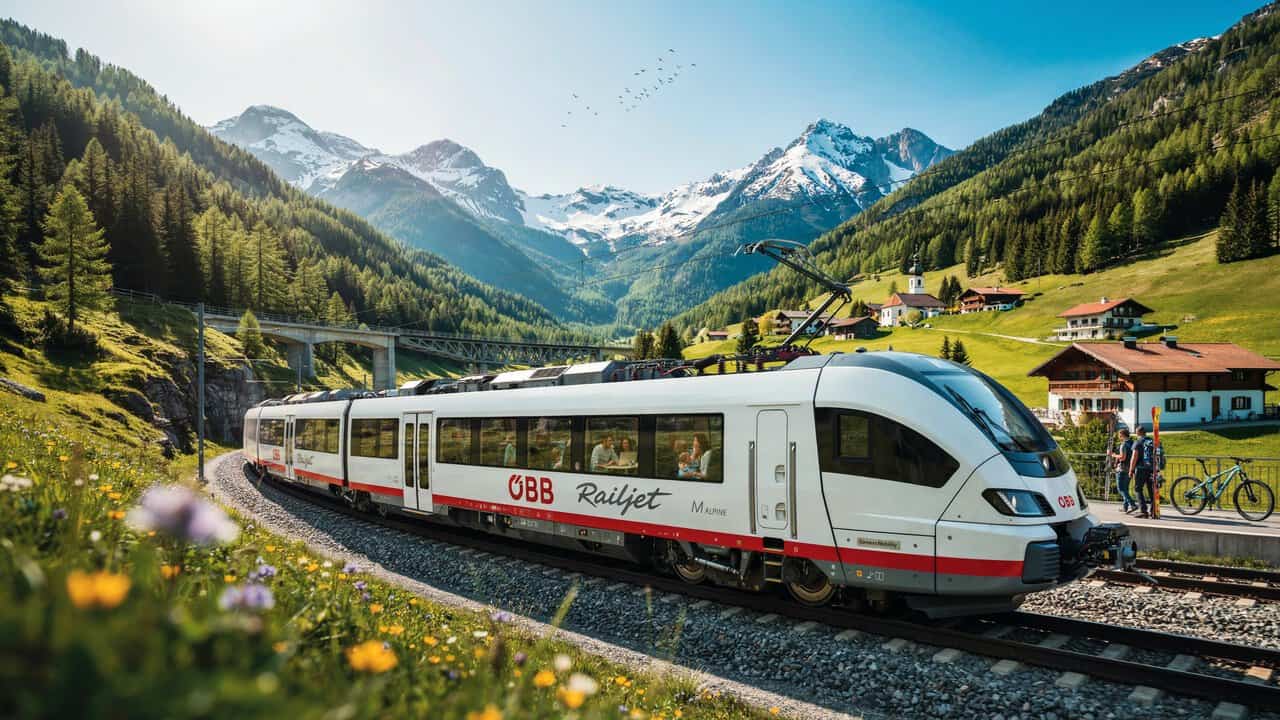
Image generated with Ai
Austria is ready to enter a new age of Alpine rail transport thanks to the new Railjet M Alpine train presented at InnoTrans 2026 by Austrian Federal Railways (ÖBB) and Siemens Mobility. The electric multiple unit has been developed for use on inner-Alpine lines and is scheduled to start passenger traffic from 2028, providing greater capacity, increased comfort, increased accessibility, and state-of-the-art digital services to tourists travelling in Austria’s mountainous regions.
The new train is anticipated to transform the way tourists visit Alpine Austria due to making rail travel more convenient for families, winter sports fans, cyclists, and long-distance passengers. Ski and bicycle amenities along with greater connectivity and passenger-oriented interiors have been incorporated into the Railjet M to meet the requirements of today’s tourism.
Advertisement
Advertisement
It happens against the backdrop of investments made by European destinations into railway infrastructure to promote sustainable travel. For Austria, which attracts millions of tourists every year due to its mountain scenery, better railway connections become an important need.
Why This Matters for Travellers Visiting Austria’s Alpine Regions
The introduction of the Railjet M is not only a railway development. It represents a major shift in how visitors can access Austria’s mountain destinations.
Advertisement
Advertisement
Many Alpine journeys involve carrying additional equipment such as skis, snowboards, bicycles and large luggage. Traditional regional trains can sometimes create challenges for travellers with bulky equipment or families travelling together.
The Railjet M has been designed to address these issues by combining inter-regional travel capability with features normally expected from longer-distance services.
Advertisement
Advertisement
For international visitors arriving in Austria, the new trains could provide smoother connections between major cities and mountain regions without requiring private vehicle travel.
The new fleet is part of ÖBB’s wider modernisation programme under a framework agreement with Siemens Mobility covering 100 Mireo electric multiple-units. The order includes 31 Railjet M units designed for Alpine routes.
Advertisement
Advertisement
Passenger Benefits Designed Around Alpine Tourism Needs
- More travel space: Each Railjet M train can accommodate 257 passengers with dedicated first-class and second-class seating.
- Outdoor equipment facilities: The train includes space for 14 bicycles and holders for up to 54 pairs of skis or snowboards.
- Family-friendly travel: A family area with children’s entertainment facilities supports travellers with younger passengers.
- Better connectivity: Passengers will have access to high-performance Wi-Fi and the Railnet portal.
- Improved boarding access: Low-floor entry and sliding steps help bridge platform gaps.
These features are particularly significant for Austria’s tourism sector because Alpine travel is not limited to summer sightseeing. Winter sports, cycling holidays and hiking trips require flexible transport solutions throughout the year.
The Railjet M aims to make rail travel a stronger option for visitors seeking scenic journeys through Austria’s mountains.
What Makes the Railjet M Different From Existing Austrian Trains?
The Railjet M has been developed as a specialised Alpine train rather than a simple replacement for existing railway vehicles.
Siemens Mobility based the train on its Mireo platform but adapted the design for long-distance inner-Alpine operations. Unlike articulated train concepts, the Railjet M uses a single-car design approach, allowing engineers to optimise passenger areas and improve interior flexibility.
Advertisement
Advertisement
The train also incorporates space-efficient bogies developed at Siemens Mobility’s Competence Centre for Bogies and Pantographs in Graz. These components are designed to reduce weight while creating additional interior room for passengers.
Technical Features Supporting Future Alpine Operations
- Train type: Electric multiple-unit (EMU).
- Configuration: Four-car unit.
- Length: Approximately 106 metres.
- Maximum speed: 160 km/h.
- Multiple operation: Up to three units can operate together.
- Safety system: ETCS onboard equipment meeting Baseline 4.0 standards.
- Platform: Siemens Mireo family.
The technical design reflects the challenges of Alpine rail travel, where trains must operate through steep landscapes, changing weather conditions and complex routes.
Before entering service, the Railjet M has undergone testing in controlled environments simulating Alpine conditions. Tests included extreme temperatures ranging from -25°C to +45°C, snow, strong winds, high humidity and freezing rain.
These evaluations are intended to ensure that passengers experience reliable service across different seasons.
How Will Railjet M Improve Travel Between Austria’s Mountain Destinations?
Austria’s Alpine regions are connected by a network of railway routes that serve both residents and visitors. However, demand for comfortable regional and inter-regional connections has continued to grow.
The Railjet M will gradually enter service on selected routes from 2028, improving links between important cities and mountain areas.
Advertisement
Advertisement
Routes Planned for Railjet M Introduction
- Graz – Bischofshofen – Innsbruck
- Graz – Leoben – Klagenfurt
- Graz – Selzthal – Linz
- Salzburg – Schwarzach-St. Veit – Wörgl
- Graz – Maribor
These routes connect eastern Austria, western Alpine areas and neighbouring regions.
For tourists, these connections could simplify multi-stop holidays that combine urban attractions with mountain experiences.
A visitor may be able to explore Graz, continue through Alpine landscapes and reach destinations near hiking trails or ski areas using a single integrated rail network.
The improvement is especially relevant as travellers increasingly seek alternatives to car-based tourism. Rail journeys allow visitors to enjoy Austria’s scenery while reducing the need for road travel through mountainous terrain.
How Could the New Train Change Austria’s Winter Tourism Experience?
Austria is internationally recognised for its ski resorts and winter landscapes. Every season, visitors travel to Alpine regions carrying equipment that can make transportation complicated.
The Railjet M directly addresses this challenge by including storage solutions specifically designed for winter sports travellers.
Advertisement
Advertisement
Features Supporting Ski and Adventure Tourism
- Dedicated ski and snowboard holders.
- Bicycle storage for summer adventure tourism.
- Large luggage areas throughout the train.
- Comfortable seating for longer regional journeys.
- Reliable digital connectivity during travel.
For ski visitors, easier rail access can improve the entire holiday experience. Travellers may avoid airport transfers, rental vehicles and difficult mountain driving conditions.
The same facilities also support Austria’s summer tourism market. Cyclists and hikers increasingly look for transport options that allow them to combine outdoor activities with sustainable travel.
The Railjet M is therefore designed as a year-round tourism connection rather than a seasonal service.
How Will Railjet M Support Austria’s Sustainable Travel Goals?
The introduction of the Railjet M Alpine train comes at a time when rail transport is becoming increasingly important for destinations looking to improve sustainable mobility. Austria has built a strong reputation for scenic railway journeys, and the new fleet is expected to strengthen connections between urban centres and Alpine regions.
For travellers, the shift towards modern electric trains means easier access to mountain destinations without depending heavily on private cars. This is particularly important in sensitive Alpine environments where managing traffic levels and protecting natural landscapes remain long-term priorities.
The Railjet M is an electric multiple-unit designed for efficient operation on regional and inter-regional routes. Its development reflects the growing demand for railway services that combine passenger comfort with environmental considerations.
Advertisement
Advertisement
Features Supporting More Sustainable Alpine Journeys
- Electric operation: The trains use electric power, supporting lower-emission rail travel compared with many road transport alternatives.
- Higher passenger capacity: A larger number of passengers can travel on each service, improving transport efficiency.
- Flexible operation: Multiple units can operate together when demand increases during busy travel periods.
- Improved connectivity: Better digital services allow passengers to work, plan trips and stay connected during journeys.
- Long-term fleet modernisation: The trains are part of Austria’s wider investment in upgraded railway infrastructure.
These improvements could encourage more visitors to choose rail when exploring Austria’s mountains. Comfortable and reliable connections often play an important role in traveller decisions, especially for international visitors unfamiliar with local roads.
The Railjet M is expected to support a tourism model where visitors can reach scenic destinations while enjoying a smoother and more connected journey.
How Will Technology Improve the Passenger Experience on Railjet M?
Modern travellers increasingly expect transport services to provide more than basic movement between destinations. Internet access, comfortable seating, easy boarding and digital information have become important parts of the travel experience.
The Railjet M has been designed with these expectations in mind. The train combines advanced railway technology with passenger-focused facilities aimed at improving comfort throughout the journey.
The onboard technology is also designed to support operational reliability. The train includes European Train Control System (ETCS) equipment that meets Baseline 4.0 standards, helping support modern railway safety requirements.
Digital and Comfort Features Available on Railjet M
- High-performance Wi-Fi: Passengers can access online services during their journey.
- Railnet portal access: Travellers can use digital railway services while onboard.
- Mobile signal-friendly windows: The design aims to improve mobile connectivity.
- Modern interior layout: Space optimisation creates a more comfortable environment.
- Advanced climate capability: The train has been tested for extreme weather conditions.
For business travellers, digital connectivity can make longer journeys more productive. For leisure travellers, it provides easier access to travel information, entertainment and communication.
Advertisement
Advertisement
The combination of technology and comfort positions the Railjet M as a train designed for modern tourism demands.
How Will Railjet M Improve Accessibility for Different Types of Travellers?
Accessibility has become an increasingly important factor in transport planning. Travellers want railway systems that are easier to use regardless of age, mobility requirements or travel circumstances.
The Railjet M includes design elements aimed at improving boarding and movement inside the train. Low-floor entry systems and sliding steps help passengers manage platform gaps more easily.
For families, older travellers and passengers carrying equipment, these improvements can make journeys less complicated.
Accessibility Improvements Designed Into the New Train
- Low-floor entry: Helps create easier boarding conditions.
- Interior space optimisation: Provides better movement areas inside the train.
- Family zone: Supports passengers travelling with children.
- Dedicated storage: Helps travellers manage luggage and outdoor equipment.
- Comfort-focused seating areas: Designed for longer regional journeys.
These features are especially valuable on Alpine routes because many journeys involve visitors carrying additional belongings.
Whether travelling for skiing, hiking, cycling or sightseeing, passengers can benefit from a train designed around practical travel needs.
Advertisement
Advertisement
What Impact Could Railjet M Have on Austria’s Tourism Industry?
Rail connections are an important part of Austria’s tourism infrastructure. Mountain destinations often depend on efficient transport links because visitors need reliable ways to reach resorts, villages and natural attractions.
The Railjet M could strengthen the connection between major Austrian cities and Alpine communities. Better transport options can encourage travellers to explore more destinations beyond traditional tourist centres.
The new trains may also support regional economies by improving access to smaller communities located along Alpine routes.
Tourism Areas That Could Benefit From Better Rail Connections
- Mountain resorts: Easier access may support visitors travelling for winter and summer activities.
- Regional towns: Improved connections can encourage longer stays and wider exploration.
- Outdoor destinations: Hikers and cyclists may find rail-based travel more convenient.
- Family tourism locations: Comfortable services can make regional trips easier.
- Cross-border travel areas: Connections such as Graz–Maribor support wider European mobility.
For international visitors, transport quality often influences destination choices. A comfortable railway journey can become part of the tourism experience itself, especially on scenic Alpine routes.
The Railjet M is therefore not only a transport investment but also part of Austria’s wider tourism accessibility strategy.
What Travellers Should Know Before Booking Railjet M Services
Although the Railjet M has already been unveiled, passengers will need to wait before using the new trains on scheduled services. ÖBB plans a gradual introduction beginning in 2028.
Advertisement
Advertisement
Until the new fleet enters operation, travellers should continue using existing timetable information when planning Austrian rail journeys.
Before Booking
Important Information for Future Railjet M Passengers
- Launch date: Passenger operations are expected to begin gradually from 2028.
- Routes: Initial services will operate on selected Alpine and inter-regional routes.
- Ticketing: Travellers will use ÖBB booking systems once services become available.
- Equipment facilities: Ski and bicycle storage will support outdoor travellers.
- Seasonal travel: Services will support both winter sports and summer adventure tourism.
- Accessibility: Passenger-friendly boarding features will improve travel convenience.
Travellers planning future Austrian holidays should check official railway updates for route availability, schedules and ticket information.
The introduction of the Railjet M will happen gradually, meaning not every Alpine route will immediately receive the new trains.
Frequently Asked Questions About Austria’s Railjet M Alpine Train
When will the Railjet M enter passenger service?
The Railjet M is expected to begin gradual passenger operations from 2028 on selected Austrian Alpine routes.
How many passengers can the new train carry?
Each four-car Railjet M unit can accommodate 257 passengers, including first-class seating, second-class seating and folding seats.
Which routes will receive Railjet M trains?
The initial routes include Graz–Bischofshofen–Innsbruck, Graz–Leoben–Klagenfurt, Graz–Selzthal–Linz, Salzburg–Schwarzach-St. Veit–Wörgl and Graz–Maribor.
Advertisement
Advertisement
Can travellers take ski equipment onboard?
Yes. The train includes storage systems designed for winter sports equipment, including space for up to 54 pairs of skis or snowboards.
Will Railjet M trains provide internet access?
Yes. The trains are designed with high-performance Wi-Fi and access to the Railnet portal.
Who is developing the Railjet M trains?
The trains are being developed by Siemens Mobility for Austrian Federal Railways as part of a wider Mireo electric multiple-unit programme.
Closing Update
The Railjet M train of Austria is a major move towards modernization of mountain railway transport. It is specifically designed for interregional Alpine routes that offer higher passenger capacity, better comfort conditions, digital services and practical facilities for travelers who bring along sports gear.
Starting from 2028, the trains will be introduced on selected routes between Austrian cities and Alps regions. As for the travelers, the Railjet M can provide them with more comfort and ease while traveling around Austrian mountains.
Given that the sustainable travel becomes more popular, Austria’s newest railway construction shows how the rail system can contribute not only to tourism development but also to mobility in general.
Advertisement
