
Japan Teams Up With UAE as Tourism Ambitions Surge and Lesser-Known Destinations Become the Next Big Draw

Published
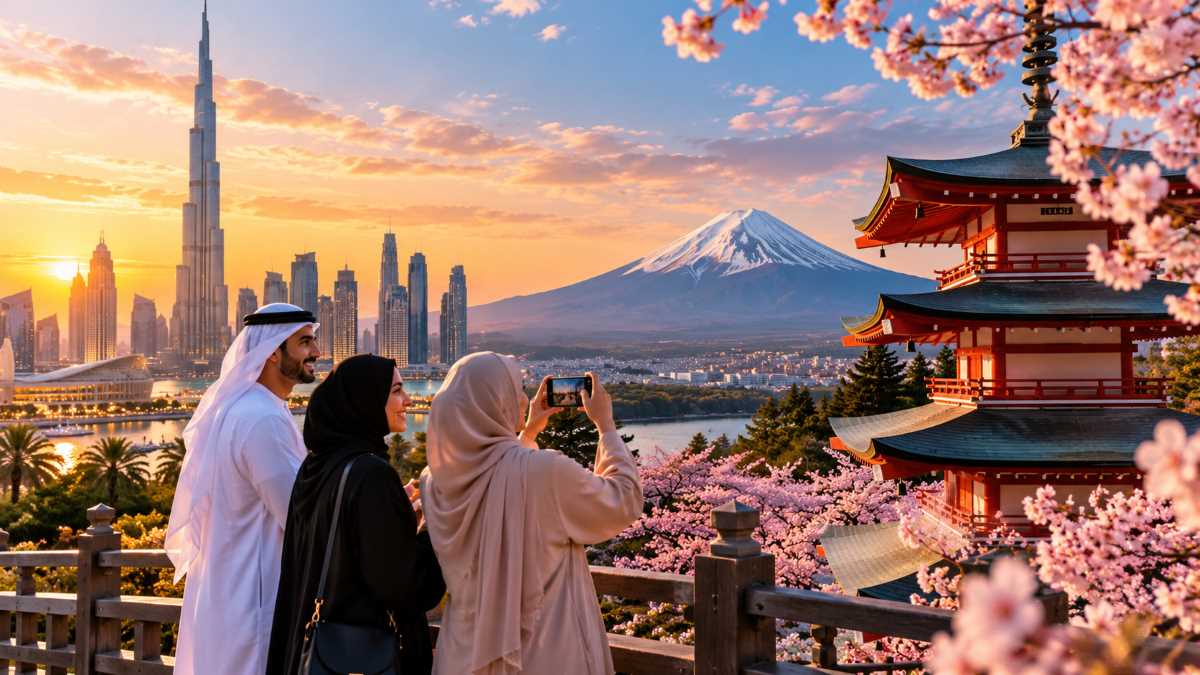
Image generated with Ai
Japan Teams Up With UAE as Tourism Ambitions Surge, while lesser-known destinations emerge as the next big draw for GCC travellers seeking fresh experiences. The latest signals from Japan point to a tourism market entering a new phase, with demand recovering after a difficult period linked to the regional situation in the Middle East. Speaking from the Japan National Tourism Organization Dubai Office, Executive Director Daisuke Kobayashi outlined how Japan plans to build on the momentum of recent years. The focus is not only on attracting first-time visitors. It is also on bringing previous visitors back with experiences they may have missed on their first journey. Meanwhile, Japan is placing greater attention on its 47 prefectures, four distinct seasons, local culture, nature and food. As tourism ambitions surge, the strategy could reshape how GCC travellers view Japan beyond its famous cities. Travel And Tour World explores what this next phase means for Japan, the UAE and the wider GCC market.
Japan Sees Strong GCC Tourism Recovery as JNTO Shifts Focus Towards Regional Destinations
Japan is seeing a strong recovery in travel demand from the Gulf Cooperation Council (GCC) market, despite disruption caused by the wider regional situation in the Middle East.
Advertisement
Advertisement
Speaking about the market, Daisuke Kobayashi, Executive Director of the Japan National Tourism Organization (JNTO) Dubai Office, said demand for travel to Japan was affected during March and April but began recovering rapidly from May. He highlighted July as a key point in that recovery, with GCC travel to Japan reaching about 80% of the previous year, according to the interview.
The figure needs to be read carefully. The interview wording does not establish that GCC arrivals increased by 80%. Rather, Kobayashi described July arrivals using an approximately 80% comparison with the previous year. The important message from the interview is the speed of recovery after the disruption in March and April, rather than an 80% year-on-year growth claim.
Advertisement
Advertisement
The wider data also shows why the GCC has become increasingly important to Japan. JNTO recorded 55,924 visitors from the six GCC countries in 2025, an increase of 25.2% from the previous year. Japan received a record 42.68 million international visitors overall in 2025.
For JNTO, the next challenge is therefore not simply to bring more first-time visitors to Japan. It is also to persuade travellers who have already experienced Tokyo, Kyoto or Osaka to return and explore a different side of the country.
Advertisement
Advertisement
Japan Visitor Market Performance and Middle East Tourism Indicators in 2026
| Indicator | 2026 Figure | Comparison |
|---|---|---|
| Japan international arrivals, January–May | 17,936,000 | -1.1% year on year |
| Japan international arrivals, May | 3,559,900 | -3.6% year on year |
| Middle East arrivals, January–May | 105,600 | +7.3% year on year |
| Middle East arrivals, May | 39,000 | +67.8% year on year |
| Japan international arrivals, July | 3,442,100 | +0.1% year on year |
| July record | 3,442,100 | Highest July total on record |
| GCC arrivals in 2025 | — | About twice the 2019 level |
GCC Demand Recovers After a Difficult Spring
The Middle East remains an important market for Japanese tourism, but the recovery has not been completely linear.
Kobayashi explained that travel demand from the GCC was affected by the regional situation, particularly during March and April. From May onwards, however, the market began to recover rapidly.
Advertisement
Advertisement
This distinction matters. A recovery in travel demand does not necessarily mean that every month will immediately return to previous levels. Aviation capacity, consumer confidence, travel planning and wider regional developments can all affect when people decide to travel.
The July figure mentioned by Kobayashi therefore provides a snapshot of the recovery rather than a standalone measure of the market’s overall performance.
It also comes against a much stronger long-term trend.
JNTO’s official figures show that visitors from the six GCC countries reached 55,924 in 2025. That represented a 25.2% increase over 2024. The organisation has also said that GCC arrivals in 2025 were roughly double the 2019 level.
Advertisement
Advertisement
That trajectory helps explain why the Japanese tourism authorities continue to invest in the region.
The JNTO Dubai Office was established in November 2021 and was the organisation’s first office in the Middle East. Its responsibilities cover the Middle East excluding Israel, as well as Algeria, Egypt, Tunisia, Morocco and Libya.
The office was created partly to develop what JNTO regarded as an underdeveloped but potentially valuable outbound market.
Japan Offers More Than a Single Holiday Experience
One of Japan’s biggest advantages in the GCC market, according to Kobayashi, is the country’s geographical and seasonal diversity.
Japan has 47 prefectures and four distinct seasons. Each region has its own combination of landscapes, food, culture and experiences.
That creates an important difference in how the destination can be marketed.
Advertisement
Advertisement
A traveller visiting Japan for the first time may concentrate on major cities and well-known attractions. A repeat visitor, however, can be offered a completely different itinerary without necessarily leaving the country.
This is central to JNTO’s strategy.
Kobayashi explained that visitors can combine city experiences, shopping and parks with nature, traditional culture and food during the same trip. The diversity also means that returning travellers can find something different depending on the season and region they choose.
For tourism destinations, that repeat-visit potential is particularly valuable.
A destination that can offer several distinct experiences does not have to rely entirely on first-time demand. Instead, it can develop a cycle in which an initial visit introduces the country and later visits encourage deeper exploration.
Japan’s structure lends itself naturally to that approach.
Advertisement
Advertisement
A first trip might focus on Tokyo, Kyoto and Osaka. A later journey could move towards Hokkaido, regional hot spring towns, historic communities, rural landscapes or lesser-known food destinations.
JNTO has already been promoting this idea in the GCC market.
The Next Phase: From First Visits to Repeat Travel
Kobayashi described the first five years of the Dubai office’s work as a period of new market development.
The next five years, he said, represent a second phase focused on expansion and growth.
The objective is not simply to increase the number of people travelling to Japan for the first time. JNTO also wants to encourage people who have already visited to return.
That requires a change in the way Japan is presented.
Advertisement
Advertisement
For a first-time traveller, major destinations provide an accessible introduction to the country. Tokyo, Kyoto and Osaka are recognisable names and offer a relatively straightforward starting point for international visitors.
But once a traveller has visited those places, repeating the same itinerary may offer less incentive for another trip.
Regional tourism can change that equation.
JNTO’s current strategy for the Middle East explicitly identifies growing interest in regional travel and aims to increase first-time visitors while also developing repeat demand. The organisation says it is targeting family travellers as well as higher-income couples, partners and friends in the 20-to-40 age group across the GCC.
The strategy also places emphasis on high-quality experiences and increasing visitor spending, reflecting the relatively high purchasing power of the GCC market.
The interview with Kobayashi fits directly into this broader approach.
Advertisement
Advertisement
Regional Japan Could Become the Next Growth Story
The push towards regional destinations is not simply about adding more names to a travel brochure.
It represents a change in how Japan wants international visitors to understand the country.
Japan is often associated with a handful of globally recognised destinations. Yet its 47 prefectures provide a much broader tourism landscape.
Regional Japan can offer experiences that are difficult to reproduce in the country’s largest cities.
These may include traditional communities, local food, nature, seasonal scenery and different forms of accommodation. The experience can also feel more closely connected to a particular region.
For repeat travellers, that distinction is important.
Advertisement
Advertisement
JNTO has already tested this approach through campaigns promoting destinations such as Hokkaido to GCC audiences. In 2024, arrivals from the six GCC countries reached 44,661, up 34.5% from 2023. JNTO then reported a further increase in GCC arrivals during the first half of 2025.
Hokkaido is a useful example of how regional diversification can work.
The island offers a different travel proposition from the major urban centres. During summer, its cooler climate, open landscapes, food and nature experiences provide an alternative to the heat experienced across much of the Gulf.
JNTO has specifically promoted Hokkaido among GCC travellers as a summer destination, highlighting its natural environment, local cuisine and accommodation.
The same model can potentially be applied to other parts of Japan.
Why Repeat Visitors Matter
The growth of repeat travel could become increasingly important as awareness of Japan rises in the GCC.
Advertisement
Advertisement
When a destination is relatively new to a market, promotional campaigns often need to answer basic questions.
Where should I go?
What can I do there?
How difficult is the journey?
What is the food like?
What type of accommodation is available?
Advertisement
Advertisement
How should I plan the trip?
JNTO’s Dubai Office has been working on this awareness-building process since its establishment. Its official description of the office’s work includes Arabic-language information, social media, advertising, influencer activity and collaboration with local airlines, travel companies, media organisations and other stakeholders.
Once travellers become familiar with the destination, the questions change.
The focus moves from whether Japan is worth visiting to what else there is to experience.
That is where regional destinations become particularly relevant.
A traveller who has already seen the country’s major urban attractions can be introduced to a new itinerary based around nature, food, culture, wellness or seasonal experiences.
Advertisement
Advertisement
This gives Japan more opportunities to remain relevant to the same traveller over several years.
The GCC Market Has Already Shown Its Potential
The long-term numbers provide useful context for the current recovery.
JNTO says the Middle East was previously an almost untapped market for Japan. Following the opening of its Dubai office in November 2021, arrivals from the wider Middle East reached 115.2% of 2019 levels by 2023.
GCC-specific numbers have also continued to strengthen.
In 2024, 44,661 visitors from the six GCC countries travelled to Japan, according to JNTO-related reporting. That was 34.5% higher than in 2023. The number increased again in 2025 to 55,924.
These figures show why Japan sees the GCC as more than a short-term source of visitors.
Advertisement
Advertisement
The market has demonstrated sustained growth over several years.
There are also practical developments supporting greater connectivity. JNTO’s Dubai Office has worked with airlines and travel companies to expand awareness and improve links between the GCC and Japan.
In September 2026, JNTO also announced a memorandum of understanding with Emirates aimed at strengthening joint promotion and expanding travel demand between the Middle East and Japan. The organisation described the Middle East as one of its priority markets.
Such partnerships indicate that market development is continuing beyond promotional campaigns alone.
From Major Cities to Deeper Experiences
The most significant change in Japan’s GCC strategy may ultimately be the move away from a simple checklist approach to travel.
Japan’s major cities remain essential. They are often the first point of contact for international visitors and provide the infrastructure, attractions and cultural experiences that make the destination accessible.
Advertisement
Advertisement
But regional tourism can add depth.
Instead of seeing Japan as a single destination, travellers can increasingly view it as a collection of different journeys.
One trip could focus on contemporary urban culture.
Another could centre on winter landscapes.
A third could explore food and traditional communities.
A fourth could combine nature, wellness and luxury accommodation.
Advertisement
Advertisement
The country does not need to reinvent itself for each visitor. Its geographical diversity already provides much of that variety.
This is the opportunity JNTO is now trying to communicate more strongly to the GCC market.
A Longer-Term Tourism Strategy
Kobayashi’s comments suggest that the next phase of Japan’s GCC tourism strategy will be measured not only by how many people arrive but also by where they travel and whether they return.
That is a more complex objective.
Increasing first-time visitation requires awareness and accessibility. Encouraging repeat travel requires a deeper understanding of what different regions can offer.
It also requires the tourism industry outside the major cities to be ready for international demand.
Advertisement
Advertisement
Hotels, destination management companies, transport providers, restaurants and local tourism organisations all have a role to play.
For the GCC market, this may also mean presenting regional Japan in ways that answer practical questions about travel while highlighting experiences that match the interests of different visitor groups.
JNTO’s existing marketing strategy points towards high-quality experiences, regional discovery and repeat visitation as important elements of its Middle East approach.
The approach is consistent with the message from Kobayashi’s interview: Japan’s appeal does not end after a first visit.
Japan’s GCC Opportunity Is Moving Into a New Phase
The latest recovery in GCC travel demand comes after a period of uncertainty, but the broader trajectory is clearer.
The market has grown substantially since JNTO established its Dubai office in 2021. GCC arrivals reached 55,924 in 2025, while Japan itself recorded a record 42.68 million international visitors.
Advertisement
Advertisement
The July figure cited by Kobayashi should therefore be understood as part of a recovery story, rather than as evidence of an 80% increase.
The bigger development is strategic.
Japan is moving from introducing itself to GCC travellers towards giving them reasons to come back.
That means looking beyond the familiar names and introducing travellers to the wider country.
For JNTO, the next stage is about turning curiosity into first visits, first visits into repeat journeys, and repeat journeys into deeper exploration of Japan’s regions.
With four seasons, 47 prefectures and a wide range of cultural and natural experiences, the destination has considerable room to pursue that strategy.
Advertisement
