
How Are Smart Vacationers In Baldwin County Dodging Steep Lodging Taxes And Seasonal Rate Hikes On Beach Trips In Alabama?

Published
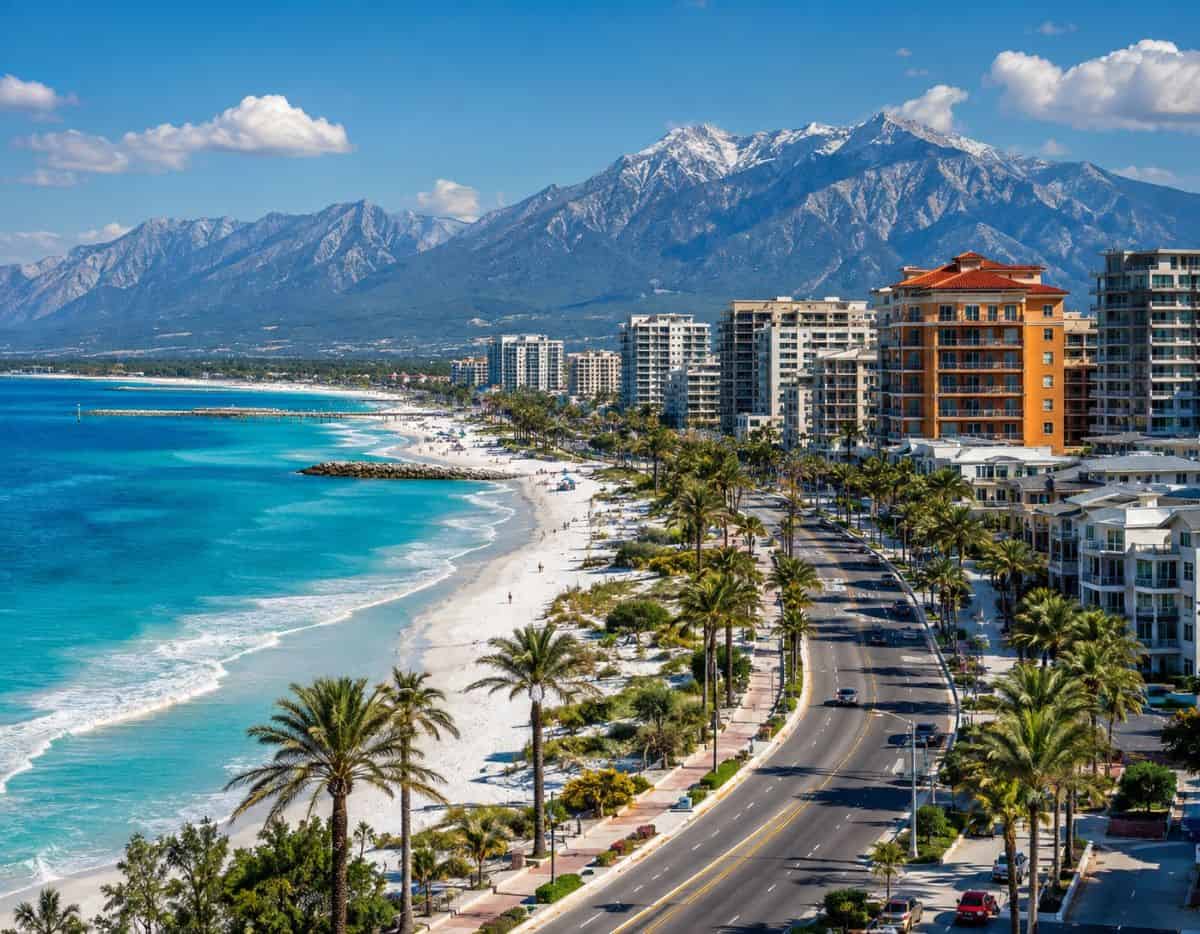
Image generated with Ai
As you cross into coastal Alabama, you begin to feel the magic in the air. Families all along the southern states would vacation at Gulf Shores and Orange Beach to ease the stress of their daily lives at the beach. While there is a constant movement of the ocean, there are changes that happen over time, and in 2025, there were many changes with regard to the price of the beach. There was a 16 percent increase in lodging tax and a subsequent increase in room rates, however, this did not slow the 29 million people visiting Baldwin County beaches with a $24.9 billion economic impact. Driven by the goal to protect their coastal traditions, visitors created a system of shoulder booking travel weeks and secured reservations. This system created travel lanes that that preserved magic of the area to be enjoyed by future generations.
Alabama Coastal Tourism Surge: Baldwin County Record $24.9 Billion Economic Impact Explored
Why are travelers flocking to coastal Alabama despite unprecedented fee adjustments? Baldwin County, home to Gulf Shores and Orange Beach, achieved monumental financial success throughout 2025. Furthermore, official state and municipal data reveals that over 29 million visitors generated a staggering $24.9 billion in economic impact across Alabama. Consequently, tourists managed stacked 16% effective lodging taxes alongside 8% to 10% sales taxes. Furthermore, visitors adapted quickly by choosing shoulder seasons to optimize vacation spending. Therefore, local government reinvestments continuously transformed these record tax revenues into vital public infrastructure, enhanced beach nourishment, and emergency municipal services.
Coastal Alabama has solidified its position as a powerhouse within the southern travel sector. Driven by unmatched white-sand shorelines and expansive coastal amenities, the region attracted millions of visitors throughout 2025 while navigating structured municipal fee models.
Advertisement
Advertisement
What factors drove Baldwin County to lead Alabama’s unprecedented $24.9 billion tourism record throughout 2025?
Advertisement
Advertisement
Coastal Alabama solidified its status as an economic powerhouse throughout 2025, capturing a massive share of state travel revenues. Official figures from the Alabama Tourism Department confirmed that total statewide travel and hospitality spending reached $24.9 billion, supported by an influx exceeding 29 million visitors. Within this booming landscape, Baldwin County anchored by the coastal cities of Gulf Shores, Orange Beach, and the inland hub of Foley remained the central driver of coastal vacation demand.
The region’s dominance stemmed from aggressive long-term promotional campaigns alongside durable domestic demand for Gulf Coast beach destinations. Statewide, visitor spending generated $1.4 billion in total state and local tax revenue, with Baldwin County’s localized lodging district contributing a major portion of these vital public funds. Despite broader economic pressures, the region’s white-sand beaches successfully retained high visitor volume.
How did cumulative lodging taxes and local sales levies combine to raise overall costs for visitors in Gulf Shores and Orange Beach?
Navigating the financial realities of a coastal getaway required tourists to pay strict stacked taxes managed by state and local agencies. For instance, when booking short-term rentals, beachfront condominiums, or hotels in Gulf Shores and Orange Beach, visitors incurred a cumulative 16.0% effective lodging tax rate on room fees, mandatory cleaning charges, and parking passes.
In addition to lodging taxes, tourists encountered an 8.0% to 10.0% total sales tax on dining, entertainment, and retail goods. This stacked structure comprised the 4.0% Alabama State Sales Tax, a 3.0% Baldwin County Sales Tax, and municipal additions ranging from 1.0% to 3.0% (such as the 3.0% municipal rate enforced within Gulf Shores corporate limits).
Advertisement
Advertisement
What impact did federal per diem rate surges have on peak summer lodging pricing across Baldwin County?
Official business and leisure travel pricing baselines reflected sharp seasonal adjustments throughout FY 2025. Data published by the U.S. General Services Administration (GSA) highlighted dramatic price swings across the calendar year for Gulf Shores and broader Baldwin County. Rates ranged from $134 per night during off-peak months up to $216 per night in summer peak.
Because the 16.0% lodging tax applies directly to base room rates alongside mandatory cleaning fees, peak summer travelers faced compound price growth. Consequently, a standard summer stay carried higher fixed overhead costs before accounting for daily retail sales taxes.
How did vacationers alter their booking behaviors and travel timing to navigate 2025 price adjustments?
Faced with 16% lodging taxes and summer rates peaking at $216 per night, visitors proactively adjusted their vacation habits. Data indicates a distinct shift toward shoulder-season travel, with a larger segment of tourists booking trips during March through May ($163 per night) or September through October ($134 per night) to lower overall expenses.
Advertisement
Advertisement
Simultaneously, travelers scrutinized secondary line-item costs on short-term rentals. Because taxes apply to cleaning fees and amenity access, guests favored direct booking channels over third-party platforms to avoid added fees. Furthermore, average lengths of stay shifted slightly shorter, allowing families to enjoy coastal experiences while keeping total tax burdens within budget.
In what ways were local tax dollars reinvested by the Baldwin County Commission to upgrade coastal infrastructure?
Rather than absorbing revenues into general administrative funds, official municipal allocations directly redirected tourist tax dollars back into community infrastructure. The Baldwin County Commission, alongside leadership in Gulf Shores and Orange Beach, deployed lodging tax yields to maintain high-traffic public corridors and protect coastal natural resources.
Key funding allocations supported extensive beach nourishment projects, coastal erosion controls, expanded emergency services, and road network enhancements to ease summer traffic bottlenecks. Additionally, municipal grants financed regional parks, public trail extensions, and cultural facilities. This structured reinvestment cycle ensured that high visitor volumes directly contributed to preserving the environment and improving resident quality of life.
How did non-traditional sports tourism generate over $86 million across Foley, Gulf Shores, and Orange Beach to counteract seasonal price drops?
Advertisement
Advertisement
Sports tourism emerged as a crucial economic driver in maintaining steady visitor volume and high lodging occupancy outside of peak summer weeks. Foley Sports Tourism hosted 85 major events during the year, drawing 253,177 attendees to the inland hub. This volume generated $44.5 million in business sales and $11 million in direct food and beverage spending while supporting 330 full-time jobs within the municipality.
Across the wider coastal region, Coastal Alabama’s Beaches Sports & Events managed over 127 tournaments and athletic competitions. These events produced 107,596 lodging room nights, delivering a total economic impact between $71.24 million and $86.8 million. Major multi-week athletic competitions proved instrumental in fueling this output. The Perfect Game Gulf Coast Baseball World Series alone accounted for 31,783 room nights and $21.04 million in economic impact. Similarly, the USSSA Fastpitch Championship contributed 25,190 room nights and $16.68 million to the local economy.
Why did visitor spending on lodging rentals reach a record $923 million across Gulf Shores and Orange Beach despite higher effective municipal taxes?
Despite elevated effective municipal tax levies, visitor demand for coastal accommodations remained exceptionally durable throughout 2025. Gross lodging rental revenues across Gulf Shores, Orange Beach, and Fort Morgan reached a record $923 million. This marked a clear increase from the $871 million recorded in 2024 and more than doubled the total rental volume recorded a decade prior.
Parallel to accommodation revenue growth, total retail spending across coastal Baldwin County rose to $1.42 billion in 2025, up from $1.41 billion in the previous year. The influx of traveler spending continued to anchor local labor markets. The overnight accommodation sector generated 22% of total statewide travel-related jobs. Meanwhile, eating and drinking establishments proved to be the largest employer within the sector, accounting for 53% of direct tourism employment.
Advertisement
Advertisement
What major luxury hotel developments and infrastructure investments transformed Gulf Shores and Orange Beach during 2025?
Substantial private and public capital investments underscored high institutional confidence in the long-term growth of coastal Baldwin County. In Gulf Shores, the $141 million, 257-suite Embassy Suites Gulf Beach Resort officially opened, adding premium beachfront capacity to the municipal hotel inventory.
In Orange Beach, ground was broken on the $350+ million Margaritaville Resort located across from The Wharf complex. Spanning 80 acres along the waterfront, the resort design includes 300 condominium units, luxury cottages, and private waterfront villas. Additionally, to expand non-coastal visitor infrastructure, a $7 million, 56-acre sports and baseball complex was unveiled within the Eastern Shore Center area, diversifying regional recreational assets.
How did new commercial flight connections at Gulf Shores International Airport expand visitor demographics beyond drive-in markets?
The operational launch of commercial air service via Allegiant Air transformed Gulf Shores International Airport into an active regional flight hub. This development fundamentally altered the destination’s visitor profile by reducing historical reliance on regional drive-in feeder markets.
Advertisement
Advertisement
Official passenger surveys revealed that 43% of air arrivals were visiting Alabama’s beach cities for the very first time. Enhanced accessibility contributed to broader economic momentum across the region, with the combined Mobile-Baldwin regional Gross Domestic Product (GDP) expanding by 20% over a two-year period to reach $13.4 billion.
How did tourist tax generation relieve the financial burden on residents across Baldwin County and the state of Alabama?
Rapid economic expansion coincided with accelerated residential growth, positioning Baldwin County as the sixth fastest-growing metropolitan area in the United States. Over two decades, the county experienced a 66% population increase, expanding its permanent resident base past 260,000 individuals.
Traveler spending provided essential tax relief for these expanding communities, generating $1.4 billion in total state and local tax revenues throughout 2025. This visitor-funded revenue offset municipal costs, effectively saving every Alabama household an estimated $725 annually in local taxes. Furthermore, statewide travel supported 255,780 jobs, with one direct job created for every $140,735 spent by vacationers.
The Final Verdict
Advertisement
Advertisement
Coastal Alabama is more than numbers. There is the laughter of kids as they make their sandcastles on Orange Beach. There is the peace of watching dolphins on Gulf Shores. There is family enjoyment of a meal of fresh Gulf seafood after a long day. The numbers from 2025 will be remembered, but the real heart of Baldwin County is in the people who come back. They return even with the growing costs and lodging tax. Families will make the sacrifice to keep their family traditions. They will adjust their time off and vacation planning to come enjoy the coast. The taxes collected from the tourists safeguard Alabama’s beautiful, undisturbed coastline and support essential services for the local communities. As those tourist taxes come back into the community, they preserve coastal Alabama’s beauty providing a peaceful sanctuary for future generations.
Frequently Asked Questions
What was the total effective lodging tax rate in Gulf Shores and Orange Beach during 2025?
Visitors paid a cumulative 16.0% lodging tax rate within the corporate city limits of Gulf Shores and Orange Beach. This total consists of the 4.0% Alabama state tax, 2.0% Baldwin County lodging tax, and 10.0% municipal tax. Properties in police jurisdictions carried an 11.0% rate.
How much was the total sales tax on dining and retail in Baldwin County?
Advertisement
Advertisement
Total sales tax on retail purchases and dining ranged between 8.0% and 10.0%. This combined the 4.0% state sales tax, 3.0% Baldwin County sales tax, and 1.0% to 3.0% municipal sales tax.
What were the official GSA per diem lodging rates for Baldwin County in 2025?
Official federal lodging baselines were set at $134 per night for off-peak months (Oct–Feb, Aug–Sep), rising to $163 per night during spring (Mar–May), and peaking at $216 per night in summer (June–July).
How were tourist tax collections utilized by local government agencies?
Tax yields collected by the Baldwin County Commission and municipal finance departments funded public infrastructure, beach restoration projects, emergency services, traffic management improvements, and local community grants.
Advertisement
