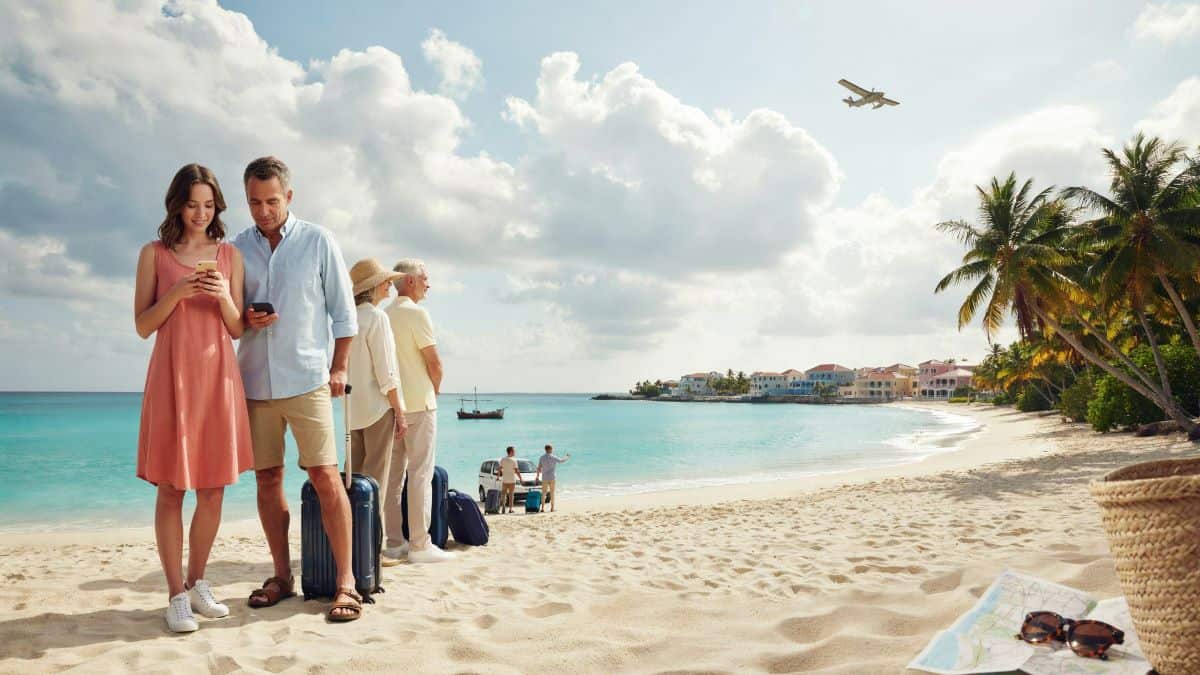
Image generated with Ai
Barbados is fighting an emerging danger to its tourism industry – misinformation about safety for travelling to the island outrunning proper and official travel advice. Barbados Tourism Marketing Inc. (BTMI) came in after inaccurate statements were made online regarding the state of Barbados. The US Embassy in Barbados said it had not raised its advisory and remained at the “Exercise Normal Precautions” level for Barbados. Canada continues to recommend normal security precautions, while the UK has no advice against travel to the island.
The issue reaches far beyond social media. The US, Canada and the UK are vital Barbados tourism markets. Their official travel advisories can influence visitor confidence, insurance decisions and travel-company assessments. That gives accuracy around government warnings real economic importance.
Advertisement
BTMI publicly challenged inaccurate information circulating online and urged travellers to check primary government sources before changing their plans.
The US Embassy helped clarify the central issue: the American advisory had not changed.
Advertisement
Advertisement
The verified position is:
This distinction matters.
Foreign governments routinely warn travellers about crime, health risks and personal security without telling them to avoid a country. Problems emerge when individual warning sentences are removed from that wider context and presented online as evidence of a new travel ban or upgraded advisory.
For Barbados, correcting that distinction quickly protects both travellers and destination credibility.
The US Department of State continues to place Barbados at Level 1, the lowest category in its four-level advisory system.US advisory level Official meaning Level 1 Exercise Normal Precautions Level 2 Exercise Increased Caution Level 3 Reconsider Travel Level 4 Do Not Travel
Washington describes Barbados as generally safe for travellers while warning that petty and opportunistic crime can occur, including in visitor areas.
That is materially different from telling Americans to reconsider or cancel travel.
The current evidence therefore does not support claims that the United States has issued a new high-risk warning for Barbados.
This makes primary-source verification essential whenever dramatic safety claims appear online.
Canada maintains its advice to take normal security precautions in Barbados.
Ottawa does, however, warn travellers about violent crime, including gun-related incidents, armed robbery, sexual assault, burglary and gang activity.
The UK Foreign, Commonwealth & Development Office also identifies risks including armed robbery, gang-related shootings, carjackings and sexual assault. British travellers are advised to secure accommodation, use recognised transport and take care in isolated areas.
Neither government currently tells ordinary tourists to avoid Barbados.Country Current Barbados position Advice against travel? United States Level 1 – Exercise Normal Precautions No Canada Take normal security precautions No United Kingdom Standard safety guidance No
The practical message is balanced: Barbados has real safety concerns, but its official international travel status remains comparatively low risk.
Official crime figures explain why foreign governments continue to include strong safety language.
Barbados recorded 6,063 crimes in 2025, down from 6,301 in 2024, a decline of about 4%.
Yet serious offences moved higher.Crime measure 2024 2025 Change Total recorded crime 6,301 6,063 About -4% Major crimes against the person 455 641 +41% Firearm-related crime 400 638 +60% Overall crime clearance rate — 64% —
Robbery accounted for around 42% of major crimes against the person and increased 78% year on year.
Authorities solved 3,851 of the 6,063 crimes recorded during 2025.
These numbers deserve attention, but they require careful interpretation. They are national crime statistics, not figures measuring offences against international tourists.
Using them as proof of a tourist-specific crime surge would therefore overstate what the official evidence actually shows.
The misinformation dispute has arrived at a sensitive moment for Barbados tourism.
The Central Bank of Barbados reported that tourism performance during the first half of 2026 fell below earlier expectations. Higher air fares and reduced airline capacity placed particular pressure on the US market.
The picture for the second half of 2026 is more encouraging, but sharply divided by source market.July–December 2026 tourism indicator Change from 2025 Overall forward bookings +3.7% UK forward bookings +10% Overall planned seat capacity +3% Canada seat capacity +13% UK and Ireland seat capacity +9% US seat capacity -8%
US forward bookings remain slightly behind 2025.
That makes the American market particularly important to watch. However, there is no official evidence showing that the misinformation caused weaker US bookings or the 8% reduction in planned seat capacity.
The Central Bank points instead to factors such as air fares and existing capacity constraints.
The stronger analysis is that misleading safety information surfaced while Barbados was already working to protect momentum in an important but softer market.
Accuracy is also important when reporting Barbados visitor statistics.
The Barbados Statistical Service revised some arrival data after technical issues affected immigration records between December 2024 and March 2025.
Figures originally showing 321,423 stay-over visitors across the affected period were revised to 293,350, a reduction of 8.73%.
Updated official statistics record approximately 707,046 stay-over arrivals during 2025.
The lesson extends beyond statistics. Tourism reporting can change materially when new official information appears.
For publishers and travellers alike, the safest approach is simple:
Official travel advisories matter because they can trigger real-world decisions.
The UK government says airlines and other travel companies may take FCDO advice into account when assessing changing international conditions.
Travel advice can also affect:
Insurance is particularly sensitive. Some policies may not provide cover when travellers knowingly visit places against official government advice.
This explains why a false claim about an advisory upgrade can be damaging even if the underlying government position never changed.
It can create the impression of a formal risk escalation before travellers reach the original source.
Barbados already treats tourism security as more than physical protection.
The Ministry of Tourism and International Transport includes cyber protection, health security, crisis management, disaster response, destination reputation and visitor confidence within its wider approach to tourism resilience.
The country also operates a Tourism Emergency Operations Centre supported by a broader emergency-management network involving tourism officials, police, health agencies, immigration, foreign affairs, airport and seaport authorities, airlines and disaster-management bodies.
That structure reflects a major change in modern tourism.
A destination emergency no longer has to begin with a hurricane, crime incident or health outbreak. It can also begin with incorrect information that spreads quickly enough to alter traveller perception.
Travellers should treat dramatic safety claims cautiously unless they appear on an official government platform.
Before travelling to Barbados:
The current evidence supports a clear conclusion.
Barbados faces genuine public-safety challenges that travellers should understand. But the US has not moved Barbados above Level 1, Canada continues to recommend normal precautions and the UK does not advise against travel.
For Barbados, the wider issue is now strategic. Canada, the UK, the United States and other overseas markets do more than supply visitors. Their government advisories help shape global perceptions of destination risk.
That makes fast, accurate communication increasingly important to Barbados tourism. In a digital travel market where misinformation can travel globally within minutes, protecting the credibility of official information has become part of protecting the destination itself.
In conclusion, Canada, UK and more continue to shape Barbados travel as safety misinformation sparks official advisory pushback and puts destination confidence under closer scrutiny. The reason is clear: government travel advice can influence how visitors assess risk, insurance and booking decisions. With no major advisory escalation from the US, Canada or UK, Barbados is reinforcing verified information while addressing genuine safety concerns. For the island, protecting trust is now as important as protecting its tourism appeal.
Advertisement
Advertisement
Advertisement











Wednesday, September 2, 2026

Tuesday, September 1, 2026

Wednesday, September 2, 2026

Wednesday, September 2, 2026

Tuesday, September 1, 2026

Tuesday, September 1, 2026

Wednesday, September 2, 2026

Wednesday, September 2, 2026