

Spain and More Drive Europe’s Tourism Revolution With Seamless Cross-Border Connections

Published
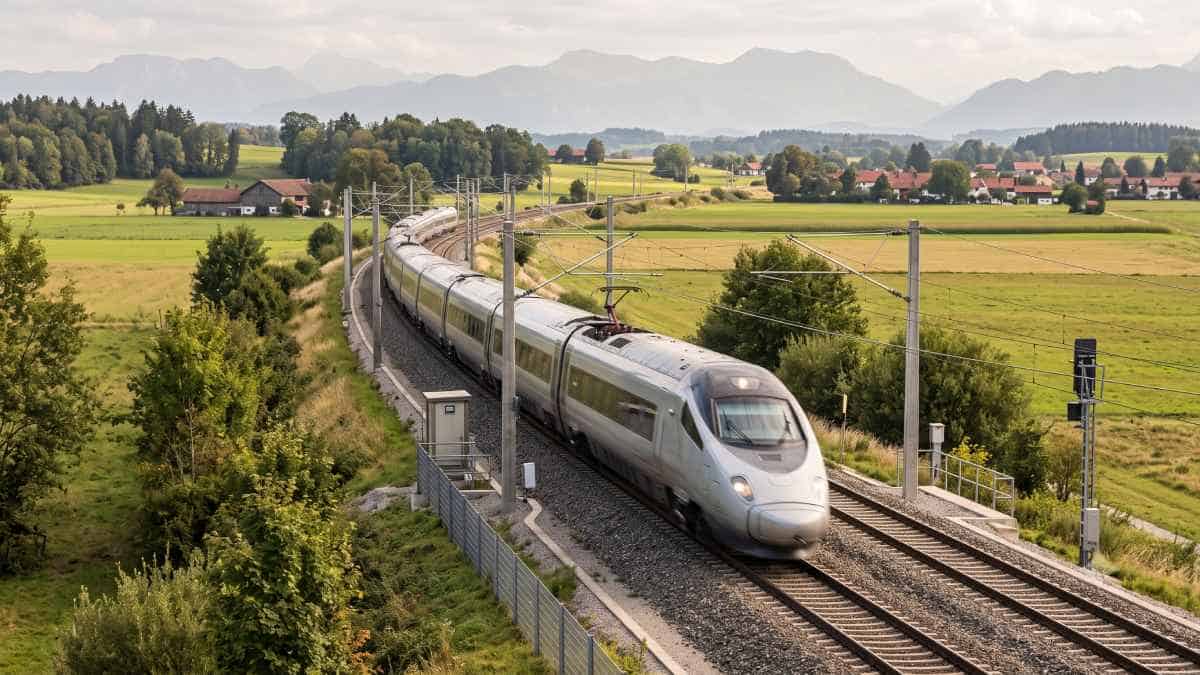
In both Southwestern and Southeastern Europe, a defining transition is taking place in tearing down traditional physical barriers through multi-modal tourism transport corridors. The authorities in Madrid, Lisbon, Athens and the rest of Western Balkans are coordinating high speed railway links, shipping routes and air corridors to create a seamless transportation network. With the removal of cross-border complications through efficient clearance and intermodal systems, these connections are changing traffic patterns and opening up potential regional economies. Through rail corridors of the Iberians to transit networks of the Balkans, the investments in strategic infrastructure have brought about an interconnected continent through an undeniable standard in efficient international transport of passengers.
Background: The Structural Evolution of European Intermodal Transit
For decades, European passenger transport and leisure travel developed along distinct national, hub-and-spoke trajectories that left the outer peninsular peripheries functionally segregated and operationally fragmented. Southwestern Europe and Southeastern Europe, despite attracting vast volumes of global tourist arrivals, operated under disconnected infrastructure paradigms. Travellers navigating the Iberian Peninsula encountered differing rail gauges, unintegrated booking platforms, and protracted cross-border transfer intervals. Concurrently, transit throughout the Western Balkans and across the external frontiers of the European Union faced acute infrastructural deficits, protracted customs queues, and limited point-to-point transit alternatives.
Advertisement
Advertisement
This historical fragmentation is undergoing systematic structural reform driven by the revised Trans-European Transport Network (TEN-T) regulatory framework under Regulation (EU) 2024/1679. This legislative standard transformed European transport policy by shifting the focus from isolated national asset modernisations to integrated, transnational corridors designed to deliver high-capacity passenger continuity between rail, civil aviation, and maritime networks. Backed by European decarbonisation objectives and evolving traveller behaviours—including extended-stay leisure patterns and the spatial decentralisation of remote workers—governments across the Mediterranean and the Balkan interior are aligning their transport strategies.
The structural convergence of Southwestern Europe—anchored by Spain, Portugal, and their cross-strait transit links to Morocco—and Southeastern Europe—spanning Greece, Bulgaria, Romania, and the Western Balkan candidate economies—presents complementary models of cross-border integration. In the west, capital-intensive engineering, heavy rail gauge harmonisation, and combined air-rail ticketing consortia are linking major international gateways with regional hinterlands. In the east, administrative rationalisation, the Western Balkans Green Lanes initiative, and regional digital mobility frameworks are dissolving procedural delays. Together, these coordinated initiatives illustrate how intergovernmental coordination, institutional financing, and digitised border regimes can transform disjointed transit stops into unified multi-modal tourism corridors.
Advertisement
Advertisement
Pillar I: The Iberian-Maghreb and Southwestern Europe Transit Corridor
The Southwestern European transit ecosystem relies on the structural integration of long-haul aviation arrivals, heavy high-speed rail corridors, and cross-Mediterranean maritime passages. By linking international aviation gateways in Madrid and Lisbon with the Atlantic Corridor rail network, passenger traffic moves toward southern ports such as Algeciras and Tarifa, where ferry links connect directly with Morocco’s maritime infrastructure at Tangier-Med.
High-Speed Rail and Air-Rail Interoperability along the Atlantic Corridor
The historical barrier separating the rail networks of Spain and Portugal is being addressed under the TEN-T Atlantic European Transport Corridor programme. Historically characterised by distinct national railway strategies, incompatible signalling equipment, and missing physical links, travel between Madrid and Lisbon has relied predominantly on road vehicles and short-haul flights. In accordance with Regulation (EU) 2024/1679 and European Commission Implementing Decision (EU) 2025/1874, European authorities established a binding mandate requiring the completion of the Madrid–Lisbon high-speed rail axis by 2034.
Advertisement
Advertisement
The operational backbone of this railway integration is the cross-border Évora–Elvas–Badajoz rail link. Infraestruturas de Portugal completed structural works along the newly constructed 88-kilometre Évora–Elvas section, conducting 200–250 km/h dynamic testing to validate cross-border track and overhead traction performance. By integrating the Portuguese network with the Spanish high-speed line constructed by Administrador de Infraestructuras Ferroviarias (ADIF) through Badajoz and Mérida, the corridor will progressively reduce overland transit durations between Lisbon and Madrid from over nine hours to approximately three hours upon complete operational commissioning.
| Corridor Infrastructure Project | Participating Jurisdictions | Infrastructure Focus | Current Operational Status |
| Évora–Elvas High-Speed Rail Link | Portugal, Spain | 88 km new rail platform, 250 km/h mixed traffic | Dynamic operational testing underway |
| Madrid–Lisbon Atlantic Corridor Axis | Spain, Portugal, EU | High-speed heavy rail cross-border integration | Mandated for completion by 2034 |
| Combined Air-Rail Ticketing Platforms | Spain, Portugal | Intermodal airline-rail integrated bookings | Active multi-modal commercial sales |
| SECEGSA Fixed Link Project | Spain, Morocco | Subsea rail tunnel across Camarinal threshold | Detailed geotechnical and seismic feasibility |
| Tabanovce–Preševo Border Modernisation | North Macedonia, Serbia | One-Stop-Shop common crossing infrastructure | Fully operational joint border facility |
| Systematic Exchange of Electronic Data+ | Western Balkans, EU | Real-time electronic customs and transit data | Active deployment across Green Lanes |
| Port Cold-Ironing Electrification (AFIR) | Spain, Portugal, Croatia | Shore-side high-voltage electricity berths | Infrastructure rollout towards 2030 mandate |
In parallel with track construction, transport ministries in Madrid and Lisbon have prioritised the operational consolidation of aviation and high-speed rail networks. National air carriers and rail operators—such as Iberia in partnership with Renfe under the Train & Fly product, and TAP Air Portugal cooperating with Comboios de Portugal (CP)—have deployed integrated intermodal booking architectures. Under these single-ticket ticketing frameworks, non-EU international long-haul arrivals entering Madrid-Barajas or Lisbon-Humberto Delgado airports transfer directly to high-speed rail lines under unified passenger rights, eliminating baggage re-checking procedures and missed-connection liability. This arrangement positions Madrid and Lisbon not merely as terminal tourist centers, but as intermodal springboards directing travel demand across Extremadura, the Alentejo, and Andalusia.
Digital Border Clearance Architectures and Schengen-Adjacent Processing
The management of non-EU tourist entries into Southwestern Europe has undergone administrative digitisation. Operating alongside the European Union’s biometric Entry/Exit System (EES) and the European Travel Information and Authorisation System (ETIAS), Spanish and Portuguese immigration agencies have established streamlined transit arrangements designed to reduce border processing times. By piloting pre-clearance digital transit passes tailored for business delegates and high-yield travellers from Latin America and North Africa, border police forces are automating preliminary documentation review before physical arrival at ports of entry.
These digital procedures connect airline and ferry passenger name records (PNR) directly to domestic railway scheduling databases. As international travellers transit through primary airports or arrive via maritime services along the southern Iberian coast, their clearance credentials are verified through centralised platforms. This process reduces physical processing delays at border control posts, facilitating transfers between long-haul flights, high-speed rail connections, and coastal excursions.
Trans-Gibraltar Connectivity and Bilateral Green Investment Syndicates
Southwestern Europe’s intermodal transit design extends across the Strait of Gibraltar to interface with Morocco’s infrastructure. Stimulated by the joint hosting responsibilities of the 2030 FIFA World Cup shared by Spain, Portugal, and Morocco, bilateral transport planning has intensified between Madrid and Rabat. Working through the public engineering company Sociedad Española de Estudios para la Comunicación Fija a través del Estrecho de Gibraltar (SECEGSA) under the Spanish Ministry of Transport and Sustainable Mobility, alongside Morocco’s Société Nationale d’Études du Détroit de Gibraltar (SNED), state engineers have accelerated geotechnical studies examining the Camarinal threshold.
Engineering assessments carried out by technical consultancies indicate that while a completed subsea railway tunnel will require a construction timeframe extending to 2035–2040, current capital allocations focus on aligning high-capacity roll-on/roll-off passenger (Ro-Pax) ferry terminals with high-speed railway services. Ports such as Algeciras and Tarifa are undergoing structural upgrades to integrate passenger flows directly into the Spanish high-speed rail network, matching complementary transit upgrades at the Port of Tangier Med.
Advertisement
Advertisement
To anchor these investments, municipal and regional development syndicates across Madrid, Lisbon, and Seville have established blended-finance funding mechanisms. These investment syndicates direct institutional capital into zero-emission transit hubs, creating passenger interchanges that link train stations, electrified public transit, cruise terminals, and peripheral eco-resorts. Backed by framework loans from the European Investment Bank and national recovery instruments, these green-transit hubs incorporate high-output electric vehicle charging parks, solar-powered terminal infrastructure, and micro-mobility facilities, reducing emissions across the transit chain.
Pillar II: Southeastern Europe’s Balkan Open Skies and Digital Nomad Blocs
In Southeastern Europe, transit integration connects the external Schengen borders with the Western Balkan interior. Passenger movements flow across the shared borders of Greece, Bulgaria, and Romania into candidate states including Albania, North Macedonia, and Serbia. The transit structure combines streamlined One-Stop-Shop border infrastructure, synchronized nomad visa arrangements, and regional point-to-point flight routes connecting regional cultural landmarks.
Transport Facilitation and Joint Border Streamlining in the Western Balkans
Southeastern Europe’s transit market has historically faced complex border mechanics. For travellers moving through the Western Balkans—specifically Albania, North Macedonia, and Serbia—customs checkpoints and non-aligned entry controls created lengthy transit delays. To mitigate these transit barriers, regional administrations established coordinated processing agreements under the Open Balkan initiative, structured to align with the Transport Community Treaty and Central European Free Trade Agreement (CEFTA) standards.
| Border Crossing Point | Adjoining Sovereign States | Facility Type | Operational Improvement Delivered |
| Tabanovce – Preševo | North Macedonia – Serbia | One-Stop-Shop Joint Border Post | Unified customs and police check; halved wait times |
| Blace – General Janković | North Macedonia – Kosovo | Integrated Control Facility | Synchronised passenger processing lanes |
| Kulata – Promachonas | Bulgaria – Greece | Intra-EU Joint Inspection Hub | Streamlined clearance across Eastern Schengen border |
| Giurgiu – Ruse | Romania – Bulgaria | Intermodal Bridge Checkpoint | Multi-modal rail/road Danube border control |
| Kakavia | Albania – Greece | Bilateral Transit Point | Implementation of Green Lane priority clearances |
The most prominent operational reform is the establishment of One-Stop-Shop border facilities, exemplified by the Tabanovce–Preševo crossing linking North Macedonia and Serbia. Rather than subjecting buses, commercial passenger shuttles, and private cars to consecutive, duplicated inspections, customs and border police agencies operate within a consolidated checkpoint. Monitored by the Transport Community Permanent Secretariat, these joint crossing operations—supported by the electronic data exchange protocols of the SEED+ network—have reduced seasonal wait times for tour buses and regional transit, saving thousands of cumulative transit hours.
The expansion of these Green Lanes to border interfaces between the Western Balkans and neighbouring EU member states (Greece, Bulgaria, and Romania) represents a major regional milestone. Formally approved at high-level regional summits, this roadmap ensures that international travel agencies can schedule multi-country bus and rail itineraries across the Western Balkans with predictable timetables, transforming previously arduous cross-border journeys into viable transit corridors.
Co-ordinated Digital Nomad Frameworks and Trans-Balkan Mobility
The regional economic profile of Southeastern Europe is evolving due to the growing presence of remote professionals, digital nomads, and extended-stay cultural visitors. To capture this segment, regional governments have enacted legislative reforms modernising residency options. Greece, Romania, and Bulgaria established formal digital nomad visa frameworks, introducing legal and fiscal mechanisms to accommodate non-EU remote workers.
Advertisement
Advertisement
| Jurisdiction | Primary Legal Authority / Framework | Minimum Verified Income | Initial Duration | Territorial Mobility Rights |
| Greece | Law 4825/2021 Digital Nomad Framework | €3,500 monthly net | 12 months (extendable) | Full Schengen mobility access |
| Romania | Law No. 22/2022 Remote Worker Scheme | €3,634 monthly gross | 12 months (extendable) | Schengen air and sea border access |
| Bulgaria | Migration Directorate Nomad Rules | Certified remote income | 12 months (extendable) | Schengen air and sea border access |
| Albania | Unique Permit Framework for Remote Work | Stable external income | 12 months (extendable) | National residence; regional agreements |
| Serbia | Foreigners Act Remote Employment Route | Documented remote funds | 12 months (extendable) | National residence; Open Balkan access |
Following the entry of Bulgaria and Romania into the Schengen area for air and maritime transit, home affairs ministries in Athens, Sofia, and Bucharest initiated formal consultations with non-EU Balkan counterparts to coordinate digital nomad mobility. These synchronised policies allow remote professionals holding registered nomad status within Greece, Romania, or Bulgaria to obtain pre-approved, streamlined entry permissions for regional visits to Serbia, Albania, and North Macedonia. By mitigating bureaucratic hurdles, the initiative creates an integrated extended-stay travel circuit linking urban hubs like Sofia, Belgrade, and Thessaloniki with scenic areas in Albania and North Macedonia.
Regional Aviation Liberalisation and Heritage Corridor Integration
Under the European Common Aviation Area (ECAA) Agreement, the Western Balkan states participate alongside EU members in an open civil aviation framework based on unified safety, security, and economic rules. Historically, however, regional air routes remained heavily centralised between national capitals and major Western European transit hubs, leaving regional UNESCO World Heritage areas isolated by complex overland terrain.
To bridge these gaps, regional air carriers and private aviation partnerships have established point-to-point domestic and cross-border flight links connecting cultural and historical destinations. Direct routes connecting Ohrid, Sofia, Thessaloniki, and Belgrade bypass hub airports to serve secondary cultural centers directly. These regional flight paths are aligned with the Western Balkans Sustainable and Smart Mobility Strategy, ensuring arriving air passengers can connect directly to intercity coach and passenger rail services through modernised multi-modal transit terminals.
Pillar III: Maritime and Inland Waterway Multi-Modal Corridors
Multi-modal European integration extends beyond overland networks to encompass maritime routes and inland waterways. By connecting Mediterranean coastal operations with the Danube River system, this multi-modal corridor links western ports such as Valencia and Barcelona to Adriatic ports like Split and Kotor, and across inland waterways via Belgrade and Ruse to the Black Sea terminal at Port Constanța.
The Mediterranean-to-Danube Transnational Logistics Alignment
Under the European Union’s TEN-T corridor framework, maritime links in the Mediterranean and Atlantic basins interface directly with the inland navigation networks of the Rhine–Danube Corridor. This multimodal network establishes a continuous transport axis stretching from Southwestern Europe across the Mediterranean into the Adriatic Sea, and through the Danube River system to the Black Sea.
Under this corridor alignment, inland waterways and maritime corridors serve as integrated passenger and freight routes running alongside parallel road and rail lines. Maritime ports in Albania (Durrës) and Montenegro (Bar) have been incorporated into Core TEN-T network planning, joining major Danube inland ports such as Novi Sad, Belgrade, Ruse, and Constanța. This infrastructure network allows river cruise operators, short-sea ferry networks, and rail providers to coordinate seasonal schedules, creating unified itineraries spanning the continent from the Atlantic coastline to the Danube delta.
Advertisement
Advertisement
Mandated Port Electrification and Unified Cruise-and-Rail Protocols
Decarbonising marine transit is critical to maintaining high-density tourism along these sensitive maritime and river environments. Under Regulation (EU) 2023/1804—the Alternative Fuels Infrastructure Regulation (AFIR)—and the complementary FuelEU Maritime standards established under Regulation (EU) 2023/1805, the EU established binding decarbonisation mandates across all major TEN-T maritime and inland ports. Under these directives, by 1 January 2030, at least 90% of all port calls made by passenger cruise vessels and container ships over 5,000 gross tonnage must connect to Onshore Power Supply (OPS), commonly termed cold-ironing, to meet their electrical needs from the onshore grid while berthed.
| European Legislative Instrument | Binding Implementation Target | Mandated Maritime and Port Target |
| Regulation (EU) 2023/1804 (AFIR) | 1 January 2030 Mandate | 90% OPS shore-power compliance for commercial port calls |
| AFIR Regulatory Review Milestone | 31 December 2026 Target | Assessment of heavy-duty and maritime alternative fuels rollout |
| Regulation (EU) 2023/1805 (FuelEU Maritime) | Staged GHG Intensity Caps | Mandatory reduction of onboard greenhouse gas intensity |
| FuelEU Maritime Port Mandate | 1 January 2035 Target | Zero-emission berthed ops across all equipped EU ports |
| TEN-T Regulation (EU) 2024/1679 | 2030 Core Network Deadline | Direct last-mile passenger rail links to maritime ports |
| TEN-T Rail Standards Requirement | 2040 Extended Network Deadline | Standard gauge migration and ERTMS signalling deployment |
Maritime engineering assessments indicate that meeting AFIR port electrification standards will require between 6 and 13 Terawatt-hours (TWh) of clean electrical capacity annually across the European Union. This energy transition is prompting cruise lines, ferry operators, and public rail companies to develop unified cruise-and-rail ticketing protocols. Under these integrated multi-modal passes, a passenger completing an Adriatic or Black Sea cruise on an OPS-compliant vessel can disembark and board an electric intercity train with unified ticketing and automated baggage handling. This coordinated movement reduces dwell times in congested coastal port cities and limits auxiliary diesel emissions in historic harbor basins.
Secondary Gateway Modernisation and Capital Syndicates
To protect historical urban centers from environmental strain and structural overtourism, infrastructure capital is moving systematically into secondary maritime gateways. Historically, international cruise itineraries in Southern Europe concentrated heavily on overcrowded destinations like Barcelona, Venice, and Dubrovnik. Infrastructure investment syndicates—combining national maritime authorities, commercial port operators, and institutional capital—are directing funding into secondary port facilities such as Portimão in Portugal, Zadar in Croatia, Kotor in Montenegro, and Varna and Burgas in Bulgaria.
Capital programmes at these secondary facilities focus on smart passenger processing, remote customs scanning, and dedicated high-voltage shore connection substations. By equipping secondary ports with modern clearance systems and linking them directly to regional rail networks, authorities are redistributing tourism traffic into surrounding regional economies. This diversification supports economic development in peripheral regions while maintaining the environmental integrity of Southern Europe’s primary historic harbours.
Pillar IV: Strategic Governance, Macroeconomic Impacts, and Industry Metrics
Evaluating the performance of these cross-continental transit networks requires examining both structural corridor commitments and macro-level passenger rail metrics across participating European nations.
| Corridor Axis | Geographic Footprint | Core Target Traveller Demographics | Primary Commercial & Institutional Drivers |
| Iberian-Atlantic Corridor | Spain, Portugal, Morocco | Long-haul arrivals, business transit | Madrid–Lisbon HSR, Air-Rail ticketing |
| Balkan Heritage & Nomad Axis | Greece, Balkans, Romania | Remote workers, cultural tourists | Joint border posts, Nomad Visas, ECAA flights |
| Med-to-Danube Waterways | Spain, Croatia, Romania, Bulgaria | High-yield slow travel, cruise tourists | AFIR shore power, Cruise-Rail ticketing |
Official passenger transport data published by Eurostat demonstrates that rail transport across the European Union reached 443 billion passenger-kilometres (pkm) performed in 2024, representing a 5.8% increase compared with the 419 billion pkm recorded in 2023. This reflects the highest passenger transit volume recorded in recent years. Across reporting European nations, rail travel expanded to 8.93 billion individual passenger journeys, driven by notable ridership growth across Spain, France, and Germany.
Advertisement
Advertisement
| Country / Reporting Cohort | 2024 Rail Passenger Volume | Observed Market Dynamics & Trends |
| European Union Aggregate (EU-27) | 443 billion passenger-km | +5.8% annual volume expansion over 2023 |
| Reporting Nations Group (31 Countries) | 8.93 billion passenger journeys | +6.0% expansion in total journeys year-on-year |
| Germany (National Rail Network) | 2.93 billion passenger journeys | Highest absolute volume among European operators |
| France (National Rail Network) | 1.32 billion passenger journeys | Sustained expansion on domestic high-speed lines |
| Spain (ADIF Rail Infrastructure) | 691.7 million passenger journeys | High-speed open-access market liberalisation |
| Romania & Bulgaria (Aggregate) | Transitional Volume Levels | Systemic network modernisation and track works |
In Spain, high-speed rail passenger volumes reached 691.7 million journeys in 2024, spurred by domestic rail liberalisation, the entrance of competing private operators (Ouigo and Iryo alongside Renfe), and expanded network links connecting Madrid to Andalusia and the Mediterranean coast. Conversely, transit infrastructure across Southeastern Europe displays greater regional disparity. While total EU national journeys reached 8.3 billion passengers and international cross-border journeys totalled 150 million passengers in 2024, Southeastern European states including Romania and Bulgaria recorded temporary contractions in passenger-kilometre performance due to track rehabilitation projects, gauge realignments, and signalling upgrades along primary TEN-T corridors.
Economic Ripple Effects, Regional Disparities, and Interoperability Roadblocks
The shift toward integrated multi-modal transit corridors alters regional economic development. When high-speed rail systems interface directly with international airport hubs and maritime cruise terminals, visitor distribution patterns change significantly. Instead of staying confined to primary gateway cities, tourist spending disperses more evenly across secondary and tertiary regional economies.
In the Western Balkans, reducing border transit times by one hour via One-Stop-Shop operations and Green Lane data sharing yields immediate economic benefits by cutting commercial transit costs and lowering retail prices for consumer goods. In the tourism and remote-work sectors, removing border friction encourages cross-border itineraries, linking heritage sites in North Macedonia with coastal resorts in Albania and commercial hubs in Serbia.
Significant regulatory and engineering challenges remain across these networks:
- Track gauge incompatibility is a central technical obstacle: whereas Spain’s high-speed lines operate on standard European gauge (1,435 mm), conventional Iberian track runs on broad gauge (1,668 mm). Portugal’s high-speed investments face strategic decisions over track gauge conversion to comply with TEN-T standardisation rules.
- Signalling systems present similar challenges; the rollout of the European Rail Traffic Management System (ERTMS) across the Atlantic Corridor and the Balkan network requires substantial public capital expenditure.
- Across the Western Balkans, physical infrastructure modernisation must advance alongside the complex institutional harmonisation required for European Union integration.
Future Outlook: Institutional Harmonisation Across European Transit Axes
The future development of European passenger transport depends on coordinated institutional alignment. The European Commission’s continued support for the Atlantic Corridor and the Western Balkans Growth Plan reflects an understanding that regional economic resilience depends directly on transport connectivity. Over the coming decade, investments will focus on completing key missing links, expanding port electrification under AFIR mandates, and transitioning to unified, multi-modal digital ticketing platforms.
As physical infrastructure projects—such as the Évora–Elvas line and the Tabanovce–Preševo one-stop crossing—demonstrate clear operational benefits, they establish workable models for cross-border cooperation. By coordinating transport investments across ministries, jurisdictions, and international organisations, Southwestern and Southeastern Europe are building a resilient, low-carbon mobility network. These initiatives are systematically removing territorial bottlenecks and establishing a truly integrated, multi-modal travel ecosystem across the continent.
Advertisement
Advertisement
Conclusion
Systematic integration between Southwestern and Southeastern Europe sets up a groundbreaking model for international passenger travel infrastructure. Through standardization of high-speed rail routes, modernization of border crossings, synchronization of nomad visas, and decarbonizing maritime access points, the European government is managing to solve the problem of regional disconnection. These well-coordinated efforts make it clear that sustainable development cannot be achieved through increased carbon-intensive transportation routes. With the maturation of testing across borders and the adoption of European standards, these connected systems will set new benchmarks for regional passenger traffic. In the end, the development of multi-modal tourist routes solidifies Europe’s position as the world leader in passenger travel for decades to come.
Advertisement
