
Delta Air Lines Flight DL127 from Madrid to New York Forced to Land in Azores After Engine Failure, Here is New Update

Published
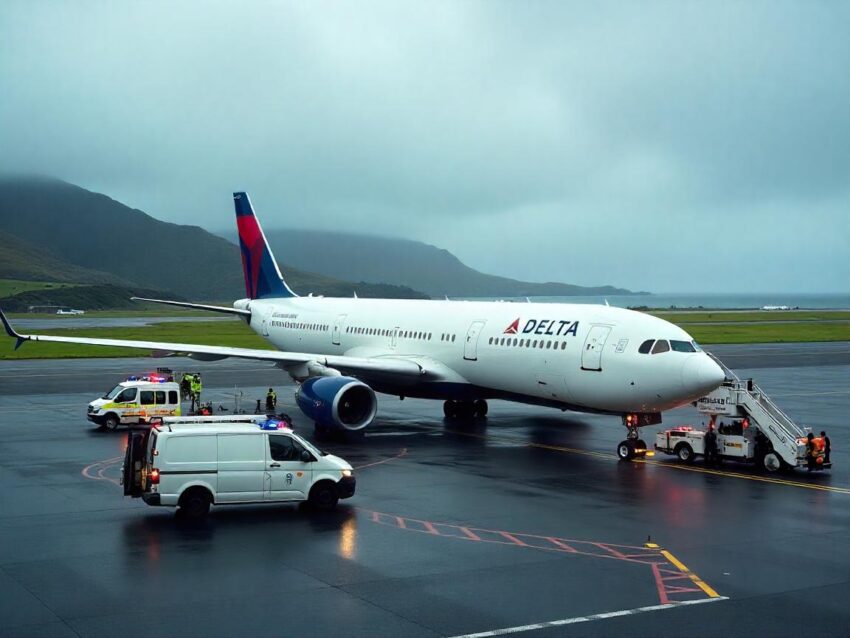 Image generated with Ai
Passengers on Delta Air Lines Flight DL127, which was en route from Madrid to New York, were suddenly stranded in the offshore island of Terceira in the Azores when a mid-flight engine failure prompted an emergency landing. What had been a routine cross-Atlantic flight on July 7, 2025, evolved into a terrifying and traumatic experience when a massive noise and sharp jolt hit the Airbus A330, causing passengers to believe the worst was happening mid-ocean.
Luckily, seasoned pilots safely diverted at Lajes Airport, which avoided disaster. Though there were no injuries, there were hours of worry experienced by passengers, unplanned overnight stay, and troublesome immigration holdups in a militarily inappropriate airport for commercial travelers.
Advertisement
Advertisement
Delta has since sent out a replacement jet, and passengers were able to continue their journey to New York. As information becomes available, this episode serves as another example of the uncertainties airlines encounter in long-distance routes and the grit required by crews and passengers in emergencies.
Mid-Ocean Engine Trouble Causes Flight Crisis
Delta Air Lines Flight DL127 was operating out of Madrid’s Adolfo Suárez Madrid–Barajas Airport when it left for New York’s JFK on July 7, 2025. It was an Airbus A330-323, tail number N805NW, cruising half-way across the North Atlantic when there was a startling loud bang in the cabin.
Advertisement
Advertisement
Passengers jolted as something tore through the plane. Whirring and whizzing sounds rang through the air afterwards, and shockwaves in fear coursed through all aboard. Crew immediately reported engine failure and opened the emergency.
With thousands of miles of ocean below and limited diversion options, the pilots steered the aircraft toward Lajes Airport on Terceira Island in the Azores — a Portuguese military base with sparse commercial facilities.
Advertisement
Advertisement
Tense Moments Onboard as Passengers Pray and Panic
Inside the cabin, tension spiked. Passengers described the next hour as a surreal mix of panic and hope. People wept. Others prayed. A few pressed call buttons, reporting strange sights outside the windows.
Despite the chaos, Delta’s crew held the line. Flight attendants moved calmly through the aisles, offering updates and trying to soothe the frayed nerves of travelers.
Advertisement
Advertisement
Even though there were no flames or external symptoms of engine damage, unusual mechanical sounds had the passengers in knots. Ditching in the cold Atlantic was a definite possibility lingering in everyone’s thoughts.
Safe Landing Amid Military Jets and Limited Facilities
After nervous decent, DL127 safely landed at Lajes Airport, where it was met by Portuguese Air Force personnel. The jet taxied off the runway and was towed into the civilian side of the airfield.
No injuries were reported among passengers or crew. The Airbus A330’s design — certified under ETOPS rules — allows it to fly safely on one engine over extended distances. Nevertheless, the incident underscored the razor-thin margins involved in long-haul operations over oceanic routes.
But the drama did not end with wheels on the ground.
Advertisement
Advertisement
Delays in Immigration and Portuguese Hospitality Stand Out
Lajes Airport, though militarily significant, has never been equipped for handling massive numbers of commercial passengers. Passengers were held for several hours in temporary terminal because native authorities were in disarray trying to process immigration formalities.
Yet even amid logistical hurdles, moments of humanity broke through. In one touching incident, a teenager traveling alone was taken under the wing of a local hotel owner. The hotelier provided dinner, transportation, and comfort — evoking scenes reminiscent of Gander’s hospitality during 9/11, immortalized in “Come From Away.”
Delta Swiftly Deploys Replacement Aircraft
With passengers stranded on a deserted island in the Atlantic, Delta rolled out contingency plans. Another Airbus A330-323, which was registered as N822NW, was deployed to rescue the suspended flight.
By the following day, all the passengers were on their way to New York, though about five hours behind. Meanwhile, the disabled plane remained grounded in Terceira, awaiting replacement engine components.
Delta verified the incident was related to single-engine failure — a situation severe but controllable due to contemporary twin-engine operating standards. Even though there was frightening noise and jolt during mid-flight, there was no fire and passengers ended up in safety.
Industry Viewpoint: Increased Disruptions Emphasize Operational Resilience
This episode falls in the midst of intensifying attention towards operational reliability in transatlantic flights. As airlines drive aircraft utilization into record levels, maintenance intervals, age, and spares availability become key indicators. Twin-engined planes such as the Airbus A330 have revolutionized long-distance journeys through the provision of fuel efficiency and versatility in routing. Engine failures, though exceptional, however, bring into sharp perspective how swiftly routine flight can turn into crisis.
Advertisement
Advertisement
For the travel industry, such emergencies test not only mechanical resilience but also customer service response. Delta’s rapid mobilization of a replacement aircraft and hotel accommodations demonstrates a well-drilled crisis playbook — crucial in an era where social media ensures instant global visibility for any incident.
Traveler Sentiment: Compliments for Crew, Though Warning about Future Flights
Passengers shaken by DL127’s emergency landing praised the crew’s professionalism but some mentioned nervousness about future transatlantic crossings, emphasizing the psychological impact of in-flight emergencies.
The incident also highlights the value of diversion airports serving long-distance routes. Airfields like the Azores, Shannon, and Keflavík are still lifelines for flights traversing long oceanic stretches.
Operationally, this kind of incident serves as another reason for airlines and regulators why ETOPS standards are in place and why crews train so hard for the worst.
Wider Context: Delta’s Recent Engine Incidents Come Under Scrutiny
This is not the first engine problem to afflict Delta Air Lines in recent months. Earlier, on April 21, 2025, a Delta Airbus A330 operating from Orlando International Airport (MCO) to Atlanta (ATL) had a spectacular engine fire during takeoff.
In this case, over 200 passengers evacuated using emergency slides. Emergency crews instantly contained the blaze before catastrophe hit. Fortunately, there were no severe injuries.
Advertisement
Advertisement
They do not indicate systemic failure. But they do reflect the harsh environment of aviation, in which mechanical malfunctions — though extremely rare — require perfect reaction.
Looking Ahead: Safety, Reliability, and Traveler Confidence
Although the Delta Madrid–New York accident ended safely, it serves as a vivid reminder for the industry: mechanical integrity, response in emergencies, and safety for passengers are absolute cornerstones of modern flight.
For airlines, customer confidence is as much about smooth delivery as it is about how quick and sensitive they can act when things go wrong. Here, Delta’s efforts — and the hospitality of the people of the Azores — helped turn fear into gratitude. But as passenger numbers rise and crossatlantic services become increasingly crowded, there’s one pressing task: making certain each engine, each crew, and each contingency plan can meet the ultimate test.
Advertisement
