
Switzerland Questions How A Town Built Its Way To Art Basel To Create The Ultimate Dream Travel Hub?

Published
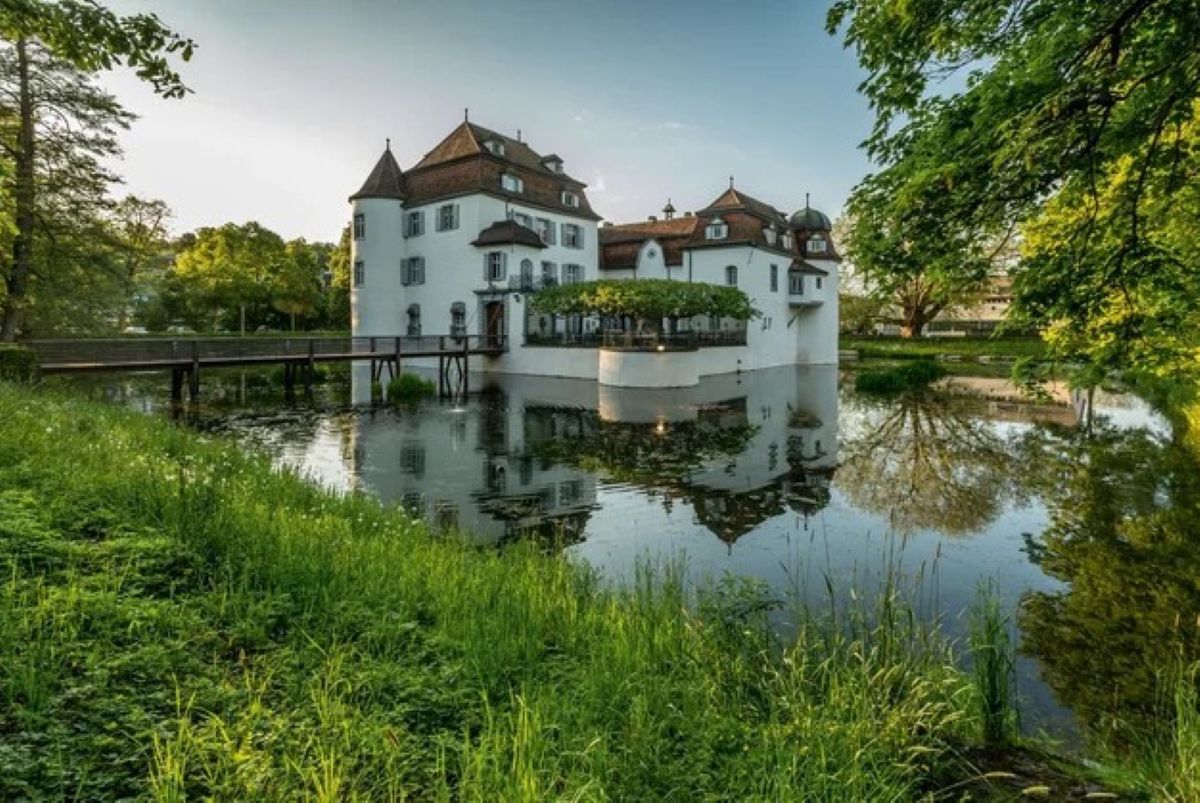
Imagine a riverside town where Art is not only shown but is the very pulse of daily life. In Basel, Switzerland, history, passion and creativity combine to make something truly wonderful. Before big world fairs and famous crowds the streets of Basel rang with serious Art love. The amazing story of How Basel Went from Art to Art Basel shows how a small cultural flame started a tourism change. It shows that when a community puts its heart and soul into keeping Art alive it forever changes how world travelers feel about travel.
How Strategic Border Connections and Early Intellectual Movements Shaped Modern Travel Experiences in Central Europe
Historical accounts revealed that during the sixteenth century, the advantageous position of Basel at the geographical intersection where Switzerland, France, and Germany meet fostered thriving cross-border trade, dynamic financial exchanges, and rich cultural interactions. Wealth generated by early textile manufacturing and the later expansion of pharmaceutical enterprises created substantial private fortunes, which local leaders consistently funneled into art patronage, architectural development, and public collections. From a modern travel perspective, this historic cross-border location established an ideal structural blueprint for multi-nation European travel itineraries, allowing international tourists to navigate effortlessly between neighboring countries while enjoying an extraordinarily dense concentration of artistic treasures inside a compact, walkable urban zone.
Additionally, the establishment of Switzerland’s inaugural university in 1460 established Basel as an intellectual powerhouse across Europe, drawing celebrated Renaissance thinkers such as the Dutch humanist Desiderius Erasmus and the legendary artist Hans Holbein the Younger during the early 1500s. When the world-renowned Amerbach Cabinet collection faced potential sale to buyers in Amsterdam in 1661, municipal leaders and academic officials joined forces to purchase the entire collection, officially creating the Kunstmuseum Basel as the world’s very first publicly owned art museum. Consequently, these historic decisions created an enduring magnet for global travelers, establishing a long-term precedent for public museum visitation that continues to fuel modern international tourism to Basel and surrounding European regions.
Advertisement
Advertisement
How Bold Civic Investments and Courageous Curatorial Decisions Transformed International Cultural Tourism Journeys
During the late 1930s, museum custodians demonstrated extraordinary foresight by actively acquiring twenty-one masterworks of modern creative expression that political authorities in Germany had seized and condemned as “degenerate.” Decades later, in 1959, the Kunstmuseum Basel further solidified its international reputation by becoming one of the first European public galleries to acquire postwar American Abstract Expressionist paintings created by celebrated artists such as Mark Rothko and Barnett Newman. These daring curatorial choices elevated the city onto the global stage, attracting art historians, international curators, and dedicated travelers across oceans specifically to view these groundbreaking modern art treasures housed securely in Switzerland.
Advertisement
Advertisement
Subsequently, a monumental moment in civic history occurred in 1967 when local citizens participated in a municipal referendum, voting enthusiastically to allocate public taxpayer funds to purchase two iconic paintings by Pablo Picasso that were otherwise destined for export to an overseas buyer. Deeply moved by this unprecedented public display of community love for high art, Picasso personally gifted four additional masterworks directly to the city of Basel. This inspiring historic event produced a compelling narrative that continues to captivate international tourists, serving as a classic case study for how passionate civic investment can cultivate world-class travel destinations and long-term economic prosperity through cultural tourism.
How the Expansion of Art Basel Redefined Modern Hospitality Demand and Global Event Destinations
Advertisement
Advertisement
In 1970, pioneering art dealers Ernst Beyeler, Trudl Bruckner, and Balz Hilt formally launched the inaugural Art Basel fair, attracting 110 international exhibitors and welcoming 16,300 passionate visitors during its debut edition. This revolutionary event transformed global art market logistics by consolidating premier international galleries into a single, high-profile annual gathering, generating an immense surge in seasonal hospitality demand, luxury travel bookings, and regional economic activity. Furthermore, the subsequent opening of dedicated contemporary spaces such as the Museum für Gegenwartskunst in 1980 and the world-famous Renzo Piano-designed Fondation Beyeler in 1997 further enhanced the architectural prestige and cultural appeal of Basel for international visitors.
Moreover, the launch of “Unlimited” in 2000 introduced a giant 200,000-square-foot exhibition venue specifically designed to display monumental installation art, solidifying the event’s global reputation for cutting-edge structural innovation. Over subsequent decades, this iconic cultural brand expanded internationally, establishing celebrated sister events in premier global travel destinations including Miami Beach, Hong Kong, Paris, and Qatar. Today, while these satellite fairs attract vast international audiences across multiple continents, the original flagship gathering in Basel annually hosts hundreds of top-tier galleries and thousands of artists, standing as an essential annual pilgrimage for global travelers, luxury tourism providers, and cultural tour operators worldwide.
The Economic Ripple Effect of High-Density Cultural Events on Regional Hospitality and Visitor Expenditure
During the annual staging of Art Basel, the regional hospitality sector faces extraordinary demand, driving hotel occupancy rates past 95% across Basel, Switzerland, as well as adjacent municipal areas in neighboring France and Germany. Industry metrics indicate that more than 82,000 international attendees travel to the municipality during the premier event week. This concentrated wave of incoming tourists yields hundreds of millions of dollars in direct expenditure, benefiting commercial aviation, private transit services, luxury dining establishments, and boutique lodging providers across the border regions.
Advertisement
Advertisement
At the same time, global art market reports confirm that international fine art transactions exceed $57.5 billion annually, with high-net-worth investors assigning up to 20% of their private capital portfolios to fine art holdings. This intense concentration of capital dramatically inflates daily per-capita spending among seasonal visitors staying in Basel. As a result, destination management organizations around the globe analyze this lucrative tourism model to design strategies aimed at maximizing localized hospitality revenue and high-value visitor spending.
Architectural Excellence and Civic Infrastructure Development as Primary Drivers of Global Tourism Appeal
The urban evolution of Basel into an architectural highlight directly reflects its status as an international fine art center, featuring landmark cultural facilities engineered by Pritzker Prize-winning architects such as Renzo Piano—who created the Fondation Beyeler in Riehen in 1997—and the practice Herzog & de Meuron. The city’s event infrastructure includes the 200,000-square-foot “Unlimited” venue at Messe Basel, custom-engineered to exhibit massive, large-scale installation works that exceed the structural limits of traditional gallery settings.
This intentional pairing of avant-garde architecture with permanent exhibition institutions establishes a distinct urban profile that attracts millions of design-focused travelers every year. Travel industry research demonstrates that long-term investment in signature museum architecture generates a permanent 30% to 40% increase in baseline international long-haul tourist arrivals, establishing Basel as a top priority for cultural and architectural travel itineraries worldwide.
Multi-National Transit Corridors and Cross-Border Travel Optimization in Central Europe
Positioned directly at the geographical junction where Switzerland, France, and Germany meet, Basel functions as a primary transit center in Central Europe, allowing international tourists to navigate three sovereign states in a single afternoon. The urban area’s unified transit network—featuring cross-border electric tram routes connecting Basel directly to Weil am Rhein in Germany and St. Louis in France—serves as a functional standard for seamless regional travel across international borders.
Advertisement
Advertisement
This strategic geographic position substantially extends the average duration of visitor stays, as tour operators construct multi-day regional itineraries incorporating prominent nearby highlights, including the Vitra Design Museum in Weil am Rhein and historical monuments throughout Alsace. Analytical data indicates that travelers using tri-national transport connections remain at their destination an average of 3.5 days longer than traditional single-city leisure tourists, resulting in significantly higher total expenditure across regional transport networks and local service industries.
Civic Preservation Policies and the Long-Term Economic Value of Publicly Funded Cultural Heritage
The municipal referendum of 1967 in Basel, in which voters chose to allocate 6 million Swiss Francs in public funds to acquire two landmark paintings by Pablo Picasso, set an international precedent for civic funding of public art collections. Today, with approximately 40 public museums serving a population under 200,000 residents, Basel maintains a ratio of 1 museum for every 5,000 citizens, vastly outstripping the cultural institution density of most major European cities.
This dense civic network yields lasting economic benefits, driving over 300,000 annual visits to primary municipal spaces like the Kunstmuseum Basel. For the global travel market, this institutional density transforms public cultural funding into a resilient, multi-generational driver of steady visitor arrivals that remains largely insulated from seasonal travel fluctuations.
Global Satellite Event Networks and the Reciprocal Dynamics of International Luxury Tourism
The expansion of the Art Basel brand beyond Switzerland has built an interconnected global showcase network, launching major satellite fairs in Miami Beach (drawing over 75,000 visitors annually), Hong Kong (attracting over 86,000 attendees), Paris, and Doha, Qatar. These international destinations operate as year-round promotional platforms, continuously directing international luxury travelers back to the original flagship gathering held in Basel.
Advertisement
Advertisement
This multi-continent network creates powerful reciprocal travel patterns, as global art collectors and enthusiasts structure their international travel around the annual event schedule. Industry statistics reveal that over 60% of international high-net-worth individuals attending satellite fairs eventually undertake long-distance trips to the primary Basel event in Switzerland, illustrating the effectiveness of geographic brand expansion within the high-end travel sector.
Corporate Sponsorship Models and the Stabilization of Cultural Destinations Against Economic Cycles
The long-term development of Basel into an international art destination relies heavily on corporate sponsorship, underpinned by the region’s pharmaceutical and chemical manufacturing firms, including historical enterprises like Ciba, Sandoz, and Roche. A clear example of this relationship is the Tinguely Museum, built in 1996 by Roche to celebrate its corporate centennial. The museum operates on a 100% corporate-funded basis, covering its full operational budget without requiring public grants or commercial fundraising efforts.
For the international travel and tourism sector, corporate-backed cultural foundations establish a resilient financial baseline that shelters arts institutions from broader economic downturns. This continuous corporate backing guarantees the ongoing delivery of world-class exhibitions, ensuring that international travelers receive premium cultural experiences regardless of global market conditions.
The Expansion of Fringe Festivals and Alternative Arts Tourism in Diversifying Local Hospitality Revenue
The large volume of international visitors arriving for Art Basel has encouraged the growth of an extensive network of independent satellite fairs and fringe events, such as the Liste Art Fair (launched in 1996 to highlight emerging galleries) and the Basel Social Club. These secondary exhibition spaces appeal to younger, broader demographic groups, expanding the destination’s reach beyond traditional high-net-worth collectors.
Advertisement
Advertisement
Metrics indicate that fringe art festivals boost overall city visitor numbers by an extra 25% to 30% during peak event weeks, driving high booking levels across mid-range hotels, local restaurants, and independent creative venues throughout Basel. This visitor diversification ensures that the economic benefits of cultural tourism are spread across a wide spectrum of local businesses, supporting both luxury hotels and independent hospitality providers.
Eco-Friendly Transit Logistics and Sustainable Practices in High-Density Cultural Destination Management
In response to growing environmental priorities and changing visitor expectations, Basel has introduced comprehensive green tourism programs, providing every overnight hotel guest with a complimentary BaselCard that grants free access to the city’s zero-emission electric public transit system. Furthermore, over 80% of major museum facilities in the city operate under strict environmental sustainability certifications, regulating energy consumption across major exhibition spaces like the Schaulager and the Museum für Gegenwartskunst.
As international travelers place increasing importance on environmentally responsible travel options, Basel‘s focus on sustainable tourism infrastructure offers a clear model for urban destinations. Market analysis demonstrates that zero-emission public transport connections and eco-certified cultural venues achieve a 15% higher booking preference among modern eco-conscious international travelers looking for sustainable, top-tier cultural itineraries.
The Final Verdict
Ultimately what makes Basel so unforgettable is not the expensive artworks or the glamorous crowds from all, over the world. It is Basel’s heartfelt spirit. Decades ago ordinary people stood together in the streets using their voices and their own money to keep beauty alive inside their neighborhood. That quiet steady devotion turned a Swiss town into the soul of international culture. Long after the exhibition halls and travelers return home the spirit of Basel stays with you proving that true art is not simply something you visit; it is a story that touches your soul forever.
Advertisement
