
New York Challenges Los Angeles as America’s Film Capital, Bringing Fresh Opportunities for Screen Tourism and City Breaks

Published
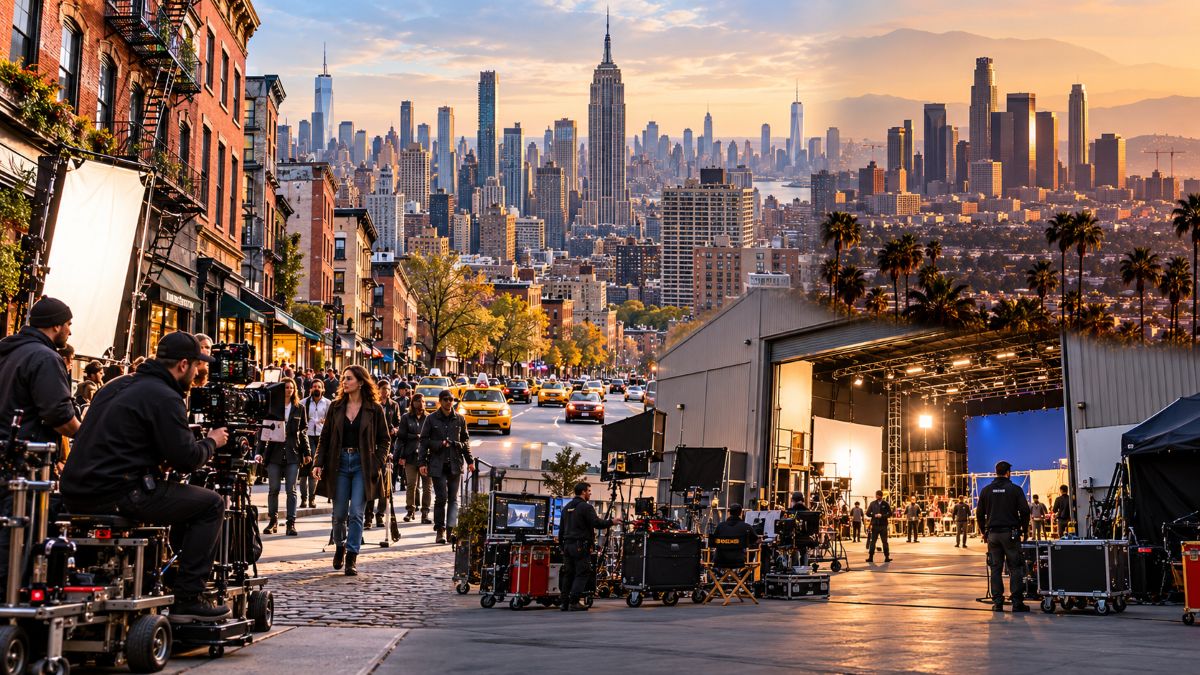
New York is closing the gap with Los Angeles as America’s leading film and television production destination, potentially reshaping the country’s screen tourism landscape. The latest industry figures show California recording nearly $1.76 billion in production spending, against New York State’s $1.61 billion, while New York’s expenditure surged 87%. This momentum could strengthen the appeal of Manhattan, Brooklyn and other filming locations for travellers seeking recognisable television streets, cinematic landmarks and behind-the-scenes experiences. However, New York has yet to overtake California, and production spending alone does not guarantee increased visitor numbers. For tourism businesses, the emerging competition offers an opportunity to develop film-inspired itineraries, location tours and longer city stays around the productions audiences already love.
New York’s Production Surge Puts Screen Tourism in Focus
The latest figures suggest a significant shift in production momentum between America’s two best-known entertainment centres. California still leads in total spending, but New York’s faster growth has brought the state within striking distance. The reported figures also raise an important question for travel businesses: can stronger production activity translate into more visitors, overnight stays and spending across local neighbourhoods?
Advertisement
Advertisement
| Film and television production comparison | California | New York State |
|---|---|---|
| Reported production spending | Nearly $1.76 billion | $1.61 billion |
| Reported spending growth | 17% | 87% |
| Spending gap | – | Approximately $150 million behind California |
| Competitive position | Current leader | Fast-closing challenger |
The contrast is striking. New York’s reported growth rate is more than five times California’s, although the two states started from different spending levels. The figures point to renewed production activity rather than a confirmed change in national leadership.
ProdPro co-founder and chief executive Alex LoVerde described the shift to The Hollywood Reporter, saying, “California’s production spending is starting to rise again, but New York’s rebound has accelerated this year, putting it within reach of the country’s largest production hub.” He also identified a potential change in leadership as a key question for the coming quarters and 2027.
Advertisement
Advertisement
For travellers, the immediate opportunity is not a race to visit a newly crowned production capital. Instead, it is the chance to explore the streets, architecture and neighbourhoods that give familiar screen stories their distinctive atmosphere.
Film Locations Give City Breaks Fresh Appeal
New York offers a compelling combination of recognisable streetscapes, historic buildings, waterfront districts and dense urban neighbourhoods. Consequently, its appeal extends beyond dedicated film enthusiasts to visitors interested in architecture, culture, shopping and local experiences.
Advertisement
Advertisement
Manhattan remains an obvious starting point. Downtown streets and the West Village have featured in numerous productions, while Midtown provides familiar landmarks and a concentration of theatres, hotels and transport connections. Visitors can combine these settings with established attractions rather than treating filming locations as isolated destinations.
Brooklyn offers another dimension. Its residential streets, industrial buildings and waterfront views provide a contrasting backdrop to Manhattan’s commercial skyline. Queens and other boroughs can also broaden an itinerary, particularly for visitors who want to explore beyond the traditional tourist circuit.
Advertisement
Advertisement
However, travellers should distinguish between a genuine filming location and a place that merely resembles a scene. Productions sometimes use studio sets, composite locations or streets elsewhere in the city. A television series set in Manhattan may also film interiors on soundstages.
This distinction matters when planning dedicated location tours. Travellers should check whether a specific scene was filmed at the advertised address before paying for a specialist experience. Equally, they should verify access arrangements because a recognisable building may be privately owned or closed to visitors.
Tourism Already Gives New York a Strong Base
New York’s existing visitor economy provides a substantial foundation for screen-inspired travel. According to New York City Tourism + Conventions, the city welcomed 65 million visitors in 2025, generating $55.6 billion in direct visitor spending and $84.7 billion in total economic impact. Tourism supported approximately 397,000 jobs across the five boroughs.
The organisation projected 66.3 million visitors for 2026 in its March 2026 outlook. That figure is a forecast, not a confirmed year-end total. Nevertheless, it demonstrates the scale of the destination’s tourism market before any additional effect from the latest production surge.
Advertisement
Advertisement
| New York City tourism indicator | 2025 reported result |
|---|---|
| Total visitors | 65 million |
| Domestic visitors | 52.4 million |
| International visitors | 12.5 million |
| Direct visitor spending | $55.6 billion |
| Total tourism economic impact | $84.7 billion |
| Tourism-supported jobs | 397,000 |
| Hotel occupancy | 84.2% |
| Average daily hotel rate | $334 |
| Hotel room inventory | Approximately 124,000 |
These figures reveal both opportunity and competition. Strong hotel occupancy and substantial visitor spending give tourism operators a ready-made market for additional cultural experiences. However, the reported $334 average daily hotel rate also highlights the importance of budgeting carefully.
Film-related itineraries could encourage visitors to stay longer, revisit familiar districts or travel outside the busiest sightseeing corridors. Yet such benefits depend on effective promotion, convenient transport and experiences that offer value beyond simply standing outside a building.
Soundstages Strengthen the State’s Appeal
Production infrastructure helps explain why New York has gained momentum. The supplied report identifies expanded soundstage capacity, an established union workforce and access to neighbouring Tri-State locations as important advantages.
A June 2026 report from commercial real estate firm CBRE, cited in the supplied coverage, found that New York Tri-State soundstage inventory had grown 43% since 2020. The opening of Sunset Pier 94 Studios also added purpose-built production facilities in Manhattan.
Meanwhile, Netflix is developing an East Coast production hub at the former Fort Monmouth site in New Jersey. Paramount has also secured a reported ten-year lease at the planned 1888 Studios in Bayonne. These developments could strengthen the wider regional production network, although neither project means that every production will take place in New York City itself.
The distinction between New York State and New York City is crucial for visitors. The state’s production spending covers activity beyond the five boroughs, while the wider Tri-State production ecosystem includes locations in neighbouring New Jersey and Connecticut.
Advertisement
Advertisement
A film-themed holiday could therefore extend beyond Manhattan. However, travellers should confirm each location’s precise address, public accessibility and transport connections before adding it to an itinerary.
What Travellers Should Know Before Visiting
The growing production scene does not mean every filming location welcomes visitors or that a celebrity appearance is guaranteed. Productions can change schedules at short notice, and street closures or temporary parking restrictions may affect local journeys.
The New York City Mayor’s Office of Media and Entertainment publishes information about filming activity, permits and location planning. Its official guidance also explains that some locations require separate permissions from transport authorities, park administrators or other agencies.
For visitors, the practical lesson is straightforward: plan around confirmed attractions, not rumours of filming. A production announcement can inspire a route, but it should not determine the entire day’s schedule.
| Traveller consideration | Practical recommendation |
|---|---|
| Finding filming locations | Check reliable location guides and confirm addresses before travelling |
| Watching a production | Follow official production announcements and respect restricted areas |
| Street closures | Allow additional travel time and check local transport updates |
| Studio visits | Verify public tours, availability, prices and age restrictions directly |
| Accommodation | Compare hotel rates across several neighbourhoods and booking dates |
| Multi-borough itineraries | Group nearby locations to reduce unnecessary journeys |
| Celebrity sightings | Treat them as unpredictable rather than a guaranteed part of the trip |
Visitors should also remember that a filming permit does not create public access to private property. The city distinguishes between filming on municipal land and locations managed by other authorities. Subway stations, trains, buses, airports and certain landmarks may require separate arrangements.
Regional Competition Could Expand Travel
The competition between California and New York creates an opportunity to position screen tourism as a wider American travel theme. Los Angeles remains associated with Hollywood history, studio culture and entertainment landmarks, while New York offers a dense urban setting where visitors can combine familiar filming locations with established attractions.
Advertisement
Advertisement
Georgia and New Jersey also form part of the broader production landscape. However, production spending alone cannot establish which state attracts the most film-inspired visitors. Comparable visitor surveys, tour bookings and tourism expenditure data would be needed to measure that outcome.
For destination marketers, the strongest approach is to connect screen recognition with experiences travellers can book. Guided neighbourhood walks, architecture tours, museum visits and local dining can turn a passing interest in a television series into a complete itinerary.
Hotels, restaurants and transport providers could also benefit if productions generate sustained interest rather than short-lived publicity. Nevertheless, the tourism impact will depend on how effectively businesses connect screen exposure with accessible, authentic experiences.
New Production Activity Needs Careful Monitoring
The latest spending figures mark an important development, but they should not be treated as proof that New York has already displaced Los Angeles. California remains ahead, and quarterly comparisons can change as projects begin, pause or move between production stages.
Travellers should also avoid assuming that increased production automatically means cheaper hotels, more public studio tours or additional visitor attractions. Those outcomes require separate investment and evidence. Likewise, the growth of soundstage capacity primarily benefits production companies and does not necessarily create new public-facing experiences.
For tourism businesses, the next indicators to watch include visitor numbers, hotel occupancy, location-tour demand and the availability of officially promoted screen experiences. These measures would offer a clearer picture of whether the production boom is translating into measurable tourism growth.
Advertisement
Advertisement
New York’s Screen Appeal Extends Beyond Studios
New York’s competitive position is strengthening as its production infrastructure expands and spending growth accelerates. Its established visitor economy gives the city a strong platform for turning familiar screen settings into distinctive travel experiences.
The next stage will depend on whether productions translate into sustained visitor interest and commercially viable tourism products. For travellers, the city already offers the advantage of combining film-inspired exploration with museums, neighbourhood dining, architecture and major cultural attractions. New York has not yet overtaken California, but its growing production profile gives visitors another reason to explore the city beyond its traditional landmarks. The most rewarding itineraries will combine screen recognition with authentic local experiences, sensible transport planning and realistic expectations.
Advertisement
