

Image generated with Ai
United Airlines Flight UAL679, a Boeing 737-924(ER) from Cleveland to Los Angeles, diverted to Kansas City International Airport, United States, on July 24, drawing attention from travellers and aviation watchers. The United Airlines Flight UAL679 diversion raised questions about why the Boeing 737-924(ER) changed its Cleveland to Los Angeles route and landed at Kansas City International Airport. Travel And Tour World brings readers the latest details, verified information, and key updates about this unexpected flight diversion. Therefore, continue reading to understand what happened, why the aircraft diverted, and what passengers need to know.
A routine domestic journey unexpectedly became the focus of attention after United Airlines Flight UAL679 diverted to Kansas City International Airport instead of continuing to its scheduled destination of Los Angeles on 24 July. While diversions are relatively uncommon, they remain an essential part of commercial aviation, enabling flight crews to make precautionary decisions whenever circumstances change during a flight.
The aircraft involved was a Boeing 737-924(ER), one of the most widely used narrow-body aircraft in United Airlines’ domestic fleet. Although passengers naturally seek immediate answers whenever a diversion occurs, airlines and aviation authorities typically release official details only after operational reviews are completed, ensuring that all available information is accurate before being made public.
United Airlines has not officially disclosed why Flight UAL679 diverted to Kansas City International Airport while operating its scheduled service from Cleveland to Los Angeles. Consequently, the precise reason remains unknown, and no official statement has suggested that the aircraft experienced a major emergency or security-related event during the flight.
Advertisement
Advertisement
Commercial aircraft may divert for several operational reasons, including a passenger medical emergency, a technical indication requiring inspection, changing weather conditions, fuel management considerations, or air traffic control requirements. Flight crews continuously monitor aircraft systems throughout every journey, and whenever they believe another airport offers the safest or most practical option, they are trained to divert without hesitation. Such decisions are precautionary in nature and demonstrate the aviation industry’s long-established commitment to safety rather than indicating that a catastrophic event has occurred.
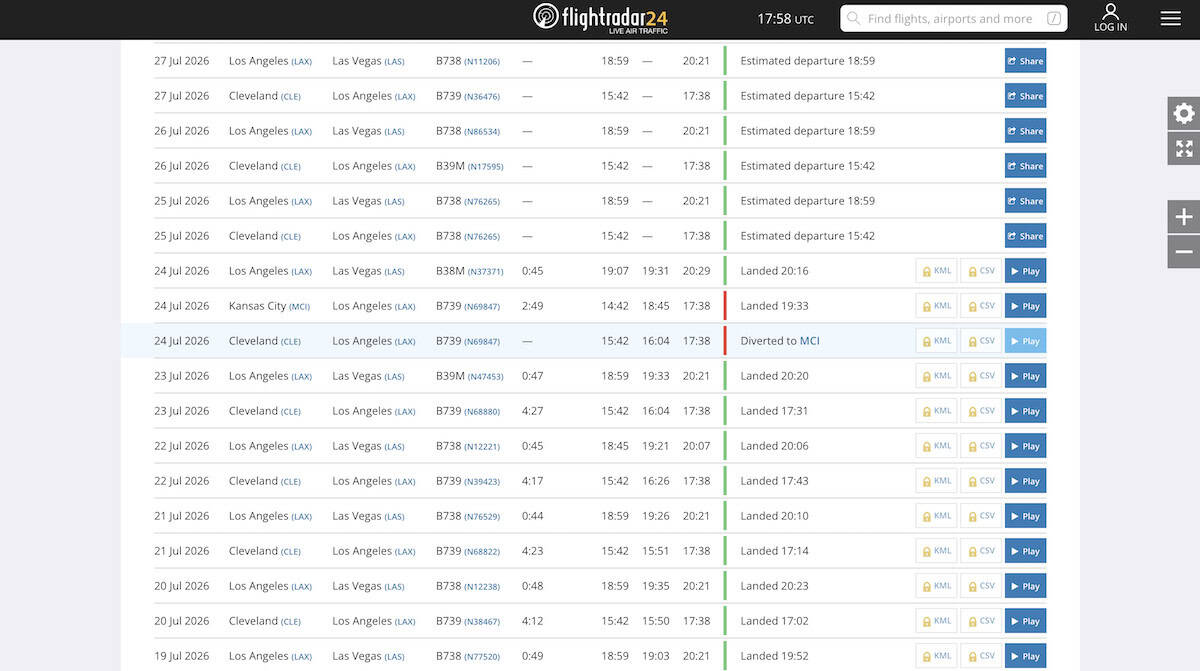
Image generated with Ai
A flight diversion follows a carefully planned operational process involving pilots, airline operations teams, air traffic controllers, airport personnel, emergency services when required, and ground handling staff. Every participant has clearly defined responsibilities, allowing the aircraft to land safely while minimising disruption to passengers and ensuring that any necessary inspections or assistance can begin immediately after arrival.
Following the landing, engineers may inspect the aircraft if a technical issue is suspected, while medical personnel may meet the aircraft if a passenger requires urgent treatment. Airline operations teams also assess crew duty hours, aircraft availability, maintenance requirements and passenger connections before deciding whether the original aircraft can continue or whether alternative arrangements are needed. Although diversions can cause delays, they are considered routine safety procedures within commercial aviation and are handled according to established regulatory standards.
Based on currently available information, Flight UAL679 departed Cleveland after a short delay before diverting to Kansas City International Airport instead of continuing directly to Los Angeles. No injuries have been publicly reported, and there has been no official confirmation of aircraft damage, onboard disruption or any incident requiring an emergency evacuation following the aircraft’s arrival.
The aircraft involved was a Boeing 737-924(ER) registered as N69847, operating a scheduled domestic passenger service for United Airlines. Publicly available flight-tracking data confirms the diversion, but neither United Airlines nor the Federal Aviation Administration has released detailed findings explaining why the flight landed in Kansas City. Until official statements become available, any suggestion regarding the exact cause remains speculative and should not be treated as confirmed information.
For passengers, an unexpected diversion can be frustrating because it disrupts travel plans, creates uncertainty and may result in missed onward connections. Nevertheless, aviation professionals consistently emphasise that diverting an aircraft is often the safest and most responsible decision available whenever flight crews identify circumstances that warrant additional caution during a journey.
Travellers should remember that airlines follow strict safety regulations established by aviation authorities, and pilots receive extensive training to make timely operational decisions under changing conditions. Although passengers naturally seek immediate explanations, investigations and technical assessments often require time before official information can be released. In the case of United Airlines Flight UAL679, the confirmed facts remain limited to the diversion itself, while the airline has yet to disclose the operational reason behind the decision. Until further updates are issued, passengers are encouraged to rely on official communications from United Airlines rather than speculation circulating on social media or other unofficial platforms.
Advertisement
Tags: aircraft diversion, Airline Updates, aviation news, Boeing 737-924(ER), Cleveland to Los Angeles flight
Advertisement
Advertisement













Saturday, September 5, 2026
Saturday, September 5, 2026
Saturday, September 5, 2026

Saturday, September 5, 2026

Saturday, September 5, 2026

Saturday, September 5, 2026

Saturday, September 5, 2026

Saturday, September 5, 2026



