
Vanuatu Earthquake Triggers Tsunami Alert in the South Pacific as Travellers Await Local Safety Updates

Published
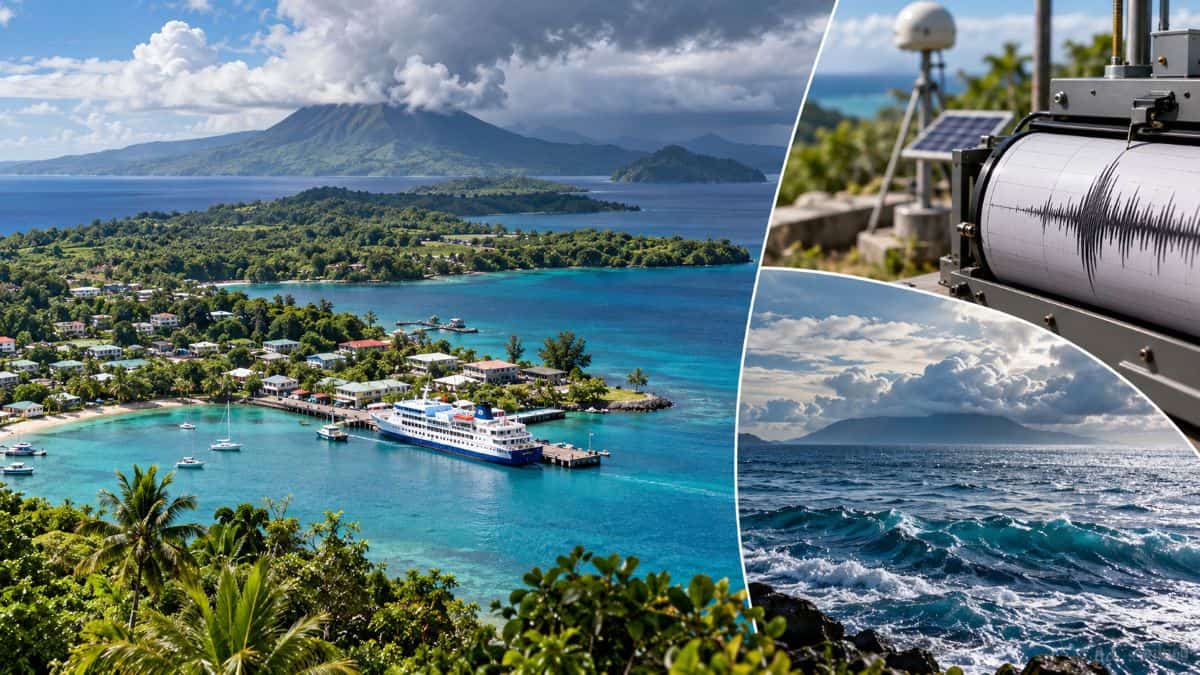
A powerful Vanuatu earthquake triggered a tsunami threat message on Saturday, 24 October 2026, after a shallow offshore tremor struck the South Pacific island nation. The Pacific Tsunami Warning Centre (PTWC) initially measured the earthquake at magnitude 7.2, warning that hazardous tsunami waves were possible along coasts within 300 kilometres of the epicentre. The earthquake occurred at approximately 02:31 UTC, about 200 kilometres west of Sola, Vanuatu, at a depth of 10 kilometres. The alert placed coastal safety, island transport and visitor movements under scrutiny. However, the latest verified information available for this report does not establish the full extent of local damage, casualties or subsequent changes to the tsunami threat.
Tsunami Threat Passes After Magnitude Revision
The situation changed shortly after the initial alert. At 03:28 UTC, the Pacific Tsunami Warning Centre issued its final threat message, revising the preliminary magnitude to 6.9 and confirming that the tsunami threat had passed. The centre advised people to remain observant and exercise normal caution near the sea. It also noted that minor sea-level fluctuations could continue in some coastal areas for several hours.
This update is crucial for travellers and tourism operators. The initial warning and the subsequent all-clear represent different stages of the same developing event. Neither should be reported without its timestamp and geographical scope.
The initial PTWC bulletin identified Vanuatu as the area potentially exposed to hazardous waves within 300 kilometres of the epicentre. It estimated that the first tsunami wave could reach Espiritu Santo at approximately 03:01 UTC. The centre cautioned that subsequent waves could prove larger and that wave intervals could range from five minutes to an hour.
Advertisement
Advertisement
The magnitude revision also highlights a standard feature of earthquake reporting. Monitoring agencies publish rapid preliminary estimates, then refine them as additional seismic data become available. A change from magnitude 7.2 to 6.9 does not mean the earthquake was insignificant. Both measurements describe a powerful event requiring prompt assessment.
What the Earthquake Means for Island Travel
Vanuatu’s tourism appeal rests on its coastline, coral reefs, volcanic landscapes and remote island communities. These attractions also create particular challenges during natural disasters. Resorts, dive centres, excursion boats and coastal transport services can all face disruption when authorities issue emergency alerts.
Advertisement
Advertisement
The earthquake’s immediate travel implications extend beyond the tsunami warning itself. Operators may need to inspect buildings, jetties, waterfront facilities and access roads before resuming normal operations. Boat transfers and marine excursions may also require fresh safety checks, even after a tsunami threat has passed.
However, a tsunami alert does not automatically mean airports have closed or flights have been cancelled. No verified airport closure, nationwide flight suspension or confirmed tourism shutdown was established in the official material reviewed for this report. Travellers should therefore avoid assuming either widespread disruption or completely normal operations.
Advertisement
Advertisement
The distinction matters for international visitors, particularly those travelling between islands. Vanuatu’s geography makes transport planning more complex than a conventional mainland holiday. A disruption at one coastal destination can affect connecting transfers, accommodation check-ins and scheduled activities elsewhere.
Key Earthquake Facts at a Glance
| Detail | Verified information |
|---|---|
| Date | Saturday, 24 October 2026 |
| Earthquake origin time | Approximately 02:31 UTC |
| Initial PTWC magnitude | 7.2 |
| Revised PTWC magnitude | 6.9 |
| Reported depth | 10 kilometres |
| Approximate location | 200 kilometres west of Sola, Vanuatu |
| Initial tsunami threat area | Coasts within 300 kilometres of the epicentre |
| Initial estimated wave arrival | Espiritu Santo, approximately 03:01 UTC |
| Final PTWC assessment | Tsunami threat had passed |
| Confirmed casualty and damage totals | Not established by the official information reviewed |
The table separates the earthquake’s physical characteristics from the changing hazard assessment. This distinction helps readers understand why early headlines may differ from later reports. It also prevents the initial magnitude and warning from being presented as the final official position.
Why Vanuatu Faces Seismic Risks
Vanuatu sits within the Pacific Ring of Fire, a broad zone of active tectonic boundaries and frequent earthquakes. Movement between tectonic plates generates seismic activity across the wider southwest Pacific. Some undersea earthquakes can displace the seabed and generate tsunami waves, although not every strong earthquake produces a significant tsunami.
The depth and location of an earthquake help scientists assess its potential effects. A shallow offshore earthquake can warrant urgent tsunami evaluation because seabed displacement may disturb the overlying water. However, magnitude alone cannot establish the size of a resulting wave or predict the damage along every coastline.
Advertisement
Advertisement
Vanuatu’s island geography adds another layer of complexity. Coastal exposure varies according to shoreline shape, elevation, seabed depth and local conditions. Consequently, two communities at similar distances from an epicentre may experience different effects.
The Vanuatu Meteorology and Geo-Hazards Department maintains national geohazard information and provides public earthquake and tsunami safety resources. Its monitoring network supports awareness of seismic activity across the archipelago.
This local monitoring role complements regional and international warning systems. The PTWC assesses tsunami threats across the Pacific, while national authorities determine and communicate appropriate protective measures within their jurisdictions. For visitors, instructions from local emergency officials remain essential.
How Travellers Should Respond Now
For visitors already in Vanuatu, the revised tsunami assessment is reassuring. Nevertheless, the end of the tsunami threat does not certify that individual hotels, roads, ports or excursion facilities are safe. Travellers should confirm local conditions before returning to waterfront activities.
Anyone planning to travel to the archipelago should check directly with their airline, accommodation provider and transfer operator. These checks are particularly important for travellers relying on small boats or connecting services. A scheduled departure may remain available even when a particular excursion or transfer needs to be rescheduled.
Visitors who felt the earthquake should follow local instructions and report any visible damage to the relevant authorities. If authorities issue evacuation directions, travellers should prioritise those instructions over hotel arrangements or pre-booked activities.
Advertisement
Advertisement
The national geohazards department also provides practical guidance for people preparing for or responding to a tsunami. Visitors unfamiliar with the region should review these instructions before visiting exposed coastal areas.
Practical Travel Checks Before Departure
| Travel consideration | Recommended action |
|---|---|
| International flights | Check airline notifications and flight status before leaving for the airport. |
| Domestic transfers | Confirm boat, ferry and inter-island connections directly with operators. |
| Hotels and resorts | Ask about building inspections, local access and any temporary restrictions. |
| Diving and snorkelling | Resume activities only when operators confirm safe marine conditions. |
| Coastal excursions | Follow local authority guidance and any restrictions on beaches or waterfronts. |
| Travel insurance | Review the policy’s emergency assistance, interruption and cancellation provisions. |
| Emergency information | Monitor official national alerts and instructions from local authorities. |
These precautions are practical risk-management measures, not confirmation that any specific service has been suspended. Travellers should distinguish independently verified cancellations from precautionary checks. That distinction helps avoid unnecessary disruption while keeping personal safety central.
For travellers who have not yet departed, the latest tsunami assessment alone does not establish whether a planned trip should be cancelled. The more useful decision depends on the destination island, departure date, transport arrangements and any new local advisories.
How the Alert Compares With Earlier Events
The latest earthquake follows a period of notable seismic activity around Vanuatu. The US Geological Survey’s significant-earthquake listings recorded a magnitude 6.6 event near Port-Olry on 20 October 2026. Its initial record also included a nearby magnitude 6.3 earthquake.
The earlier event illustrates why travellers should assess each earthquake individually. Even earthquakes within the same region can produce different tsunami assessments, depending on their characteristics and the available observations. A previous event’s outcome cannot establish the risk associated with a later tremor.
The comparison below focuses on the verified information available for each event.
Advertisement
Advertisement
| Indicator | 20 October event | 24 October event |
|---|---|---|
| Initial earthquake magnitude | 6.6 | 7.2 |
| Revised magnitude in the cited PTWC record | No revised value established here | 6.9 |
| Location | Near Port-Olry, Vanuatu | Approximately 200 kilometres west of Sola, Vanuatu |
| Initial tsunami assessment | No tsunami threat in the cited PTWC statement | Hazardous waves initially possible within 300 kilometres |
| Later assessment | No threat in the cited statement | PTWC subsequently confirmed the threat had passed |
The comparison also demonstrates the importance of tracking official updates rather than relying on the first alert. In the latest event, the revised magnitude and final tsunami assessment materially changed the immediate risk picture.
What Tourism Businesses Should Watch
For travel companies, the immediate priority is operational verification rather than speculation. Tour operators, accommodation providers and destination managers should establish whether their facilities and services remain accessible. They should also maintain direct communication with suppliers and customers.
The wider tourism industry can draw three practical lessons from this event. First, emergency messaging needs clear timestamps and geographical boundaries. Second, suppliers should communicate confirmed service changes promptly. Third, travel advisers should distinguish between a tsunami threat, an earthquake damage assessment and a transport disruption.
These distinctions are especially important in island destinations. A resort might remain operational while a nearby boat transfer requires inspection. Likewise, an airport could remain open even if individual coastal excursions are temporarily restricted.
No verified industry-wide cancellation figure, hotel closure total or tourism revenue impact was available in the official information reviewed. Publishing such figures without confirmation would risk misleading travellers and businesses.
Tourism operators should therefore rely on documented inspections, transport updates and official safety notices. This approach supports responsible visitor communication while limiting unnecessary cancellations.
Advertisement
Advertisement
What Visitors Need to Know Next
The immediate tsunami threat from the Vanuatu earthquake has passed, according to the PTWC’s final message. However, travellers should continue to distinguish the end of the tsunami threat from confirmation of local infrastructure and transport conditions. The revised magnitude of 6.9 replaces the initial 7.2 estimate in the centre’s final assessment. Visitors should verify flights, accommodation and marine excursions directly with their providers. Meanwhile, tourism businesses should communicate confirmed operational changes and follow local safety instructions. Further developments should be assessed through official monitoring channels, not unverified social media claims. For now, accurate information and sensible precautions remain essential to travel planning.
Advertisement
