
America Moves to Transform Road Travel with New Safety Standards for Self-Driving Cars and Robotaxis

Published
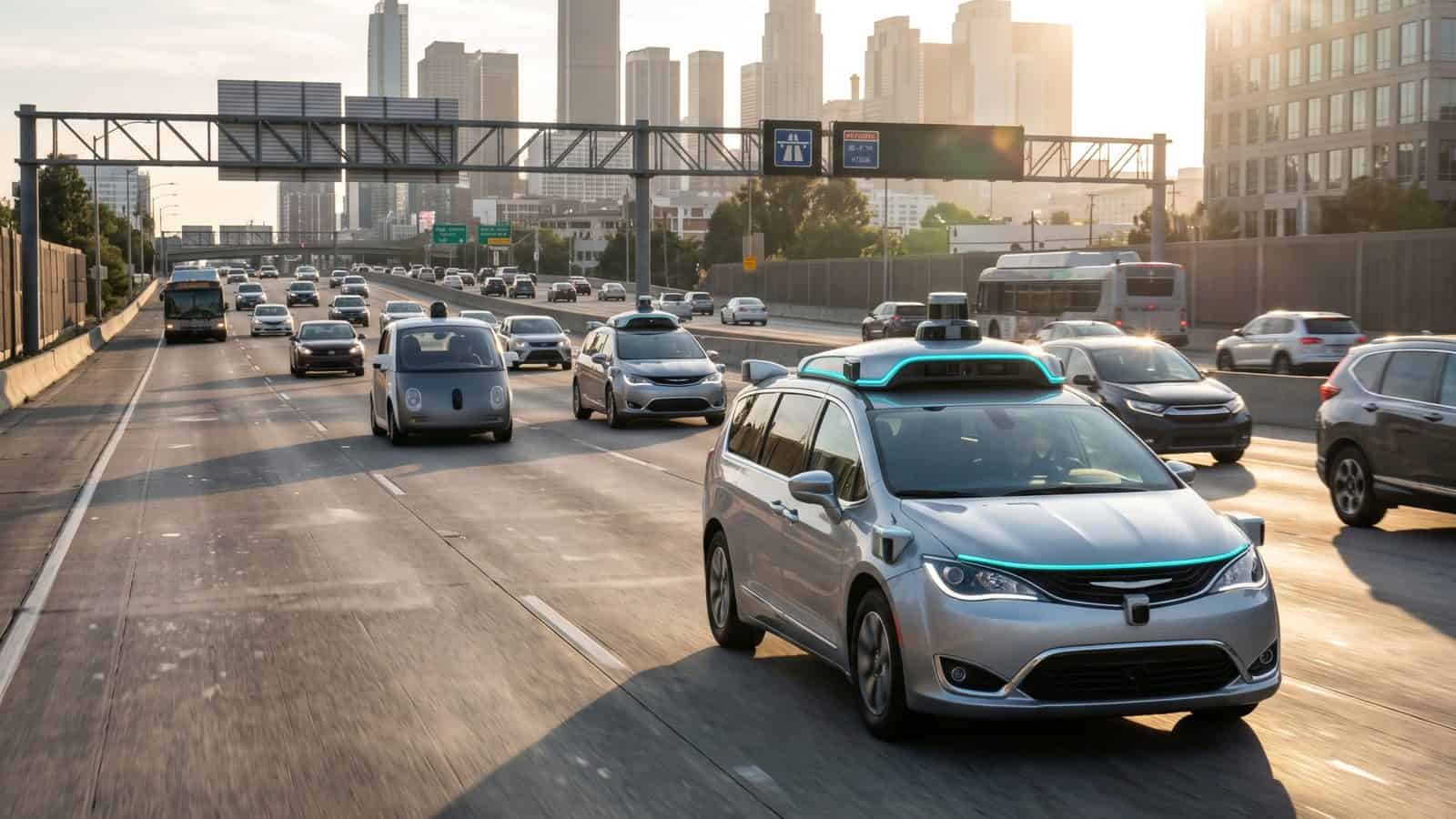 Image generated with Ai
America’s proposed overhaul of US road safety standards could reshape how vehicles without human drivers are designed and identified. The National Highway Traffic Safety Administration (NHTSA) has outlined changes to federal lighting requirements for automated vehicles, including distinctive cyan marker lamps and greater flexibility for traditional controls.
The proposals matter for self-driving cars in America because existing regulations were developed around human-operated vehicles. By updating equipment tests and clarifying how automated operation may be displayed, the agency aims to accommodate driverless road travel while preserving safety expectations.
Cyan Marker Lamps and Flexible Controls Proposed for Self-Driving Vehicles
The proposed amendments to Federal Motor Vehicle Safety Standard (FMVSS) No. 108 would accommodate vehicles operated exclusively by automated driving systems (ADS). For those purpose-built vehicles, existing requirements covering manually activated direction indicators, hazard warning signals and headlamp beam switches would be revised. NHTSA said the flexibility was intended for vehicles that were never designed to be driven by a person, rather than every vehicle offering automated functions.
A separate element would set consistent specifications for optional ADS marker lamps. Cyan would be the prescribed colour, with requirements for their positioning, activation and visibility. The agency said clear identification was intended to assist police officers and other road users when an automated driving system was controlling a vehicle. These autonomous vehicle lighting rules would address equipment design and signals of automated operation. The proposal would not make the identification lamps compulsory.
Advertisement
Advertisement
Modern Headlamp Testing Would Support Advanced Vehicle Technology
NHTSA also proposed removing the fixed 12.8-volt test requirement applied to integral beam headlamps. Instead, manufacturers would be able to certify lighting performance at design voltages appropriate to their particular systems. The agency linked the change to durable LED and advanced lighting systems. Existing performance expectations would remain central to certification.
Vehicle design flexibility would also be increased by eliminating provisions specifying the vertical order of upper and lower headlamp beams. NHTSA said the configuration change could be made without reducing vehicle safety or weakening illumination standards. Although these measures address technical testing and front-end architecture rather than journey planning, they form part of the wider changes proposed for US road safety standards. Their relevance to driverless road travel lies in allowing lighting equipment to be assessed against modern vehicle designs rather than arrangements developed for earlier technologies.
Advertisement
Advertisement
Public Consultation Opens the Door to Wider Federal Safety Reforms
A public consultation lasting 30 days is to begin after the notice appears in the Federal Register. NHTSA said submissions should reference Docket No. NHTSA-2026-1519, with feedback invited from manufacturers, safety organisations and stakeholders. As the measures remain proposals, the final requirements have not yet been established.
The lighting notice is separate from the negotiated rulemaking process announced earlier in October. That process is expected to consider other parts of FMVSS No. 108. Meanwhile, wider updates have been proposed for transmission shift displays under Standard 102, windscreen defrosting and wiping under Standards 103 and 104, tyre placard location under Standard 110 and braking controls under Standard 135. NHTSA has also announced future work on controls and displays (101), mirrors and rearview systems (111), electronic stability control (126), and sun visors and warning labels (201 and 208). Taken together, the measures represent a detailed review of regulations applied to automated vehicles.
Robotaxi Deployment and Automated Driving Safety Standards Receive Federal Attention
Alongside the lighting proposal, the administration’s automated vehicle framework is being used to update exemption programmes for research, demonstration and commercial fleets. Eligibility for research and demonstration exemptions is being expanded to domestic vehicles, while vehicles manufactured before a commercial exemption was issued may now qualify for deployment. NHTSA said its first exemption for a commercial robotaxi deployment had already been granted under the revised framework.
The agency is also developing its first federal motor vehicle safety standard specifically focused on ADS safety. Work with the SAE Industry Technologies Consortia is intended to accelerate multiple objective performance standards. Federal guidance is being revised for the first time since 2017, with recommendations covering first responder interactions, safety management systems and remote assistance as operations move beyond small-scale testing.
For self-driving cars in America, these measures place robotaxi safety regulations alongside changes in vehicle design requirements. Exemptions already granted remain distinct from safety standards being developed. Neither the proposed cyan lamps nor the wider programme should be presented as already finalised universal rules.
A New Regulatory Direction for America’s Driverless Road Travel
Taken together, the proposed changes show how US road safety standards are being reconsidered for vehicles built around automated driving rather than human controls. Optional cyan lamps would provide a consistent signal of automated operation, while revised headlamp tests and design provisions would offer manufacturers greater flexibility.
The wider programme also covers exemptions, performance standards and updated federal guidance. However, the lighting amendments remain proposals, and public feedback is still to be sought. For travellers, the significance of these developments lies in the regulatory foundations being prepared for driverless road travel and the continuing evolution of robotaxi safety regulations nationwide.
Advertisement
