
Japan Overtakes Other Nations In GDP Tourism Boom With New Partnerships, And Sustainable Travel Transformation At The Heart Of Its Rise

Published
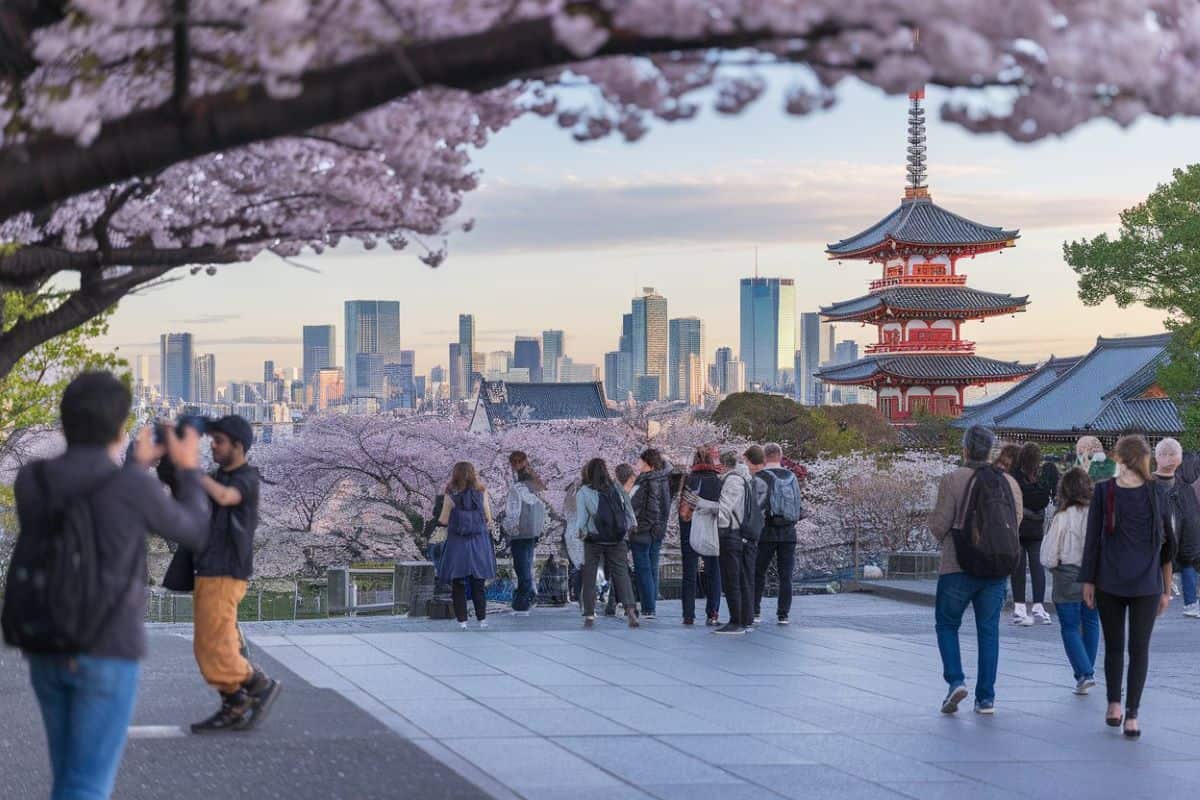
Image generated with Ai
Japan’s unprecedented Japan Tourism GDP Boom 2026 is rewriting the rules of global travel. As of mid-2026, the nation is officially overtaking historic European and Asian tourism strongholds in key economic metrics, transforming inbound travel into its second-largest export industry. Fuelled by a record-breaking influx of international visitors and a visionary pivot towards sustainability, Japan is proving that high-volume tourism can coexist with cultural preservation. This transformation matters because it sets a new global benchmark for economic resilience. By leveraging strategic partnerships and implementing bold policy shifts, Japan is securing its position as the ultimate model for future-proof tourism.
Background: The Resurgence of the Rising Sun
The trajectory of Japan’s tourism sector over the past decade represents one of the most remarkable economic rebounds in modern history. Before the global disruptions of 2020, the Japanese government had set ambitious targets to welcome 40 million foreign tourists annually. While the journey was temporarily derailed, the post-2023 reopening saw a sudden, immense surge of pent-up demand. By 2024, Japan welcomed a staggering 36.87 million tourist arrivals, reflecting a 47% increase from the prior year and shattering previous records.
However, the real turning point arrived in 2025 and 2026. Rather than resting on its laurels, the Japanese government recognised the fragility of unchecked tourism. The immense influx placed an undeniable strain on iconic locations like Kyoto, Mt. Fuji, and the Golden Route. In response, Tokyo initiated a comprehensive policy overhaul aimed at prioritising quality over pure volume, leading to the Japan Tourism GDP Boom 2026. Today, this strategic pivot has successfully transformed tourism into an economic juggernaut that rivals the nation’s legendary automotive export sector.
Latest Official Developments: Overtaking Global Competitors
Recent data from the World Travel & Tourism Council (WTTC) and the Japan National Tourism Organization (JNTO) confirms that Japan is rapidly climbing the global ranks. As of July 2026, Japan recorded 3.44 million inbound tourist arrivals in a single month. When viewed through the lens of economic contribution, Japan’s travel and tourism sector generated a staggering $310.5 billion in economic value in 2024, accounting for 7.7% of the national GDP.
Advertisement
Advertisement
Forecasts for 2025 and 2026 indicate this share is rising past the 8.0% mark. By securing the 3rd spot overall in the Travel and Tourism Competitiveness Report, Japan has outpaced several traditional European and North American powerhouses in tourism growth rates and infrastructure resilience. Furthermore, from a statistical standpoint, spending by international tourists in Japan is now classified as the country’s second-largest export industry, trailing only automobiles.
Advertisement
Advertisement
Government Announcements: The New Tourism Nation Promotion Basic Plan
In March 2026, the Japanese Cabinet officially approved the New Tourism Nation Promotion Basic Plan. This landmark strategy formally marks the end of the era of chasing visitor volume at all costs. Instead, it ushers in an era defined by sustainable value and regional revitalisation. The Japan Tourism Agency (JTA) and the Ministry of Land, Infrastructure, Transport and Tourism (MLIT) have jointly announced that future investments will heavily favour regions outside the traditional Tokyo-Osaka-Kyoto corridor.
The government has also introduced stringent new regulations to combat overtourism. For example, as of July 1, 2026, the International Tourist Tax (commonly known as the departure tax) tripled from ¥1,000 to ¥3,000 per person. These funds are explicitly earmarked for environmental infrastructure, local cultural preservation, and the enhancement of sustainable travel amenities.
Statistics and Inbound Market Dynamics
The numerical evidence underpinning the Japan Tourism GDP Boom 2026 is undeniable. In 2025, the number of international tourists visiting Japan peaked at an extraordinary 42.7 million. Domestic tourism also remained remarkably robust, with over 540 million domestic trips recorded in recent years.
Key source markets continue to dominate the inbound statistics. Travellers from South Korea, Taiwan, and China remain the largest demographics, but long-haul visitors from the United States, Australia, and Europe have shown the highest year-on-year growth in terms of per-capita spending. Total tourism consumption within the country amounted to ¥34.3 trillion ($237 billion) in recent annual tallies, solidifying tourism’s critical role in Japan’s overall GDP of over $4.2 trillion.
Sustainable Travel Transformation: A Blueprint for the World
At the heart of Japan’s rise is a meticulous approach to sustainability. The Japan Sustainable Tourism Standard for Destinations (JSTS-D) has been implemented to guide local municipalities in balancing economic gains with ecological and cultural preservation.
Advertisement
Advertisement
Tackling Overtourism with Policy
- Mt. Fuji Restrictions: As of the summer of 2026, climbing Mt. Fuji requires a mandatory ¥4,000 fee and an online reservation, with strict gate closures implemented to prevent dangerous “bullet climbing”.
- Kyoto’s Lodging Tax: To manage the immense pressure on local infrastructure, Kyoto steeply increased its lodging tax in March 2026, particularly targeting high-end ryokans and luxury hotels with fees up to ¥10,000 per night for the most expensive rooms.
- Strict Local Bylaws: Wards in Tokyo and Osaka have instituted strict on-the-spot fines for street smoking and littering, ensuring that the visual and environmental integrity of major cities remains intact.
New Partnerships and Industry Impact
Japan is not navigating this transition in isolation. The government has forged lucrative new partnerships across the Asia-Pacific region, including active leadership in the ASEAN-Japan Sustainable Tourism Initiative. These collaborations aim to standardise eco-tourism practices and share community-based tourism frameworks.
In the retail sector, a monumental shift takes effect in November 2026. The traditional tax-free shopping system—where tourists pay tax-free prices at the register—is being replaced with a European-style airport refund system. This policy change is designed to curb the illegal resale of tax-free goods within Japan while streamlining the compliance process for domestic retailers.
Economic Implications: Beyond the Metropolis
The ultimate goal of the current administration is “regional dispersion.” By pushing the Japan Tourism GDP Boom 2026 into rural prefectures, the government aims to revitalise ageing communities that have historically been overlooked by the Golden Route. Increased spending in areas like Shikoku, Hokkaido, and the Chūgoku region acts as a direct wealth transfer from international markets to local Japanese artisans, farmers, and hospitality workers.
With the travel and tourism sector now supporting roughly 5.9 million jobs (nearly 8.7% of total employment), the equitable distribution of these roles across all 47 prefectures is essential for long-term economic stability.
Future Outlook
As Japan looks toward 2030, its tourism sector is built to be shock-proof. By combining financial deterrents for overtourism with heavy investments in rural infrastructure, the country is curating a high-value visitor demographic. The projection that Japan’s sustainable tourism market will grow at a CAGR of 12.8% over the next decade suggests that the global appetite for responsible, culturally immersive travel is perfectly aligned with Japan’s new policies.
Advertisement
