
Japan Tourism Arrivals Fall as Changing Source Markets Reshape the Travel Picture

Updated
Published
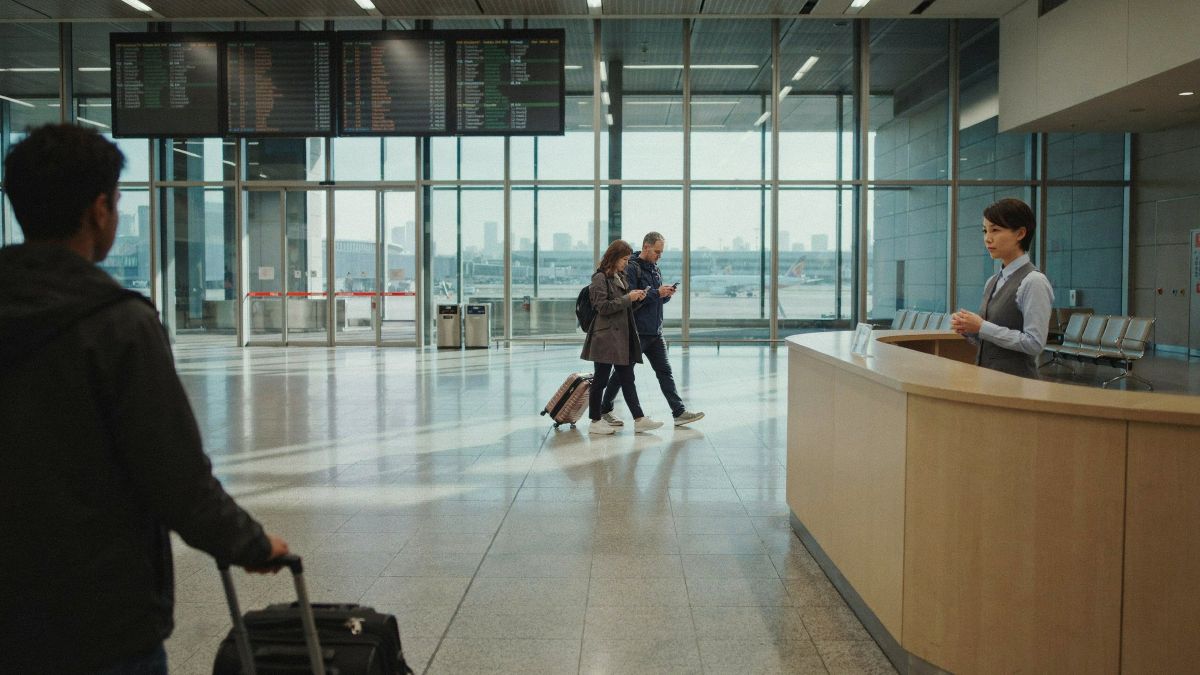
Tourism arrivals in Japan are declining during the first eight months of 2026 due to a decline in tourists from China, even though there was a rise in tourists from some other countries. The new source markets affect the tourism scenario in the region, yet they don’t paint the scenario as one of gains and losses. Countries like South Korea, Taiwan, India, and the United States have contributed more tourists while Japan had fewer tourists overall. This clearly explains why tourism performance should not be solely measured in terms of arrivals.
Why the 9% US tourism claim needs a closer look
The available figures do not support a 9% tourism revenue decline shared by Las Vegas, Miami and other US hubs. The statistics cover different periods and measure different parts of tourism.
Las Vegas visitor spending fell 7.8% in 2025, to US$50.8 billion. Visitor numbers also dropped 7.5%, to 38.5 million. Miami, by contrast, reported a 4.1% rise in visitor spending for 2025, to US$22.7 billion. These are annual figures, not matching results for 2026.
US international travel figures also need careful labelling. In July 2026, overseas arrivals fell 7% year on year. But total international arrivals, which also include visitors from Canada and Mexico, declined just 0.1%. International visitor spending from January to July was down 0.1%. These national results do not confirm a 9% fall in tourism revenue across major US cities.
Advertisement
Advertisement
Las Vegas faces pressure, but its story is not simply about fewer tourists
Las Vegas had a difficult 2025. It welcomed 3.1 million fewer visitors than in 2024, and international air passenger traffic fell 7.4%. Domestic air passenger traffic also declined, by 5.9%. The downturn, therefore, cannot be explained by overseas arrivals alone.
The spending data adds another layer. Total visitor spending fell by US$4.3 billion in 2025. Yet average spending per visitor slipped by only US$4, to US$1,318. Gaming spending rose, and the city recorded another annual gaming revenue record, driven by local establishments. Spending on sporting events and attractions also increased. Shopping and sightseeing, however, weakened.
Advertisement
Advertisement
That mix matters. A city can lose visitors while some businesses continue to perform well. But fewer guests can still leave hotels, restaurants, attractions and workers competing for a smaller pool of customers. The next question is whether demand will recover and whether spending will reach more of the local economy.
Miami’s growth challenges the idea of a nationwide city slump
Miami presents a clear contrast with Las Vegas. Greater Miami and Miami Beach welcomed 28.3 million visitors in 2025. Those visitors spent US$22.7 billion, a 4.1% increase on 2024. Tourism supported more than 216,000 jobs in Miami-Dade County, representing 10% of local employment.
International visitors spent more than US$1,150 per person, per trip on average. Lodging generated US$10.4 billion, close to half of all visitor expenditure. Miami also led the largest 25 US hotel markets in occupancy, average daily room rate and revenue per available room during the first four months of 2026.
These results do not show that Miami is immune to economic pressures. They do show why every major US destination should not be grouped into a single decline story. A stronger article can compare how different cities attract visitors and where their spending goes.
Macao turns visitor growth into a wider spending story
Macao offers one of Asia’s strongest examples of growth beyond visitor counts. Non-gaming visitor spending reached MOP44.47 billion during the first half of 2026, up 17.4% year on year. Average non-gaming spending per visitor also rose, reaching MOP2,123. Shopping, accommodation and food and drink made up most of this spending.
The figures offer a useful way to examine how tourism supports businesses outside gaming venues. They also show that event visitors can spend more: people visiting for meetings, incentives, conferences and exhibitions recorded relatively high spending per person in the first half of the year.
Advertisement
Advertisement
Macao’s latest holiday figures add urgency to the story. It recorded 1.143 million arrivals from 1 to 7 October 2026. Average daily arrivals rose 15.5% compared with the previous National Day holiday. Hotel occupancy reached 91.3%, while average room rates fell 1.7%.
This points to a key question: can a destination turn busy periods into stronger prices and longer stays, as well as more arrivals?
Macao’s record arrivals hide a divide between day trips and overnight stays
The October holiday figures look impressive, but arrival totals do not tell the whole story. Macao’s August 2026 data show why. Overall visitor arrivals rose 6.1% year on year, but same-day visitors increased while overnight visitors fell 2.4%. Average visitor stays shortened by 0.1 day, to one day.
Macao’s international visitor category also declined 9.8% in August. That happened even as total arrivals grew, showing how performance can vary by source market and visitor type. In the first eight months of 2026, however, international visitor arrivals were up 3.4%.
For local businesses, the difference between a day trip and an overnight visit can be significant. Overnight guests have more time to use hotels, restaurants and evening attractions. Day visitors may contribute strongly to retail and food spending, but they create different demands.
This detail gives the article a sharper focus: not simply whether visitor numbers rise, but what those visitors do and how long they stay.
Advertisement
Advertisement
South Korea’s growth reaches beyond Seoul
South Korea’s 2026 tourism figures show strong demand and signs of wider regional travel. The country welcomed 12.8 million foreign visitors from January to July, an increase of 21.3% from the same period in 2025. Foreign-tourist card spending reached KRW12.08 trillion, up 48.3%. This card measure indicates spending, but it is not a complete national tourism-receipts total.
The spread of arrivals is equally notable. In June, 390,000 international tourists entered through regional airports, including those serving Gimhae, Daegu, Jeju and Cheongju. That was 42.5% more than in June 2025. Arrivals through airports in the Seoul metropolitan area grew 18.2% over the same period. The share of surveyed visitors travelling to provincial areas also rose in the second quarter.
This creates a useful local-economy angle. Tourism growth may matter more when it reaches destinations beyond the main gateway. Further reporting could examine whether visitors spend more nights and money in those regions, and which local businesses benefit.
Japan shows that Asia is not enjoying one shared tourism boom
Japan’s figures complicate any claim that Asia is uniformly winning more tourists. The country recorded an estimated 27.63 million arrivals from January to August 2026, down 2.7% year on year. A steep fall in Chinese arrivals was a major part of the picture. Visits from China declined 56.7% to 2.90 million.
Other markets moved in the opposite direction. Arrivals from South Korea increased 21.2%, Taiwan rose 19.8%, and India grew 20.2%. US arrivals to Japan also increased 6.1%, to 2.31 million. These gains did not fully offset the fall from China.
This pattern suggests that source-market mix can shape a destination’s overall results. It also offers a strong reporting question: how exposed is a city when it depends heavily on a few countries?
Advertisement
Advertisement
The figures do not prove that US travellers are abandoning Las Vegas for Japan. They show only that US arrivals to Japan rose while Japan’s total arrivals fell. Any claim about travellers switching destinations would need separate evidence.
Indian travellers have become a focus for Asian destinations
India provides a connecting thread between tourism competition in Asia and the United States. Indian visitor numbers to Sentosa grew 8% from April 2025 to March 2026. India remained the island destination’s largest international source market. Indian visitors showed interest in family holidays, celebrations, premium experiences and business trips that include leisure.
Thailand is also targeting Indian travellers. It welcomed 2.49 million Indian visitors in 2025, up 16.82% from the prior year. The country set a 2026 target of more than 2.55 million Indian visitors. That target is a plan, not a confirmed result. Thailand’s strategy includes wellness, family travel, weddings and destinations beyond Bangkok and Phuket.
The United States continues to attract visitors from India too. In July 2026, India ranked among the leading overseas sources of US tourism and business arrivals.
This makes India a useful lens for the article. Destinations are competing for different kinds of trips, from family celebrations to business events. The evidence does not show that one country is taking all the demand from another.
Business events offer another measure of tourism strength
Leisure travel is only part of the picture. Business events can bring visitors who stay in hotels, use local transport and extend their trips for sightseeing.
Advertisement
Advertisement
Macao recorded 918 meetings, incentives, conferences and exhibitions in the first half of 2026, broadly unchanged from the previous year. But the number of participants and attendees rose 16% to 494,000. Event-related receipts for non-gaming industries reached about MOP2.43 billion, up 44.8%.
Singapore reported that MICE tourism receipts reached S$2.3 billion in 2025, an increase of more than 35%. Las Vegas also showed strength in this segment: convention attendance rose 10.5% during January to August 2026. The reporting periods differ, so these figures should not be treated as a direct ranking.
The comparison still raises a useful question. Can business events help destinations maintain demand when leisure travel softens? To answer it, an article should examine event attendance, hotel nights and delegate spending, rather than relying on event counts alone.
Asian markets still matter to Las Vegas
Asia’s tourism story is not separate from Las Vegas. Preliminary estimates indicate that some Asian source markets grew there in 2025, even as the city’s total visitor volume fell.
Estimated visits from Japan increased 10.5% to 126,000. China rose 8.6% to 98,300, while South Korea increased 3% to 158,200. Taiwan recorded the strongest percentage growth among the listed markets, up 16.2% to 35,800. India rose 3.2% to 67,500. Singapore, however, declined 6.1% to 10,700.
These are preliminary modelled estimates for 2025. They are not direct border counts or measures of 2026 bookings. They should be used as context, not proof that Las Vegas has recovered or that Asian travellers are replacing other visitors.
Advertisement
Advertisement
Their value lies in showing that the city’s international markets do not all move together. An article can explore how Las Vegas might strengthen this mix while being clear about what the estimates can and cannot prove.
The local impact depends on more than arrivals
Las Vegas, Miami and other US cities, it is evident that a 9% reduction in tourism income does not make sense in describing the situation. In Las Vegas, there was an account of spending on the part of tourists while in Miami, there was both spending and employment from tourism activities. At the same time, in Macau, there were increasing spending outside the gaming sector but with decreasing number of overnight tourists. South Korea benefited because of regional airports while for Japan, its overall figure declined despite an increase in tourism from the market segments. Hence, a dramatic fall in the number of tourists affects local economies, but the destinations have their problems.
Advertisement
