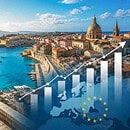
Image generated with Ai
The Balkans are rising as a major international travel destination, especially along the Mediterranean. Montenegro has seen a huge growth in European tourism and often credits Albania and others for this record breaking seventh month of 2026. Massive growth penetration has changed the economy. Along with a healthy foreign exchange market and even more real estate speculation, Montenegro is using what is by far the prettiest stretch of the Adriatic coastline to great effect, thanks largely to a competitive pricing strategy. Strong inter regional trade alliances are very much shaping this positive picture. I will break down what the official numbers say, add some economics, and give a view the of the future of this tourism explosion.
Montenegro’s trajectory from a secluded Balkan secret to a globally recognised premium destination is one of the most remarkable narratives in modern European tourism. Historically reliant on traditional Eastern European markets, the nation has progressively diversified its appeal over the last decade. Before the unprecedented global disruptions of the early 2020s, the country was already building a robust reputation for luxury hospitality and ecological beauty—a dual identity enshrined in its national constitution as an “ecological state.” The period leading up to 2026 witnessed intense governmental and private sector collaboration aimed at upgrading accommodation capacities, modernising transport links, and refining service standards. By the end of 2025, Montenegro had successfully registered 2.73 million tourist arrivals and an impressive 15.37 million overnight stays, cementing its status as a highly competitive Mediterranean alternative.
The strategic shift involved moving away from high-volume, low-yield mass tourism towards a more sustainable, high-value economic model. Authorities recognised that competing solely on price against massive, established markets like Turkey or mainland Greece was ultimately unsustainable in the long term. Instead, the national focus pivoted to leveraging Montenegro’s unique, compact geography—where dramatic alpine peaks meet pristine coastal waters within a very narrow territorial span. This geographical density allows visitors to experience diverse climates, historical architecture, and dramatic landscapes within a single day. Consequently, the firm foundation was laid for the dramatic Montenegro tourism growth witnessed throughout the first seven months of 2026. This evolution required heavy, sustained investments in deep-water marinas, such as the globally renowned Porto Montenegro, alongside luxury hospitality brands, which recalibrated international perceptions and successfully attracted a notably more affluent demographic to the Adriatic coastline.
As verified by the Statistical Office of Montenegro (MONSTAT), the first seven months of 2026 have yielded robust empirical data that confirms both the resilience and the explosive potential of the nation’s tourism sector. The official figures paint a vivid picture of a rapidly accelerating market, heavily dominated by high-spending international visitors. In June 2026 alone, the number of tourist arrivals in collective accommodation surged to a ten-month high of 206,990, representing a robust 5.8% year-on-year acceleration. This marked a significant and welcome acceleration from the modest 0.3% growth recorded in May, indicating a sharply steepening demand curve as the peak summer season approached. The data confirms that international marketing campaigns initiated in the preceding winter successfully captured the attention of early-summer holidaymakers.
Advertisement
Advertisement
Crucially, the demographic composition of these arrivals underscores Montenegro’s immense international appeal. Foreign visitors accounted for a staggering 91.4% of the June total, translating to 189,266 individual arrivals, while domestic tourism represented a mere 8.6%. This heavy reliance on foreign markets highlights the effectiveness of recent international marketing initiatives but also naturally exposes the sector to external geopolitical and broader European economic fluctuations. The data from April 2026 further illustrates the seasonal build-up, with 107,939 arrivals and 278,906 overnight stays recorded, despite a slightly softer year-on-year trend that month due to an unusually wet spring season and earlier Easter holidays. Europe remained the unequivocally dominant source region, contributing approximately 78.8% of all foreign arrivals in June. The primary feeder markets included traditional strongholds such as Serbia, the United Kingdom, Bosnia and Herzegovina, Germany, and France. Notably, arrivals from outside Europe also showed remarkable vitality, with Israel, the United States, and China emerging as the top non-European source markets—a direct result of targeted visa facilitations and enhanced bilateral aviation agreements.
A critical and often underappreciated dimension of the 2026 success story is the profound impact of regional cross-border dynamics. The phenomenon of Albania and others fuelling the tourist arrivals in 2026 is a testament to the increasing popularity of multi-destination Balkan itineraries among European and intercontinental travellers. Albania’s own meteoric rise as a tourism hotspot—having previously recorded 3.8 million foreign overnights in a similar early-year period—has created a massive spill-over effect that directly benefits Montenegrin border regions, particularly the southern municipalities of Ulcinj and Bar. European tourists are increasingly viewing the Western Balkans as a unified, seamless experiential zone rather than isolated national destinations.
Tour operators headquartered in Germany, the United Kingdom, and Scandinavia have aggressively marketed packaged tours that effortlessly blend the rugged Albanian Riviera with Montenegro’s majestic Bay of Kotor and mountainous interior. In April 2026 alone, Albanian nationals and international tourists crossing via the Albanian border accounted for thousands of recorded arrivals in Montenegro’s collective accommodations. This highly fluid movement of tourists is facilitated by recently upgraded border infrastructure and relaxed regional transit protocols championed by various cross-border initiatives. Furthermore, the competitive tension between Montenegro, Albania, and Croatia has paradoxically fuelled collective regional growth. As Croatia pivots towards an ultra-premium pricing model following its full Schengen integration, budget-conscious yet quality-seeking tourists are migrating southward. Montenegro occupies the perfect strategic middle ground, offering solid infrastructure and high service standards that bridge the gap between Croatia’s polished luxury and Albania’s raw, rapidly emerging appeal.
Delving deeper into the MONSTAT archives for the January to July 2026 period reveals vital trends regarding shifting visitor behaviour and accommodation preferences. While absolute arrival numbers are highly impressive, the specific metrics surrounding overnight stays offer a much more nuanced understanding of the sector’s operational health. In 2025, the average length of stay hovered around 5.6 nights per visitor. Early indicators for the first seven months of 2026 suggest a slight contraction in this average, reflecting a broader, pan-European trend towards shorter, more frequent “city break” style holidays, even within traditional coastal resort destinations. Tourists are packing more destinations into shorter timeframes, heavily utilising the improved regional mobility networks.
This structural shift towards shorter stays has profound operational implications for the Montenegrin hospitality industry. To achieve the exact same volume of occupied bed-nights, hotels and private apartment owners must now process a significantly higher number of check-ins, check-outs, and room turnovers. This churn directly increases operational expenditures, particularly in housekeeping, commercial linen services, and front-desk administration, thereby applying intense downward pressure on net profit margins despite rising gross revenues. During June 2026, collective accommodation facilities successfully registered 793,956 overnight stays, with foreign tourists accounting for a massive 90.8% of this overall volume. The spatial distribution of these overnight stays remains heavily skewed towards the coastline. Seaside resorts consistently captured over 81% of all tourist traffic throughout the spring and early summer. Meanwhile, the capital city, Podgorica, maintained a steady 10% to 12% share, driven primarily by corporate business tourism. Conversely, Montenegro’s spectacular mountain resorts only accounted for roughly 4.7% of total arrivals in June.
The sheer, unprecedented volume of the 2026 tourism surge has placed massive demands on Montenegro’s national transport infrastructure. According to the latest civil aviation reports, the country’s two primary international airports—Podgorica and Tivat—handled approximately two million passengers combined during the first seven months of 2026. This milestone, while a resounding triumph for the National Tourism Organisation and its airline partners, has starkly exposed long-standing terminal and airside limitations. Tivat Airport, strategically located adjacent to the booming Bay of Kotor, routinely operated at maximum physical capacity, efficiently but strenuously handling dozens of daily charter and scheduled flights from across Western Europe and the Middle East. The throughput demonstrates the underlying strength of international demand but illustrates the immense pressure on gateways not originally designed for current peak-season traffic.
The infrastructural strain undeniably extends well beyond aviation. As highlighted by industry analysts in August 2026, the rapid influx of Western and regional visitors has exposed a widening gap between premium hotel offerings and essential public infrastructure. Tourists paying premium, euro-denominated rates at luxury enclaves naturally expect seamless mobility, impeccable public cleanliness, and reliable municipal utilities. However, the coastal road network, particularly the primary Adriatic Highway, experienced severe vehicular congestion throughout June and July. To address these critical bottlenecks, the Montenegrin government has accelerated high-level discussions regarding the potential concession or privatisation of the state-owned airports to rapidly unlock urgently needed capital for comprehensive terminal expansion. Additionally, vital funding from international financial institutions is being funnelled into upgrading essential road corridors and constructing bypasses around major coastal towns to alleviate gridlock.
In direct response to the rapid influx of visitors in the first seven months of 2026, the Montenegrin Ministry of Tourism, Ecology, Sustainable Development and Northern Region Development has issued several pivotal, forward-looking policy directives. A central pillar of the government’s long-term strategy is the aggressive promotion of the “shoulder seasons”—specifically April, May, September, and October. By actively incentivising cultural tourism, authentic gastronomy, rural retreats, and active sports like hiking and sailing, authorities aim to strategically flatten the extreme summer peak and distribute tourist footfall much more evenly throughout the calendar year. This commercial extension is substantial; hotels operating for eight or nine months can spread fixed costs across a larger revenue base and retain experienced staff for longer periods.
Recent official announcements have also detailed a comprehensive digital transformation agenda for the entire tourism sector. This ambitious programme includes the implementation of advanced data analytics platforms in close collaboration with MONSTAT to accurately track visitor flows in real-time. This capability allows local municipalities to optimise waste management schedules, adjust traffic signalling dynamically, and deploy emergency services more effectively. Furthermore, the national government has streamlined the complex visa application process for key emerging international markets. This includes the successful rollout of expedited e-visas for tourists from Central Asia and the Gulf states, significantly boosting arrival figures from these highly lucrative regions in early 2026 and diversifying the country’s reliance on traditional European feeder markets.
The inherently symbiotic relationship between robust tourism and real estate in Montenegro has never been more visibly apparent than in 2026. The sustained surge in tourist arrivals has acted as a massive catalyst for Foreign Direct Investment (FDI), particularly within the highly sought-after coastal property market. Official macroeconomic data indicates that the first half of the year witnessed robust capital inflows directed towards luxury residential developments, mixed-use coastal resorts, and boutique heritage hotels. Real estate analysts reported that property prices in premium coastal locations surged dramatically over recent periods, with earlier Q3 2025 data showing coastal residential averages reaching €2,458 per square metre—a spectacular 23.2% year-on-year increase.
This steep upward trajectory continued unabated into 2026. In highly exclusive enclaves such as Porto Montenegro in Tivat, luxury apartments command premium prices that rival established Western European rivieras. This phenomenal, sustained growth is primarily driven by wealthy international buyers. Historically dominated by investors from nearby regions, the buyer demographic in 2026 has noticeably and healthily diversified to include significant contingents from Germany, the United Kingdom, Turkey, and the Middle East. These buyers are heavily attracted by the country’s NATO membership, political stability, and ongoing EU accession progress. Furthermore, the burgeoning short-term rental market offers highly attractive gross rental yields, averaging around 5.62% nationally, providing a lucrative incentive for income-focused investors.
While the record-breaking arrival numbers of 2026 paint a vivid picture of unmitigated commercial success, the day-to-day operational reality for the Montenegrin hospitality industry is significantly more complex. The sector is currently grappling with severe macroeconomic headwinds, most notably persistent inflation and acute labour shortages. In July 2026, Montenegro’s annual inflation rate accelerated to 3.8%, driven predominantly by the expanding services sector. Crucially, consumer prices for restaurants and hotels surged by 5.4% year-on-year, directly reflecting the increased operational costs of food sourcing, energy consumption, and wage bills.
The domestic labour pool is fundamentally insufficient to meet the massive demands of the expanded summer tourism ecosystem. Montenegro simply cannot organically staff the thousands of hotels, coastal restaurants, beach clubs, and transport services operating at absolute full capacity during the peak season. Consequently, the industry has become heavily reliant on migrant labour. In 2026, a significant percentage of seasonal hospitality workers were actively recruited from neighbouring Balkan states, as well as increasingly from distant Asian labour markets. This necessary reliance on imported labour introduces new operational complexities. Employers must carefully navigate visa bureaucracies, provide acceptable staff housing in a highly inflated local rental market, and invest heavily in rigorous training to ensure that service personnel can flawlessly deliver the exacting service standards expected by premium European tourists.
The aggregate national statistical data often obscures the hyper-localised, nuanced nature of Montenegrin tourism. The first seven months of 2026 clearly demonstrated that the tourism boom is highly concentrated within a few key coastal municipalities. Budva, long established as the undisputed commercial capital of Montenegrin tourism, experienced extraordinary, record-breaking volume. By early July 2026, the Budva municipality had already recorded approximately 162,000 arrivals and close to a staggering 500,000 overnight stays. The city’s vibrant nightlife, extensive sandy beaches, and massive concentration of both collective hotels and private accommodation firmly establish it as the primary engine room of the national tourism economy.
In stark contrast, the globally renowned, UNESCO-protected city of Kotor faces a completely different set of structural challenges and opportunities. Kotor’s massive appeal lies in its unparalleled historical Venetian architecture and the dramatic, fjord-like geography of Boka Bay. However, the exact geography that makes Kotor exceptionally beautiful also makes it highly susceptible to severe seasonal overcrowding. During the spring and summer of 2026, local authorities in Kotor worked tirelessly to balance the highly lucrative influx of daily cruise ship passengers with the specific needs of high-spending, long-stay hotel guests. Meanwhile, Tivat has fully transitioned into the undisputed luxury epicentre of the Adriatic, attracting the highest echelon of international visitors and driving premium property prices to historic new highs.
As the intense peak summer season of 2026 gradually transitions into the autumn shoulder period, industry experts, government officials, and macroeconomists are rigorously analysing the seven-month data to accurately forecast the long-term trajectory of Montenegrin tourism. The broad consensus among official bodies and independent analysts is overwhelmingly positive, albeit heavily caveated by the urgent, undeniable need for sweeping structural reforms. The proven ability to smoothly attract and process over two million airport passengers and record continuous year-on-year growth in collective accommodation arrivals definitively validates the core, undeniable appeal of the destination.
However, sustainability experts warn that the current economic model of hyper-concentrated coastal summer tourism is rapidly approaching its absolute physical and ecological limits. The bright future outlook depends entirely on strategic diversification. This means expanding geographical diversification—proactively driving visitors to the spectacular but currently under-visited northern mountain regions—and temporal diversification, officially extending the operating season into the winter months. Ultimately, the ongoing integration of Montenegro into the European Union remains the ultimate catalyst for future structural growth. If the government and private sector can successfully navigate the immediate, pressing challenges of infrastructural congestion and labour shortages, the unparalleled Montenegro tourism growth witnessed in 2026 will be remembered as the foundational baseline for a highly sustainable, prosperous Adriatic powerhouse.
The evidence gathered shows that Albania, along with the other countries that have contributed to the growth of tourism in Montenegro, have significantly impacted the Adriatic region in an unprecedented way in 2026 with a 7 month increase in the number of tourists. With 2 million travelers using the airports and Budva, one of the seaside municipalities, achieving record growth in occupancy, Montenegro has established itself as one of the leading countries in the Mediterranean. The partnership between Albania and neighboring countries has improved regional integration and economic resilience within the region. Although the building of the infrastructure is needed to be done as soon as possible by the government, the future is still very positive. The positive formula will ensure that this region attracts more and more travelers.
Advertisement
Advertisement
Advertisement











Wednesday, September 2, 2026
Tuesday, September 1, 2026

Wednesday, September 2, 2026
Wednesday, September 2, 2026
Tuesday, September 1, 2026
Tuesday, September 1, 2026

Wednesday, September 2, 2026

Wednesday, September 2, 2026