
Nauru Targets Tourism Growth as Pacific Island Welcomes More Visitors: Best Time to Visit and What to See

Published
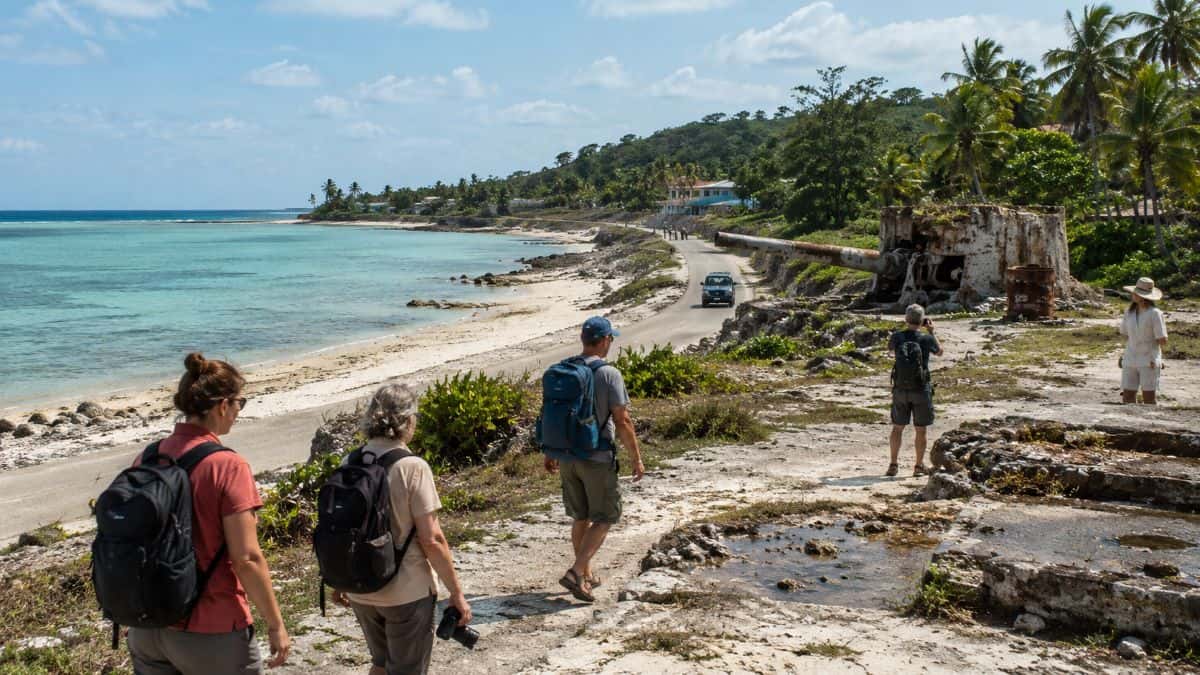
Image generated with Ai
Nauru targets tourism growth as Pacific Island welcomes more visitors: best time to visit and what to see becomes a bigger question as interest rises from Europe, North America and Australia. Nauru targets tourism growth as Pacific Island welcomes more visitors through nature, history and small-scale sustainable travel. The island offers Anibare Bay, Buada Lagoon, WWII sites, Naoero Museum and former phosphate landscapes. Travellers can arrive through Nauru International Airport and connect via Brisbane and other Pacific gateways. Warm weather continues year-round, so the best time to visit depends on heat, rainfall, flight schedules and planned outdoor experiences.
Europe, North America and Australia Drive Visitor Interest
Official Nauru Tourism information says tourism numbers in 2024 were approximately 94% higher than in 2023.
Advertisement
Advertisement
The strongest increases were coming from Europe, North America and Australia. However, the official release does not provide separate visitor totals for individual countries such as the United States, Canada, Germany or the United Kingdom, so those markets should not be assigned unsupported figures.
Nauru Tourism says many visitors are adventurous baby boomers and “bucket-list” travellers looking for less-visited destinations. Most visitors stay for around four days.
Advertisement
Advertisement
Anibare Bay, Buada Lagoon and WWII Heritage Lead Visitor Experiences
Official tourism information identifies Anibare Bay as one of Nauru’s standout attractions. The eastern coastline offers white sand, palm-fringed scenery and access to the island’s tropical Pacific environment.
Advertisement
Advertisement
Buada Lagoon provides a different experience inland. It is surrounded by tropical vegetation and gives travellers an alternative to Nauru’s coastal landscape.
Other officially promoted experiences include:
- WWII sites and historical remains
- Naoero Museum
- Topside and the former phosphate-mining landscape
- fishing in deep Pacific waters
- swimming at Anibare Boat Harbour
- traditional and cultural sites
- walking or riding around the island
- local handicrafts and food experiences.
Nauru International Airport Remains the Main Gateway
Nauru International Airport is the country’s principal international aviation gateway.
Advertisement
Advertisement
Nauru Airlines’ 2026–27 schedule connects Nauru with Brisbane, Tarawa, Majuro, Nadi and Suva, while other Pacific connector services link with destinations such as Pohnpei and Koror.
The airline has warned that runway works at Nauru International Airport are expected between June and September 2026. Scheduled services may therefore be modified during this period.
Advertisement
Advertisement
Brisbane Provides an Important International Access Point
Nauru Tourism specifically identifies Brisbane as an important gateway enabling international visitors to reach the island.
Nauru Airlines also links Nauru onward with other Pacific destinations, giving travellers opportunities to combine Nauru with Fiji, Kiribati, Marshall Islands, Micronesia and Palau depending on the operating schedule.
This aviation network supports Nauru’s wider goal of competing in regional and international visitor markets.
Getting Around Nauru Is Relatively Simple
Nauru covers only about 21 square kilometres and is around six kilometres wide at its broadest point.
Official Nauru Airlines destination information says travellers can walk around the entire country in several hours, although it recommends starting early because daytime temperatures rise quickly. Nauru Airlines’ travel division also offers hotel reservations, transfers and car-hire arrangements.
Advertisement
Advertisement
When Is the Best Time to Visit Nauru?
Nauru has a tropical climate with warm temperatures throughout the year, generally ranging from about 24°C to 34°C.
The official tourism material does not designate a single “best month” for visiting Nauru. Travellers can therefore plan year-round, while considering heat, rainfall, flight schedules and planned activities. Early mornings are particularly useful for walking and outdoor exploration because temperatures rise quickly during the day.
Nauru Wants Tourism Growth Without Mass Tourism
The country’s tourism policy explicitly connects growth with conservation, biodiversity, cultural protection, infrastructure, ecotourism and the Blue Ocean Strategy.
Nauru Tourism has also stated that the country is not seeking mass tourism. Instead, it wants a small-scale sustainable tourism sector that contributes to the local economy and creates opportunities for future generations.
That strategy positions Nauru around nature, history, cultural experiences, aviation connectivity and low-volume Pacific travel rather than conventional large-resort tourism.
Nauru targets tourism growth as Pacific Island welcomes more visitors because the country is building a small-scale tourism model around nature, culture and better regional connectivity. Nauru targets tourism growth as Pacific Island welcomes more visitors while protecting biodiversity, heritage and local communities. There is no single official best time to visit, as temperatures stay warm throughout the year. Travellers can explore Anibare Bay, Buada Lagoon, WWII remains, Naoero Museum and Topside, while Brisbane remains an important gateway. The strongest reason to visit is Nauru’s unusual mix of remote Pacific scenery, history, culture and low-volume sustainable tourism.
Advertisement
