

South Africa’s Cape Town to Host SportAccord 2028, Opening New Opportunities for Sports Tourism

Published
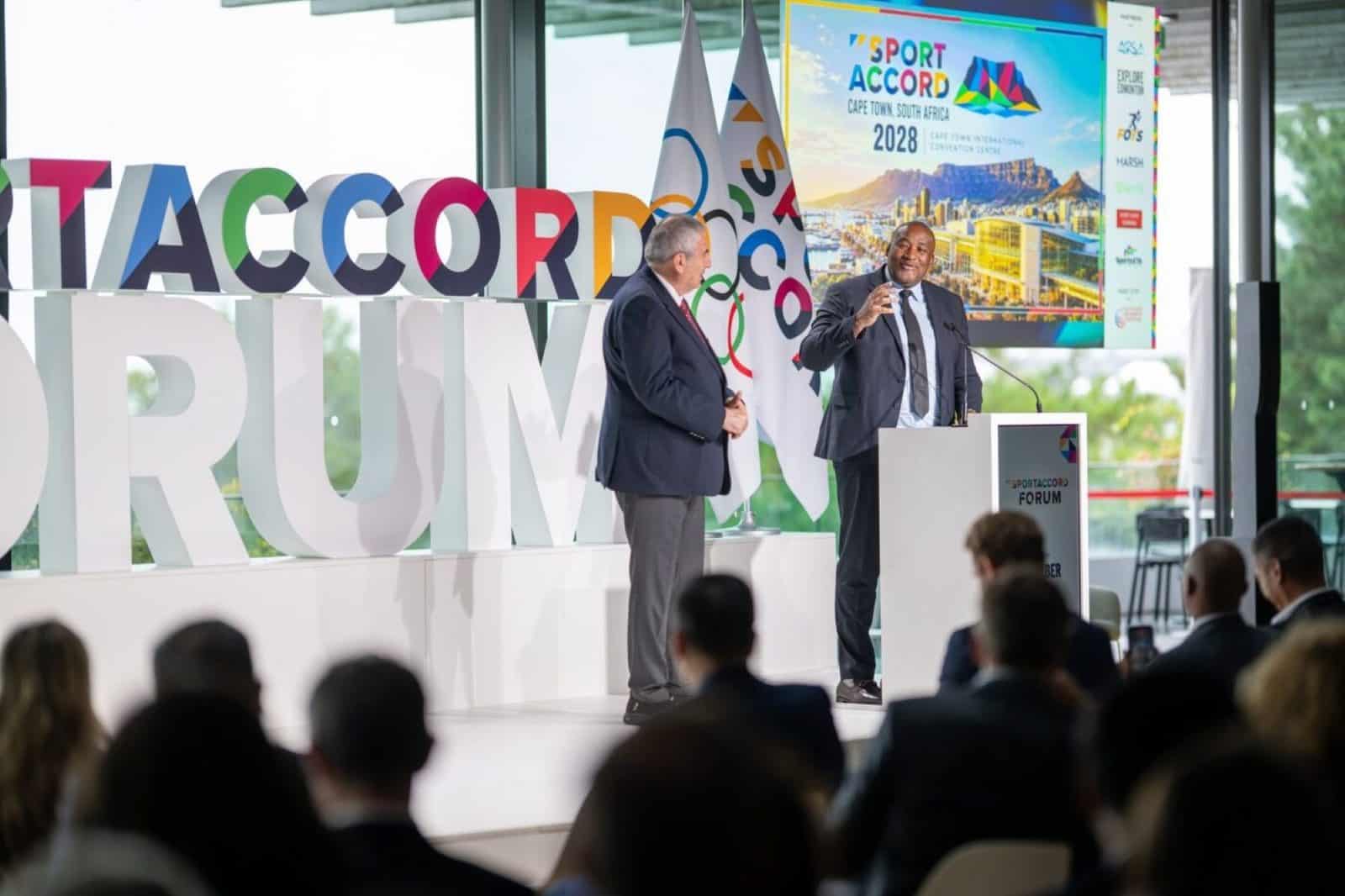
South Africa’s Cape Town is set for a major sports tourism boost as the historic SportAccord Convention arrives in 2028, bringing an international sporting gathering to Africa for the first time. The event will connect global sports organisations, event planners and destination representatives with Cape Town’s established tourism industry. Its potential impact extends beyond conference venues to international airline connectivity, hotel demand, business travel and visitor experiences. For global tourism, the convention represents another opportunity to develop Africa’s position in the international meetings and sporting events market while supporting longer-term destination promotion and commercial relationships.
Cape Town SportAccord Convention 2028 Creates a New Opportunity for South Africa’s Sports Tourism Industry
Cape Town’s selection as host of the 20th SportAccord Convention marks a historic milestone for international sports meetings, as the event arrives in Africa for the first time in 2028. Confirmed on 7 October 2026, the week-long gathering will unite international federations, host cities, event organisers and commercial partners for discussions and collaboration. The announcement also comes as South Africa explores hosting the 2036 Olympic Games, with possible progression in the IOC selection process in March 2027. Any advancement could prompt a review of the convention arrangements. Venue details, delegate numbers and projected tourism spending remain unconfirmed.
- Cape Town is the announced destination for the 2028 convention.
- It will be the first edition staged on the African continent.
- The programme is expected to span one week.
- International sporting organisations and commercial stakeholders form the principal audience.
- Its tourism contribution will depend on delegate numbers, travel patterns and final event arrangements.
| SportAccord 2028 details | Verified position |
|---|---|
| Host destination | Cape Town, South Africa |
| Event | 20th SportAccord Convention |
| Scheduled year | 2028 |
| African hosting milestone | First edition in Africa |
| Main participants | International sports organisations, host cities and industry stakeholders |
| Dates and venue | Not announced in the official 7 October release |
| Economic impact forecast | Not published |
South Africa Tourism Growth Provides a Stronger Foundation for International Sports Events
South Africa enters the convention planning period with a substantially recovered international tourism market. Statistics South Africa recorded approximately 10.5 million overnight international tourists in 2025, an increase of 17.7% compared with 2024. The total also exceeded the country’s 2019 pre-pandemic level by 2.6%. More recent statistics indicate that international visitor activity continued during 2026. In August alone, the country received 1,005,286 overnight tourists, including visitors from overseas markets and neighbouring African countries. These figures describe national tourism activity rather than Cape Town’s performance or demand generated by SportAccord, but they provide useful context for the destination’s international market.
- South Africa welcomed more than 10 million international overnight tourists during 2025.
- International tourist arrivals rose by 17.7% year on year.
- National tourism exceeded the pre-pandemic benchmark.
- August 2026 recorded more than one million overnight tourists.
- The growing visitor market provides a broader foundation for international business events.
Cape Town International Airport Becomes Central to the SportAccord 2028 Travel Opportunity
International air connectivity will be critical to accommodating delegates travelling to Cape Town for SportAccord 2028. Wesgro reported that Cape Town International Airport handled approximately 11.1 million arriving and departing domestic and international passenger movements during 2025, setting a new annual record. In December 2025, international two-way passenger movements reached approximately 364,000, representing 10% year-on-year growth. Domestic passenger movements during that month reached 754,000, increasing by 7%. These figures demonstrate an established aviation market serving both local and overseas travellers. However, the convention has not yet been linked to additional flight frequencies, special airline services or specific passenger forecasts.
Advertisement
Advertisement
- Cape Town International Airport exceeded 11 million two-way passenger movements in 2025.
- International passenger movements grew during December 2025.
- Domestic aviation provides important links with South Africa’s other cities.
- International delegates may use direct or connecting services.
- Additional convention-related flight capacity has not been confirmed.
| Cape Town aviation indicator | Verified result | Reference period |
|---|---|---|
| Total airport passenger movements | 11.1 million | 2025 |
| International two-way movements | 364,000 | December 2025 |
| International passenger growth | 10% | December 2025, year on year |
| Domestic two-way movements | 754,000 | December 2025 |
| Domestic passenger growth | 7% | December 2025, year on year |
Brazil and South America Gain Greater Relevance Through Cape Town’s Expanding Air Routes
Cape Town’s growing international air network offers an additional dimension to its preparations for global events. On 2 July 2026, LATAM launched direct services between São Paulo and Cape Town, adding an important connection with South America. Wesgro reported more than 42,000 two-way direct passengers between São Paulo and Cape Town during 2025, alongside more than 61,000 passengers travelling between South America and the city via connecting hubs. These figures illustrate the size of an established intercontinental travel market. The new link could offer another travel option for South American sports representatives attending the 2028 convention, subject to future schedules and availability.
- São Paulo gained a direct connection with Cape Town in July 2026.
- LATAM introduced a South American airline presence on the route.
- Brazil represents an established international travel market for the destination.
- Direct air access may simplify some convention-related travel.
- No additional Brazil–Cape Town service has been announced specifically for SportAccord 2028.
| South America connectivity | Verified information |
|---|---|
| Country | Brazil |
| Origin city | São Paulo |
| South African destination | Cape Town |
| Airline | LATAM |
| Service inauguration | 2 July 2026 |
| Direct two-way São Paulo–Cape Town passengers | More than 42,000 in 2025 |
| South America–Cape Town passengers via hubs | More than 61,000 in 2025 |
| Confirmed SportAccord-specific services | None announced |
Cape Town’s Business Events Industry Offers an Established Platform for SportAccord 2028
Cape Town’s existing business events infrastructure provides an important advantage for the convention. In May 2026, Wesgro reported that Cape Town retained the top African city position for international association meetings in the ICCA 2025 rankings, based on 55 qualifying meetings held during 2024. Stellenbosch also featured among the continent’s leading conference destinations, with 10 qualifying meetings. The Cape Town and Western Cape Convention Bureau secured 30 business event bids in its preceding financial year, representing an estimated R683 million in economic activity. These figures concern the broader meetings industry and are not projections for SportAccord 2028.
Advertisement
Advertisement
- Cape Town held Africa’s leading city position in the cited ICCA association meetings rankings.
- Its international conference market supports specialised business tourism.
- Stellenbosch adds another established meetings destination within the Western Cape.
- Conference organisers can draw on convention venues, hotels and professional event suppliers.
- SportAccord could strengthen Cape Town’s visibility among international sports event decision-makers.
| Business events indicator | Verified figure | Reporting context |
|---|---|---|
| Cape Town international association meetings | 55 | Meetings held in 2024 |
| Stellenbosch international association meetings | 10 | Meetings held in 2024 |
| Cape Town’s African ICCA city position | First | ICCA 2025 rankings |
| Convention Bureau bids secured | 30 | Preceding financial year, reported May 2026 |
| Estimated economic contribution of secured bids | R683 million | Projected value, not realised revenue |
Cape Town’s Major Events Economy Demonstrates Why International Conventions Matter
Cape Town already manages a substantial calendar of sporting, cultural and business gatherings. The City of Cape Town reported in January 2026 that 1,064 permitted events were approved during 2025, attracting more than 3.47 million spectators and participants. Fifteen supported events generated economic activity exceeding R2.5 billion. A further municipal update published in July 2026 reported that a review of 30 major events identified more than R5 billion in contributions to the local economy. These assessments illustrate the wider importance of organised events, although their economic measures and event samples should not be combined or attributed to SportAccord.
- Cape Town approved more than one thousand events during 2025.
- Combined event attendance exceeded 3.47 million spectator and participant visits.
- The city’s events economy includes sporting fixtures, cultural activities and professional gatherings.
- The July 2026 municipal review identified substantial economic contributions from major events.
- The established events sector gives SportAccord access to an experienced destination supply chain.
| Cape Town events indicator | Official information |
|---|---|
| Permitted events in 2025 | 1,064 |
| Spectators and participants | More than 3,472,000 |
| Economic activity from 15 supported events | More than R2.5 billion |
| Economic contribution from 30 major events reviewed | More than R5 billion |
| Latest review announcement | 7 July 2026 |
United Kingdom, Germany, United States and Other International Markets Shape South Africa’s Travel Opportunities
International sports conventions depend on accessible connections between participating countries and the host destination. South Africa’s existing source markets illustrate where established travel demand can support international events. Statistics South Africa identified the United Kingdom, United States and Australia among the leading overseas origin markets in June 2026. Meanwhile, Wesgro’s September 2026 aviation review identified the United Kingdom, Germany and United States as established international markets for the Western Cape. These countries provide useful context for assessing long-haul connectivity. However, the composition of SportAccord’s 2028 delegation has not been published, so existing tourism demand cannot be treated as confirmed convention attendance.
Advertisement
Advertisement
- The United Kingdom remains an important international visitor market.
- Germany contributes to South Africa’s established European tourism demand.
- The United States is a significant long-haul visitor market.
- Australia also contributes to overseas arrivals.
- Convention-specific country participation remains unconfirmed.
| Country | Overnight tourists visiting South Africa | Reference period |
|---|---|---|
| United States | 40,566 | June 2026 |
| United Kingdom | 16,863 | June 2026 |
| Australia | 12,113 | June 2026 |
Cape Town Hotels, Hospitality and Local Tourism Businesses Could Benefit from International Delegate Travel
One of the clearest potential economic channels for SportAccord 2028 is accommodation demand. International delegates attending a multi-day convention typically require hotel rooms, ground transport and access to hospitality services. Some may extend their journeys for leisure activities, depending on personal schedules and available travel products. This creates opportunities for accommodation providers, restaurants, professional transport businesses, destination management companies and travel agents. However, the scale of demand cannot be determined without confirmed attendance and room-night data. A higher concentration of business travellers could support individual operators, but increased room rates or occupancy levels should not be assumed before reliable booking information becomes available.
- Hotels could attract delegates requiring multi-night accommodation.
- Conference-related travel may generate bookings for airport transfers and local transport.
- Restaurants and hospitality providers could benefit from business visitors.
- Travel agencies may develop combined business and leisure itineraries.
- Actual hotel occupancy and visitor expenditure will require event-specific data.
| Tourism business | Potential benefit | Evidence still required |
|---|---|---|
| Hotels | Delegate accommodation bookings | Confirmed room-night demand |
| Restaurants | Business dining and delegate spending | Verified expenditure |
| Transport operators | Airport transfers and local journeys | Passenger and transfer volumes |
| Tour operators | Optional excursions and private experiences | Confirmed reservations |
| Travel agencies | Conference travel packages | Actual sales and bookings |
| Event suppliers | Professional services contracts | Awarded contracts and expenditure |
Table Mountain, Cape Winelands and Cape Peninsula Could Extend the Tourism Value of SportAccord 2028
Cape Town’s visitor appeal extends beyond its conference facilities. International delegates may have opportunities to explore Table Mountain, the Cape Peninsula, historic attractions and the wider Western Cape. These destinations create possibilities for additional leisure expenditure when visitors combine professional commitments with recreational travel. The region’s established tourism infrastructure also offers options for short excursions, guided activities and longer itineraries. Such travel cannot be counted as an automatic benefit of SportAccord, particularly before the convention schedule and delegate preferences are known. The more meaningful tourism opportunity lies in making optional experiences accessible to international guests without overstating their expected demand.
- Table Mountain offers a recognised natural attraction near the city.
- The Cape Peninsula provides coastal sightseeing opportunities.
- Stellenbosch and the Winelands offer potential post-convention itineraries.
- Cultural and historical attractions could complement delegates’ business schedules.
- Longer visits would depend on travellers’ preferences, budgets and available time.
| Destination area | Potential visitor activity | Relevance to convention tourism |
|---|---|---|
| Table Mountain | Scenic sightseeing | Optional short leisure excursion |
| Cape Peninsula | Coastal touring and nature experiences | Pre- or post-event visits |
| Stellenbosch | Winelands and heritage experiences | Extended Western Cape itineraries |
| V&A Waterfront | Shopping, dining and leisure | Convenient activities around business schedules |
| Cape Town city centre | Heritage and cultural exploration | Opportunities for short guided tours |
| Wider Western Cape | Nature and regional tourism | Potential multi-day extensions |
SportAccord 2028 Could Strengthen Future Sports Tourism Investment and International Event Bidding
SportAccord’s strategic significance extends beyond immediate travel expenditure. The convention creates a setting where international sporting organisations can engage with destinations interested in hosting competitions, championships and professional events. Such contact may allow Cape Town to demonstrate its aviation infrastructure, accommodation market and convention capabilities to organisations involved in future event selection. However, the opportunity to establish relationships is not equivalent to a confirmed hosting contract or investment commitment. The announcement also carries a qualification: SportAccord has stated that arrangements could be reviewed if South Africa advances further in the International Olympic Committee’s process concerning possible hosting of the 2036 Olympic Games.
- International sports organisations will be central to the convention.
- Destination representatives may develop professional relationships with future event organisers.
- Cape Town can demonstrate its established conference and visitor infrastructure.
- Future sporting event contracts have not been confirmed as outcomes of SportAccord.
- The 2028 arrangements may require review depending on South Africa’s Olympic hosting process.
| Strategic area | Current position | Possible longer-term significance |
|---|---|---|
| International sports relationships | Convention hosting announced | Expanded professional networks |
| Sports event bidding | No additional event awards confirmed | Opportunities to pursue future competitions |
| Tourism investment | No SportAccord-specific investment forecast | Possible commercial partnerships |
| Destination marketing | International sporting audience expected | Greater international visibility |
| Olympic hosting discussions | South Africa identified as an interested party | Potential implications for convention arrangements |
Cape Town Travel and Tourism Impact Outlook for 2028 and Beyond
The practical value of SportAccord 2028 will depend on how effectively Cape Town translates an international conference into measurable travel activity. Airlines and airports will be concerned with incoming passenger movements and route availability. Hotels will need reliable booking forecasts. Tourism operators will benefit most if delegates choose excursions or extend their visits. Meanwhile, conference organisers and municipal authorities will need to coordinate transport, venues and visitor services. The existing tourism figures demonstrate the scale of Cape Town’s broader visitor economy, but they do not establish the convention’s eventual contribution. Accurate assessment will require confirmed event details and measurable results after the gathering.
Advertisement
Advertisement
- International delegate numbers will determine the immediate travel opportunity.
- Accommodation bookings will provide evidence of hospitality demand.
- Air passenger movements can help assess connectivity requirements.
- Extended visitor stays could support attractions beyond conference venues.
- Economic outcomes should be assessed using verified expenditure and attendance data.
| Tourism impact area | What should be monitored |
|---|---|
| International visitor arrivals | Actual overseas delegate attendance |
| Airline connectivity | Flight availability and passenger movements |
| Hotel performance | Confirmed convention-related room nights |
| Visitor expenditure | Spending attributable to convention visitors |
| Leisure tourism | Additional excursion and extended-stay bookings |
| Local business participation | Verified supplier contracts and spending |
| Destination development | Subsequent event bids and confirmed hosting agreements |
Conclusion
South Africa’s Cape Town is set for a major sports tourism boost as the historic SportAccord Convention arrives in 2028. The gathering presents an opportunity to connect international sporting organisations with the city’s established travel, aviation, hospitality and business events industries. Its importance lies not only in attracting professional visitors but also in creating relationships that may support future destination development. Hotels, airlines and tourism businesses could benefit from additional demand, although the eventual scale remains uncertain. For Cape Town, SportAccord represents a significant opportunity to strengthen South Africa’s visibility within the global sports tourism market.
Advertisement
