Image generated with Ai
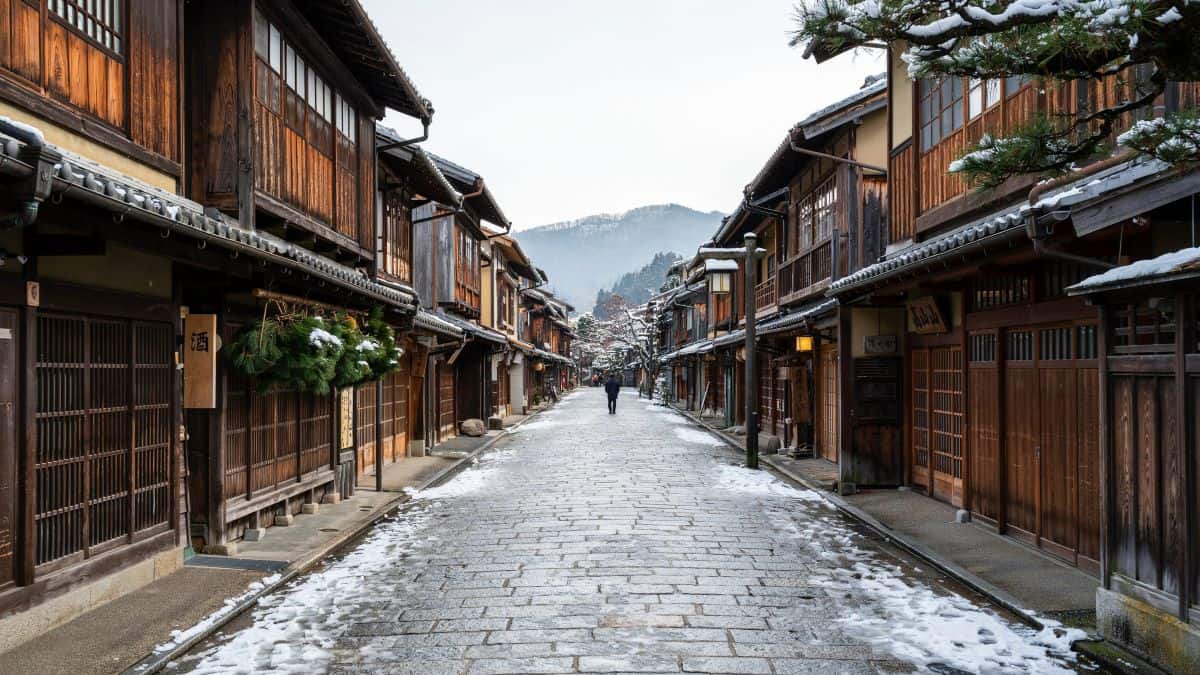
Takayama and more Japanese cities are seeing more tourists as underrated destinations fuel a new travel boom across Japan. Today, Takayama attracts tourists seeking authentic Japanese experiences beyond crowded routes. Meanwhile, more underrated Japanese cities are gaining attention as travelers discover regional culture, food, nature and heritage. This new travel boom is also encouraging visitors to explore Japan beyond its famous gateways. Moreover, Takayama and more cities offer fresh reasons to travel deeper into Japan. As Japanese cities welcome more tourists, travel opportunities continue expanding. Travel And Tour World urges travelers to read the entire story and discover the Japanese cities shaping this exciting new travel boom.
Japan is entering a new era of international tourism. The country welcomed 42,683,600 international visitors in 2025, according to the Japan National Tourism Organization. That was 15.8% above 2024, when arrivals reached 36,870,148.
The recovery is also visible in accommodation demand. Japan’s national accommodation statistics show the dramatic pandemic disruption followed by a strong rebound in 2023, 2024 and 2025. The Tourism Agency publishes annual accommodation datasets covering 2021 through 2025.
The tourism challenge is increasingly about where visitors go, rather than simply how many arrive.
Advertisement
Advertisement
Tokyo and Kyoto remain essential for first-time visitors. However, concentrating millions of travelers around the same famous attractions can create congestion. Regional cities can offer another solution.
These destinations combine historic architecture, local food, mountains, coastlines, art, traditional industries and slower travel experiences.
They can also extend a Japan itinerary beyond the familiar Tokyo–Kyoto–Osaka corridor.
The six cities below are particularly useful for travelers seeking a different perspective.
The recovery has not happened at the same speed everywhere. Pandemic restrictions affected 2021 heavily, while 2022 marked the beginning of domestic and international recovery.
By 2023, international demand was returning strongly. In 2024 and 2025, several regional destinations reached or exceeded earlier visitor levels.
Year Japan international visitors Tourism trend 2021 245,862 Pandemic-era low 2022 3,832,110 International reopening begins 2023 25,066,350 Strong recovery 2024 36,870,148 Previous record surpassed 2025 42,683,600 New annual record
The national figures demonstrate why regional tourism matters. Even as Japan attracts record international demand, dispersing visitors can help travelers discover less crowded destinations and distribute tourism spending more widely.
Local statistics also show how dramatically regional tourism has recovered.
Japanese municipalities do not all calculate “tourists” in the same way.
Some count estimated visitor arrivals. Others count visitors to individual attractions, overnight stays or movements across defined areas.
Nagasaki, for example, changed its methodology from 2024. Its newer system uses location-data information and accommodation-tax records. Therefore, 2024 and 2025 should not be treated as perfectly comparable with earlier figures.
This distinction is important when comparing destinations.
| City | 2021 | 2022 | 2023 | 2024 | 2025 | Latest official indicator |
|---|---|---|---|---|---|---|
| Takayama | 1.948m | 3.086m | 4.072m | 4.422m | 4.795m | Citywide visitor arrivals |
| Nagasaki | 2.586m | 4.049m | 5.319m | 6.540m* | 6.903m* | Citywide visitors |
| Kumamoto | 2.311m | 4.053m | 5.626m | 6.305m | 6.547m | Citywide visitor arrivals |
| Onomichi | 4.617m | 5.657m | 6.583m | 6.675m | 6.697m | Citywide visitor estimate |
| Kanazawa | Official annual survey series available | Official annual survey series available | Official annual survey series available | Official annual survey series available | 2025 survey: 879 respondents | Attraction and accommodation statistics |
| Matsumoto | Official annual tourism datasets available | Official annual tourism datasets available | Official annual tourism datasets available | Official annual tourism datasets available | Major attractions reached record levels | Attraction and accommodation statistics |
*Nagasaki’s 2024–2025 figures use the city’s revised methodology.
Takayama’s five-year progression is especially striking. Visitor arrivals increased from 1.948 million in 2021 to 4.795 million in 2025, more than doubling over four years. The city recorded its highest-ever annual total in 2025.
Onomichi also shows a substantial recovery. Its total visitor estimate rose from 4,617,407 in 2021 to 6,696,507 in 2025.
Kumamoto’s tourism arrivals climbed from 2.311 million in 2021 to 6.547 million in 2025. Tourism consumption reached ¥128 billion in 2025, while overnight stays reached approximately 4.18 million. Foreign visitor arrivals reached about 1.808 million, up 29.9% year over year.
Takayama is one of Japan’s strongest choices for travelers who want traditional streets, mountain scenery and regional food without relying on Tokyo or Kyoto. The city recorded 4.795 million visitor arrivals in 2025, up 8.44% from 4.422 million in 2024. Both overnight and day-trip visitor numbers reached record levels. Overnight visitors numbered 2.324 million, while day visitors reached 2.471 million.
The five-year progression is revealing. Takayama recorded 1.948 million visitors in 2021, 3.086 million in 2022, 4.072 million in 2023, 4.422 million in 2024 and 4.795 million in 2025. That means the city recovered far beyond its pandemic-era level.
International demand is particularly strong. Foreign overnight visitors reached 978,312 in 2025, up 27.1%. European visitors accounted for 220,141 overnight stays, while North American visitors reached 70,721.
Travelers should spend at least two nights here. Start around the historic Sanmachi Suji district, then visit Takayama Jinya and the morning markets. The Takayama Festival is another major attraction.
Food is central to the experience. Look for Hida beef, local ramen, Hoba miso and regional sake.
A practical itinerary is simple. Arrive from Nagoya, spend the first afternoon exploring the old town, dedicate the second day to markets and nearby villages, then continue toward Shirakawa-go or Kanazawa.
For accommodation, travelers should consider a traditional ryokan for one night and a modern hotel for another. Staying overnight is preferable to a quick excursion because Takayama’s character becomes clearer after the day-trip crowds leave.
Takayama also introduced a lodging tax in October 2025, with the city explaining that tourism-related revenue would support sustainable tourism development. Its 2025 tourism policy also emphasizes respectful visitor behavior and better management of crowded areas.
Takayama indicator 2021 2022 2023 2024 2025 Total visitors 1.948m 3.086m 4.072m 4.422m 4.795m 2025 overnight visitors — — — 2.249m 2.324m 2025 day visitors — — — 2.173m 2.471m Foreign overnight visitors — — — 769,743 978,312
Kanazawa is perhaps the strongest choice for travelers who want traditional Japan but prefer an alternative to Kyoto. The city combines historic districts, gardens, samurai heritage, seafood, contemporary art and traditional crafts.
Its 2025 tourism survey covered 879 Japanese visitors across major locations including the central tourist information centre, Higashi Chaya, Kanazawa Castle Park and Nagamachi. The research found that 62.1% of surveyed Japanese visitors were repeat visitors, while 81.6% travelled independently rather than through packaged arrangements.
Food was the leading motivation. 86.3% said eating was something they expected from their Kanazawa trip. Historic attractions followed at 60.3%, while traditional streets and historic atmosphere reached 52.0%.
The city’s most visited attractions among surveyed travelers included Kanazawa Castle and Kenrokuen Garden at 90.9%, Omicho Market at 72.5%, the traditional tea districts at 72.2%, the 21st Century Museum at 46.0% and Nagamachi Samurai District at 38.2%.
The satisfaction figures are equally strong. 95.4% of respondents described themselves as either very satisfied or generally satisfied. Average spending per person within Kanazawa was ¥37,344.
Travelers should allow two full days. Begin with Kenrokuen early in the morning. Continue to Kanazawa Castle, Omicho Market and the Higashi Chaya district.
Food should be treated as part of the itinerary. Try local seafood, sushi, Kaga cuisine, wagashi sweets and regional sake.
Hotels around Kanazawa Station are convenient for rail travelers, while boutique accommodation around the historic centre works better for visitors prioritizing atmosphere.
The city is also well suited to a regional itinerary. Survey respondents showed strong interest in adding Noto, Toyama, Kaga and Fukui during future trips.
2025 Kanazawa tourism indicator Result Survey respondents 879 Repeat visitors 62.1% Independent travel 81.6% Expected food experience 86.3% Expected historic attractions 60.3% Kenrokuen/Kanazawa Castle visitors in survey 90.9% Omicho Market 72.5% Tea districts 72.2% Overall satisfaction 95.4% Average spending per person ¥37,344
Matsumoto is an excellent choice for travelers combining culture with outdoor tourism. Its biggest advantage is the ability to connect an urban historic experience with the Japanese Alps.
The city’s tourism statistics include visitor arrivals, foreign accommodation, domestic accommodation and detailed visitor surveys.
One statistic demonstrates the strength of international interest. Matsumoto Castle welcomed 986,207 visitors in 2024, almost matching its historical peak. Foreign visitors reached 191,748, representing the highest number and highest share since the city began recording foreign visitors in 2009. The foreign total was approximately 30% higher than 2023 and almost double the level recorded a decade earlier.
The city also reported that Matsumoto Museum of Art attracted 230,586 visitors in fiscal 2024, including more than 40,000 international visitors.
Travelers should spend two or three nights. Day one can focus on Matsumoto Castle and the historic centre. Day two can be dedicated to the Japanese Alps. Travelers with more time can use Matsumoto as a base for Kamikochi and surrounding mountain areas.
The city is especially attractive during spring, summer and autumn. Mountain scenery dominates the experience, while winter brings a quieter atmosphere.
Food choices include soba noodles, oyaki, local miso-based dishes and Nagano produce. Travelers should also look for regional sake.
For accommodation, the best approach is to combine a centrally located hotel with one night at an onsen property if time allows.
The city’s statistics also show why Matsumoto deserves greater attention. It offers the rare combination of a nationally important castle, contemporary art, traditional streets and direct access to alpine landscapes.
Matsumoto tourism indicator Latest official figure Matsumoto Castle visitors, 2024 986,207 Foreign Matsumoto Castle visitors, 2024 191,748 Foreign Castle visitors, change from 2023 +30% Matsumoto Museum of Art visitors, FY2024 230,586 Foreign Museum visitors, FY2024 40,000+
Nagasaki provides one of Japan’s most distinctive cultural experiences. Its history has been shaped by international exchange, maritime trade and multiple cultural influences.
Official statistics show a major tourism recovery. Visitor numbers were 2.5857 million in 2021, rising to 4.0488 million in 2022 and 5.3194 million in 2023. The city’s revised methodology then produced 6.540425 million in 2024 and 6.902993 million in 2025.
The methodology change is important. From 2024, Nagasaki began using location-data information and accommodation-tax records to improve its estimates. Consequently, the newer numbers should not be compared mechanically with earlier estimates.
For travelers, Nagasaki offers an unusually broad itinerary. Glover Garden, Oura Church, Dejima and the waterfront provide different perspectives on the city’s international history.
The Atomic Bomb Museum and Peace Park are essential for visitors interested in understanding the city’s wartime history. They should be approached respectfully and with enough time for reflection.
The city’s food culture is another attraction. Travelers should try Nagasaki champon, sara udon, castella and local seafood.
A three-day itinerary works well. Day one can cover the historic western hillside and waterfront. Day two should focus on peace and wartime history. Day three can explore Dejima, markets and surrounding viewpoints.
Accommodation around Nagasaki Station is convenient for rail travelers. Waterfront hotels provide a stronger leisure experience.
Nagasaki is particularly valuable for travelers who want a city that combines history, food, architecture, international connections and emotional depth.
Nagasaki visitors Official figure 2021 2,585,700 2022 4,048,800 2023, old methodology 5,319,400 2023, revised methodology 6,091,907 2024, revised methodology 6,540,425 2025, revised methodology 6,902,993 2025 tourism expenditure ¥229.04 billion
Kumamoto is an increasingly important Kyushu destination for travelers who want history and access to volcanic landscapes.
Its tourism statistics show one of the strongest recoveries among regional Japanese cities. Visitor arrivals increased from 2.311 million in 2021 to 4.053 million in 2022, 5.626 million in 2023, 6.305 million in 2024 and approximately 6.547 million in 2025.
The city’s tourism economy has also expanded rapidly. In 2024, tourism expenditure reached ¥115.3 billion, up 23.4%. Overnight stays reached approximately 4.023 million, while foreign overnight visitors reached about 890,000.
The 2025 figures were even stronger. Tourism spending reached ¥128 billion, visitor arrivals approximately 6.547 million, and overnight stays approximately 4.18 million. Foreign visitor arrivals rose 29.9% to about 1.808 million, while foreign overnight stays increased 29.7% to roughly 1.154 million.
Kumamoto Castle should anchor any visit. Travelers can then explore Suizenji Garden and the city’s food scene.
The wider region is equally important. Kumamoto provides a useful base for exploring Mount Aso and other parts of Kyushu.
Local food includes basashi, ramen, karashi renkon and regional produce.
A three-day itinerary is ideal. Spend the first day in central Kumamoto. Use the second for the castle and gardens. Reserve the third for an excursion toward Aso.
For accommodation, central hotels are practical for short stays. Travelers extending their journey into the countryside should consider an onsen ryokan.
Kumamoto tourism indicator 2021 2022 2023 2024 2025 Visitor arrivals 2.311m 4.053m 5.626m 6.305m 6.547m Overnight stays 1.837m 2.611m 3.533m 4.023m 4.180m Tourism spending ¥38.1bn ¥61.4bn ¥93.4bn ¥115.3bn ¥128bn Foreign overnight stays 0.006m 0.047m 0.434m 0.890m 1.154m
Onomichi offers one of the most compelling alternatives for travelers wanting a smaller-scale Japanese experience. The city combines hillside temples, narrow lanes, sea views, island culture and access to the Shimanami Kaido cycling route.
Its visitor recovery has been impressive. Onomichi recorded 4,617,407 visitors in 2021, followed by 5,657,323 in 2022, 6,583,116 in 2023, 6,674,931 in 2024 and 6,696,507 in 2025.
The latest figures also reveal a major international expansion. Foreign visitors reached 707,462 in 2025, up 33.9% from 528,300 in 2024. Tourism spending rose to ¥39.37 billion, while cycling visitors reached a record 280,060.
The city recorded particularly strong visitor growth from Taiwan, the United States, France, Australia and the United Kingdom. Taiwan accounted for 147,252 visitors, followed by the United States at 102,729 and France at 52,876.
Travelers should start around the old hillside districts before exploring Senkoji Park and the waterfront. Cyclists can then begin a longer Shimanami Kaido journey.
Food is another reason to stay. Look for Onomichi ramen, seafood and local citrus products.
Two nights is the minimum recommended stay. Three nights works better for cyclists.
Accommodation ranges from conventional hotels near the station to smaller guesthouses and traditional properties.
A practical itinerary starts with the old town and temples. The second day can be devoted to cycling or island exploration. The third day can be used for a slower food and cultural itinerary.
Onomichi tourism indicator 2021 2022 2023 2024 2025 Total visitors 4,617,407 5,657,323 6,583,116 6,674,931 6,696,507 Foreign visitors 0 0 371,257 528,300 707,462 Tourism spending ¥19.885bn ¥25.536bn ¥34.151bn ¥36.948bn ¥39.370bn Cycling visitors 102,108 168,368 214,342 223,874 280,060 Senkoji Ropeway users* 212,180 483,034 503,216 509,932 619,339
*Ropeway figures are fiscal-year figures rather than calendar-year visitor totals.
| City | Best for | Recommended stay | Signature experience | Travel style |
|---|---|---|---|---|
| Takayama | Traditional Japan and mountains | 2–3 nights | Old town + Hida beef | Slow cultural travel |
| Kanazawa | Arts, gardens and food | 2 nights | Kenrokuen + seafood | Culture and gastronomy |
| Matsumoto | Alps and castle heritage | 2–3 nights | Matsumoto Castle + mountains | Nature and culture |
| Nagasaki | History and international heritage | 3 nights | Peace Park + historic districts | Educational cultural travel |
| Kumamoto | Castle and Kyushu nature | 2–3 nights | Kumamoto Castle + Aso | History and adventure |
| Onomichi | Cycling and coastal Japan | 2–3 nights | Shimanami Kaido | Active slow travel |
Travelers arriving in Tokyo do not need to abandon the traditional route completely.
A better approach is to use Tokyo as the gateway and then build a wider itinerary.
Days 1–3: Tokyo
Explore Tokyo’s historic and contemporary sides before moving west or north.
Days 4–5: Matsumoto
Take the train toward Matsumoto. Explore the castle and historic centre. Add an alpine excursion if conditions allow.
Days 6–7: Takayama
Continue toward Takayama. Explore the old town, markets and Hida cuisine. Add Shirakawa-go if time permits.
Days 8–9: Kanazawa
Continue to Kanazawa for gardens, samurai heritage, tea districts, contemporary art and seafood.
Days 10–12: Kyoto
Include Kyoto if this is a first Japan visit. Travel early at major attractions and use official congestion information where available.
Days 13–14: Osaka or regional extension
Finish in Osaka, or replace the final section with a longer trip to Nagasaki, Kumamoto or Onomichi.
The statistics tell a larger story than simple visitor growth.
Takayama moved from 1.948 million visitors in 2021 to 4.795 million in 2025. Onomichi rose from 4.617 million to 6.697 million. Kumamoto nearly tripled from 2.311 million to 6.547 million over the same period.
International demand is becoming especially important.
Onomichi’s foreign visitors climbed to 707,462 in 2025. Takayama recorded 978,312 foreign overnight stays. Kumamoto reached roughly 1.154 million foreign overnight stays.
For travelers, this means Japan’s tourism map is becoming much wider.
The strongest itinerary is no longer necessarily the one containing the largest number of famous attractions.
Instead, travelers can combine major cities with regional destinations.
That approach creates more opportunities for local food, independent businesses, traditional accommodation, outdoor activities and longer stays.
It can also reduce pressure on heavily visited areas.
Japan’s tourism growth therefore creates an opportunity for travelers to go beyond the obvious.
Tokyo and Kyoto can remain part of the journey. But Takayama, Kanazawa, Matsumoto, Nagasaki, Kumamoto and Onomichi show why the next chapter of Japan travel may be found farther from the traditional route.
Takayama and more underrated Japanese cities are reshaping how travelers discover Japan. The growing tourist interest shows that visitors increasingly want experiences beyond the busiest destinations. From Takayama’s historic streets to Kanazawa’s culture, Matsumoto’s mountain scenery, Nagasaki’s heritage, Kumamoto’s attractions and Onomichi’s coastal charm, each city offers a distinct reason to explore deeper. Moreover, these destinations can help travelers experience authentic food, local traditions and memorable landscapes while supporting regional tourism. As Japan’s travel boom continues, exploring underrated Japanese cities can create richer journeys. Travel And Tour World encourages global travelers to look beyond familiar routes and discover Japan’s emerging travel treasures.
Advertisement
Tags: hidden Japan destinations, Japan regional tourism, japan travel, Japan Travel Boom, Takayama tourism
Advertisement
Advertisement













Monday, September 7, 2026

Monday, September 7, 2026

Monday, September 7, 2026

Sunday, September 6, 2026
Saturday, September 5, 2026
Monday, September 7, 2026

Monday, September 7, 2026