
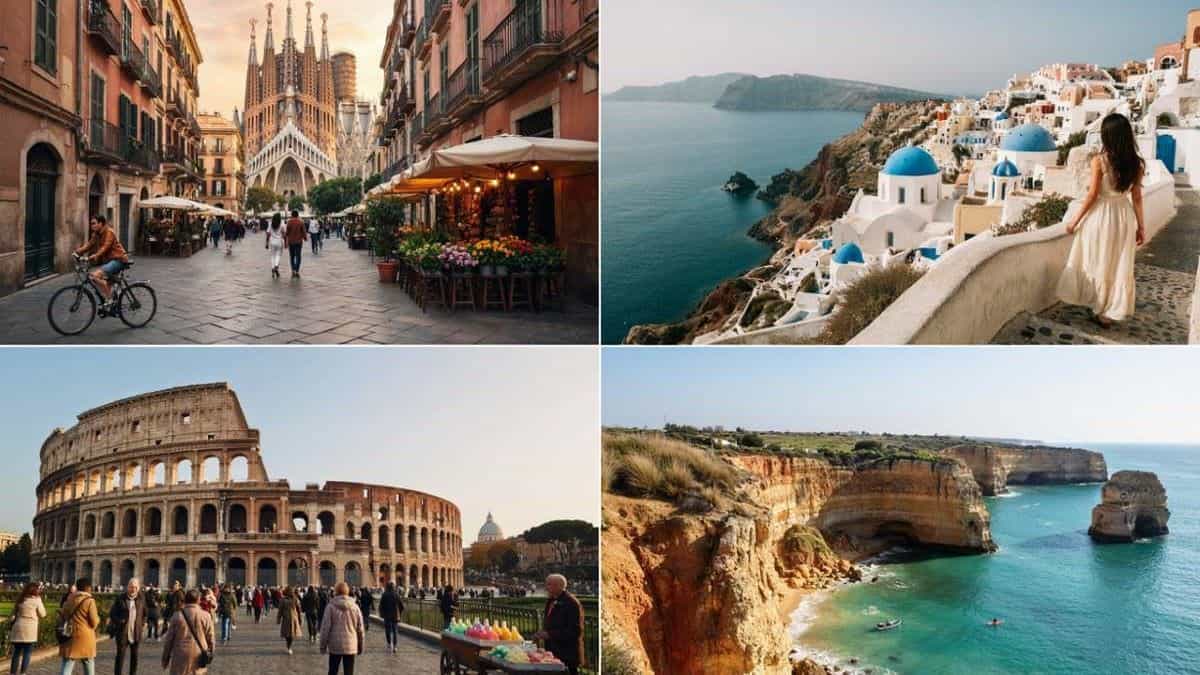
Image generated with Ai
Greece and Portugal have a new reason for tourists to go beyond their typical summer vacation plans. Autumn vacations in the Mediterranean are being increasingly recognized by tourists who want warmer weather, cultural experiences, and an easier-going vacation tempo. In terms of tourism, the area is at the beginning of a significant transition. While July and August remain the dominant times of year for a summer vacation, current trends indicate that tourist interest in Southern Europe will continue through the colder months. As one of the top tourist destinations in the Mediterranean, Portugal continues to attract many foreign visitors. September and October are becoming increasingly popular with tourists and will create additional revenue opportunities for hotels, attractions, and other local businesses. These shifts could ultimately impact how the Mediterranean tourism market functions. They could also potentially allow destinations to distribute tourist traffic over a longer time frame. Why is there a surge in autumn travel? To learn more about recent trends in tourism, the most visited locations, and changes in the European tourism calendar, Travel And Tour World encourages its readers to read the full article.
| Country | 2026 period | Key tourism statistic | Year-on-year change | International demand |
|---|---|---|---|---|
| Spain | January–July | 58.1 million international tourists | +4.6% | UK, France and Germany were the leading source markets |
| Spain | July | 11.54 million international tourists | +4.6% | UK led with almost 2.2 million visitors |
| Italy | January–March | 23.0 million arrivals | +4.2% | Foreign overnight stays increased 12.3% |
| Italy | January–March | 71.6 million overnight stays | +7.5% | Foreign visitors generated 54.6% of total nights |
| Greece | April–June | 46.8 million overnight stays | +1.7% | International visitors generated 40.8 million nights |
| Portugal | April–June | 23.3 million overnight stays | +1.2% | Non-residents accounted for 16.7 million nights |
| Portugal | July | 9.6 million overnight stays | +2.1% | Non-resident nights reached 6.6 million |
The Mediterranean holiday story is changing. Summer still brings the biggest crowds. Yet more travellers now see value in visiting after the hottest months. September and October can offer warm days, open-air dining, coastal views and rich cultural experiences without the full force of the July and August rush. Greece and Portugal sit at the heart of this shift. Both remain popular with overseas visitors. Both also show why the travel calendar is becoming longer. However, the wider picture matters. Spain and Italy are also recording strong tourism activity in 2026. Their huge visitor numbers show that Southern it continues to hold a powerful place in the global travel market. The latest official figures give this trend real weight. During the first half of 2026, tourist accommodation across the European Union recorded 1.321 billion overnight stays. That was 1.7% more than in the same period a year earlier. International overnight stays grew even faster, rising 2.5%. This creates an important question. Is summer still the only season that matters? The answer is no. But summer is not disappearing either. Instead, the gap between peak and shoulder seasons is becoming more interesting. Travel demand is spreading across more months. For destinations, that can bring fresh income and help extend the tourism season. For visitors, it creates another chance to explore the Mediterranean at a different pace.
Advertisement
The numbers for 2026 show that European tourism remains strong. During the first six months of the year, accommodation across the EU recorded 1.321 billion nights. Almost half of these nights came from international visitors. Foreign demand also grew faster than domestic demand. That detail matters. It suggests that overseas travellers are helping keep European destinations busy beyond their traditional holiday periods. The Mediterranean benefits greatly from this demand because its climate, coastline, islands, cities and cultural attractions appeal to many types of visitors. Yet the market remains seasonal. July and August continue to dominate. School holidays still shape family travel. Beach resorts still attract their largest crowds during the warmest months. The change is therefore not a dramatic replacement of summer. It is a gradual extension. Travellers now have more reasons to consider other months. Some want sunshine without extreme heat. Others want better conditions for walking, sightseeing or outdoor activities. Many simply want a different holiday experience. This is where autumn travel gains its appeal.
“Autumn is no longer an overlooked period for European travel. The latest figures show that visitors are spreading their trips beyond the traditional summer peak. This shift gives destinations a valuable chance to extend their tourism season, ease pressure during busy months, and offer travellers a more comfortable experience.” – by Anup Kumar Keshan, Founder and Editor-in-Chief, Travel And Tour World.
Advertisement
Advertisement
Greece remains one of the most recognisable names in Mediterranean travel. Its islands, ancient sites, beaches and food continue to attract visitors from around the world. The country’s 2026 figures show that international travellers remain a major force in its accommodation market. During the second quarter of 2026, Greece recorded 46.8 million accommodation overnight stays. This represented growth of 1.7% compared with the second quarter of 2025. Foreign visitors generated 40.8 million of those nights. That is a striking share. It shows how strongly the destination depends on international tourism. It also explains why changes in travel timing can matter so much. Greece remains highly seasonal. Summer still creates a huge concentration of demand. Eurostat identifies the country as one of the EU markets with particularly strong seasonality. So the evidence does not support the idea that autumn has already become as busy as August across the country. Instead, it points to an opportunity. If more travellers choose September or October, tourism businesses can continue serving visitors after the biggest summer wave has passed. Hotels, restaurants, guides and local attractions can benefit from a longer period of activity. That could be valuable for islands and coastal areas where the tourism economy often depends heavily on a short peak.
Portugal offers another important part of the story. Its appeal is broad. Travellers can choose cities, beaches, islands, food, nature and historic sites. The country’s climate also helps it remain attractive outside the hottest part of summer. Official statistics show that Portuguese accommodation recorded 9.4 million guests during the second quarter of 2026. These visitors generated 23.3 million overnight stays. Guest numbers rose 2.3% compared with the same period in 2025. Overnight stays increased 1.2%. Foreign visitors remained central to the market. Non-residents generated 16.7 million overnight stays during the quarter. They therefore accounted for almost 72% of all nights. This is important for the shoulder-season story. International travellers provide a strong base for continued tourism demand. They also have different holiday calendars. Not everyone travels during the same weeks. That creates opportunities for destinations to spread visitor activity across the year. The Algarve is especially relevant. It accounted for 27.2% of Portugal’s accommodation nights during the second quarter. Greater Lisbon followed with 23.4%, while the North accounted for 18.5%. Each area offers a different reason to visit. That variety can help Portugal maintain demand as the calendar moves beyond the height of summer.
The strongest evidence comes from Spain. The country’s National Statistics Institute reported 58.1 million international tourists during the first seven months of 2026. That was 4.6% higher than during the same period of 2025. July alone brought 11.54 million international visitors. That figure shows that the traditional summer market remains incredibly powerful. But the earlier months also tell an interesting story. International arrivals rose 5.2% in April. May saw an increase of 9.5%. June recorded growth of 2.9%. July then added another 4.6%. The market therefore entered the main summer period with strong momentum. Regional demand was also spread across several major destinations. Catalonia received 11.9 million international visitors during the first seven months. The Balearic Islands welcomed 9.2 million. The Canary Islands received 9.0 million. Andalusia recorded 7.3 million. This variety matters. Some visitors come for beaches. Others come for cities, food, history or nature. That gives the country more ways to attract people outside the narrowest summer window. It also helps explain why September and October can remain busy. The tourism product does not disappear when August ends. The weather changes. The pace changes. But the attractions remain.
Italy adds another powerful example. Official figures show that tourism started 2026 strongly. During the first quarter, the country recorded 23 million tourist arrivals and 71.6 million overnight stays. Arrivals rose 4.2%. Overnight stays rose even faster, increasing by 7.5%. Foreign visitors were especially important. They generated 54.6% of all overnight stays during the quarter. Foreign nights increased by 12.3%. That is a major rise. The growth also accelerated during the later months of the quarter. Foreign overnight stays increased 11.3% in February and 17.4% in March. This suggests that international travel demand is not simply waiting for the summer. The second quarter kept the momentum alive. Italy recorded 147.9 million accommodation nights between April and June. That was 3.9% higher than in the same period of 2025. Holiday and short-stay accommodation performed even better. Nights in this category rose 10.6%. That result is significant for modern travel. Visitors do not all want the same type of holiday. Some prefer hotels. Others choose apartments, holiday homes or other flexible accommodation. These options can make shorter breaks and off-peak trips easier. Italy’s numbers therefore show more than simple growth. They show a tourism market with several moving parts.
Advertisement
Advertisement
Weather is one obvious reason travellers may choose the shoulder season. Summer heat can be intense. That can make long walks through historic centres tiring. It can also make outdoor activities less comfortable. Autumn offers a different experience. Days can remain warm in many southern areas. Visitors can still eat outside. They can still explore beaches and coastal towns. They can also spend more time walking through cities and visiting cultural sites. For some travellers, this balance is ideal. They want the atmosphere of a Mediterranean holiday without the strongest summer heat. There is also the issue of pace. Peak-season travel can feel rushed. Popular attractions may have long queues. Roads can become busy. Restaurants may operate at full capacity. An autumn visit may feel easier. But this does not mean the region becomes empty. The latest figures show that demand remains substantial. That is the key distinction. The shoulder season may feel calmer in some places, but it is still becoming commercially important.
Madeira provides one of the clearest examples of strong autumn demand. Official regional statistics recorded 228,800 guests in October 2025. They generated 1.174 million overnight stays. Guest numbers increased 11.4% year on year. Overnight stays rose 11.8%. The accommodation figures were also strong. Hotels accounted for 66.7% of overnight stays. Hotel nights increased 5.9%. Local accommodation performed even more strongly. Overnight stays in that sector rose 26.9%. The island recorded a bed occupancy rate of 71.4% and room occupancy of 82.1%. These numbers show how a destination with a mild climate can continue attracting visitors after the main European summer holiday period. Madeira is not identical to the mainland Mediterranean market. Yet it provides a useful example of the wider principle. Climate can stretch the tourism calendar. When visitors know that a destination can offer pleasant conditions in October, the traditional summer window becomes less important.
The change could have economic value. Tourism businesses often face a difficult pattern. They prepare for a huge summer rush. Then demand can fall quickly. A longer season can soften that drop. Hotels may stay open for more months. Restaurants can keep staff for longer. Tour operators can run more trips. Shops can continue serving visitors. Local workers may also benefit. Seasonal employment can be unstable when tourism depends heavily on a few months. More visitors in spring and autumn could create a steadier flow of work. There is another possible benefit. A longer season can spread pressure. Eurostat has highlighted how strong seasonality can place pressure on local resources during peak periods. Roads, public transport, accommodation and popular attractions can all feel the strain when visitor numbers rise sharply. Moving some demand into other months could help. However, it is not a magic solution. If autumn tourism grows too quickly, popular places can still become crowded. Local infrastructure must keep pace. Destinations must also protect the natural and cultural assets that attract visitors in the first place. Growth without planning can simply move the problem around.
Foreign travellers are central to this story. Italy’s 2026 figures show especially strong growth in international overnight stays. Portugal also depends heavily on overseas visitors. Spain continues to record millions of foreign arrivals. This matters because international tourists do not all follow one holiday calendar. Different countries have different school breaks. Different workers have different schedules. Some travellers can take shorter trips outside the main holiday period. That creates a wider pool of potential visitors. A person may not want to spend two weeks in Europe during the hottest weeks of August. But that same traveller may happily book five days in September. Another may choose October for food, history or nature. The destination does not need to change completely. The timing does.
Despite all this growth, one fact remains clear. Summer is still the biggest tourism season. Eurostat recorded 501 million nights in EU tourist accommodation during August 2025. July recorded 460 million. The figures for January were far lower. Greece also remains one of the most seasonal tourism markets in Europe. So the idea that autumn has already overtaken summer would be misleading. The better conclusion is more subtle. The summer crown is still secure. But the season beneath it is getting stronger. September and October are becoming valuable tourism months. They are attracting millions of visitors and supporting businesses long after the busiest weeks of the year. That is a meaningful change.
For years, the Mediterranean tourism calendar was easy to understand. Spring brought the first visitors. Summer delivered the great rush. Autumn brought a gradual slowdown. That pattern is becoming less rigid. The latest statistics suggest a more balanced model could develop. Spring can attract city and cultural travellers. Summer can continue to dominate beach tourism. Autumn can bring visitors who want warm weather, food, nature, culture and a slower pace. This does not mean every destination will follow the same path. A resort built almost entirely around summer beaches will face different limits from a major cultural city. An island with a mild climate may perform better in October than a destination that depends on very hot weather. Local conditions matter. Still, the wider direction is worth watching. Tourism is becoming less tied to one narrow period.
For visitors, the message is simple. There is no need to assume that a Mediterranean holiday must happen in July or August. September and October can offer another option. The weather may be kinder. The pace may be slower. Cultural trips may feel more comfortable. Coastal destinations can still provide sunshine and outdoor experiences. Yet travellers should not expect every famous destination to be quiet. The latest numbers show that demand remains high. Popular places can still be busy. Flights and hotels can still fill up. Major attractions can still see queues. In other words, autumn is not an escape from tourism. It is becoming another important part of it.
The most important lesson from the 2026 data is not that summer is losing its power. It is that travellers are gaining more choices. Spain has recorded strong international growth. Italy is seeing rapid increases in foreign overnight stays. Portugal continues to attract a large overseas market. Greece remains a major Mediterranean destination despite its strong summer concentration. Across the EU, international accommodation nights are growing faster than domestic nights. Together, these figures point towards a tourism industry that is spreading demand across a wider part of the year. That could reshape business planning. It could influence hotel opening periods, staffing, transport and destination marketing. It could also change the way travellers think about the best time to visit Europe. For the Mediterranean, this is a useful opportunity. The challenge will be to manage it wisely. More visitors can bring more money and more jobs. But destinations must protect their communities, landscapes and historic places too. The future may not belong to summer alone. Instead, South Europe could develop a longer and more flexible tourism calendar, where autumn plays a much bigger role than it once did. And for travellers looking beyond the hottest weeks of the year, that change could open an entirely new chapter in Mediterranean travel.
Advertisement
Advertisement
Advertisement












Monday, September 7, 2026

Monday, September 7, 2026

Monday, September 7, 2026

Monday, September 7, 2026

Sunday, September 6, 2026
Saturday, September 5, 2026

Monday, September 7, 2026

Sunday, September 6, 2026



