

Thailand River Travel Booms as Reasonable Boat Fares Unlock Hidden Heritage in 2026

Published
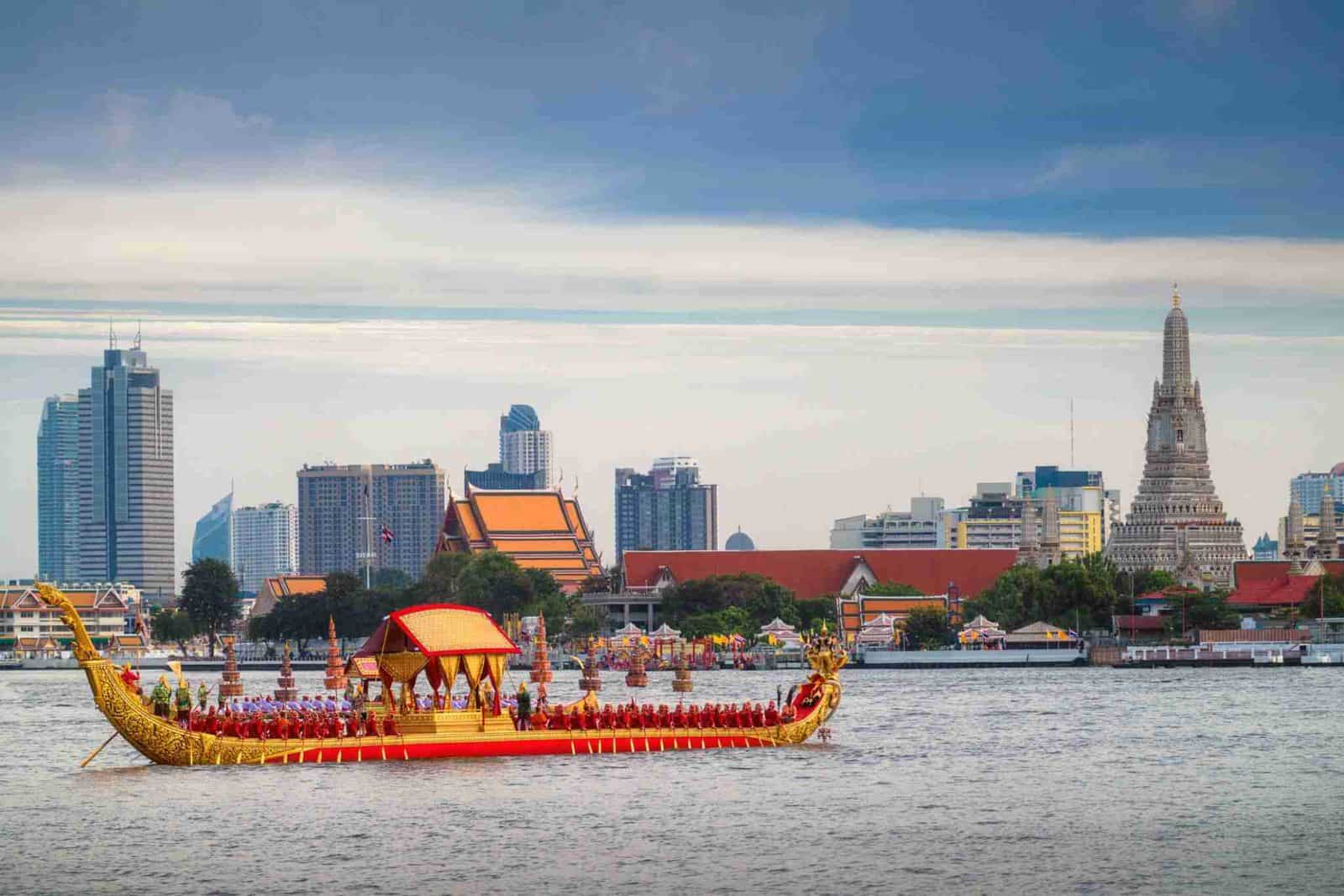
Image Credit: Thailand Tourism
Bangkok River Travel is once more becoming a popular activity in the land of Thailand in October 2026 because of the cheap boat fare and historical areas and attractions that are shaping the way the tourists travel around the city. Since the introduction of the cheapest boat fare at 19 baht for the Chao Phraya Express Boat ride on the Orange line from 6 October, tourists now have the chance to visit historical areas through the riverside by using affordable boats rather than expensive tours. Popular areas such as Song Wat, Talat Noi and Charoen Krung have become hot spots for the foreigners as a result of tourism marketing, markets and preserved culture. However, Royal Barge Procession of Thailand that will take place on 6 November is expected to use 52 traditional royal barges. What the tourists forget about is the fact that affordability gives them access to historical temples, businesses and communities.
Advertisement
Advertisement
A Two-Day-Old Fare Change Gives Bangkok’s Tourism Revival a Fresh Economic Dimension
On 6 October 2026, Chao Phraya Express Boat introduced an updated fare schedule covering several passenger services.
The official operator lists the Orange Line at 19 baht, the Yellow Line at 24 baht and the Red Line at 33 baht per journey.
Advertisement
Advertisement
The Green-Yellow Line operates with distance-based fares, including 17 baht between Pak Kret and Nonthaburi and 36 baht for the longer Pak Kret–Sathorn journey.
These prices matter because river travel is not exclusively a leisure activity. The services also support commuters and everyday movement through Bangkok.
Advertisement
Advertisement
For international tourists, the fares demonstrate that certain journeys along the historic river can be undertaken without purchasing a premium cruise.
However, the service lines differ in their schedules, stopping patterns and suitability for sightseeing.
Advertisement
Advertisement
The new fare structure does not itself establish that river tourism will grow. Its importance lies in providing a measurable, current transport cost against which travellers can compare different sightseeing choices.
What Others Are Missing: Bangkok’s Cheapest River Experiences Are Not Necessarily Its Least Interesting
The Chao Phraya is regularly associated with luxury hotels, riverside restaurants and organised boat excursions.
Yet the same river also connects working neighbourhoods, public markets, historic temples and local businesses.
This creates an unusual advantage for Bangkok: visitors with very different budgets can experience the city’s heritage within the same broad geographic corridor.
Advertisement
Advertisement
A traveller using public transport may allocate more of their budget towards traditional food, museum admission or local handicrafts.
Another may choose a guided tour to gain historical context and easier access to sites away from standard routes.
Neither experience is automatically superior.
The difference concerns how visitors distribute their money, time and attention.
Bangkok’s emerging opportunity is to make both approaches possible without reducing the waterfront to an expensive, exclusive leisure destination.
That is the real significance of examining river transport alongside neighbourhood regeneration.
Advertisement
Advertisement
Bangkok’s River Fare Changes: What Travellers Will Pay from October 2026
The current fare schedule introduces a useful point of comparison for visitors evaluating Bangkok’s transport options.
| Boat service | Previous listed fare | Fare from 6 October 2026 | Route |
|---|---|---|---|
| Orange Line | THB 18 | THB 19 | Nonthaburi–Rajsingkorn |
| Yellow Line | THB 23 | THB 24 | Nonthaburi–Sathorn |
| Red Line | THB 32 | THB 33 | Nonthaburi–Sathorn |
| Green-Yellow Line | THB 16 | THB 17 | Pak Kret–Nonthaburi |
| Green-Yellow Line | THB 23 | THB 24 | Nonthaburi–Sathorn |
| Green-Yellow Line | THB 35 | THB 36 | Pak Kret–Sathorn |
Comparison based on Chao Phraya Express Boat’s official schedules published for 24 June and 6 October 2026. The operator identifies different operating days for individual services; travellers should verify the applicable timetable and piers.
The comparison shows a one-baht increase across the listed services.
For passengers using the Orange Line, a single journey now costs 19 baht instead of 18 baht.
Importantly, these are regular express boat fares. They should not be confused with private river cruises, organised sightseeing packages or the separate Chao Phraya Tourist Boat service.
The distinction matters because transport choices can significantly affect a visitor’s overall sightseeing budget.
Advertisement
Advertisement
A traveller planning multiple stops should compare single-journey tickets with any relevant tourist passes while considering the actual route, departure frequency and operating hours.
The Tourist Boat Network Has a Different Role from Bangkok’s Commuter Ferries
Bangkok’s river transport system serves several markets simultaneously.
Regular Chao Phraya Express Boat services support everyday journeys along the river, while the dedicated Chao Phraya Tourist Boat is designed around visitor access to major attractions.
According to the Chao Phraya River Trade Association, the tourist boat operates a hop-on, hop-off-style service connecting key riverside locations.
The association describes services departing approximately every 30 minutes, with stops including Sathorn, ICONSIAM, Ratchawongse, Wat Arun, Tha Tien, Tha Chang and Phra Arthit.
The service also offers access towards Asiatique during its evening operation.
Advertisement
Advertisement
These routes can help travellers organise sightseeing around the river rather than repeatedly returning to road transport.
However, access to particular neighbourhoods may still require walking or onward connections.
Visitors should also be aware that the Express Boat operator currently lists Oriental Pier as closed for renovation.
Therefore, selecting a service based exclusively on a familiar pier name or an outdated travel guide could lead to unnecessary delays.
Song Wat’s 300-Creator Campaign Reveals Another Side of Thailand’s Tourism Strategy
Affordable transport alone cannot explain why Bangkok’s older riverside areas are attracting attention.
A second factor is Thailand’s effort to turn neighbourhood culture into internationally recognisable travel experiences.
Advertisement
Advertisement
On 25 August 2026, the Tourism Authority of Thailand collaborated with TikTok Thailand on an initiative involving more than 300 LIVE creators.
Participants visited Song Wat, an established trading neighbourhood known for historic shophouses, food businesses and multicultural heritage.
Creators from countries including Indonesia, the Philippines and Singapore, alongside markets in Central Asia and the Caucasus, participated in the activity.
The programme introduced the district to audiences who may previously have had limited awareness of the area.
According to TAT, the initiative was intended to encourage travel consideration by allowing international creators to share experiences from the neighbourhood.
This reveals a distinctive connection between modern tourism marketing and historic urban environments.
Advertisement
Advertisement
Song Wat’s appeal lies partly in activities that existed long before social media began attracting visitors.
The challenge is ensuring that digital popularity encourages meaningful engagement with those businesses rather than merely increasing photography stops.
Why Thailand’s Creative Tourism Campaigns Could Influence Where Visitors Spend
The economic importance of neighbourhood tourism lies in its potential to distribute visitor expenditure across smaller enterprises.
A conventional sightseeing itinerary might concentrate purchases around major attractions, hotel restaurants and large shopping destinations.
A neighbourhood-based itinerary can create opportunities for smaller cafés, family-run food businesses, craft producers and independent retailers.
This does not establish that every local business benefits equally.
Advertisement
Advertisement
Tourist demand can favour businesses with strong digital visibility, English-language marketing or attractive online presentation.
Traditional shops without those advantages may receive less attention even when they contribute significantly to the destination’s heritage.
For Thailand’s tourism planners, this creates an important distinction between attracting tourists to a district and supporting the economic health of the district itself.
The strongest results would involve visitors spending time across multiple establishments, understanding local history and supporting enterprises that help preserve the area’s identity.
That outcome is possible, but it requires evidence from local business activity rather than social media impressions alone.
Charoen Krung Shows Why Bangkok’s Tourism Transformation Started Before 2026
Bangkok’s heritage regeneration did not begin with this year’s tourism campaigns.
Advertisement
Advertisement
The Creative Economy Agency identifies Charoen Krung as a model creative district, shaped through collaboration involving public authorities, private businesses, educational organisations and local communities.
A major development was the relocation of the Thailand Creative & Design Center to the historic Grand Postal Building in 2017.
That move helped establish the area as a focus for design, cultural activity and creative enterprise.
The district subsequently attracted additional galleries, design businesses and cultural programming.
In 2026, Bangkok Design Week brought more than 350 creative programmes to several districts across the city, including Charoen Krung–Talat Noi.
The festival ran from 29 January to 8 February and involved designers, entrepreneurs and community partners.
Advertisement
Advertisement
These activities provide important background to the waterfront’s current popularity.
Bangkok’s creative tourism appeal reflects years of cultural investment, not simply a sudden trend driven by travel influencers.
A 52-Barge Royal Procession Could Bring More Attention to the River in November
The next major development on Bangkok’s waterfront will be the Royal Barge Procession on 6 November 2026.
Official information from the Tourism Authority of Thailand confirms that the ceremony will take place along the Chao Phraya River and conclude at Wat Arun.
The event will feature 52 royal barges, including the principal ceremonial vessels associated with Thailand’s royal traditions.
The procession forms part of the Royal Kathin Ceremony.
Advertisement
Advertisement
For visitors, the occasion offers an opportunity to witness an important religious and royal tradition in its historic setting.
The authorities have also scheduled rehearsal opportunities before the main ceremony.
Remaining scheduled dates after 8 October include 15, 21 and 28 October, subject to official arrangements.
The procession is therefore particularly relevant to travellers organising Bangkok visits during October and early November.
However, tourists should not assume that ordinary boat journeys will follow their normal routes during ceremonial operations.
Official guidance on viewing areas, security measures and transport restrictions should take priority over routine sightseeing plans.
Advertisement
Advertisement
Last Year’s Riverside Festival Generated an Estimated 5.5 Billion Baht in Economic Activity
An important financial benchmark comes from the 2025 Vijit Chao Phraya festival.
The Tourism Authority of Thailand reported more than 1.7 million visits during the programme, which ran from 9 November to 23 December.
It also reported estimated economic circulation of at least THB 5.5 billion, subject to final evaluation.
The festival featured 15 curated locations across both sides of the river.
According to TAT, businesses benefiting from the programme included hotels, restaurants, retailers, river cruises and passenger boat operators.
This provides stronger evidence of waterfront tourism’s commercial significance than general claims about rising popularity.
Advertisement
Advertisement
Nevertheless, the figure should be treated carefully.
Economic circulation is not equivalent to net tourism revenue, and festival visits do not represent unique international tourist arrivals.
The reported amount also does not establish how much individual neighbourhood businesses received.
What the figures demonstrate is that coordinated waterfront programming can support substantial economic activity across multiple sectors.
Could November and December Become Bangkok’s Most Important Riverside Travel Window?
Thailand’s official tourism planning creates an interesting concentration of waterfront-related activity towards the end of 2026.
The Royal Barge Procession is scheduled for 6 November.
Advertisement
Advertisement
TAT has separately indicated that the next Vijit Chao Phraya festival is anticipated between 13 November and 13 December.
If the planned festival proceeds, Bangkok could offer two distinctive cultural experiences during a relatively short period.
One celebrates royal and religious heritage, while the other is designed around illuminated waterfront attractions and creative programming.
That combination could make late-year visits particularly attractive to travellers interested in culture and photography.
It could also encourage visitors to plan more than a single evening beside the river.
However, the proposed Vijit Chao Phraya 2026 dates should not be interpreted as a confirmed final programme.
Advertisement
Advertisement
Travellers should verify the event details before making non-refundable arrangements.
Thailand’s Waterfront Tourism Opportunity Extends Beyond Foreign Arrivals
Another often-overlooked element of Bangkok’s riverfront economy is domestic participation.
Public ferries, local markets, riverside events and cultural activities are not exclusively designed for international visitors.
They also serve Bangkok residents and travellers from other parts of Thailand.
This matters when assessing the financial performance of cultural tourism.
A successful waterfront programme may increase domestic spending, generate local employment opportunities and stimulate demand for transport services without producing an equivalent increase in international arrivals.
Advertisement
Advertisement
Similarly, repeat local visits to an event can contribute to attendance figures.
Tourism analysis should therefore examine the composition of visitor demand rather than interpreting all participation as evidence of foreign travel growth.
For Bangkok, the possibility of combining domestic and international visitor interest is a structural advantage.
It could help sustain some tourism-related businesses beyond the periods when international demand is strongest.
Bangkok’s Cultural Tourism Faces a Practical Test: Can Visitors Easily Connect the Attractions?
An appealing destination is not always an easy destination to navigate.
This is particularly relevant along the Chao Phraya, where attractions are distributed across different riverbanks, piers and neighbourhoods.
Advertisement
Advertisement
Visitors may need to combine boat journeys with walking, rail services or short road transfers.
Some historic streets are narrow, while access to individual attractions depends on local operating hours.
Different boat routes also serve different passenger markets.
For first-time international tourists, these distinctions can be confusing.
An effective river itinerary should therefore answer three straightforward questions: where to board, where to disembark and how to reach the intended attraction from the pier.
Clearer visitor information could improve the overall experience.
Advertisement
Advertisement
So could integrated neighbourhood itineraries that combine heritage, food and cultural activities without requiring multiple disconnected journeys.
This is an editorial assessment of a tourism opportunity, not a claim that authorities have announced a new integrated river transport system.
Where Travellers Can Explore Bangkok’s Emerging Heritage Corridor
The map identifies four useful places for visitors interested in historic waterfront neighbourhoods. These locations are not all directly connected by the same boat service, so travellers should check individual pier connections.
Comparison: What Different Bangkok River Experiences Offer Tourists in 2026
| Experience | Main visitor benefit | Cost information | Principal consideration |
|---|---|---|---|
| Orange Line Express Boat | Affordable river transportation | THB 19 per journey | Check route and stopping piers |
| Yellow Line Express Boat | Scheduled transport between Nonthaburi and Sathorn | THB 24 per journey | Primarily a weekday service |
| Dedicated Tourist Boat | Sightseeing-oriented river connections | Check current ticket options | Separate from regular Express Boat fares |
| Song Wat heritage walk | Historic businesses, architecture and local cuisine | Public streets generally free to explore | Purchases and organised experiences cost extra |
| Talat Noi exploration | Historic neighbourhood atmosphere and creative businesses | Depends on chosen activities | Requires walking through narrow streets |
| Charoen Krung creative attractions | Galleries, design and cultural discovery | Venue-dependent | Opening times vary |
| Royal Barge Procession | Traditional royal and religious heritage | Official viewing arrangements apply | Potential transport restrictions |
| Private river excursion | Personalised access and guided experiences | Operator-dependent | Confirm inclusions and safety arrangements |
The comparison reinforces a simple point: river tourism does not have a single standard price or visitor experience.
The most suitable choice depends on whether the traveller prioritises transport, cultural understanding, comfort, independent exploration or a specialist guided experience.
Travel Analytics: Four Indicators That Reveal Bangkok’s Emerging Waterfront Economy
The available official information identifies four distinct measures of Bangkok’s waterfront tourism activity.
Advertisement
Advertisement
Express Boat Orange Line
THB 19
Fare effective 6 October 2026
Vijit Chao Phraya 2025
THB 5.5bn+
Estimated economic circulation
Song Wat international promotion
300+
LIVE creators involved
Advertisement
Advertisement
Royal Barge Procession 2026
52
Ceremonial barges scheduledOfficial sources: Chao Phraya Express Boat, Tourism Authority of Thailand. The figures describe different activities and are not directly comparable measures of tourist arrivals.
These measures highlight four complementary aspects of Bangkok’s waterfront.
Transport fares indicate the affordability of selected passenger services.
Festival economic assessments demonstrate the potential scale of coordinated cultural activities.
International creator participation reveals an effort to extend neighbourhood visibility into overseas markets.
Advertisement
Advertisement
The Royal Barge Procession illustrates the continuing importance of Thailand’s ceremonial heritage.
Together, they support a broader interpretation of the waterfront’s role in tourism.
However, the available data do not establish a direct causal relationship between fare adjustments, increased neighbourhood visits and international tourism growth.
A stronger evaluation would require passenger counts, visitor-origin surveys, local business expenditure data and comparisons across different months.
Editorial Conclusion: Bangkok’s Biggest Tourism Advantage May Be Access, Not Exclusivity
The new era has come for Bangkok River Travel in 2026 as Bangkok River Travel is getting into a promising era in 2026, as Bangkok River Travel has started operating in 2026, as Bangkok River Travel is getting into a promising era in 2026, when Thailand attracts its visitors by cheap ferry travels and heritage places. With the help of such cheap tickets of Chao Phraya Express Boat starting from 19 baht, tourists will have an opportunity to visit sights of Bangkok rivers without spending a lot of money on expensive trips organized by private firms. Moreover, emphasis on Song Wat, Talat Noi and Charoen Krung is the indication that locals know how to utilize heritage and innovations in order to develop their own business and offer to tourists real Thai culture. Also, Royal Barge Procession is one of the events which help to diversify cultural tourism in Bangkok. For a travel analytics specialist, 1.7 million tourists, who visited Thailand during the event Vijit Chao Phraya in 2025, is the proof of a great interest of tourists in water tourism. Tourists must visit historical rivers in Bangkok in order to enjoy heritage and cheapness of Thailand.
Advertisement
