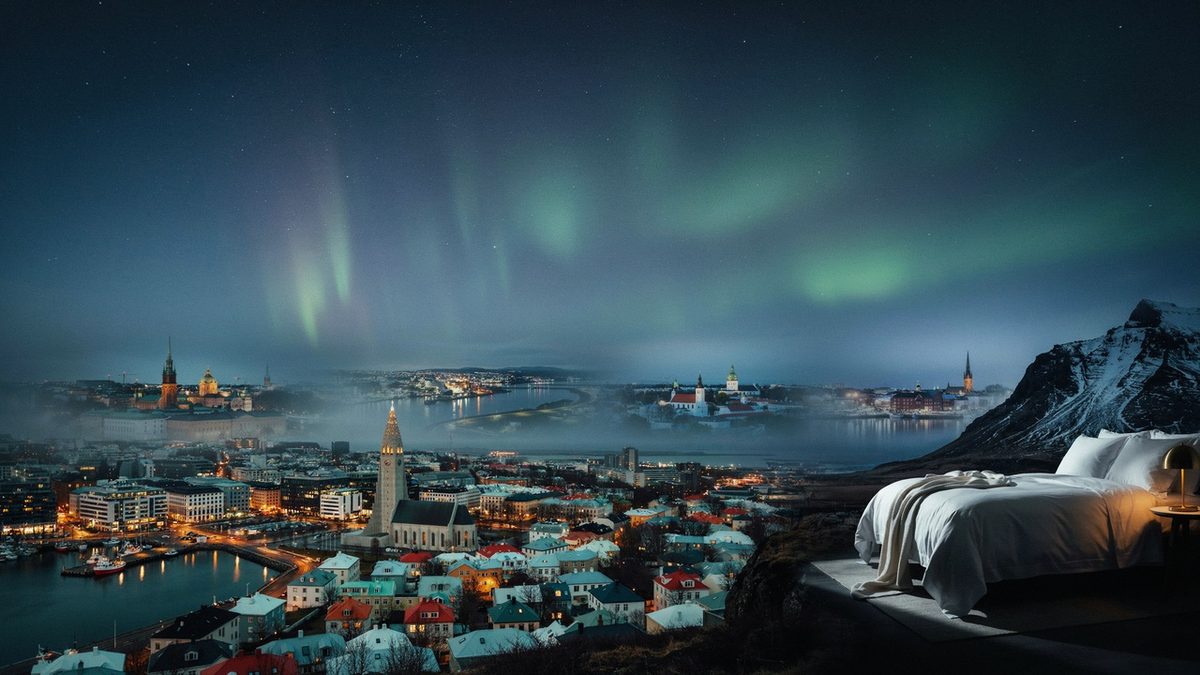
Image generated with Ai
Reykjavik, Stockholm, Cork and more destinations now attract tourists seeking sleep tourism, as quieter nights, cooler temperatures and cleaner air turn European city breaks into restorative escapes.
Reykjavik, Stockholm, Cork and more destinations are attracting tourists for a surprising reason: sleep tourism. As travellers look beyond crowded attractions and packed itineraries, destinations that support better rest are gaining attention. Reykjavik leads the trend, while Stockholm and Cork also rank highly for their cooler nights, quieter surroundings and comparatively clean air. Meanwhile, more European cities are joining the conversation as sleep becomes part of the modern wellness journey. Crucially, this does not mean tourists are travelling simply to stay in bed. Instead, they are choosing places where the climate and environment can make relaxation easier. Consequently, sleep tourism is becoming an intriguing travel trend.
Reykjavik has emerged as Europe’s top destination for travellers looking to sleep better, according to a September 2026 study by luggage retailer Eminent. The ranking puts Reykjavik ahead of Stockholm and Cork, with Nordic cities featuring strongly among the leading destinations. The research considers several environmental conditions that can influence rest, including night-time noise and light pollution, summer temperatures and perceived air pollution. As sleep deprivation becomes a growing concern across Europe, the findings point to a different kind of city break. Rather than chasing packed itineraries, travellers may increasingly choose destinations where cooler nights, quieter surroundings and cleaner air make switching off easier.
Reykjavik tops Europe’s sleep tourism ranking, while Stockholm and Cork follow, as travellers seek cooler nights, cleaner air and quieter cities for a holiday that helps them sleep better. Reykjavik, Iceland, is the best destination for anyone who wants to get a proper sleep on their next European trip, a September 2026 report on sleep tourism found. With sleep deprivation now affecting nearly 1 in 3 adults across Europe, a new study by the online luggage shop Eminent set out to find the top 10 cities for catching up on rest.
Advertisement
Advertisement
Here’s a look at the top 10 European cities for catching up on sleep:Destination Sleep Staycation Score Perceived Noise and Light Pollution Perceived Air Pollution Reykjavik 99.21 19.47 14.25 Stockholm 96.11 27.80 15.10 Cork 95.11 28.66 15.62 Kaunas 91.47 25.71 27.56 Gothenburg 90.53 33.33 19.00 Vilnius 89.89 30.58 25.18 Stavanger 88.84 34.30 21.00 Edinburgh 87.21 34.15 24.34 Belfast 86.16 36.54 22.62 The Hague (Den Haag) 86.05 27.69 18.12
Sleep is becoming an increasingly important part of the travel experience, and a new European city ranking suggests that where people spend their holiday could make a meaningful difference to how well they rest.
According to a September 2026 study from online luggage retailer Eminent, Reykjavik in Iceland is the best European destination for a sleep-focused staycation, achieving a Sleep Staycation Score of 99.21 out of 100.
The research examined European cities through environmental conditions associated with sleep quality. It looked at perceived noise and light pollution, summer overnight temperatures and perceived air pollution before combining the results into an overall score.
The result is a ranking led overwhelmingly by cooler and comparatively quieter northern European destinations.
Reykjavik takes the top spot, followed by Stockholm in Sweden and Cork in Ireland. Kaunas, Gothenburg, Vilnius and Stavanger also make the top seven, while Edinburgh, Belfast and The Hague complete the top 10.
Reykjavik’s position at number one is particularly striking because its overall score is significantly ahead of the rest of the field.
The Icelandic capital recorded a 99.21 Sleep Staycation Score, according to Eminent’s analysis. Its perceived noise and light pollution score was just 19.47, while perceived air pollution stood at 14.25.
The study also puts Reykjavik’s average summer minimum temperature at 8.9°C.
For travellers who struggle to sleep when rooms become warm or city streets remain noisy late into the night, those conditions could make the destination particularly appealing.
The attraction is not necessarily about spending an entire holiday in bed. Instead, the ranking highlights how the physical environment surrounding a hotel or holiday rental can influence the ease with which visitors settle down at night.
Iceland’s capital therefore fits neatly into the emerging concept of sleep tourism, where accommodation, surroundings and daily routines are increasingly considered part of the overall wellness experience.
Stockholm ranks second with a score of 96.11 out of 100.
Eminent’s study says the Swedish capital recorded no tropical nights during the 92-day summer period examined. In practical terms, that means overnight temperatures did not reach the threshold used by the research for particularly warm nights.
Stockholm recorded a perceived noise and light pollution score of 27.80 and perceived air pollution of 15.10.
That combination makes the Swedish capital an interesting proposition for travellers who want the attractions of a major European city without choosing a destination where summer heat could interfere with sleep.
Stockholm also demonstrates why sleep-focused travel does not necessarily mean retreating to a remote countryside resort. A busy capital can still appeal to visitors who want restaurants, museums, architecture and cultural attractions during the day, followed by relatively comfortable sleeping conditions at night.
Ireland’s Cork takes third place with a 95.11 Sleep Staycation Score.
The study reports that summer nights in Cork remain below 20°C, with average overnight temperatures of around 14°C.
Its perceived noise and light pollution score is 28.66, while perceived air pollution is recorded at 15.62.
That gives Cork one of the strongest overall combinations in the ranking.
For travellers seeking a slower city break, Cork also offers a useful alternative to Ireland’s busier tourism hubs. Its inclusion demonstrates that sleep-friendly travel is not confined to Scandinavian or Icelandic destinations.
The city’s relatively cool summer nights and comparatively low environmental pollution levels contribute to its high position in Eminent’s methodology.
Kaunas ranks fourth with a score of 91.47.
Lithuania’s second city may not have the same international profile as many of Europe’s traditional tourism capitals, but the research places it firmly among the continent’s strongest destinations for a restful break.
Kaunas records a perceived noise and light pollution score of 25.71, which is lower than Stockholm’s figure in the same dataset.
The study also says the city experiences no summer nights above 20°C.
Its perceived air pollution score of 27.56 is higher than Reykjavik, Stockholm and Cork, but its overall combination of environmental factors still puts Kaunas comfortably inside the top five.
For travellers interested in less crowded European destinations, that could make the city especially relevant.
Sweden appears twice in the top five, with Gothenburg ranking fifth at 90.53.
The city’s summer overnight temperatures reportedly remain below 20°C, averaging approximately 14°C.
Gothenburg records a perceived noise and light pollution score of 33.33 and perceived air pollution of 19.00.
The numbers reinforce a wider pattern in the ranking: northern European cities perform strongly when cooler nights and comparatively modest pollution levels are considered alongside urban conditions.
Gothenburg also offers a different experience from Stockholm. Travellers can combine a city break with access to Sweden’s western coastline, giving the destination a strong appeal for those who want urban attractions without giving up opportunities to slow down.
The northern European trend continues beyond the top five.
Vilnius ranks sixth with 89.89, followed by Stavanger in seventh place with 88.84.
Edinburgh comes eighth with 87.21, Belfast ninth with 86.16, and The Hague, listed as Den Haag in the research, takes tenth with 86.05.
The full ranking is notable for the absence of several of Europe’s biggest tourism magnets. Cities such as Paris, London, Rome, Madrid and Barcelona do not appear in the top 10.
That does not mean those destinations are inherently poor places to sleep. Rather, the study measures a specific combination of environmental indicators, and those indicators favour cities with cooler summer conditions and lower perceived levels of noise, light and air pollution.
Temperature is one of the most practical considerations for sleep-focused travel.
A hotel room can become uncomfortable when outdoor temperatures remain high overnight, particularly when accommodation lacks effective air conditioning. Warm conditions can make it harder for the body to reduce its core temperature, an important part of the normal process of falling asleep.
That makes destinations with cooler summer nights attractive to travellers who are sensitive to heat.
The Eminent research consequently places considerable emphasis on overnight summer temperatures rather than simply looking at daytime climate.
For European travellers planning summer holidays, the distinction is important. A destination can be pleasant for sightseeing during the day while still becoming uncomfortable after dark.
Temperature is only one part of the equation.
Urban noise can come from traffic, nightlife, construction, public transport and other activity. Artificial light can also remain present throughout the night, particularly in dense city centres.
The research combines perceived noise and light pollution into one measure, making quieter and darker destinations more competitive in the ranking.
Air quality is another component. Although air pollution does not determine sleep quality on its own, cleaner air can contribute to a more comfortable environment, particularly for travellers who are sensitive to poor air quality.
Eminent combines these different factors into a single score rather than identifying one destination as universally best for every sleeper.
The findings arrive as sleep becomes a larger part of the wider wellness travel conversation.
Traditionally, wellness holidays have focused on spas, fitness programmes, healthy food, meditation and outdoor activities. Sleep is increasingly being treated as another pillar of the experience.
An Eminent travel consultant cited in the study said the global sleep tourism industry is already worth $690 billion and is forecast to grow by another $400 billion by 2028.
The consultant also argued that the surrounding environment matters because temperature, noise and air quality can affect a traveller’s ability to maintain a normal sleep routine.
That idea could have wider implications for hotels and tourism businesses. Accommodation providers may increasingly market blackout curtains, soundproofing, climate control, quiet rooms, sleep programmes and other features designed around rest.
The key takeaway is straightforward: a restorative holiday does not necessarily require a remote wellness retreat.
Reykjavik demonstrates how an international capital can perform exceptionally well when environmental conditions are favourable. Stockholm and Gothenburg show that major Swedish cities can also provide strong sleep-focused options, while Cork and Kaunas offer alternatives outside the Nordic heartland.
Travellers planning a European summer break could therefore consider overnight climate and the surrounding urban environment alongside familiar factors such as attractions, transport and hotel prices.
However, the ranking should be viewed as a guide rather than a guarantee of better sleep. Individual sleep needs differ, and hotel location, room orientation, bedding, personal routines and local events can all affect the actual experience.
“Sleep is becoming a more important part of how travellers define a successful holiday, and this research highlights an interesting shift in European travel preferences. Anup Kumar Keshan, Founder and Editor-in-Chief, Travel And Tour World, said: ‘Travellers are no longer looking only for attractions and packed itineraries. They increasingly want destinations that allow them to slow down, recover and return home refreshed. Reykjavik’s leading position is particularly compelling because it shows how climate, quieter surroundings and cleaner air can strengthen a city’s appeal beyond conventional sightseeing. For the travel industry, sleep tourism represents an opportunity to rethink the city-break experience around comfort, wellbeing and genuine recovery.’”
| Rank | Destination | Score | Noise & light | Air pollution |
|---|---|---|---|---|
| 1 | Reykjavik | 99.21 | 19.47 | 14.25 |
| 2 | Stockholm | 96.11 | 27.80 | 15.10 |
| 3 | Cork | 95.11 | 28.66 | 15.62 |
| 4 | Kaunas | 91.47 | 25.71 | 27.56 |
| 5 | Gothenburg | 90.53 | 33.33 | 19.00 |
| 6 | Vilnius | 89.89 | 30.58 | 25.18 |
| 7 | Stavanger | 88.84 | 34.30 | 21.00 |
| 8 | Edinburgh | 87.21 | 34.15 | 24.34 |
| 9 | Belfast | 86.16 | 36.54 | 22.62 |
| 10 | The Hague | 86.05 | 27.69 | 18.12 |
Cause: Busy schedules, warmer nights, urban noise and artificial light can make restful travel harder for some visitors. Answer: Choosing a destination with cooler nights, lower perceived pollution and quieter surroundings may create more favourable conditions for sleep. Reason: Eminent’s ranking combines these environmental indicators into a Sleep Staycation Score, placing Reykjavik first with 99.21 points. Stockholm, Cork, Kaunas and Gothenburg follow because their summer nights remain relatively cool and their perceived pollution levels are comparatively low. The findings suggest that travellers seeking recovery should consider sleep conditions when choosing a city, alongside attractions, accommodation, transport, cost and seasonal weather
Reykjavik leads Eminent’s September 2026 ranking of Europe’s best cities for a sleep-focused staycation. Its 99.21 score reflects particularly low perceived noise and light pollution, cool summer nights and comparatively clean air. Stockholm, Cork, Kaunas and Gothenburg complete the top five, highlighting the strength of northern and cooler European destinations. The ranking shows how environmental conditions are becoming relevant to travellers interested in wellness and recovery, rather than sightseeing alone. However, the score is a research-based comparison, not a guarantee of individual sleep quality. Hotel location, room conditions, personal preferences and daily routines can still influence how well travellers sleep.
Advertisement
Tags: cork, european travel, reykjavik, Sleep Tourism, stockholm
Advertisement
Advertisement











Wednesday, September 2, 2026

Wednesday, September 2, 2026

Wednesday, September 2, 2026

Wednesday, September 2, 2026

Wednesday, September 2, 2026

Tuesday, September 1, 2026

Wednesday, September 2, 2026

Wednesday, September 2, 2026