
California Follows Oregon, Washington and More as Wildfires Reshape the US Travel Season

Updated
Published
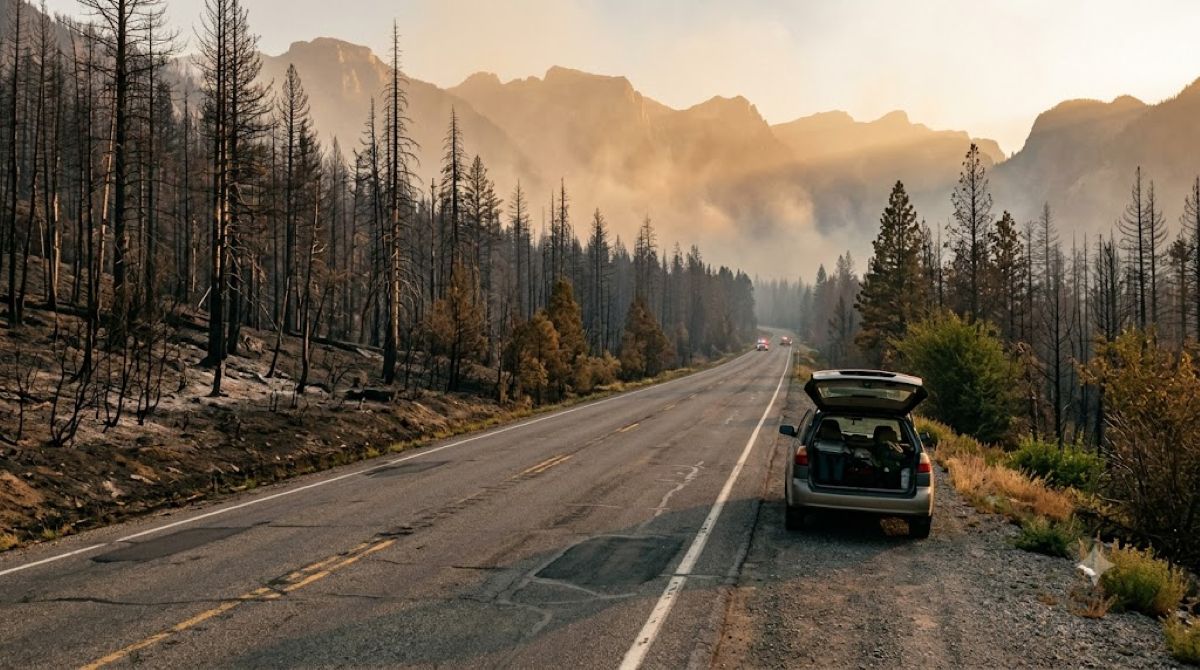
The United States is facing a huge wildfire year in 2026. Fires have affected travel plans across 47 states. They have closed roads, stopped camping trips, forced visitor evacuations and covered famous landscapes in smoke. The danger is not the same everywhere. Some places remain open. Others have seen major visitor areas close for weeks or months. Official federal figures show that more than 64,000 wildfires had been recorded across the country by mid-October. More than nine million acres had burned. For travellers, this has changed the simple idea of a summer road trip. A holiday now needs more planning, more care and a close check of local updates.
Wildfires are changing how Americans travel
Wildfires do not only burn forests. They can quickly affect the places visitors want to see. A fire near a national park can close trails, campgrounds and roads. Thick smoke can make driving hard. It can also spoil views, hiking days and outdoor events. Families may cancel bookings when evacuation warnings are issued. Small tourism businesses can lose guests at the busiest time of year.
The impact is often local. A whole state may not be closed. One town, road or park may face problems while another area stays open and ready for visitors. This has become one of the most important messages for travellers in 2026. People should not assume an entire destination is unsafe because of one wildfire. But they must also not travel into a closed area.
Oregon offers a clear example. It recorded the largest burned area in the federal state-by-state wildfire report. Fires affected major routes in eastern and central Oregon during the summer. Road closures, detours and reduced speed zones created long delays. These changes affected holiday drives, camping journeys and access to rural attractions. Smoke also reduced visibility and made travel less pleasant.
Advertisement
Advertisement
California faces one of the clearest tourism shocks
California has faced some of the most visible visitor disruption. The Santa Rosa Island Fire burned a large part of Santa Rosa Island in Channel Islands National Park. The fire forced the island to close to visitors. Day visits later returned, but overnight trips faced a much longer delay.
Campground and backcountry reservations were cancelled through 13 October. Some areas of the island remain closed for the rest of the 2026 recreation season. This matters for people who plan boat trips, wildlife viewing, hiking and coastal camping. It also affects tour operators, transport providers and local businesses that depend on visitors heading to the Channel Islands.
The fire did more than stop holidays for a few days. It created safety concerns from damaged trails, unstable ground, weakened trees and erosion. This means tourism recovery takes time. Visitors may return, but the experience can be different. Some trails, shorelines and campsites may stay off limits until experts decide they are safe.
California also faced fire restrictions in outdoor areas such as Joshua Tree National Park. These restrictions limited campfires and open flames. Such rules may sound small, but they change the camping experience for visitors during busy holiday periods.
Utah, Washington and Nebraska see direct visitor closures
Utah faced a sharp tourism impact when the Babylon Fire forced the closure of the Needles district at Canyonlands National Park. Staff and visitors were evacuated as the fire moved near Utah Highway 211. Campground bookings, backcountry permits and day-use plans were cancelled through July.
Canyonlands remained partly open because other districts were not closed. This shows why travellers need to check the exact part of a park they plan to visit. A wildfire can shut one famous area while another remains open.
Washington has also faced serious visitor disruption. Several wildfires brought smoky conditions and evacuation concerns. Near Mount Rainier, closures affected Grand Park trails, backcountry campgrounds and Sunrise Road. In the Lake Chelan area, fire closures affected forest districts used by hikers and outdoor travellers.
Nebraska saw a direct impact at Fort Robinson State Park. The South Fork Fire led to the evacuation of visitors and the temporary closure of the park and nearby Peterson Wildlife Management Area. Officials contacted guests with reservations to discuss refunds or transfers. Highway 20 also closed in the area. For a tourism destination built around open landscapes, history and outdoor adventure, a sudden closure can change an entire travel plan.
Advertisement
Advertisement
Roads, smoke and closures create wider travel problems
The biggest travel problem is often not the fire itself. It is what happens around it. Smoke can make a scenic drive unsafe. It can cause breathing problems and poor visibility. A road closure can leave visitors with few other routes. A campground closure can send families searching for rooms at short notice.
Idaho saw public-land and off-road travel limits after the Big Grass Fire. Colorado closed public land in Mesa County during the Snyder Fire before reopening it later. Arizona temporarily closed Montezuma Pass Road and evacuated the visitor centre at Coronado National Memorial during the Yaqui Fire. Trails stayed closed while safety checks continued.
New Mexico placed several important visitor sites under stronger fire restrictions. These included Bandelier National Monument, Valles Caldera National Preserve, Pecos National Historical Park and Fort Union National Monument. Nevada also used broad public-land restrictions that limited campfires, charcoal cooking and target shooting.
US wildfires in 2026 by state
| State | Wildland fires | Acres burned |
|---|---|---|
| Alabama | 1,519 | 28,092.5 |
| Alaska | 398 | 88,715.9 |
| Arizona | 1,558 | 64,000.5 |
| Arkansas | 124 | 3,884.8 |
| California | 5,722 | 345,434.3 |
| Colorado | 1,094 | 274,872.0 |
| Delaware | 1 | 0.3 |
| Florida | 3,128 | 274,854.0 |
| Georgia | 3,383 | 88,285.1 |
| Hawaii | 64 | 91.0 |
| Idaho | 872 | 477,898.7 |
| Illinois | 35 | 493.6 |
| Indiana | 10 | 47.7 |
| Kansas | 53 | 171,522.7 |
| Kentucky | 743 | 18,460.0 |
| Louisiana | 703 | 19,775.3 |
| Maine | 605 | 307.5 |
| Maryland | 102 | 2,167.5 |
| Massachusetts | 437 | 666.5 |
| Michigan | 311 | 1,170.8 |
| Minnesota | 1,133 | 81,919.7 |
| Mississippi | 1,806 | 57,425.6 |
| Missouri | 1,288 | 45,092.2 |
| Montana | 1,925 | 148,900.3 |
| Nebraska | 646 | 1,035,503.4 |
| Nevada | 688 | 415,499.0 |
| New Hampshire | 43 | 109.3 |
| New Jersey | 785 | 800.7 |
| New Mexico | 1,119 | 149,874.5 |
| New York | 82 | 222.9 |
| North Carolina | 5,973 | 20,614.6 |
| North Dakota | 19 | 999.0 |
| Ohio | 430 | 770.5 |
| Oklahoma | 2,259 | 485,885.2 |
| Oregon | 1,068 | 2,319,327.6 |
| Pennsylvania | 955 | 1,000.4 |
| South Carolina | 1,626 | 19,447.2 |
| South Dakota | 236 | 18,954.0 |
| Tennessee | 608 | 7,315.2 |
| Texas | 4,588 | 348,958.5 |
| Utah | 1,105 | 559,861.0 |
| Vermont | 63 | 255.3 |
| Virginia | 727 | 7,447.9 |
| Washington | 1,258 | 649,024.7 |
| West Virginia | 680 | 8,035.5 |
| Wisconsin | 695 | 932.0 |
| Wyoming | 562 | 58,268.2 |
Tourism can recover but safety must lead
Wildfire tourism is not only about cancelled trips. It is also about trust. Visitors want clear information. They need to know what is open, what is closed and where smoke is moving. Tourism offices, park staff and emergency agencies now play a major role in helping people make safe choices.
The 2026 wildfire season has shown that travel can continue in many parts of the United States. But plans must stay flexible. Travellers should check road conditions, park alerts, air quality and local fire restrictions before leaving. A safe journey may mean choosing a different trail, town or route.
America’s forests, parks and scenic roads remain powerful travel draws. Yet this year has made one fact clear. Wildfire planning is now part of the modern US holiday.
Advertisement
Advertisement
United States Wildfires Burn More Than Eight Million Acres as Oregon, Nebraska and Washington Face the Biggest Travel Shock
The United States has faced a fierce wildfire year in 2026, with fires reported across 47 states. The state-by-state figures show a striking picture. More than 53,000 wildland fires had burned over 8.3 million acres by early September. The damage was not shared evenly. Some states saw thousands of fires but lower burned acreage. Others recorded fewer fires that spread across vast areas of forest, grassland and public land. For travel and tourism, the result has been serious. Roads, parks, campsites and scenic routes have faced smoke, closures and sudden changes.
Oregon becomes the centre of the acreage crisis
Oregon recorded the largest burned area in the country. The state reported 1,068 wildland fires, but these fires burned more than 2.31 million acres. This was far higher than any other state in the table. The scale shows why wildfires can reshape an entire summer travel season.
Oregon is known for road trips, forests, rivers, coastal escapes and outdoor adventure. When fires spread across eastern and central parts of the state, they affect more than remote land. They can close major roads, delay journeys and restrict access to campsites, hiking areas and small towns. Smoke can also make popular mountain and wilderness views disappear.
Visitors may still find many areas open, but travel becomes harder to plan. A route that looks safe in the morning can face a warning or closure later in the day. For tourism businesses, this can lead to last-minute cancellations and fewer overnight stays.
Advertisement
Advertisement
Nebraska sees an unexpectedly huge burn area
Nebraska recorded 646 wildland fires and more than 1.03 million acres burned. This makes Nebraska the second-most affected state by acreage in the table, ahead of several western states that are more widely known for large wildfire seasons.
The impact is important for visitors travelling through the Nebraska Panhandle, grasslands, state parks and rural communities. Wildfires can close highways and force parks to stop taking visitors. Fort Robinson State Park faced a temporary closure during the South Fork Fire. Guests were evacuated, while reservations required changes, refunds or transfers.
Nebraska’s result shows that wildfire tourism disruption is not limited to mountain states. Open prairie, dry grass and strong winds can create a fast-moving risk. Road-trip travellers may face a sudden need to change their route or choose a different overnight stop.
Washington and Utah face major outdoor travel disruption
Washington recorded 1,258 fires and more than 649,000 acres burned. The state’s forests, national park areas and mountain landscapes are major draws for domestic and international visitors. Fires and smoke affected access in several outdoor areas. Closures around Mount Rainier and Lake Chelan showed how a wildfire can affect hiking, camping and scenic driving at the same time.
Utah also faced a severe season. It recorded 1,105 fires and nearly 560,000 acres burned. The Babylon Fire forced the closure of the Needles district at Canyonlands National Park. Visitors and staff were evacuated, while campground bookings and backcountry permits were cancelled.
This matters because Utah’s tourism is closely linked to outdoor experiences. National parks, desert roads, stargazing, camping and trail walks bring visitors from around the world. When a single district closes, the travel industry feels the impact through cancelled nights, changed itineraries and pressure on other open areas.
Oklahoma, Idaho and Nevada reveal the scale of western fire danger
Oklahoma recorded 2,259 fires and nearly 486,000 acres burned. Idaho reported 872 fires and almost 478,000 acres burned. Nevada had 688 fires but more than 415,000 acres burned. These figures show that a lower fire count does not always mean a smaller problem. A few large fires can burn across huge areas.
In Idaho, burned public land and off-road routes faced restrictions after the Big Grass Fire. This directly affected people who travel for camping, fishing, hiking and motorised recreation. Nevada introduced broad fire restrictions on public land, limiting campfires, charcoal cooking and other activities that can create sparks.
For travellers, these rules change the holiday experience. A camping trip may still go ahead, but without a campfire. A remote driving route may remain open, but access roads and recreation areas can close. Visitors must plan for alternatives instead of assuming every outdoor facility will operate as normal.
California and Texas report thousands of fires
California recorded 5,722 fires, the second-highest fire total in the table. It burned more than 345,000 acres. Texas reported 4,588 fires and almost 349,000 acres burned. North Carolina recorded the highest number of fires, with 5,973, though its burned acreage was lower at about 20,615 acres.
California’s visitor impact included the Santa Rosa Island Fire in Channel Islands National Park. The fire led to closures and the cancellation of overnight stays. Texas and North Carolina also show how states with many fire incidents can face repeated local disruption, even where one single fire does not burn the largest area.
Florida, Colorado and Kansas also recorded high acreage totals. Florida burned nearly 275,000 acres. Colorado burned almost the same amount. Kansas had only 53 reported fires, yet more than 171,000 acres burned. These contrasts show why wildfire reports must look at both fire count and acreage.
Advertisement
Advertisement
Smaller figures do not mean no tourism concern
Several states recorded low burn totals. Delaware had one fire and 0.3 acres burned. Indiana recorded 10 fires and 47.7 acres. Hawaii recorded 64 fires and 91 acres. Yet even small fires can affect tourism if they happen near a beach, historic site, trail or busy road.
Maine, New Hampshire, Vermont, Massachusetts, New Jersey and New York also reported lower acreage totals. But smoke, fire bans and local closures can still change visitor plans. Tourism officials must give clear information so people know what remains open.
| State | Confirmed tourism impact in 2026 |
|---|---|
| California | Santa Rosa Island in Channel Islands National Park was closed after a fire burned about one-third of the island. Day visits resumed on 1 July, but overnight stays were cancelled through 13 October and part of the island remained closed for the season. |
| Oregon | Wildfires brought temporary road closures, detours and reduced speed zones. Major eastern and central Oregon travel corridors were affected, disrupting self-drive trips and access to recreation areas. |
| Washington | Evacuations and smoke affected travel. Closures included Grand Park trails, backcountry campgrounds and Sunrise Road near Mount Rainier, plus closures in the Lake Chelan area. |
| Utah | The Babylon Fire forced the evacuation and temporary closure of Canyonlands National Park’s Needles district. Existing campground and backcountry reservations were cancelled through 31 July. |
| Nebraska | Fort Robinson State Park and Peterson Wildlife Management Area closed during the South Fork Fire. Visitors were evacuated, reservations were transferred or refunded, and Highway 20 was closed in the area. |
| Idaho | The Big Grass Fire led to temporary closure of burned public land and off-road routes in south-western Idaho, limiting outdoor recreation and driving access. |
| Colorado | The Snyder Fire resulted in emergency closures of BLM-managed public land in Mesa County. The land later reopened, but post-fire conditions continued to affect recreation. |
| Arizona | The Yaqui Fire temporarily closed Montezuma Pass Road and evacuated the Coronado National Memorial visitor centre. Trails remained closed for safety checks after the visitor centre reopened. |
| New Mexico | High wildfire danger brought Stage II fire restrictions to Bandelier, Valles Caldera, Pecos, Fort Union and other heritage and outdoor visitor sites. |
| Nevada | Statewide BLM fire-prevention restrictions limited campfires, charcoal cooking, target shooting and other visitor activities across public land. |
Wildfire planning is now part of every US holiday
The 2026 figures show a new reality for American travel. Wildfire is no longer only a concern for a few western states. It can affect road trips, national parks, rural stays, campgrounds and outdoor festivals across the country.
The safest message for visitors is simple. Check conditions before leaving. Look at road warnings, park updates, smoke maps and local fire restrictions. Do not enter closed land or travel towards an active fire. Many destinations remain open and welcome visitors, but a flexible plan is now essential for a safe US holiday.
Advertisement
