
WTTC and World Governments Summit Forge Strategic Partnership to Strengthen Global Tourism Growth

Published
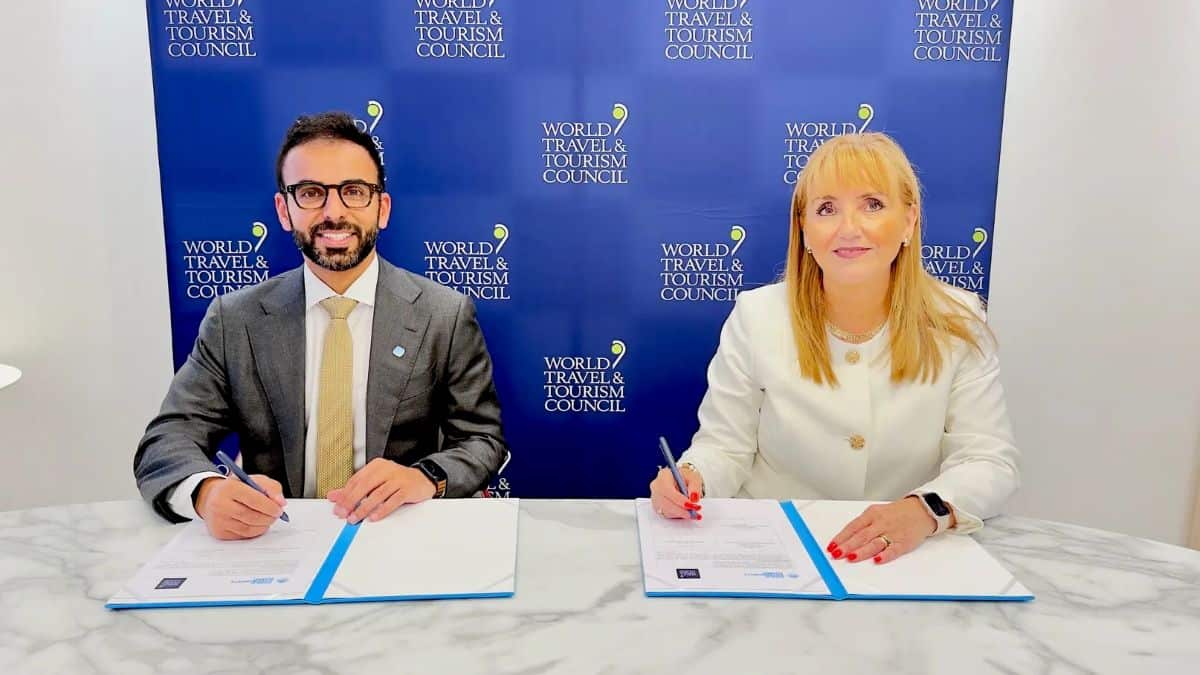
The World Travel & Tourism Council (WTTC) and World Governments Summit Organization (WGS) have announced a partnership that is geared towards improving collaboration between governments and the global travel industry. The partnership provides a platform that will facilitate increased collaboration among policy makers, tourism companies and experts from across the globe in addressing the changes in Travel & Tourism, including technology, sustainability, investment, workforce and destination competitiveness.
The partnership has been inked through a Memorandum of Understanding (MoU) by both organizations. The partnership takes advantage of the private sector network of WTTC and the convening power of WGS. This is according to a statement released by Government of Dubai Media Office.
Advertisement
Advertisement
Why Could This Partnership Change Global Tourism Cooperation?
The agreement creates a structured channel through which public authorities and tourism businesses can address shared challenges rather than developing responses independently. This matters because the future of tourism increasingly depends on decisions spanning several policy areas. Digital transformation, infrastructure, border systems, workforce availability, climate resilience, destination management and investment regulation can directly influence how easily tourism businesses grow and how travellers experience destinations.
Through the new framework, WTTC and WGS plan to encourage governments and private-sector leaders to exchange expertise and explore practical responses to these issues. The Dubai Government said the partnership would establish an international platform for discussing tourism challenges and opportunities while helping develop policies that improve competitiveness, resilience and economic contribution. For the wider industry, closer communication between companies and policymakers could support regulations and investment strategies that reflect both government priorities and real-world tourism operations.
Advertisement
Advertisement
How Will the MoU Turn Dialogue Into Practical Tourism Action?
The partnership goes beyond general industry dialogue. Its institutional framework is expected to support joint projects, research, strategic events and the exchange of international best practices. Under the MoU, the two organisations intend to collaborate on initiatives capable of improving tourism’s readiness for future economic, technological and social changes.
Advertisement
Advertisement
The Government of Dubai Media Office confirms that planned cooperation includes joint reports, studies, research, priority projects and international knowledge exchange. These activities will be developed alongside dialogues bringing together governments, private-sector organisations, international institutions and specialists.
Such an approach could provide policymakers with stronger access to operational industry knowledge while allowing companies to better understand emerging government priorities. The objective is therefore not simply to discuss the future of tourism, but to translate international dialogue into policies and projects capable of influencing investment, destination planning and industry development.
Why Will Technology and Innovation Become Central Priorities?
Rapid technological development is changing almost every stage of the traveller journey. Digital identity systems, artificial intelligence, automation, data-driven destination management and smarter transport networks are increasingly influencing how tourism is planned and delivered. The new WTTC-WGS partnership provides a platform where governments and businesses can explore how such technologies should be adopted while considering economic impact, regulation and traveller expectations.
Advertisement
Advertisement
That focus fits closely with the wider mandate of the World Governments Summit, which examines future trends, government innovation and technological transformation. Its programmes are designed to help policymakers anticipate emerging challenges and identify potential solutions. For tourism, effective technological transformation will require substantial cooperation. Governments oversee areas including borders, infrastructure, regulation and national tourism policy, while private companies operate airlines, hotels, digital platforms, attractions and other traveller-facing services. Closer collaboration could therefore accelerate the development of more connected and future-ready tourism ecosystems.
Can Public-Private Cooperation Strengthen Sustainable Tourism?
Sustainability is another major pillar of the agreement. Tourism destinations face increasing pressure to balance visitor growth with environmental management, community interests and long-term economic benefits. The partnership aims to encourage policy frameworks capable of supporting sustainable tourism development while maintaining the industry’s competitiveness. This means governments and businesses will have opportunities to exchange practical knowledge on subjects such as destination planning, investment priorities, infrastructure and resilience.
Advertisement
Advertisement
The Dubai Government has described the partnership as a mechanism for developing more flexible and sustainable policies while strengthening tourism’s ability to support investment, economic growth and international cooperation. The value of this approach lies in connecting policy ambitions with implementation. Governments can establish national sustainability priorities, but hospitality companies, airlines, tour operators, technology providers and investors play a major role in turning those ambitions into operational change.
How Could the Agreement Address Tourism Workforce Challenges?
The global tourism industry also depends heavily on access to a skilled and adaptable workforce. Technology, changing service expectations and new business models are altering the expertise required across hospitality, aviation, destination services and travel technology. Although the MoU covers a wider strategic agenda, its emphasis on knowledge exchange and future-ready tourism ecosystems provides a framework through which workforce issues can also be considered.
Greater public-private dialogue can help identify skills gaps and encourage closer alignment between education systems, workforce policy and industry requirements. The issue is closely connected with tourism competitiveness. Destinations may have strong infrastructure and attractions, but their ability to deliver reliable visitor experiences ultimately depends on the people working across the sector. By bringing together government decision-makers, industry leaders and global specialists, the WGS framework could help create more coordinated discussions around human capital and the long-term skills tourism economies will require.
Why Is the World Governments Summit Important to the Partnership?
The World Governments Summit gives the agreement considerable international reach. Established in 2013 under the leadership of Sheikh Mohammed bin Rashid Al Maktoum, the organisation was created as a global knowledge-exchange platform focused on the future of governments and public-sector innovation. The UAE Government also identifies the Summit as an initiative launched in 2013 to explore the priorities facing the next generation of governments.
Its scale has expanded significantly. The 2026 World Governments Summit, held from 3 to 5 February, was announced with participation involving more than 35 heads of state and government, representatives from over 150 governments and more than 6,000 attendees. That convening capacity gives the tourism partnership access to decision-makers beyond traditional travel-industry forums. A central element of the new collaboration will consequently involve using the WGS framework to advance international discussion on the Future of Tourism, alongside events and initiatives in the UAE and overseas.
Advertisement
Advertisement
What Roles Will WTTC and WGS Play in the New Framework?
The partnership combines two different but complementary areas of influence. WTTC contributes private-sector perspectives from across the travel economy, while WGS provides access to governments, policymakers, international organisations and specialists focused on future governance. The MoU was signed by Gloria Guevara, President and CEO of WTTC, and Mohammad Yousef Al Sharhan, Managing Director of the World Governments Summit Organization. The initiative is supported by Mohammad Abdullah Al Gergawi, UAE Minister of Cabinet Affairs and Chairman of WGS.
Rather than relying on isolated government or industry initiatives, the partnership seeks to establish continuing cooperation around areas where interests overlap. That could include policy development, research, destination growth, innovation, investment and international cooperation. For tourism businesses, this creates another route for contributing operational experience to policy discussions. For governments, it provides greater exposure to the challenges and opportunities identified by companies operating directly within global travel markets.
Could the UAE Become an Even Stronger Tourism Policy Hub?
The partnership also reinforces the United Arab Emirates growing role as a venue for international tourism and government dialogue. Through the World Governments Summit, the UAE has developed a platform bringing national leaders, businesses, institutions and experts together to examine future challenges across multiple economic sectors. Tourism now gains a more formal place within that ecosystem through the WTTC agreement.
The partnership plans to support events and initiatives both within the UAE and internationally, allowing discussions developed through WGS to extend into wider global tourism networks. This could strengthen the UAE’s position not merely as a major visitor destination and aviation hub, but also as a location where discussions about tourism governance, technology, sustainability and investment are increasingly shaped. The long-term significance will depend on how effectively research and dialogue are converted into measurable industry initiatives.
A New Framework Could Make Global Tourism More Future-Ready
The collaboration between WTTC and the World Governments Summit can be viewed as an important effort to reduce the divide between policy-making related to tourism and private business experience. Its importance is that a formal platform will be created where governments, corporations and global experts can deal with common interests, including innovation, sustainability, investments, skills development and destination resilience. Common research, knowledge sharing, strategic events and forward-looking projects can help policymakers to better understand the dynamically changing tourism markets and also provide industry representatives an opportunity to make valuable contributions.
Advertisement
Advertisement
With the rising impact of technology, sustainability considerations and evolving tourists’ behavior on tourism, isolated measures will probably not be enough. More coordinated efforts in public-private cooperation may become crucial. In case of success of such cooperation in terms of converting the global discourse into actionable policies and projects, this partnership can make the Travel & Tourism sector more competitive and resilient, and also make it a more valuable contributor to investment, employment, economic growth and international connectivity.
Image Source: WTTC
Advertisement
