

Australia Tightens Student Visa Rules From October 2026 to Stop Visa Hopping and Course Downgrades

Published
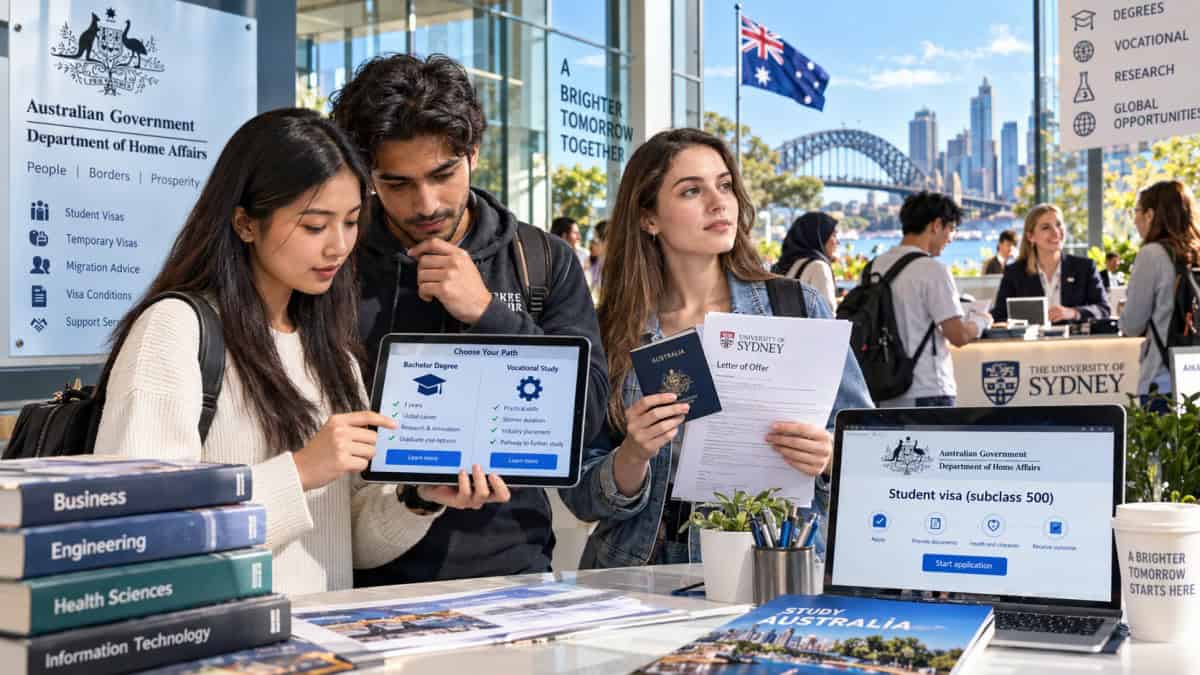
Australia has introduced sweeping student visa rules from 2 October 2026, sharply limiting the ability of international students and other temporary migrants to remain in the country by repeatedly moving between visas, providers or lower-level courses. The reforms restrict most onshore Student visa applications, require genuine academic progression for many students seeking further study, tighten family-member arrangements and temporarily double the provider-transfer restriction from six to 12 months. A separate Student visa transfer stream will then begin on 1 July 2027. For prospective students, particularly those planning multi-stage courses, the changes make choosing the right qualification and provider before travelling to Australia considerably more important.
The Australian Government describes the package as an integrity measure aimed at curtailing “visa hopping” while protecting the international education sector. The reforms do not prevent genuine students from studying in Australia. Instead, they narrow the circumstances in which temporary migrants can move into Student visas from inside the country and make it harder for existing students to use successive study arrangements primarily to extend their stay.
Advertisement
Advertisement
The distinction is important. International students remain a major part of Australia’s education system and economy. Australian Government data show 687,810 international students studied in the country during the first six months of 2026. India accounted for 16% of those students, second only to China. The same official data show international student numbers were 7% lower than during the equivalent period of 2025.
What Changed Under Australia’s Student Visa Rules on 2 October 2026?
The reforms affect several parts of the Student visa system at once.
Advertisement
Advertisement
Most temporary visa holders can no longer simply lodge a Student visa application while remaining in Australia. Existing Student visa holders also face tighter conditions if they want another Student visa. At the same time, new limits apply to transfers between education providers and to bringing partners and dependent children.
Key Student Visa Changes Now in Force
| Measure | From 2 October 2026 |
|---|---|
| Most temporary visa holders | Cannot apply for a Student visa from inside Australia |
| Existing Student visa holders | Further onshore applications generally restricted to specified exemptions |
| Academic progression | Further study generally needs genuine progression |
| Higher education to VET switching | Onshore pathway restricted |
| Provider transfer restriction | Temporarily increased from 6 to 12 months for non-school students |
| Family members | Generally cannot be included unless an exemption applies |
| Subsequent family entrants | No longer permitted after the Student visa is granted |
| Pre-2 October applications | Continue under the rules applying when lodged |
| New transfer visa stream | Starts 1 July 2027 |
The government says the changes are intended to restore the Student visa’s central purpose: temporary entry for genuine study rather than the use of education enrolment as an informal mechanism for extending residence.
Advertisement
Advertisement
Why Is Australia Targeting Visa Hopping?
Visa hopping describes situations in which a person moves through successive temporary visas or educational enrolments in order to continue living in Australia, even when the underlying purpose of their stay has changed.
The government’s concern is not ordinary academic progression. A student finishing a bachelor’s degree and moving to a legitimate higher qualification is very different from someone enrolling in progressively cheaper or lower-level programmes mainly to remain in the country.
Advertisement
Advertisement
Assistant Minister for International Education, Citizenship, Customs and Multicultural Affairs Julian Hill said the government wanted to manage the size and shape of the onshore student market while preserving Australia as a destination for genuine international education.
The broader Australian migration strategy similarly identifies stopping student visa hopping as an integrity priority. It also includes stronger action against migration agents involved in applications without merit and other measures designed to reduce the misuse of temporary visas.
This makes the October measures more than a technical change to one visa subclass. They form part of a wider recalibration of temporary migration.
Can Temporary Visa Holders Still Switch to a Student Visa Inside Australia?
For many people, no.
Advertisement
Advertisement
From 2 October 2026, most temporary visa holders affected by the new rules cannot apply for a Student visa while remaining in Australia.
The government has specifically identified Working Holiday Maker and Skills in Demand visa holders among those affected. The official policy is designed to prevent people entering Australia under one temporary purpose and then routinely converting their stay into education from inside the country.
Where an applicant cannot lodge in Australia, they generally need to leave the country, apply offshore and remain outside Australia when the Student visa is granted.
Home Affairs also warns that an offshore Student visa application does not generate a Bridging visa. An applicant may travel to Australia on another valid visa while the Student application is being processed where permitted, but must again be outside Australia when the Student visa is granted if the rules require offshore grant.
That is a significant practical consideration because accommodation, flights, work and course commencement dates can all be affected.
Applicants should therefore confirm their immigration position before making non-refundable commitments.
Advertisement
Advertisement
Can Existing Students Apply for Another Student Visa in Australia?
Most existing Student visa holders no longer have an unrestricted ability to apply for another Student visa onshore.
Home Affairs states that another onshore application may be possible where a student falls within a defined exemption.
Examples include students who:
- need up to another 12 months to finish their existing course with the same provider;
- are sponsored by Australia’s Department of Foreign Affairs and Trade or Defence;
- are applying to undertake a PhD;
- are applying for primary or secondary school studies;
- have completed their principal AQF qualification and are progressing to a higher AQF level;
- are moving from certain non-AQF studies into an AQF qualification;
- have finished school and are progressing to eligible non-AQF study; or
- cannot continue because their education provider has defaulted.
The rules therefore do not close all further-study options. They create a much clearer distinction between genuine educational progression and repeated enrolment that does not advance a student’s qualification level.
What Does Genuine Course Progression Mean?
The Australian Qualifications Framework, or AQF, arranges regulated Australian qualifications across ten levels.
Level 1 has the lowest complexity and Level 10 the highest. Certificate qualifications occupy the lower levels, while bachelor’s, postgraduate and doctoral qualifications sit further up the framework.
Advertisement
Advertisement
For context:
| AQF Level | Typical Qualification |
|---|---|
| Level 1 | Certificate I |
| Level 2 | Certificate II |
| Level 3 | Certificate III |
| Level 4 | Certificate IV |
| Level 5 | Diploma |
| Level 6 | Advanced Diploma or Associate Degree |
| Level 7 | Bachelor Degree |
| Level 8 | Bachelor Honours, Graduate Certificate or Graduate Diploma |
| Level 9 | Master’s Degree |
| Level 10 | Doctoral Degree |
Under the new onshore arrangements, students completing one course and seeking another Student visa generally need to show progression to a higher AQF level where that progression exemption is being used.
There is another important restriction. Home Affairs says that where a student has completed a higher education course, the next course used for the relevant onshore progression exemption must also be a higher education course delivered by a higher education provider.
That makes the former strategy of entering Australia through higher education and then switching into a VET programme considerably more difficult.
Can Students Still Move From University to a Lower-Level VET Course?
The reforms specifically target this pathway.
The government says students will no longer be able to enter Australia for higher education and then transfer onshore to VET as a way of moving into lower-cost or lower-level study.
Advertisement
Advertisement
Existing Student visa condition 8202 already requires visa holders to remain enrolled at the same AQF level or a higher level than the qualification for which their visa was granted, with a specific exception involving doctoral study and transfer to a master’s programme.
Home Affairs states that moving to a lower AQF level, or from an AQF course to a non-AQF award, can breach the Student visa condition unless the student first applies for and is granted an appropriate new Student visa.
The October 2026 package goes further by tightening the mechanisms through which such changes can occur onshore.
Students therefore need to separate two issues: whether an education provider will enrol them and whether their immigration status permits the proposed course change.
A new enrolment offer does not by itself guarantee that a student’s visa arrangements permit the move.
How Has the Provider Transfer Rule Changed?
One of the most immediate changes is a temporary doubling of the transfer-restriction period for non-school international students.
Advertisement
Advertisement
Before the reform, international students were generally restricted from transferring education providers during the first six months of their principal course.
From 2 October 2026 until 30 June 2027, that period is temporarily 12 months for non-school students.
School students remain subject to the existing six-month restriction relating to their first registered school course.
Exceptional circumstances can still permit transfers, including cases where a provider or course ceases to be registered.
The 12-month restriction should not, however, be mistaken for a permanent rule.
What Happens on 1 July 2027?
A second stage begins on 1 July 2027.
Advertisement
Advertisement
At that point, the transfer restriction is scheduled to return from 12 months to six months, but Australia will introduce a new Student visa transfer stream.
Students wanting to move between providers after arriving in Australia will need to obtain a new Student visa through this transfer mechanism before beginning with the new provider.
The government has outlined several integrity features.
A student must have commenced study with the provider that issued the Confirmation of Enrolment supporting the original visa and must ordinarily complete at least six months of the principal course before transferring.
The student cannot begin at the new provider until the new transfer visa has been granted.
Crucially, the new visa will retain the same end date as the original visa. This is designed to prevent a provider transfer itself from creating additional time in Australia.
Advertisement
Advertisement
Transfers will be permitted sideways or upwards through the AQF rather than downwards. The government has also stated that students will not be allowed to use the transfer stream to move from higher education into VET or to transfer into additional packaged courses.
This represents a substantial structural change.
Under the future system, changing providers will not necessarily extend a student’s permitted stay. It becomes primarily an education-transfer mechanism rather than an opportunity to reset a migration timeline.
What Happens to Students Who Need More Time to Complete Their Course?
Australia has retained exemptions for genuine situations where additional study time is required.
A current Student visa holder may be eligible to make another application from within Australia where they need up to 12 additional months beyond the original course end date to finish their studies and continue with the same education provider.
This may be relevant where illness, failed subjects or another legitimate circumstance delays course completion.
Advertisement
Advertisement
Government statements also identify provider default as an important exception. Students should not be penalised simply because their registered provider can no longer deliver the course.
However, students should not assume that needing more time automatically guarantees another visa.
Visa eligibility remains subject to Home Affairs requirements and individual circumstances.
Do the Rules Affect Partners and Children?
Yes. This is one of the most significant parts of the October reform package.
From 2 October 2026, most Student visa applicants can no longer include partners or dependent children unless they qualify for an exemption.
Home Affairs lists limited exemption groups including:
Advertisement
Advertisement
- PhD students;
- DFAT or Defence-sponsored students;
- foreign government scholarship recipients;
- eligible nationals from Pacific countries; and
- eligible nationals from ASEAN countries.
The affected ASEAN group includes Brunei, Cambodia, Indonesia, Laos, Malaysia, Myanmar, the Philippines, Singapore, Thailand, Timor-Leste and Vietnam.
Eligible Pacific nationalities listed by Home Affairs include Fiji, Kiribati, Nauru, Papua New Guinea, Samoa, Solomon Islands, Tonga, Tuvalu, Vanuatu and several other Pacific states.
Another major change concerns subsequent entrants.
A Student visa holder can no longer add family members after the Student visa has been granted. Home Affairs states there are no exemptions to that subsequent-entrant prohibition.
Where an exemption permits family members, they generally need to be included at the appropriate stage of the primary application.
The government has also created arrangements designed not to split eligible families already together in Australia.
Advertisement
Advertisement
What Happens to Applications Lodged Before 2 October 2026?
They are not retrospectively shifted onto the new application rules.
Home Affairs confirms that Student visa applications lodged before 2 October 2026 continue to be assessed under the rules applying when the application was lodged.
This includes applications containing family members.
That date distinction is crucial.
Two otherwise similar applicants may therefore face different procedural settings depending on whether their valid application was lodged before or from 2 October 2026.
Students with pending applications should check the exact lodgement date rather than assuming every part of the new regime automatically applies to them.
Advertisement
Advertisement
What Do the Changes Mean for Indian Students?
India’s importance to Australian international education makes these changes especially relevant to Indian families.
Australian Government education data show that Indian nationals represented 16% of all international students studying in Australia during the first half of 2026, making India the country’s second-largest student source behind China.
Historical Department of Education data also show 145,012 Indian students were commencing or continuing Australian study during 2025.
The economic relationship is substantial. Australian Bureau of Statistics data show education-related travel services associated with India were worth approximately A$9.384 billion in calendar 2025, up A$311 million, or 3.4%, from 2024.
For Indian applicants, the October rules therefore deserve attention well before a university or college deposit is paid.
A student planning to undertake a bachelor’s or master’s programme should not base their migration strategy on the assumption that they can later switch easily into a cheaper lower-level VET course while remaining in Australia.
Advertisement
Advertisement
Likewise, someone currently in Australia on another temporary visa should not assume they can convert that status into a Student visa without leaving the country.
The safest approach is to choose the intended qualification, academic level and provider on their genuine educational merits from the outset.
That does not mean changing direction is impossible. Legitimate course changes remain possible under defined conditions. However, the immigration framework is deliberately being redesigned so that course selection and visa duration correspond more closely to genuine study.
How Important Is International Education to Australia?
The tighter rules do not indicate that Australia is abandoning international education.
Official figures show precisely the opposite: the sector remains one of Australia’s largest export industries.
The Department of Education estimates that international education generated almost A$55 billion in export income during calendar 2025. Of that amount, A$30.4 billion related to goods and services and A$24.4 billion to tuition fees.
Advertisement
Advertisement
Australian Bureau of Statistics figures put education-related travel services at A$54.998 billion in 2025, up 6% from the previous year. Education represented 63.9% of Australia’s total travel-services exports.
Yet student numbers have recently been easing.
During January to June 2026, Australia recorded 687,810 international students, down 7% from the equivalent period in 2025. International enrolments declined 8%, while commencements fell 9%.
Higher education enrolments still increased 2%, while other sectors declined. English-language intensive courses for overseas students, or ELICOS, recorded a particularly large 27% decline.
This context helps explain the government’s policy balance.
Australia wants international education to remain economically and academically important, while arguing that stronger integrity measures are needed to protect its reputation and manage temporary migration.
Advertisement
Advertisement
Are Migration Agents and Lawyers Also Under Greater Scrutiny?
Yes, although students should distinguish the October Student visa rules from the government’s broader regulation of migration advice.
The government has increased regulatory activity through the Office of the Migration Agents Registration Authority.
OMARA’s monitoring team proactively reviewed 85 registered migration agents during 2025–26, identifying 43 instances of non-compliance. Across monitoring and investigation activity, 28 registered migration agents were sanctioned during that financial year.
New professional requirements also took effect from 1 April 2026, including mandatory annual training on ethical standards and obligations under the migration-agent Code of Conduct.
Julian Hill has separately criticised advisers who encourage clients to spend money pursuing migration cases with little realistic prospect of success. In a March 2026 speech to the Law Council of Australia, he called for greater honesty with applicants where cases were effectively hopeless and raised ethical concerns about advisers accepting money for applications with very poor prospects.
For students, the practical message is straightforward: immigration advice should come from appropriately authorised sources, and applicants should be cautious about promises that a succession of courses, appeals or temporary visas can guarantee a long-term stay.
Advertisement
Advertisement
Home Affairs itself tells education providers, education agents and migration agents to check whether applicants can meet the new requirements before encouraging them to enrol, make financial commitments or submit a visa application.
Does a Student Visa Still Allow Work in Australia?
Yes. The October reforms do not remove the normal work permission attached to the Student visa.
Home Affairs currently states that Student visa holders can work up to 48 hours per fortnight while their course is in session.
Students undertaking a master’s degree by research or doctoral degree are not subject to that work-hour limit, and their family members also receive different work arrangements where eligible.
The Student visa can permit a stay of up to six years depending on enrolment and individual circumstances.
The standard application charge is currently listed by Home Affairs as starting from A$2,500, although concessions apply in limited circumstances and applicants should use the government’s pricing estimator for their actual case.
Advertisement
Advertisement
These existing conditions should not be confused with the new restrictions on where an application can be made or how students can move between courses and providers.
Why This Matters
Australia’s October 2026 reforms fundamentally change the assumptions international students can make about studying, switching courses and extending their stay.
The Student visa remains a route for genuine international education. What has narrowed is the ability to use repeated onshore applications and provider changes as an open-ended temporary migration strategy.
That matters for students because course decisions now carry greater immigration consequences.
A qualification chosen primarily because it offers a quick entry point to Australia may create problems later if the student discovers that the course does not support their academic plans. Likewise, entering a more expensive higher education programme with the intention of transferring into a cheaper lower-level provider is increasingly incompatible with the new settings.
Providers are affected too. Institutions that relied heavily on recruiting students already in Australia from other providers may encounter a more restrictive market.
Advertisement
Advertisement
The 1 July 2027 transfer stream will reinforce that change by requiring a new visa before a student can begin with another provider and preserving the original visa’s end date.
For Australia’s international education sector, the government’s objective is to place greater weight on students who choose courses for educational purposes and less on enrolment structures designed primarily around prolonged temporary residence.
What Travellers Should Know
Anyone planning to travel to Australia for study should now treat the course, provider and visa as closely connected decisions.
The most important date is 2 October 2026, when the new onshore Student visa, family and interim transfer arrangements took effect. The next major date is 1 July 2027, when the new Student visa transfer stream is scheduled to begin.
Before Booking
- Confirm whether your visa application must be lodged from outside Australia.
- Do not assume that holding another Australian temporary visa allows an onshore Student visa application.
- Check the AQF level of both your current and proposed qualification.
- Higher education students should not assume they can later switch onshore to a VET course.
- Non-school students are temporarily subject to a 12-month provider-transfer restriction until 30 June 2027.
- From 1 July 2027, a six-month transfer restriction will apply alongside the new Student visa transfer stream.
- Do not commence with a new provider under the future transfer stream until the required visa has been granted.
- Check family eligibility before lodging because most applicants can no longer include partners or dependent children unless an exemption applies.
- Family members cannot be added later as subsequent entrants after the Student visa is granted.
- Applications lodged before 2 October 2026 continue to be assessed under the rules applying when they were lodged.
- Use official Home Affairs information or appropriately authorised professional advice before paying non-refundable tuition or travel costs.
These points are particularly important for students arranging accommodation, flights and course deposits before their visa pathway is settled.
Frequently Asked Questions
When did Australia’s new Student visa rules start?
Most of the new measures began on 2 October 2026. They affect onshore Student visa applications, further Student visas, family members and provider transfers. The separate Student visa transfer stream begins on 1 July 2027.
Advertisement
Advertisement
Can a Working Holiday Maker apply for a Student visa while in Australia?
The government says most temporary visa holders, specifically including Working Holiday Maker and Skills in Demand visa holders, can no longer lodge a Student visa application onshore under the new settings. Affected applicants generally need to apply from outside Australia.
Can an international student switch to a lower AQF qualification?
The government is tightening this pathway. Existing visa condition 8202 already requires students generally to remain at the same or a higher AQF level, and the new transfer regime is designed to permit transfers sideways or upwards rather than downwards.
Can students still change education providers?
Yes, but restrictions apply. Until 30 June 2027, non-school students generally face a temporary 12-month transfer restriction. From 1 July 2027, the period returns to six months but students will need a new visa through the transfer stream before commencing with the new provider.
Can international students still bring their families?
Most Student visa applicants can no longer include partners or dependent children unless an exemption applies. Exemptions include specified PhD students, government-sponsored students and eligible nationals from ASEAN and Pacific countries. Family members also cannot later apply as subsequent entrants after the primary Student visa has been granted.
Australia Is Redefining What a Student Visa Is For
Australia’s new rules mark a decisive shift towards treating the Student visa principally as permission to undertake a defined period of genuine education.
Students can still pursue further qualifications. Legitimate provider transfers remain possible. Exceptions protect PhD candidates, school students, certain government-sponsored students, people affected by provider failure and students who genuinely need additional time to finish their course.
Advertisement
Advertisement
What has changed is the ease with which a temporary stay can be repeatedly extended by switching visas, dropping to lower-level courses or moving between providers.
For prospective international students, that creates a stronger incentive to plan the entire study pathway before travelling. The institution, qualification level, course duration, family arrangements and longer-term career plan should all be considered together.
For Indian students, who represent one of Australia’s largest international education communities, the impact is particularly significant. Australia’s universities and colleges remain open to eligible Indian applicants, but studying in the country now requires more careful planning around academic progression and immigration rules.
The transition is also not finished. The temporary 12-month transfer restriction remains in place only until 30 June 2027. From 1 July 2027, the new transfer visa stream will create another major change in how students move between Australian education providers.
Australia is therefore not closing its doors to international education. It is drawing a firmer boundary between education and migration strategy. For genuine students, the central lesson is clear: choose the course for its educational value, understand the visa conditions before travelling, and do not rely on later course switching or repeated temporary visa applications as a guaranteed way to remain in Australia.
Advertisement
