
Xinjiang Unveils Untouched Alpine Valleys And Sapphire Lakes Built For Mindful Slow Travel In China

Published
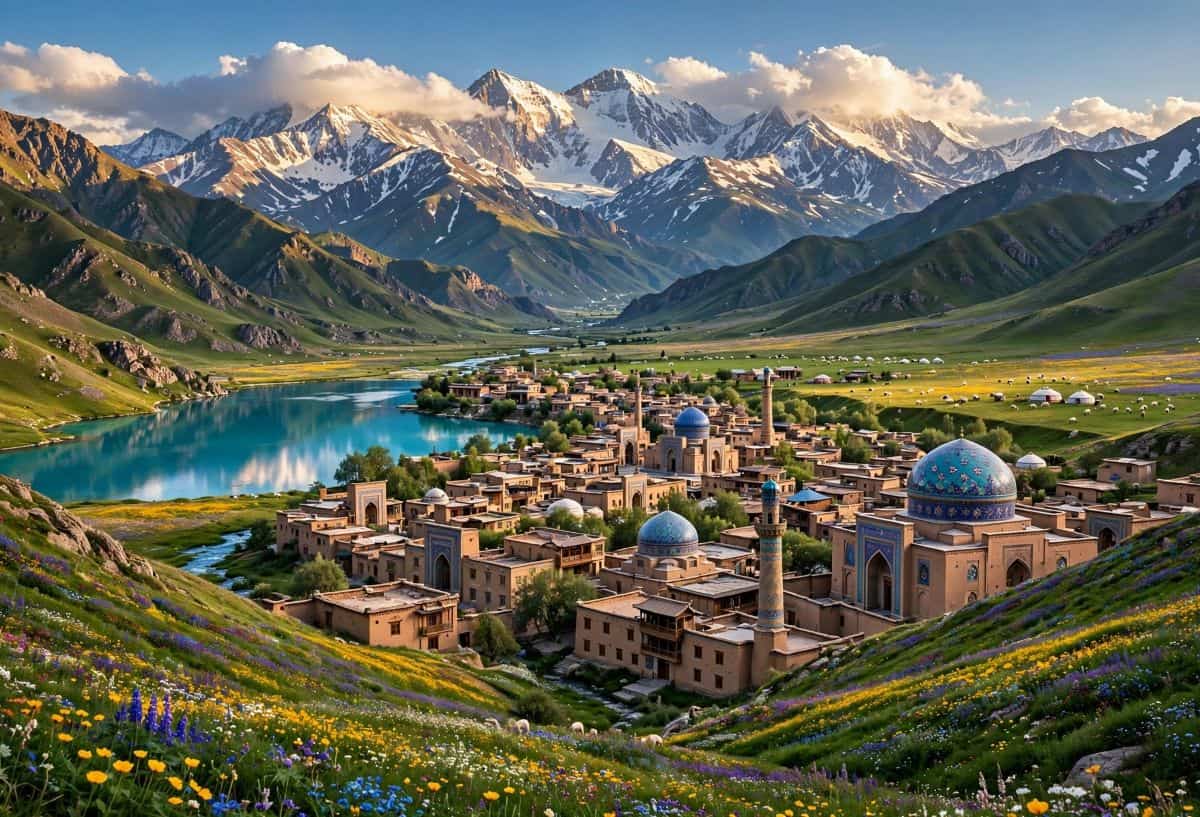
Image generated with Ai
Escaping the city and watching what happens next becomes enchanting. That’s how I would describe the Ili Kazakh Autonomous Prefecture of China. Many people call it “The Jiangnan on the Other Side of the Great Wall.” This is an untouched paradise. You can almost sketch the landscape of alpine meadows with the wind in the pines and the rushing hoofs of wild horses. Snow-capped mountains shoot to the sky and meet ancient glaciers that meet and carve the valleys of ever flowing rivers. The astounding beauty of Kazakh creates a peaceful image of Kazakh’s serene customs and way of life which truly captures the beauty of a place. Travelers experience peace and serenity which they wouldn’t find anywhere else. This is truly a love letter to the world. Travel introduces you to the life that was always meant to be yours. The magic you feel along the journey brings that life to you.
Unveiling China’s Hidden Paradise in the Ili Kazakh Autonomous Prefecture
Modern adventurers consistently seek tranquil refuges far removed from crowded concrete cities! Ili Kazakh Autonomous Prefecture, widely celebrated as “Jiangnan beyond the Great Wall”, presents an extraordinary natural contrast to the fast-paced, urbanized world. This vast realm boasts magnificent alpine pastures, snow-draped mountain peaks, prehistoric glacial forms, verdant forest ecosystems, and deep-rooted Kazakh traditions. Furthermore, global wanderers are noticeably shifting their focus toward authentic, nature-centered escapes. By seamlessly blending pristine ecological beauty with rich indigenous heritage, this destination offers a powerful alternative to standard city itineraries. Active travelers can completely disconnect from routine pressures while immersing themselves in sweeping, pristine wilderness! Consequently, this ongoing transformation strengthens local economies while protecting fragile mountain habitats for generations to come.
This remarkable surge in outdoor exploration fundamentally reshapes how global tour networks plan their multi-region itineraries across Central Asia. Industry professionals observe that modern vacationers actively reject rushed, transactional city tours in favor of immersive, restorative natural journeys. In response, global travel managers are reallocating investments toward eco-conscious transport systems, localized hospitality initiatives, and low-impact mountain excursions. As a result, the region establishes a fresh standard for sustainable, high-altitude tourism. This transformative model ultimately balances rural economic development with strict environmental preservation.
Advertisement
Advertisement
The Geographic Beauty and Unique Climate Dynamics of the Tianshan Mountain Range
Advertisement
Advertisement
The unique topography of the Ili Kazakh Autonomous Prefecture is largely dictated by the soaring arches of the Tianshan Mountains, which trap moist air masses to create an surprisingly lush haven within northwestern China. Unlike the arid desert zones typically associated with Xinjiang, this region experiences ample rainfall, feeding extensive alpine river systems and nurturing dense coniferous forests. The resulting geographical conditions generate mild summer seasons that offer an ideal sanctuary for high-altitude trekking, nature photography, and ecological research. Environmental scientists frequently highlight how these distinct microclimates sustain complex biodiversity hotspots that cannot be found anywhere else in regional Asia.
From a global hospitality perspective, these favorable climatic patterns extend the seasonal viability of outdoor adventure markets beyond traditional peak windows. Global travel planners are taking advantage of the extended green seasons to offer specialized eco-tours, mid-altitude hiking expeditions, and wilderness wellness retreats. By leveraging the region’s moderate summer environment, international operators can balance tourist volumes across multiple months, thereby preventing the severe ecological wear and tear often seen in overcrowded global mountain resorts.
Exploring Alpine Wonders and UNESCO Protected Ecosystems in Central Asia
Deep within the majestic Tianshan Mountains, the renowned Nalati Grasslands function as a central jewel of the region, artfully combining high-altitude meadows, serpentine river networks, and spectacular cascading waterfalls. Observers highlight that this picturesque area provides an exceptionally mild climate throughout the warm summer months, boasting comfortable average temperatures around 23°C. Visitors frequently participate in classic outdoor activities.
Simultaneously, the nearby Kalajun Grasslands command international acclaim as an essential segment of the prestigious UNESCO World Heritage Xinjiang Tianshan site. Ecological specialists emphasize that Kalajun maintains remarkably untouched natural habitats defined by undulating grassy plains framed by towering, ice-capped summits. During the lush spring and summer months, these mountain valleys undergo a breathtaking transformation into vibrant, multi-hued botanical displays. This seasonal spectacle continually captivates international visitors and solidifies Xinjiang’s reputation as a premier ecological sanctuary.
Advertisement
Advertisement
Strategic Shifts in Global Itinerary Design for Protected Mountain Destinations
The profound commercial effect of these protected landscapes extends directly across the global travel industry, fundamentally reshaping international itinerary design. Major destination management specialists are increasingly pivoting away from rapid landmark hopping, choosing instead to design extended, nature-focused retreats centered around the Tianshan Mountains. This strategic transition actively drives long-term consumer demand for specialized outdoor gear, private overland logistics, and licensed local trail guides. By elevating pristine, protected environments like Kalajun into main global highlights, regional stakeholders demonstrate that international travelers are eager to pay a premium for preserved, low-density ecological destinations.
Furthermore, this heightened focus on preserved ecosystems encourages cross-border hospitality brands to adopt more sustainable operational standards worldwide. Accommodation providers operating near sensitive zones like the Nalati Grasslands are actively implementing low-footprint infrastructure, solar energy integration, and comprehensive waste reduction programs. As these practices prove financially viable and highly attractive to eco-conscious tourists, they create a positive ripple effect throughout the broader global hospitality market. Consequently, luxury and adventure travel providers across the world are gradually shifting their core strategies to align with these environmentally responsible, high-value consumer expectations.
Cultural Immersion, High-Altitude Lakes, and the Growing Global Slow Travel Movement
Beyond its breathtaking geographical features, the region’s intense appeal remains deeply grounded in authentic human interaction and living history. Visitors venturing into the Ili Kazakh Autonomous Prefecture are warmly invited to engage with long-standing Kazakh heritage, savor traditional regional delicacies, and observe time-honored pastoral ways of life. A short journey away approximately 160 km from Yining within the neighboring Bortala Mongol Autonomous Prefecture lies the magnificent Sayram Lake. Famous for its luminous, sapphire-blue waters bordered by sharp alpine peaks, this high-altitude water body serves as an indispensable anchor point for overland travel routes across northwestern China.
Advertisement
Advertisement
Tourism analysts unanimously agree that the Ili Kazakh Autonomous Prefecture is most meaningfully experienced through the gentle philosophy of slow travel. Rather than hurriedly moving between crowded commercial spots, thoughtful travelers are encouraged to embrace unhurried road trips, changing mountain panoramas, and quiet, untouched wilderness spaces.
Preserving Pastoral Heritage and Local Nomadic Traditions in Modern Overland Routes
The integration of authentic Kazakh pastoral customs into organized overland routes represents a major evolution in how cultural heritage is presented to international tourists. Modern sightseers increasingly seek meaningful encounters that respect local ways of life rather than staged performance art. In places like Yining and surrounding nomadic valleys, visitors can observe traditional carpet weaving, equestrian sports, and native culinary arts directly within living pastoral communities. This direct involvement ensures that cultural tourism revenues flow straight into rural households, empowering indigenous families to sustain their ancestral lifestyles alongside modern economic growth.
For global tour providers, this emphasis on living heritage requires a thoughtful reassessment of community-based tourism practices. Tour organizers are establishing direct partnerships with local herding cooperatives to design respectful, low-impact cultural visits. By offering authentic domestic stays and cultural workshops, international travel brands are able to satisfy the growing consumer demand for transformative, educational experiences while safeguarding the social fabric of traditional mountain communities.
Socioeconomic Impacts on Long-Haul Overland Travel Infrastructure Across Central Asia
Advertisement
Advertisement
The global implications of this shift toward slow travel are profoundly altering long-haul tourist behavior and international aviation strategies. As global travelers increasingly prioritize meaningful, extended stays over brief, high-stress city stops, international airlines and tour operators are adjusting their flight schedules and transport services to support longer overland routes connecting Yining and Bortala. This evolution directly benefits local communities by distributing tourism expenditures directly into small-scale pastoral economies, family-owned lodges, and regional artisan markets.
Ultimately, the emerging global preference for immersive, low-impact exploration guarantees that places like Sayram Lake will continue to inspire a more thoughtful, balanced, and sustainable era of worldwide tourism! Modern infrastructure investments across the Ili Kazakh Autonomous Prefecture demonstrate how remote geographic regions can successfully develop world-class eco-tourism corridors without sacrificing their environmental integrity or cultural soul.
Spatial Dimensions and Environmental Carrying Capacity Metrics Governing the Nalati Alpine Pasture Systems
Spanning an impressive geographical footprint of 1,848 square kilometers, the Nalati Grasslands represent one of the most vast and ecologically vital high-altitude pasture ecosystems in China. Positioned at elevated altitudes ranging between 1,800 to 2,200 meters above sea level, this expansive alpine terrain benefits from a substantial volume of annual precipitation, receiving roughly 880 millimeters per year. This consistent hydrological influx sustains extraordinarily rich vegetation cover, robust river channels, and lush subalpine meadows. To preserve this sensitive environment, local authorities enforce strict daily visitor quotas during peak tourist activity between June and September. Restricting traffic prevents severe soil compaction and grass degradation across the high-altitude grazing grounds.
Carefully regulating visitor capacity across such a massive landscape requires a balanced management framework that respects indigenous land rights while accommodating sustainable eco-tourism. Balancing traditional pastoral grazing routes with managed tourist traffic ensures that indigenous herding practices remain fully functional without compromising ecological integrity. Environmental agencies actively monitor pasture health, stream quality, and vegetation density to ensure that modern outdoor recreation does not overwhelm the delicate ecosystem. Through these carefully calibrated conservation strategies, the alpine pasturelands remain fully protected while continuing to welcome global travelers.
Advertisement
Advertisement
Hydrological and Geological Profiling of Sayram Lake’s High-Altitude Mountain Basin
Covering a surface area of 458 square kilometers, Sayram Lake holds the distinction of being the largest and highest alpine lake within Xinjiang, sitting at an elevation of 2,071 meters above sea level. Formed approximately 70 million years ago during the Himalayan orogenic period, this ancient tectonic fault-trough basin reaches maximum water depths of 92 meters and holds an impressive total volume of 21 billion cubic meters of pure water. The lake displays extraordinary underwater clarity due to constant replenishment from pristine, high-altitude mountain runoff and glacial snowmelt. Consequently, it serves as an indispensable freshwater reservoir and primary ecological baseline for the surrounding Bortala Mongol Autonomous Prefecture.
The structural stability and water quality of this high-altitude basin are maintained through strict watershed management controls designed to limit runoff contamination. Local conservation authorities strictly monitor surrounding drainage zones to protect the lake’s fragile aquatic chemistry from human disruption. Because the alpine ecosystem responds sensitively to climatic changes, the lake acts as a key scientific indicator for tracking environmental trends across the broader regional landscape. Preserving this pristine body of water ensures that surrounding ecosystems, wildlife populations, and local human communities continue to benefit from its natural freshwater resources.
Macroeconomic Revenue Dynamics and Overseas Traveler Expenditures across Northwestern Region
The steady expansion of nature-based tourism throughout the Ili Kazakh Autonomous Prefecture plays a prominent role in generating foreign currency revenues across Xinjiang, which reached $4.475 billion USD by late 2024. Overseas travelers in the region spend an average of $250 USD per day, primarily driven by long-distance overland transportation, purchases of authentic cultural handicrafts, and payments for specialized wilderness guides. As travel connections continue to improve across Yining and peripheral districts, regional tourism revenues sustain consistent double-digit annual growth rates, fundamentally diversifying rural economic opportunities.
Advertisement
Advertisement
This influx of foreign capital directly enhances local infrastructure, supporting regional road improvements, environmental management, and vocational training programs for hospitality personnel. Rural families who previously relied entirely on traditional agriculture now participate directly in the broader service economy as local guides, lodge operators, and cultural artisans. By distributing tourist spending beyond urban centers into remote rural districts, the regional economy gains long-term resilience. This economic model demonstrates how controlled, high-value tourism can stimulate regional financial growth while protecting rural lifestyles.
Strict Ecological Preservation Mandates Governing the World Heritage Tianshan Landscape
The Kalajun Grasslands serve as a cornerstone protected zone within the UNESCO World Heritage Xinjiang Tianshan site, which safeguards hundreds of thousands of hectares of high-value mountain habitats. Protective regulations enforce a complete ban on heavy industrial construction within designated buffer zones, keeping manufacturing plants, resource extraction, and heavy urban development far removed from vulnerable flora and fauna. By capping commercial building projects and implementing comprehensive waste management protocols, environmental agencies keep biodiversity loss near zero while allowing low-impact ecological exploration.
Conservation guidelines for this protected landscape require all tourism operations to conform to strict sustainability standards, ensuring that human presence does not disrupt natural habitats. Walking trails, observation platforms, and shuttle routes are designed to minimize physical contact with sensitive plant species and wildlife nesting areas. Regular environmental audits are conducted to assess wildlife movements, soil stability, and vegetation recovery rates. By placing ecological preservation above short-term commercial expansion, the region maintains its pristine wilderness quality and sets a strong example for global conservation management.
Meteorological Microclimates and Optimal Seasonal Weather Profiles across the River Basin
Advertisement
Advertisement
Unlike the arid, landlocked desert basins of northern and southern Xinjiang, the Ili River Valley features a remarkably humid microclimate created by moist westerly air masses trapped against the formidable Tianshan Mountains. During the summer, high-altitude pastures enjoy comfortable average temperatures ranging between 20°C to 23°C, offering a refreshing microclimate compared to lowland urban cities. In contrast, winter temperatures drop significantly below freezing, maintaining a pronounced four-season cycle that governs seasonal livestock migration, grazing rotations, and tourist openings.
These favorable seasonal weather conditions create ideal windows for outdoor activities, allowing travelers to enjoy pleasant weather during spring, summer, and early autumn. The predictable climatic cycle enables tourism operators to structure seasonal itineraries that optimize outdoor safety and comfort. Furthermore, the substantial rainfall during warmer months keeps the valley exceptionally green, earning the region its reputation as an oasis among the surrounding arid landscapes. Understanding these microclimatic patterns helps travel planners maximize visitor comfort while respecting seasonal ecological boundaries.
Demographic Integration and Cultural Heritage Safeguarding within Kazakh Communities
Indigenous Kazakh herders form a core demographic foundation within the Ili Kazakh Autonomous Prefecture, keeping centuries-old seasonal transhumance routes alive between summer mountain pastures and sheltered winter valleys. Over 1,000 registered local travel enterprises across the district partner directly with herding cooperatives, establishing sustainable secondary income streams for indigenous families. These community-led initiatives enable local households to offer authentic home-stays, regional food experiences, and cultural demonstrations, ensuring that economic benefits flow directly into rural communities.
This direct community participation helps preserve local traditions, horse-rearing skills, and artisanal crafts that might otherwise decline amid modern urbanization. Travelers gain rare opportunities to learn about nomadic heritage directly from local families, fostering mutual cultural respect. Furthermore, financial gains from cultural tourism allow younger generations to remain within their ancestral homelands while enjoying improved living standards and educational resources. This balanced model proves that cultural preservation and economic progress can thrive side by side.
Advertisement
Advertisement
Logistics Infrastructure and Highway Transportation Corridors Linking Peripheral Scenic Hubs
Overland transportation across northwestern China relies on high-grade highway networks connecting Yining to scenic areas like Sayram Lake (160 kilometers away) and the Nalati Grasslands. Recent infrastructure upgrades have significantly shortened transit times between major transport hubs, allowing self-drive vehicles, electric tour shuttles, and long-distance buses to navigate high mountain passes safely. These modernized transit corridors allow large numbers of travelers to move across wide distances without intruding upon vulnerable pasturelands.
The strategic development of these highways emphasizes environmental protection, incorporating wildlife overpasses, noise barriers, and eco-friendly paving materials to reduce construction impacts. By concentrating vehicle traffic along designated transportation corridors, local authorities limit human encroachment into untouched wilderness areas. Furthermore, improved transit safety allows emergency services, local traders, and seasonal herders to move efficiently across the region year-round, boosting both tourism logistics and local quality of life.
Ecotourism Growth Metrics and Shifting Trends in Traveler Length of Stay
The average duration of stay for independent travelers exploring the Ili Kazakh Autonomous Prefecture has grown to 4.5 to 5 days per trip, reflecting a clear preference for immersive slow travel over brief, high-speed sightseeing. Multi-day trekking routes, guided equestrian journeys, and outdoor photography excursions account for over 60% of independent travel bookings across the region. Extended stays increase direct visitor spending within rural communities while reducing the environmental strain associated with rapid, high-turnover tour groups.
Advertisement
Advertisement
This shift toward longer travel itineraries encourages local business owners to invest in higher-quality hospitality services, sustainable lodging, and specialized recreational activities. Visitors who spend several days in the region develop a deeper understanding of its ecology, culture, and geography, leading to higher satisfaction rates and positive word-of-mouth recommendations. Ultimately, promoting extended, low-impact travel itineraries creates a more stable, economically beneficial, and environmentally responsible tourism industry across northwestern China.
The Final Verdict
Leaving this part of northwestern China feels somewhat like leaving a part of your heart behind in those never ending green valleys. The Mongolian inspired yurts with crackling fires to warm us have left us wanting more, while the intense sapphire hue over Sayram Lake at sunrise and the silence of the mountains will fill our hearts forever. The Ili Kazakh Autonomous Prefecture offers a so much more than just a travel break, it completely alters our perception of the world and how we appreciate beauty found on every continent.
The Ili Kazakh Autonomous Prefecture offers an appeals to a feeling of fulfillment of the adventure to travel somewhere unexpected that dazzles with a real sense of wonder and draws you in. Preserving the grandness of nature has led to this part of the world being one of the last remote places to offer adventure, and you don’t have to seek success in return to the world here. You leave this land not only with pictures, but with peace, you leave with that warm feeling of wonder of all the possibilities in this infinite sky.
Advertisement
