
Heathrow, Manchester and Other UK Airports Set for Major Passport Control Shake-Up as Facial Recognition E-Gates Expand

Published
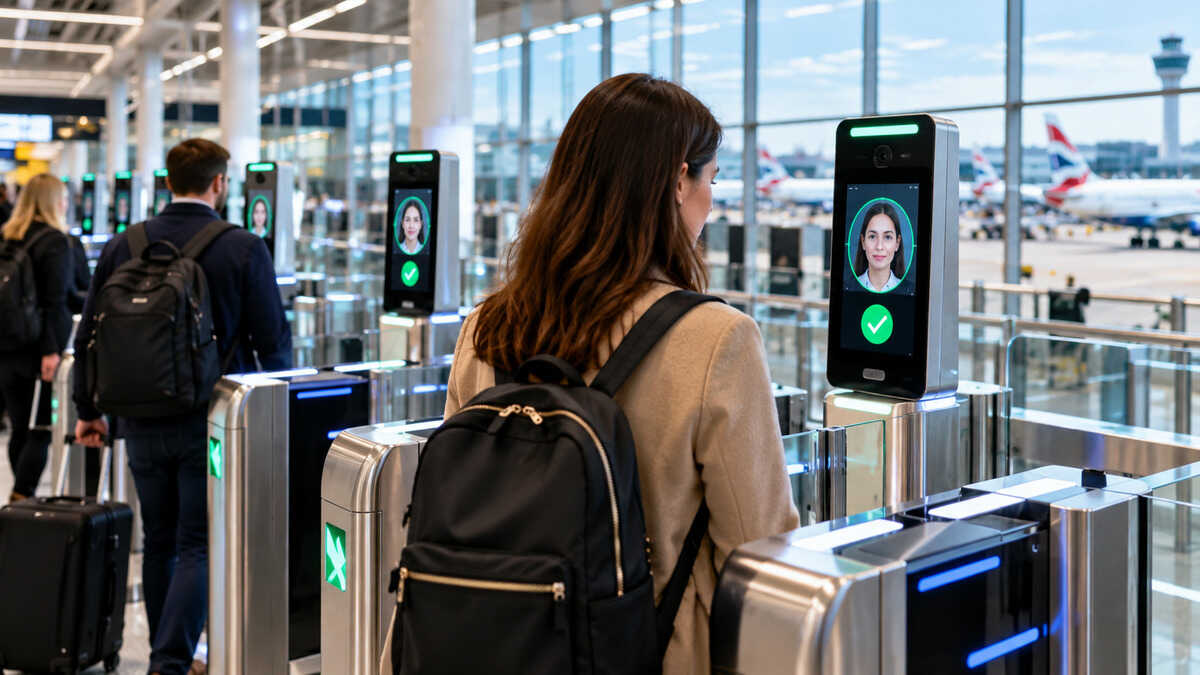
The UK is set to see a huge change in how border services are delivered at its airports. Passengers who qualify will be able to use contactless facial recognition technology so they won’t have to scan their passports to enter the country. The new technology will be used at 12 major airports across the country. After trialling for three weeks at Manchester Airport, the new technology hopes to speed up immigration processes. The new technology will ensure passengers identities can be verified whilst keeping borders secure. This could speed up processing times by up to 25%. As always, you will need to ensure you have a valid passport.
Twelve Major UK Airports Identified for Contactless Border Technology
The planned introduction of contactless facial recognition represents an important development in Britain’s airport infrastructure. The upgrade aims to replace the traditional passport-scanning step at selected automated border gates with a biometric identity check.
Advertisement
Advertisement
The airports identified for the proposed rollout are Heathrow, Gatwick, Manchester, Birmingham, Bristol, Cardiff, Edinburgh, Glasgow, London City, London Luton, Newcastle and London Stansted.
These airports serve a mixture of international business routes, European leisure destinations and long-haul travel markets. Introducing the technology across these locations could affect a substantial proportion of passengers entering the UK through automated border control.
Advertisement
Advertisement
However, the timetable remains important. The reported rollout targets early 2027, and this should not be interpreted as confirmation that every gate at every listed airport has already been upgraded.
Manchester Airport Trial Establishes Foundation for Wider Rollout
Manchester Airport has emerged as an important testing location for the next generation of British border processing technology. A three-week pilot assessed whether contactless facial recognition could allow eligible arriving passengers to complete identity checks without physically presenting their passports at the automated gate.
Advertisement
Advertisement
Traditional e-gates allow passengers to place their passports on a scanner which are verified and then the passenger is matched to their passport using facial recognition.
The proposed technology changes that sequence. Instead of beginning with a document scan, it uses an existing reference image and a live facial photograph to verify identity.
Advertisement
Advertisement
This approach could remove one of the repetitive steps in the arrivals process, particularly when passengers struggle to position passports correctly or when electronic chips cannot be read immediately.
The trial provides a basis for further deployment, although wider operational performance will depend on reliability, passenger eligibility and the integration of biometric checks with existing border security procedures.
Facial Recognition Could Reduce Border Processing Times by Up to 25%
One of the most significant reported benefits of the new technology is its potential to accelerate passenger processing.
Under conventional automated border procedures, an individual identity check can take approximately 20 to 25 seconds, although actual processing times vary according to document readability, passenger positioning and system performance.
Advertisement
Advertisement
The contactless system has been reported as potentially reducing border processing time by as much as 25%.
Conventional check
20–25 sec
Indicative processing time per passenger
Potential improvement
Up to 25%
Reported reduction, not a guaranteed outcome
If a 25% improvement were achieved against the stated conventional processing time, an individual check could theoretically fall to approximately 15–19 seconds.
Advertisement
Advertisement
This calculation is illustrative rather than a measured trial result. Actual waiting times also depend on the number of available gates, passenger arrivals, staffing and secondary inspections.
Nevertheless, even modest reductions in processing time could improve passenger flow during busy international arrival periods.
Birmingham and East Midlands Airports Begin Introducing Contactless E-Gates
The rollout has already moved beyond initial testing. According to UK government guidance updated on 20 October 2026, a small number of contactless e-gates are operating at Birmingham and East Midlands airports.
This is an important distinction from the original announcement, which identified a wider national programme but did not establish that the upgraded technology was available at every participating airport.
The Home Office began the phased introduction on 6 October 2026, with the intention of extending the system across the UK airport network by early 2027.
The latest official programme identifies 13 airports, including East Midlands Airport, rather than the 12 locations originally listed in the supplied report.
Advertisement
Advertisement
How the New Biometric System Will Change Airport Arrivals
The contactless system uses facial comparison technology to establish a traveller’s identity without requiring a passport to be placed on an electronic reader.
When an eligible passenger approaches an upgraded gate, a camera captures a live facial image. The system then compares that image against verified immigration, travel and passport information already available to border authorities.
Once identity verification and the necessary security checks have been completed, the gate opens automatically.
The technology is intended to simplify the passenger experience without removing existing immigration controls.
This distinction matters because contactless processing does not mean unrestricted entry. Border Force will continue conducting identity and security checks, even when travellers no longer need to scan their passports.
The government has confirmed that the new system is initially restricted to British citizens. Other nationalities already eligible for conventional e-gates are expected to gain access as the programme expands.
Advertisement
Advertisement
British Travellers Must Still Carry Valid Passports
Despite the removal of the physical scanning requirement at upgraded gates, international travellers must continue carrying valid passports.
Airlines and other transport providers will still need to establish that passengers possess the necessary documentation for their journeys. Immigration authorities may also request passports when additional verification is required.
If the contactless system cannot confirm a passenger’s identity, the individual may be instructed to scan their passport using the existing reader.
Where automated verification remains unsuccessful, the traveller may be referred to a Border Force officer for further checks.
These procedures provide an alternative when facial recognition cannot complete the process, ensuring that technical difficulties do not automatically prevent a traveller from receiving an immigration assessment.
The government’s guidance also makes clear that all immigration and security checks will continue under the new arrangements.## Children Aged Eight and Above Can Use Eligible UK Airport E-Gates
Advertisement
Advertisement
The contactless rollout follows another significant change to Britain’s automated border arrangements.
From 8 July 2026, the minimum age for eligible children using UK airport e-gates was reduced to eight years.
Previously, children generally needed to be at least ten years old to use the automated facilities.
Under the updated requirements, children aged eight to seventeen must be accompanied by an adult. Passengers must also meet the minimum height requirement of 120 centimetres and hold the appropriate biometric travel documentation.
The age change expands access to automated border processing for families, although the initial contactless service remains limited to British citizens.
Together, the developments form part of a broader effort to modernise the arrivals experience and reduce reliance on manual document processing.
Advertisement
Advertisement
International Visitors Could Benefit From Future Expansion
The initial focus on British citizens does not mean contactless border processing will remain permanently restricted to domestic passport holders.
Existing UK e-gate arrangements already accommodate eligible travellers from several countries, including the United States, Canada, Australia, Japan, New Zealand, Singapore and South Korea, alongside eligible European nationals.
The government intends to extend contactless processing to other nationalities that already qualify for e-gate access.
However, no universal implementation date has been confirmed for these additional passenger groups.
For international tourism, the expansion could eventually improve the arrival experience for visitors entering Britain for holidays, business travel, conferences and family visits.
Faster identity checks may be particularly valuable at major international gateways handling large numbers of passengers arriving within short periods.
Advertisement
Advertisement
Nevertheless, eligibility for contactless processing will remain subject to the relevant immigration requirements and security procedures.
Airport Modernisation Could Support Britain’s Tourism Industry
Border processing plays an important role in the overall visitor experience. For many international passengers, immigration control is one of the first major interactions they encounter after arriving in Britain.
Long queues can influence perceptions of airport efficiency, particularly after overnight flights or during peak holiday periods.
Contactless technology could help airports process eligible passengers more consistently by reducing the need for manual document positioning and repeated scanning attempts.
The potential benefits extend beyond individual convenience. Improved passenger throughput may also allow border authorities to allocate staff more effectively, particularly when travellers require additional documentation checks or assistance.
However, the technology alone cannot guarantee shorter airport queues. Flight schedules, simultaneous international arrivals, available gate capacity and operational disruptions will continue to influence waiting times.
Advertisement
Advertisement
The government’s reported 25% processing improvement should therefore be understood as a measure of individual e-gate performance rather than a guaranteed reduction in total airport waiting times.
Digital Border Security Remains Central to the Upgrade
The new system forms part of Britain’s wider transition towards digitally supported immigration and border management.
The UK has already introduced electronic travel authorisation requirements for eligible visitors and expanded the use of digital immigration status through its eVisa programme.
Contactless e-gates build on this approach by using verified travel information and biometric identity comparison at the point of arrival.
The intention is to establish identity more efficiently while preserving the security checks required under existing border procedures.
However, the wider use of biometric technology also creates important operational responsibilities concerning the protection, accuracy and handling of personal information.
Advertisement
Advertisement
The effectiveness of the system will depend on reliable identity matching, appropriate security safeguards and clear procedures for passengers whose identities cannot be verified automatically.
The Home Office has identified contactless processing as part of its longer-term border modernisation programme.
What Passengers Should Expect Before the Early 2027 Rollout
Travellers arriving at participating British airports should expect a gradual transition rather than an immediate nationwide replacement of conventional passport scanning.
During the rollout, some e-gates may support contactless processing while others continue operating through the existing passport-reader system.
Passengers should follow airport signage and Border Force instructions rather than assume that every gate provides the upgraded service.
British citizens using eligible contactless facilities may be able to proceed directly through facial verification. Other travellers should continue using the border arrangements applicable to their nationality and immigration status.
Advertisement
Advertisement
The programme’s scheduled expansion by early 2027 represents a substantial change in how identity verification is conducted at British airports.
For passengers, the central benefit is straightforward: fewer physical document-handling steps and potentially faster border processing.
For the aviation industry, the development represents another stage in the integration of biometric technology into airport operations.
UK Airport Contactless E-Gates Mark a New Phase in International Travel
Britain’s move towards contactless airport border control could reshape the arrival experience for millions of eligible travellers. With early deployment already under way at Birmingham and East Midlands airports, the programme is progressing towards a wider rollout covering major international gateways by early 2027.
Heathrow, Manchester and other UK airports are preparing for a major passport control upgrade as facial recognition e-gates expand to reduce border processing times by up to 25%, ease queues and strengthen security. Eligible British travellers will be able to clear automated checks without scanning their passports, with wider rollout planned by early 2027.
There are claims that there can be up to a 25% improvement in the processing rate per person however passport checks will still be required and immigration checks will still occur. Queue times will depend on the airport and how efficiently they run. This is not removing border controls but adapting them to modern times.
Advertisement
