
Syria Follows UAE And More In Rebuilding Tourism And Winning Back Tourists With Aviation Expansion As Middle East Travel Recovery Accelerates

Published
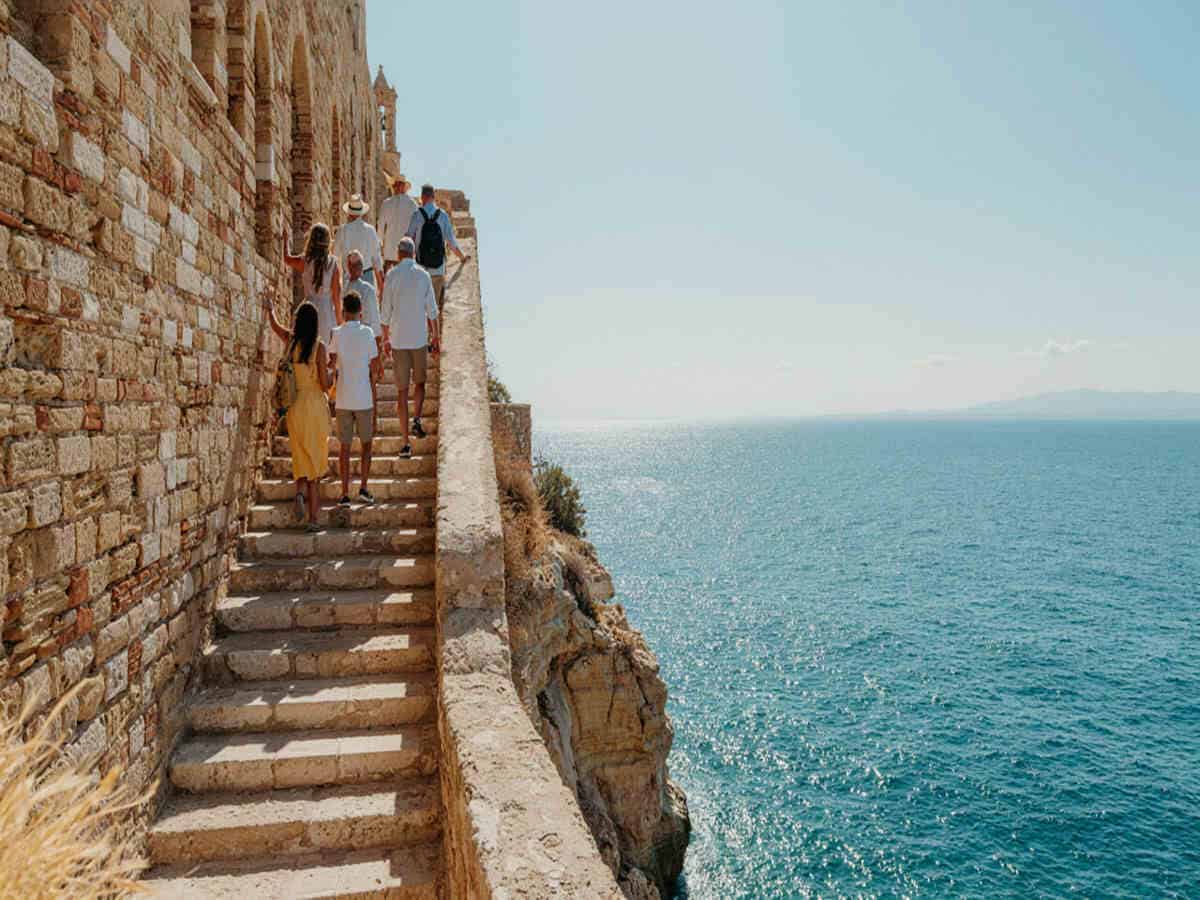
Image generated with Ai
Syria is reviving its tourism industry by launching flights amid the growing recovery in the tourism industry of UAE and the Middle East region. The revival of Syria’s tourism industry has been brought about by the establishment of air connectivity, airport renovations, improving hotel facilities, and the revival of international tourists. The recovery of the Syrian tourism industry brings it in line with that of the UAE, Saudi Arabia, Jordan, Qatar, Oman, and Iraq.
Across the Middle East, tourism recovery in 2026 is taking several different forms. Some countries are restoring lost connectivity. Others are building entirely new tourism economies. Syria stands out because much of its recovery depends on rebuilding the basic travel network that allows international tourists to enter, move around and stay in the country.
Syria Is Putting Aviation At The Centre Of Its Tourism Comeback
Aviation has become one of the strongest pillars of Syria’s travel recovery.
The country recorded around 3.52 million visitors during the first half of 2026, compared with approximately 1.67 million during the same period in 2025. That sharp increase shows how quickly overall travel activity has expanded.
Advertisement
Advertisement
Foreign tourist arrivals were particularly significant. Around 719,000 foreign tourists were recorded during the period, compared with roughly 131,000 a year earlier.
Arab visitors also increased, while Syrian expatriates continued to represent a major share of arrivals.
Advertisement
Advertisement
Important inbound markets included Türkiye, Germany, Sweden, the United States, the Netherlands, Canada and the United Kingdom. Jordan, Lebanon and Iraq remained important regional markets.
The recovery is therefore being supported by several visitor segments rather than one single source.
Advertisement
Advertisement
Syria’s tourism recovery is being driven by:
- Returning international air services.
- SyrianAir fleet and route expansion.
- Rehabilitation of major and regional airports.
- Rising foreign and regional visitor numbers.
- Hotel reopening and accommodation upgrades.
- Tourism workforce development.
- Digital visitor services.
- Greater focus on visitor security.
SyrianAir Emerges As A Symbol Of Wider Travel Renewal
SyrianAir has become one of the most visible parts of Syria’s tourism rebuilding effort.
The carrier introduced a redesigned green-and-gold identity during 2026. Its Airbus A320-233 registered YK-AKJ appeared in Ostrava wearing the refreshed livery.
The change is more than cosmetic.
It accompanies a broader effort to modernise the airline, expand operational capacity and restore routes that are important for tourism, family travel and business movement.
Advertisement
Advertisement
Damascus-Amsterdam flights returned in July 2026, creating a direct connection between Syria and an important European market.
The route is particularly relevant for travellers visiting friends and relatives, as well as Syrian communities living across Europe.
SyrianAir has also expanded connectivity involving Moscow and Madinah.
These routes serve different travel purposes.
- Amsterdam strengthens European access.
- Moscow reconnects Syria with another major international market.
- Madinah supports religious and regional travel.
- Additional aircraft can help increase frequencies and restore more destinations.
The airline’s expansion could therefore play a central role in determining how quickly Syria reconnects with international tourism.
Damascus International Airport Is Rebuilding Its Gateway Role
Damascus International Airport remains the country’s most important aviation gateway.
Advertisement
Advertisement
The airport handled more than 148,000 passengers in May 2026, including arrivals and departures.
More than 1,500 flights were recorded during the month, while 13 airlines were operating services.
These figures are important because tourism recovery depends heavily on reliable connectivity.
Travellers usually assess more than attractions when selecting a destination. They also consider direct flights, transit options, airport facilities and the ease of reaching hotels or tourism areas after arrival.
As more airlines return, Damascus gains greater potential to function again as Syria’s primary international entry point.
Stronger passenger flows can also benefit:
Advertisement
Advertisement
- Hotels.
- Restaurants.
- Ground transportation.
- Travel agencies.
- Tour operators.
- Retail businesses.
- Local guides.
This creates a wider economic effect beyond aviation itself.
Regional Airports Could Spread Tourism Beyond The Capital
Syria is also rebuilding aviation infrastructure outside Damascus.
Deir Ezzor International Airport underwent rehabilitation before returning to operations.
Its reopening included domestic services from Damascus as well as international connectivity involving Kuwait.
Qamishli International Airport has also been moving through rehabilitation.
These developments matter because tourism cannot depend permanently on a single gateway.
Advertisement
Advertisement
Regional airports can make it easier for visitors to reach different parts of the country and may eventually support greater access to historical, cultural and archaeological destinations.
They can also improve domestic travel.
For travellers, shorter internal journeys can make itineraries easier. For tourism businesses, better regional access can help distribute spending across more communities.
Syria Is Rebuilding Hotels Alongside Airports
Improving aviation alone will not be enough.
Visitors also need reliable accommodation.
Syria has therefore included hotel development within its wider tourism strategy.
Advertisement
Advertisement
A programme covering 2026 to 2030 targets hundreds of lower-category hotels.
The initiative includes:
- 224 two-star hotels
- 108 one-star hotels
- Improved safety standards
- Better visitor comfort
- Upgraded accommodation services
- Stronger value for budget and regional travellers
This segment is important because not every traveller seeks luxury accommodation.
Affordable and mid-range hotels can support families, regional visitors, longer stays and price-sensitive tourists.
The reopening of the renovated Palm Village Hotel near Damascus, with 33 suites, also demonstrates how existing tourism properties are being returned to service.
Hospitality Training Could Improve Visitor Confidence
Syria has also started placing greater attention on tourism skills.
Advertisement
Advertisement
Training programmes have been introduced for people working in tourism and hospitality.
Around 1,000 scholarships have been linked with tourism workforce development.
This is significant because tourism recovery depends heavily on service quality.
A traveller may remember a historic attraction, but they will also remember whether:
- Hotel staff were helpful.
- Transport was organised.
- Guides communicated clearly.
- Restaurants offered reliable service.
- Booking processes worked smoothly.
- Tourist information was easy to understand.
Better training can help improve all of these areas.
It can also create employment opportunities as tourism businesses reopen.
Advertisement
Advertisement
Digital Tourism Services Are Becoming Part Of The Recovery
Syria is also attempting to modernise the visitor experience through technology.
The My Syria tourism application was introduced to connect travellers with accommodation, tourism and lifestyle services.
Digital payment support is particularly important.
International visitors increasingly expect:
- Card payments.
- Mobile wallet access.
- Online booking.
- Digital tourism information.
- Easy access to accommodation options.
- Convenient travel planning.
Providing these services can reduce practical obstacles for visitors.
For Syria, digitalisation could be especially useful because tourism recovery offers an opportunity to rebuild systems around modern traveller expectations instead of relying entirely on older booking models.
Advertisement
Advertisement
Tourist Police Add A Dedicated Visitor-Security Layer
Security remains one of the biggest challenges facing Syria’s tourism recovery.
A specialist tourist police force has been introduced to assist visitors and provide protection around tourism and archaeological locations.
This gives travellers a dedicated security presence within key tourism areas.
Tourist police can support crowd management, respond to visitor problems and provide an identifiable point of assistance.
However, the wider security picture remains important.
Many governments continue to maintain restrictive travel advice relating to Syria.
Advertisement
Advertisement
That means increasing tourist numbers will depend not only on new flights or hotels but also on international perceptions of safety and stability.
UAE Uses Aviation Strength To Keep Tourism Growing
The United Arab Emirates remains one of the most powerful tourism markets in the Middle East.
Dubai welcomed millions of international overnight visitors during the first eight months of 2026.
Hotel occupancy also strengthened as aviation capacity recovered.
Dubai International Airport handled tens of millions of passengers during the first half of the year.
The UAE benefits from a tourism system where airlines, airports, hotels, shopping, events and attractions work together.
Advertisement
Advertisement
Dubai attracts several visitor segments at the same time:
- Leisure tourists.
- Business travellers.
- Stopover passengers.
- Luxury visitors.
- Families.
- Event travellers.
This diversity gives the UAE a strong advantage during periods of disruption.
If one market weakens, other visitor segments can continue supporting tourism demand.
Saudi Arabia Is Building Tourism On A Much Larger Scale
Saudi Arabia is moving beyond recovery and towards rapid tourism expansion.
The Kingdom recorded around 123 million domestic and inbound tourism trips in 2025, generating approximately SAR304 billion in tourism spending.
That momentum has continued to shape tourism development in 2026.
Advertisement
Advertisement
More than 50 international hospitality brands have been expanding in the country.
Tourism investment highlighted by authorities has exceeded US$120 billion.
Religious tourism remains a major pillar.
More than 1.7 million Hajj pilgrims were recorded in 2026.
However, Saudi Arabia is also expanding leisure tourism.
Riyadh, Jeddah, Aseer and emerging destinations are becoming increasingly important for:
Advertisement
Advertisement
- Entertainment.
- Culture.
- Nature.
- Events.
- Hospitality.
- Domestic holidays.
- International leisure travel.
This diversification makes Saudi Arabia one of the region’s most important tourism growth stories.
Jordan Uses Charter Flights To Rebuild International Demand
Jordan is taking a more targeted approach.
The country is using charter flights, airline partnerships and overseas tourism promotion to restore visitor numbers.
European charter traffic has become particularly important.
Visitors travelling on these programmes can combine several major attractions during one journey.
These include:
Advertisement
Advertisement
- Petra.
- The Baptism Site.
- Aqaba.
- The Dead Sea.
- Desert experiences.
- Religious heritage.
Jordan’s compact geography gives it an advantage because tourists can combine several tourism products without travelling very long distances.
The country has also been working with tour operators and airlines to strengthen international access.
That makes aviation partnerships an essential part of Jordan’s tourism recovery strategy.
Qatar Uses Events To Reduce Tourism Seasonality
Qatar is focusing on events, family tourism and stopover travel.
Its Hala Summer 2026 campaign combined accommodation, entertainment and family activities.
This approach is important because summer can traditionally be a more difficult period for tourism in Gulf destinations.
Advertisement
Advertisement
Events help create travel demand even outside peak seasons.
The Qatar International Food Festival attracted nearly half a million visitors during its 2026 edition.
Doha also benefits from its role as a major international aviation hub.
Transit passengers travelling between Europe, Asia, Africa and Australasia can potentially become stopover tourists.
Qatar can therefore use aviation traffic to generate additional hotel stays, restaurant spending and attraction visits.
Oman Builds Tourism Around Nature And Distinctive Experiences
Oman is developing a different tourism identity.
Advertisement
Advertisement
Rather than competing only through large cities and major events, it places greater emphasis on nature, culture and outdoor experiences.
Tourism output and hotel performance strengthened before and during 2026.
Higher-category hotels welcomed millions of guests, while room nights and hotel revenue also increased.
Oman’s tourism appeal extends well beyond Muscat.
Key experiences include:
- Dhofar’s seasonal landscapes.
- Al Jabal Al Akhdar mountain tourism.
- Desert adventures.
- Coastal resorts.
- Cultural villages.
- Traditional architecture.
- Nature-based tourism.
This gives Oman a strong position among travellers seeking slower, lower-density holidays.
Advertisement
Advertisement
Iraq Builds Tourism Momentum Through Religious Travel
Religious tourism remains a major force in Iraq’s travel recovery. More than 1.27 million visitors entered the country during the Muharram period by late July 2026, showing the strength of pilgrimage-led demand.
To manage these large visitor flows, authorities have improved border processing and kept key crossings operating for longer periods during major religious events. These measures help reduce pressure on transport networks and support smoother regional travel.
The impact extends across the tourism economy. Hotels, restaurants, transport companies and local businesses all benefit from higher visitor spending, making religious travel one of Iraq’s most important tourism drivers.
How Middle East Countries Are Rebuilding Tourism In 2026
| Country | Main Tourism Strategy | Key Travel Impact |
|---|---|---|
| Syria | Aviation restoration, airport upgrades and hotel recovery | Reconnects the country with international travellers |
| UAE | Aviation capacity, hotels and global marketing | Maintains large international visitor flows |
| Saudi Arabia | Tourism investment and destination development | Creates major new travel capacity |
| Jordan | Charter flights and overseas promotion | Rebuilds European and regional arrivals |
| Qatar | Events and stopover tourism | Supports year-round demand |
| Oman | Nature, culture and hospitality | Attracts experience-led travellers |
| Iraq | Religious tourism and border facilitation | Supports large cross-border visitor flows |
Seven Forces Are Reshaping Middle East Tourism Recovery
The Middle East tourism recovery is becoming more sophisticated because countries are using several strategies at the same time.
1. Airlines are reopening routes.
More direct flights mean easier access and stronger competition between destinations.
2. Airports are receiving upgrades.
Better terminals and reopened regional gateways can spread tourism beyond capital cities.
Advertisement
Advertisement
3. Hotels are expanding.
New international brands and restored local properties create more rooms for visitors.
4. Events are generating demand.
Food festivals, entertainment programmes and major events are helping reduce seasonality.
5. Religious travel remains powerful.
Saudi Arabia and Iraq continue to receive very large pilgrimage flows.
6. Digital tourism is becoming essential.
Online booking, payment systems and travel apps simplify the visitor journey.
7. Governments are diversifying tourism.
Countries increasingly combine heritage, culture, nature, aviation, events and luxury tourism rather than relying on one product.
Syria’s Tourism Opportunity Depends On Stronger Connectivity
Syria’s tourism recovery remains different from the UAE, Qatar and Saudi Arabia, where mature aviation and hospitality systems already support large visitor flows. Syria is rebuilding key parts of its tourism network, making dependable international air links especially important.
Advertisement
Advertisement
Recovery also depends on more than flights. Travellers need reliable airports, hotels, transport, trained staff, digital payments and clear tourism services. These elements are now being restored together to create a smoother visitor experience.
The return of SyrianAir routes, airport rehabilitation and rising visitor numbers show positive momentum. However, security concerns, travel advisories, infrastructure gaps and international confidence will continue to shape how quickly Syria’s tourism sector can grow.
Middle East Tourism Recovery Moves Into Expansion
The Middle East is shifting from tourism recovery to faster expansion. The UAE is using strong aviation and visitor infrastructure, while Saudi Arabia is investing heavily in new destinations. Jordan is rebuilding arrivals through charter flights, and Qatar is turning events and stopovers into tourism growth.
Oman is strengthening nature and cultural tourism, while Iraq continues to benefit from large religious visitor flows. Together, these markets show how aviation, hospitality, events and regional travel are reshaping the tourism economy.
The development of tourism in Syria will be done via the development of aviation and flights because the recovery of travel from UAE and the Middle East is gaining momentum.
It can be seen that the recovery of travel in Syria will now follow this trend via the use of flights, airport renovations, and hotel recoveries and tourism digitalization.
Advertisement
