
Carolina Renaissance Festival Drives Record Autumn Tourism Surge as North Carolina Hosts Multi-Weekend Medieval Gathering Through November 22

Published
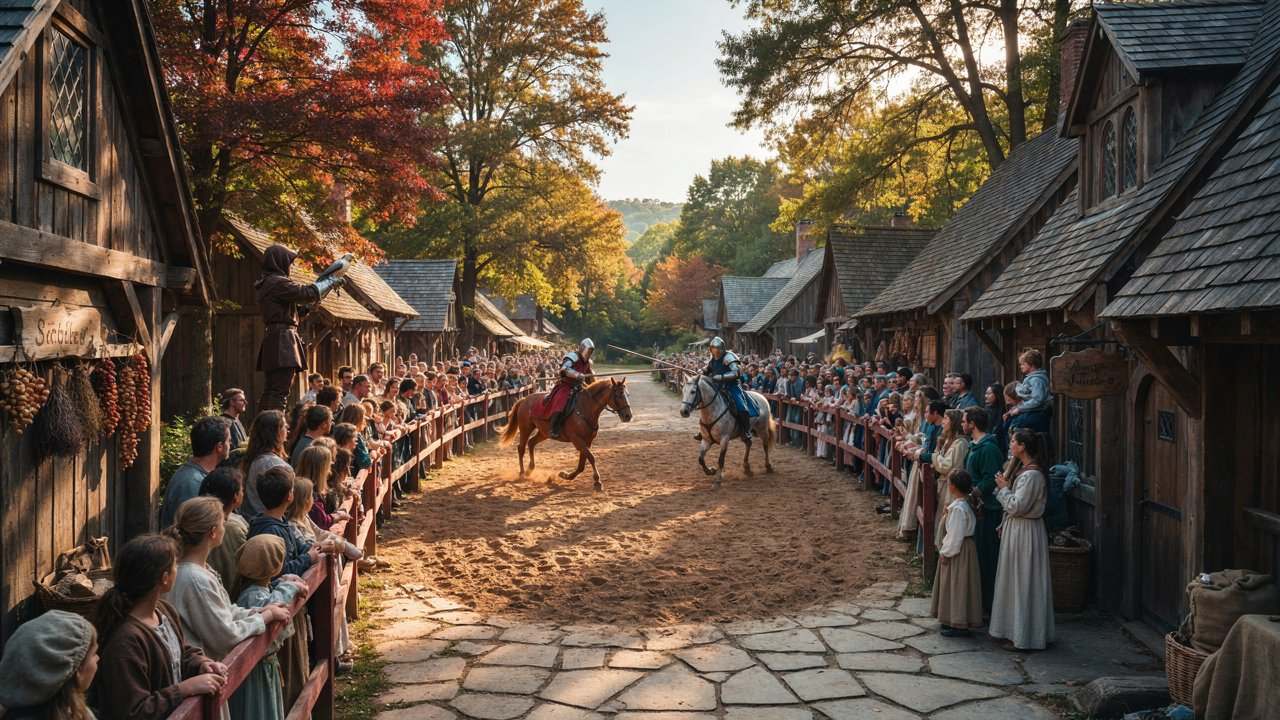
Carolina Renaissance Festival Drives Record Autumn Tourism Surge as North Carolina Hosts Multi-Weekend Medieval Gathering Through November 22.The permanent 25-acre European storybook village of “Fairhaven”—carved into a 325-acre woodland preserve between Huntersville and Concord—is operating at peak capacity this weekend as the 33rd Annual Carolina Renaissance Festival advances through its eight-weekend autumn engagement, running Saturdays and Sundays through November 22, 2026.
Since its establishment in 1994, the festival has expanded into one of the largest Renaissance faires in North America, drawing upwards of 230,000 visitors to northern Mecklenburg and Cabarrus counties. Operating as a living-history theme park, open-air circus, and fine-craft market, the gathering brings together international variety performers, equestrian jousters, master artisans, and regional agritourism purveyors to transform the Piedmont woodland into a high-density regional economic engine.
Advertisement
Advertisement
Where Does This Event Happen and Who Is Participating?
The festival takes place at 16445 Poplar Tent Road in Huntersville, North Carolina, positioned along the Mecklenburg–Cabarrus County border just north of Charlotte:
- Equestrian Competitors & Jousters: The Queen’s Tournament Arena hosts full-contact, unchoreographed equestrian jousting tournaments three times daily, executed by professional stunt riders and armorers from Aventail Productions, culminating in historical ground-combat pageantry.
- Master Craft Artisans & Guilds: More than 140 juried open-air artisan shops feature live heritage craft demonstrations, including blacksmithing, glassblowing, leather crafting, pottery throwing, candle carving, weaving, and custom chainmail smithing.
- Stage & Roaming Variety Entertainers: Non-stop entertainment runs across 16 outdoor stages, featuring acrobats, aerial silks artists, Celtic folk musicians, bagpipers, comedy revues, and falconers presenting historical birds-of-prey flight demonstrations at the Edgewood Theatre.
- The Living Village Cast & Concessions: Over 100 professional and community actors portray costumed historical and fantasy figures, led by Queen Elizabeth I and the royal court, alongside dozens of food booths preparing seasonal fare such as giant roasted turkey legs, stews served in sourdough bread bowls, and regional Tar Heel craft beers and ciders.
What Does the 5-Year Attendance Comparison Reveal?
Turnstile counts, municipal traffic filings, and box-office capacity audits monitored by the Economic Development Partnership of North Carolina (EDPNC) and regional tourism boards reflect robust post-pandemic demand, highlighted by consecutive sell-outs across all weekend dates:
Advertisement
Advertisement
| Year | Edition | Total Paid Admissions | Peak Single-Weekend Turnout | Box-Office & Operational Catalysts |
| 2021 | 28th | ~195,000 | ~26,000 | Phased reopening; introduction of date-specific online ticketing caps. |
| 2022 | 29th | ~210,000 | ~28,500 | Unrestricted capacity; return of dedicated weekday school field trips. |
| 2023 | 30th (Milestone) | ~220,000 | ~29,000 | 30th anniversary celebrations; high rate of weekend sell-outs. |
| 2024 | 31st | ~232,000 | ~31,000 | Record online advance sell-outs; heavy interstate drive traffic. |
| 2025 | 32nd | ~238,000+ | ~32,000 | Capacity capped across all peak Saturday/Sunday dates; expanded parking. |
| 2026 | 33rd (Current) | ~240,000 (Paced) | Tracking Peak | Pacing toward all-time seasonal benchmark through Nov. 22 finale. |
Which Other Countries Have This Same Event?
While the Carolina Renaissance Festival is unique to North Carolina, sovereign nations worldwide stage structurally equivalent historical reenactments, medieval tournaments, and Renaissance festivals:
- United Kingdom (Tewkesbury Medieval Festival, Gloucestershire): Europe’s largest annual medieval reenactment, drawing thousands of international combatants to commemorate the 1471 Battle of the Roses with authentic living-history encampments and period fairs.
- Germany (Kaltenberger Ritterturnier, Bavaria): Staged at Kaltenberg Castle, this world-renowned medieval festival features equestrian stunt jousting, minstrel stages, and massive open-air craft bazaars.
- France (Fêtes Médiévales de Provins, Provins): Held in a UNESCO World Heritage medieval town, uniting master blacksmiths, troubadours, and falconry spectacles.
- Canada (Montréal Medieval Fair, Quebec): Canada’s marquee historical festival, bringing together hundreds of artisanal guilds, armored fencing tournaments, and traditional Celtic music troupes.
- Italy (Palio di Legnano & Medieval Festival of Brisighella): Historic district pageants featuring Renaissance flag throwers (sbandieratori), period banquets, and historical jousting matches.
Which Region of Travelers Visits This Event Most?
Mobility analytics and lodging surveys aligned with the State of North Carolina Portal (NC.gov) trace three primary inbound travel pipelines:
Advertisement
Advertisement
- Carolinas Regional Drive Core (Over 68% of Total Visitors): Day-trippers arrive along the Interstate 77, Interstate 85, and Interstate 40 corridors. The Charlotte metropolitan basin (Mecklenburg, Cabarrus, Iredell, Union counties) provides steady local attendance, paired with strong weekend day-trippers from the Piedmont Triad (Greensboro, Winston-Salem, High Point) and Upstate South Carolina (Greenville, Spartanburg, Rock Hill).
- Southeastern Multi-State Corridor (Roughly 22% of Admissions): Leisure travelers commute 2 to 5 hours from Virginia, Georgia, Tennessee, and the Research Triangle (Raleigh, Durham, Chapel Hill), driving long-weekend hotel bookings across Lake Norman and Concord.
- Out-of-Region & International Living-History Enthusiasts (~10% of Footfall): Specialized historical cosplayers, living-history hobbyists, and international tourists arriving via Charlotte Douglas International Airport (CLT), integrating the fair into broader Blue Ridge and Piedmont autumn travel itineraries.
Which Country Benefits Most and How Are Tourism and the Economy Impacted?
The United States—and specifically the State of North Carolina, Mecklenburg County, Cabarrus County, and the Town of Huntersville—serves as the primary financial beneficiary.
┌────────────────────────────────────────────────────────────────────────┐
│               CAROLINA REGIONAL AUTUMN TOURISM FOOTPRINT               │
├───────────────────────────────────┬────────────────────────────────────┤
│       DIRECT HOSPITALITY          │       COMMUNITY & AGRIBUSINESS     │
├───────────────────────────────────┼────────────────────────────────────┤
│ • $42M–$50M estimated direct      │ • Independent artisan revenue:     │
│   spend across dining, lodging,   │   craft sales provide up to 40%    │
│   coastal retail, and fuel.       │   of vendors' annual incomes.      │
│                                   │                                    │
│ • Weekend hotel occupancy lift to │ • Off-peak resilience: sustains    │
│   84%–90% across Huntersville,    │   Lake Norman hospitality through  │
│   Concord, and North Charlotte.   │   late autumn shoulder season.     │
└───────────────────────────────────┴────────────────────────────────────┘
County Tax Base Integration: The surge generates millions in local sales taxes and county occupancy taxes, providing municipal funds for municipal emergency services and infrastructure without adding to municipal bond debt.
Direct Counter-Cyclical Economic Spending: According to economic benchmarks published by the State of North Carolina (NC.gov) and destination datasets from Visit NC (EDPNC), regional cultural and heritage festivals produce higher daily spending than general transit travel. Across its eight-weekend run, the event injects an estimated $42 million to $50 million into the regional economy through hospitality, food and beverage, retail, and automotive fuel.
Hospitality and Shoulder-Season Hedging: Hotels across Huntersville, Cornelius, Davidson, Concord Mills, and University City achieve weekend occupancy rates between 84% and 90%, sustaining Average Daily Rates (ADR) during a November shoulder period that follows the summer Lake Norman peak.
Sustaining Independent Artisan Guilds: The fair serves as a vital commercial outlet for hundreds of independent regional and traveling artisans. For many blacksmiths, fine leather smiths, and glass artists, the Carolina engagement accounts for 30% to 40% of their annual gross retail receipts.
Advertisement
