
Bangkok Braces for More October Rain as Flooded Roads Challenge Airport Access and Tourist Travel

Published
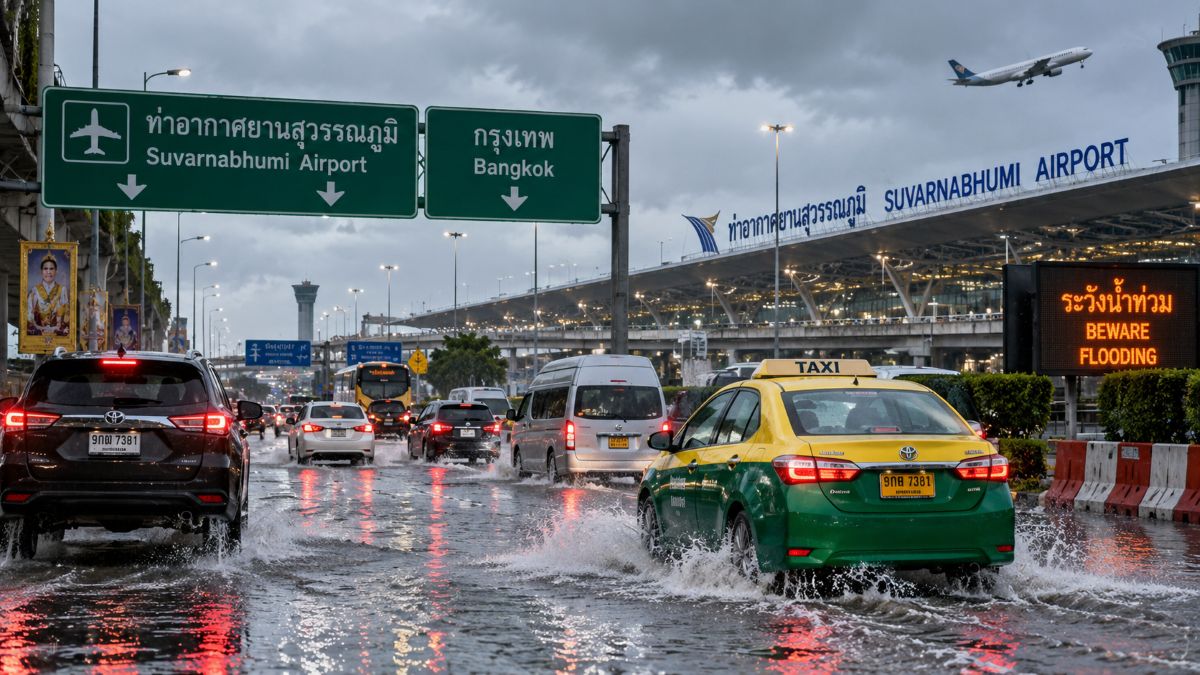
Bangkok Braces for More October Rain as Flooded Roads Challenge Airport Access and Tourist Travel because Thailand’s capital is entering October after heavy rainfall and localised waterlogging across several areas. The latest monitoring data showed 12 flooded locations and five with slight waterlogging among 240 monitored stations, while some affected roads recorded water depths of up to 20cm. At the same time, the Thailand Meteorological Department forecast thunderstorms across more than 30% of Bangkok and surrounding areas on 1 October. The situation does not indicate a citywide tourism shutdown. However, flooded roads can challenge airport access and tourist travel, particularly for passengers using road transfers. Bangkok authorities continue monitoring conditions, while tourism officials advise visitors to allow additional journey time and check weather and traffic conditions before travelling. Pasted markdown
Why is Bangkok flooding a concern for travellers as October begins?
Bangkok is entering October after heavy rainfall caused localised waterlogging across parts of the capital. The situation is not a citywide shutdown. However, flooded roads can affect taxis, private vehicles and airport transfers.
Thailand’s Meteorological Department issued a heavy-rain warning for 23–27 September 2026, including Bangkok and surrounding areas. Bangkok’s flood-monitoring system subsequently recorded conditions at 240 monitoring stations.
As of 30 September, 12 stations were flooded, five showed slight waterlogging and 210 were normal. Thirteen stations were malfunctioning. Water depths at monitored locations ranged from 5cm to 20cm.
Advertisement
Advertisement
For visitors, the important issue is location. Conditions can differ sharply between roads, so a citywide warning does not accurately describe every neighbourhood.
Which Bangkok roads are reporting water accumulation?
Bangkok’s monitoring system identified water accumulation on sections of several roads, including Lat Krabang Road, Ram Inthra Road, Si Haburanukit Road, Phatthanakan Road, Chaokhun Thahan Road, Theparak Road and Watcharapol Road.
Advertisement
Advertisement
Some monitored sections recorded approximately 20cm of water, while other locations reported depths of 5cm, 7.5cm, 10cm or 15cm.
| Road | Reported water-depth examples |
|---|---|
| Chaokhun Thahan Road | Up to about 20cm |
| Theparak Road | Up to about 20cm |
| Other monitored roads | 5–15cm |
This matters most for travellers using road transport. Heavy rain can slow traffic, increase journey times and complicate transfers.
Visitors should therefore check local conditions before travelling between hotels, attractions, stations and airports.
Are Bangkok’s airports operating despite the flooding?
The available official information does not indicate that Bangkok’s main airports have closed because of the flooding.
Airports of Thailand operates Suvarnabhumi Airport and Don Mueang International Airport, alongside four other major airports.
The greater concern for tourists is airport access.
Advertisement
Advertisement
The Tourism Authority of Thailand has advised travellers that localised flooding and waterlogging can cause delays when travelling towards airports and transport hubs. It recommends allowing additional journey time and checking weather and traffic conditions before departure.
That makes airport-transfer planning particularly important for international passengers.
Travellers should check flight status separately because road disruption and flight disruption are different issues.
What is the weather outlook for Bangkok on 1 October?
The Thailand Meteorological Department’s forecast for 1 October 2026 gives Bangkok and surrounding areas a more specific picture.
Thunderstorms are forecast across more than 30% of the area, with minimum temperatures of 26–27°C and maximum temperatures of 34–36°C.
The wider October outlook forecasts thunderstorms across 40–60% of Thailand during the first half of the month, with some areas facing heavy rainfall.
Advertisement
Advertisement
The national October outlook gives approximately 80–120mm of rainfall and 9–12 rainy days. These figures apply nationally and should not be treated as a Bangkok-specific flood forecast.
For tourists, this means weather conditions should be checked daily rather than relying on one forecast for an entire holiday.
How is Bangkok strengthening its flood response?
Bangkok authorities are continuing drainage and monitoring work in vulnerable areas.
The city’s flood-management activities include cleaning drainage pipes, dredging canals and maintaining waterways to preserve drainage capacity.
Authorities also inspect and maintain pumping equipment. A documented operation in Yannawa District included checking pumping equipment and removing rubbish obstructing drainage infrastructure.
The 240-station monitoring network provides another layer of resilience. Instead of treating Bangkok as one flood zone, authorities can monitor individual locations and identify water accumulation on specific roads.
Advertisement
Advertisement
For travellers, this is useful because travel decisions can be based on the actual route rather than general conditions across the capital.
What should tourists do during heavy rain in Bangkok?
Visitors should build flexibility into their itineraries during periods of heavy rainfall.
| Travel situation | Recommended action |
|---|---|
| Airport transfer | Allow additional time |
| Taxi journey | Check flooded roads |
| Sightseeing | Avoid heavily waterlogged areas |
| Train journey | Check live service information |
| International departure | Leave earlier |
| Road trip | Check weather before leaving |
The Tourism Authority of Thailand recommends that visitors check local traffic and weather conditions before setting out.
Bangkok’s public transport network can also provide alternatives when individual roads become congested or waterlogged.
However, visitors should check conditions close to departure because heavy rainfall can change road conditions rapidly.
How can visitors monitor Bangkok flooding and travel conditions?
Travellers have several official information sources to monitor conditions.
Advertisement
Advertisement
Bangkok’s flood-monitoring platform provides information on monitored roads and water levels. The latest available data covers 240 monitoring stations.
The Thailand Meteorological Department provides daily weather forecasts. Travellers should use these alongside local flood information rather than relying on weather forecasts alone.
The Tourism Authority of Thailand also provides visitor assistance through 1672, while the Tourist Police can be contacted on 1155.
For flights, passengers should check their airline and airport information directly.
What does Bangkok’s flooding mean for October travel?
Bangkok’s flooding demonstrates why travel resilience depends on more than keeping airports and attractions open.
Roads can become waterlogged while airports remain operational. Localised flooding can then create secondary problems for airport transfers, sightseeing and city travel.
Advertisement
Advertisement
The current monitoring system covers 240 locations, with 12 flooded and five slightly waterlogged stations in the latest 30 September data.
For tourists, the situation calls for preparation rather than blanket cancellation of travel plans.
Bangkok remains accessible, but visitors should monitor road conditions, allow additional time for transfers and remain flexible during heavy rainfall.
The latest 1 October forecast calls for thunderstorms over more than 30% of Bangkok and surrounding areas.
That makes real-time monitoring particularly important for travellers beginning October journeys in the Thai capital.
Comment from Anup Keshan, Founder and Editor-in-Chief of Travel And Tour World
“Bangkok’s latest flooding situation shows why travel resilience increasingly depends on accurate, location-specific information. Visitors do not necessarily need to view heavy rainfall as a reason to abandon their entire trip. Instead, they should understand which roads are affected, allow additional time for airport transfers and monitor official updates before moving around the city. Bangkok’s extensive monitoring network provides valuable information because conditions can differ considerably between locations. For travellers, preparation and flexibility are essential. The city’s ability to combine drainage work, monitoring and transport information will remain important as October brings further rainfall.”
— Anup Keshan, Founder and Editor-in-Chief, Travel And Tour World
Advertisement
