
Capella Sydney Elevates Australia’s Luxury Hotel Market as Boutique Retreats and Michelin Keys Transform Premium Tourism

Published
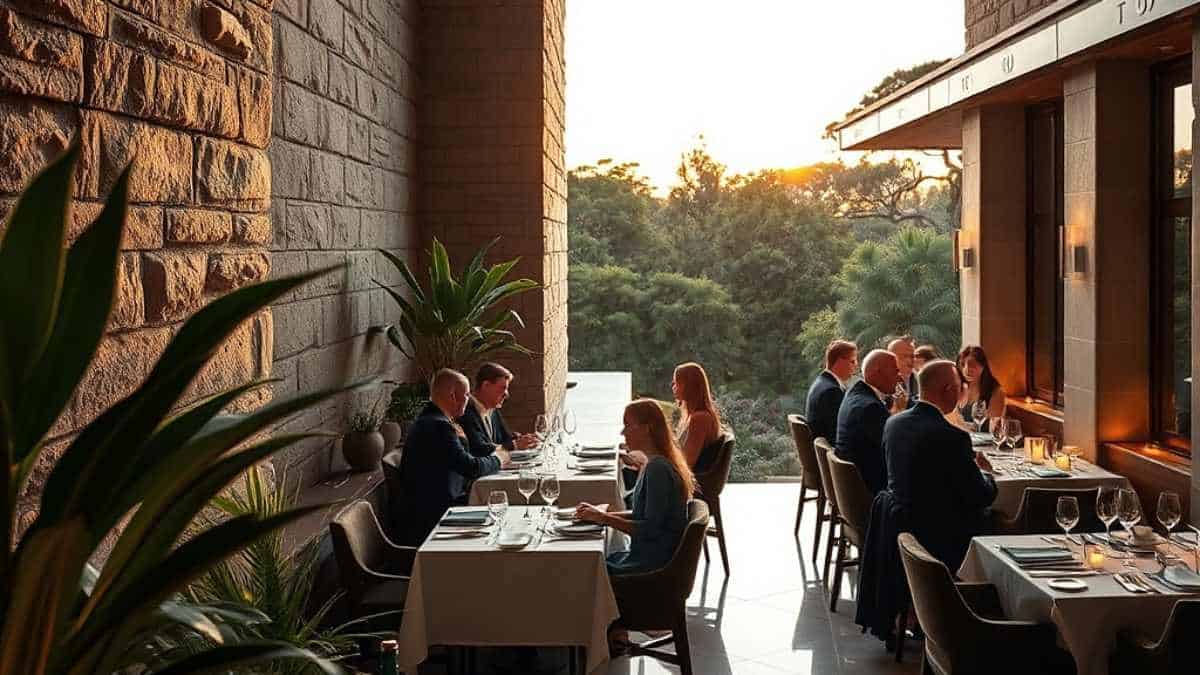
Image generated with Ai
The luxury hospitality industry of Australia is witnessing an important era as boutique hotels, heritage revivals, eco-resorts, and wilderness resorts transform the premium visitor economy of the nation. Sydney stands right in the middle of the change as the appointment of Capella Sydney as a Two Michelin Keys establishment marks an important milestone in the growing recognition of luxury accommodations of Australia on an international level. Driven by the rising expenditure of international visitors, high-value tourism policies, and the demand from the affluent travelers of the Asia-Pacific region, the change is transcending hotel luxury into a new paradigm.
Background: The Evolution of Australia’s Premium Visitor Economy
The Australian accommodation landscape has undergone a profound structural shift over the past decade. Historically reliant on large-scale urban hotel towers situated within major central business districts, the country’s high-end accommodation market is now defined by a decentralized, highly sophisticated network of luxury boutique hotels, restored heritage properties, eco-lodges, and ultra-premium wilderness retreats. This evolution reflects a broader transformation in global travel behavior, where affluent travelers prioritize bespoke architectural storytelling, localized cultural immersion, and curated culinary access over standardized luxury offerings.
The origins of this shift stem from a deliberate pivot by federal and state tourism authorities toward cultivating a high-yield visitor economy. Recognizing that high-net-worth individuals (HNWIs) deliver disproportionately higher spend per night compared to high-volume mass tourism, federal bodies such as Tourism Australia established specialized marketing collectives. Initiatives like the Signature Experiences of Australia program—incorporating specialized portfolios such as Luxury Lodges of Australia, Ultimate Winery Experiences Australia, Great Golf Courses of Australia, and Discover Aboriginal Experiences—were systematically constructed to package and market unique luxury itineraries to discerning global markets.
Concurrently, domestic economic forces have reshaped travel habits across the continent. Following international border reopenings and subsequent economic normalization, domestic travelers retained a strong preference for premium regional and urban escapes within Australia. By early 2026, data from Tourism Research Australia (TRA) confirmed that overall visitor spending had surged to record highs, underpinned by strong domestic activity alongside a rapid rebound in international arrivals from primary source markets across Asia, Europe, and North America.
Advertisement
Advertisement
The Strategic Pivot Toward High-Yield Tourism Strategy
High-yield tourism focuses on maximizing economic return per visitor rather than pursuing raw entry volumes. This model reduces environmental and municipal infrastructure strain while channeling capital directly into localized supply chains and regional economies. Under Australia’s national strategy, THRIVE 2030 (THe Re-Imagined Visitor Economy), the federal government explicitly prioritized high-value international travelers and extended domestic overnight stays to ensure sustainable growth.
Advertisement
Advertisement
This macroeconomic directive directly favored boutique hotel developers and independent luxury operators. Boutique properties, defined by intimate room counts, distinctive design aesthetics, personalized service models, and deep local integration, are uniquely positioned to command premium average daily rates (ADR). High-net-worth travelers tend to stay longer, allocate significant budget toward fine dining and bespoke excursions, and generate word-of-mouth endorsements across exclusive global travel networks.
The Shift From Mass Accommodation to Bespoke Luxury
Modern luxury travelers increasingly seek wellness integration, authentic heritage preservation, and environmental stewardship alongside physical comfort. Large, multi-hundred-room hotels often face operational constraints when attempting to deliver this degree of hyper-personalized service. Consequently, institutional capital and private investment across Australia have shifted toward adaptive reuse projects and regional luxury developments.
Developments such as the adaptive conversion of historic state administrative buildings into luxury retreats demonstrate how capital city CBDs are repositioning their built environments. Simultaneously, regional luxury glamping and eco-lodges have elevated regional destinations into international travel destinations, creating crucial corridors between capital city gateways and regional wilderness zones.
Advertisement
Advertisement
Latest Official Developments: Michelin Key Recognition and Regional Benchmarks
The international prestige of luxury boutique hospitality in Australia reached a milestone following the rating announcements by global hospitality authorities. Capella Sydney was promoted to Two Michelin Keys, placing the hotel among an elite group of international lodging establishments. The Michelin Key rating system evaluates properties on five key criteria: architectural and interior design excellence, quality and consistency of service, distinct personality and character, value for price, and contribution to the local guest experience.
Across Australia, New South Wales (NSW) leads the nation with 18 Michelin Key locations, establishing the state as the premier hub for luxury lodging. Victoria and Queensland follow as secondary luxury capitals, securing eight Michelin Key properties each. This geographical distribution reflects both the concentration of private investment capital in eastern seaboard gateways and the diverse appeal of Australia’s temperate cultural hubs and tropical natural environments.
Advertisement
Advertisement
Capella Sydney: A Benchmark in Urban Adaptive Reuse
The promotion of Capella Sydney to Two Michelin Keys highlights the successful execution of adaptive urban restoration within Australia’s high-end property sector. Located in Sydney’s historic Sandstone Precinct, the property occupies the former Department of Education building, originally designed by Government Architect George McRae in the early 20th century. The multi-year restoration preserved the building’s heritage architecture while integrating contemporary luxury engineering, art curation, and guest amenities.
The Two Michelin Key designation signifies an exceptional property offering unique character, refined operational execution, and a strong local identity. This recognition elevates Sydney’s standing as a international gateway capable of competing with luxury urban centers in Europe, Asia, and North America. It also signals to property investors that adaptive reuse projects in major capital city precincts can generate strong international brand recognition and premium room yield.
Geographical Breakdown: New South Wales, Victoria, and Queensland
The concentration of 18 Michelin Key properties in New South Wales reflects a long-term alignment between public infrastructure investment, private capital deployment, and destination marketing. The state’s Michelin Key portfolio spans harborfront luxury in Sydney to boutique vineyard retreats in the Hunter Valley, coastal retreats in Byron Bay, and historic estates in the Southern Highlands.
Victoria’s eight Michelin Key locations highlight the state’s focus on boutique design, arts, and culinary hospitality. Properties situated in Melbourne’s urban core, combined with luxury lodges in the Yarra Valley, Mornington Peninsula, and Daylesford, offer an integrated urban-regional travel circuit that appeals to high-spending European and North American visitors.
Queensland’s eight Michelin Key properties underscore the strength of eco-luxury and reef-adjacent accommodation. From luxury lodges tucked within the UNESCO World Heritage-listed Daintree Rainforest to private island retreats in the Whitsundays, Queensland’s premium portfolio caters to international travelers seeking high-end comfort within pristine natural ecosystems.
Advertisement
Advertisement
Government Announcements and Strategic Tourism Frameworks
The expansion of Australia’s luxury lodging sector is supported by a coordinated suite of federal and state government policies. Public sector agencies recognize that luxury tourism infrastructure serves as an economic anchor, driving high-value employment, supporting regional supply chains, and elevating national brand visibility.
THRIVE 2030: Re-imagining the National Visitor Economy
At the federal level, the Australian Trade and Investment Commission (Austrade) manages THRIVE 2030, the national long-term strategy for the visitor economy. Designed to foster sustainable growth, THRIVE 2030 provides a framework to increase national visitor expenditure.
In recent strategic updates, Austrade revised the core target to $230 billion in annual visitor spend by 2030, specifically excluding long-stay international student expenditure to align with international measuring standards. This revision elevated the focus on short-term leisure, business, and premium travelers. Crucially, THRIVE 2030 establishes a specific regional visitor expenditure target of $95 billion by 2030, a goal heavily reliant on expanding luxury boutique accommodation in regional areas.
State Frameworks: NSW Visitor Economy Strategy 2035 and Regional Initiatives
State tourism organizations have updated their strategic plans to complement federal targets. Destination NSW implemented the NSW Visitor Economy Strategy 2035, which focuses on attracting high-value visitors and identifies immersive experience development, business events, eco-resorts, and wellness tourism as strategic priorities.
By offering targeted experience development grants and supporting planning approvals for low-impact eco-tourism developments, Destination NSW has catalyzed private investment in regional luxury accommodation. Similar policy updates in Victoria—such as Experience Victoria 2033—focus on improving product quality, growing regional night-time economies, and building local host networks to extend visitor stays and expenditure.
Advertisement
Advertisement
Simultaneously, Austrade introduced the WELCOME Framework to promote accessibility and inclusive design across Australia’s tourism industry. Designed as a practical guide for accommodation and experience operators, the WELCOME Framework assists luxury operators in removing physical, sensory, and cognitive barriers for travelers. Luxury boutique operators are increasingly adopting these guidelines, recognizing that inclusive design enhances operational flexibility and guest satisfaction across all market segments.
Comprehensive Statistical Analysis: Economic Contribution, Accommodation Metrics, and Investment Pipelines
Official performance statistics published by Tourism Research Australia (TRA) for the period ending March 2026 highlight strong macroeconomic momentum across the national visitor economy. Driven by expanded international airline capacity and resilient domestic leisure travel, total expenditure reached record levels.
| Key National Tourism Indicator | Year-Ending March 2026 Performance | Year-on-Year Growth Rate (%) |
| Total Visitor Expenditure | $197.9 Billion | +10.0% |
| International Visitor Spend | $40.9 Billion | +20.0% |
| Domestic Overnight Spend | $107.6 Billion | +0.7% |
| Domestic Day Trip Spend | $49.4 Billion | +27.0% |
| Total Visitor Trips (Domestic & Int.) | 405.4 Million | +6.0% |
| International Visitor Trips | 9.2 Million | +10.0% |
| Tourism Direct GDP Contribution | $81.1 Billion (FY 2024-25) | +3.8% |
| Direct Tourism Employment | 727,000 Jobs | +4.0% |
| Active Tourism Businesses | 361,000 (Jun 2025) | +0.1% |
Data Source: Tourism Research Australia (TRA) National and International Visitor Surveys.
The statistics show that while domestic overnight trips consolidated slightly (-2.3% to 113.1 million trips), overall domestic expenditure remained steady at $107.6 billion, demonstrating higher average spend per domestic trip. International visitation expanded significantly, reaching 9.2 million trips, while international visitor spend jumped 20% to reach $40.9 billion.
Supply Dynamics, Occupancy Benchmarks, and Investment Pipelines
The expansion of luxury boutique hospitality is supported by overall accommodation capacity and commercial investment pipelines. Metrics from the Bureau of Infrastructure and Transport Research Economics (BITRE) and TRA illustrate a growing infrastructure base across the sector.
Advertisement
Advertisement
| Supply & Accommodation Benchmark | Benchmark Figure (2025/2026) | Annual Variance |
| Commercial Accommodation Rooms (10+ rooms) | 340,662 Rooms | +0.8% |
| Average National Room Occupancy | 72.9% | +1.9 ppt |
| Tourism Infrastructure Pipeline (>$20M projects) | $74.5 Billion | +17.5% |
| Incoming International Airline Seats | 28.1 Million | +7.0% |
| International Aviation Load Factor | 82.6% | +0.5 ppt |
Data Source: Tourism Research Australia, BITRE, and Australian Bureau of Statistics (ABS).
The $74.5 billion pipeline of major commercial tourism infrastructure projects reflects strong capital commitment from private equity, real estate investment trusts (REITs), and institutional developers. Simultaneously, incoming international airline seat capacity reached 28.1 million, providing the transport links needed to bring high-spending travelers to capital cities and regional boutique hubs.
Policy Implications and Industry Impact: Behavioral Trends and Modern Luxury Archetypes
The concentration of Michelin Key locations underscores a broader shift in guest expectations across Australia’s hospitality sector. Modern luxury travelers are moving away from standardized amenities, seeking unique experiences, privacy, wellness integration, and authentic cultural connection.
Demographic Evolution and High-Net-Worth Asia-Pacific Travelers
Comprehensive market research conducted by the Luxury Group by Marriott International in partnership with Destination NSW revealed key behavioral trends among high-net-worth travelers across the Asia-Pacific region. Australia emerged as the preferred long-haul destination (46%), ranking ahead of Japan (42%) and Hong Kong (27%) among affluent consumers in key markets including Singapore, South Korea, Japan, Indonesia, and India.
Market research identified several key operational drivers:
Advertisement
Advertisement
- Increased Travel Expenditure: 68% of Asia-Pacific HNW travelers plan to increase their travel spend, rising to 89% among Indian HNW travelers.
- Gastronomy as a Primary Booking Driver: 88% of respondents select travel destinations based on culinary discovery, 83% choose destinations specifically to visit award-winning restaurants, and 81% select hotels based on fine dining options.
- Evolving Gen Z Luxury Mindsets: Emerging younger affluent consumers display distinct travel preferences, categorized into four primary archetypes:
- The Connoisseur Traditionalist (34%): Prioritizes hotel reputation, service standards, acclaimed dining, and brand recognition.
- The Future Proofer (30%): Views travel as an investment in personal health, prioritizing wellness facilities, nature access, and expert care.
- The Quiet Luxurist (20%): Values digital disconnection, privacy, secluded boutique properties, and lesser-known destinations.
- The Cultural Reclaimer (16%): Focuses on heritage connection, family intergenerational travel, and authentic local immersion.
Integrating Culinary Excellence, Wellness Infrastructure, and First Nations Heritage
To capture market share, luxury operators are embedding these behavioral drivers into their development strategies. Fine dining is no longer an ancillary amenity; it is a central revenue driver. Boutique hotels feature destination restaurants led by acclaimed chefs, emphasizing hyper-local seasonal produce and native Australian ingredients.
Concurrently, integrating authentic First Nations cultural experiences has become a core element of Australia’s luxury hospitality offering. Supported by Tourism Australia’s Discover Aboriginal Experiences collective, luxury operators work directly with Traditional Owners and Cultural Custodians to offer private guided tours, storytelling, and land connections. This provides guests with meaningful cultural immersion while generating direct, sustainable economic benefits for Indigenous communities.
Wellness facilities have similarly expanded beyond traditional day spas into comprehensive health amenities. Regional boutique retreats across the Blue Mountains, Byron Bay Hinterland, Yarra Valley, and Mornington Peninsula integrate hydrotherapy, thermal baths, guided nature immersion, and tailored nutrition programs, capturing spend from wellness-focused travelers.
Tourism, Business, and Public Impact: Unlocking Regional Yield and Workforce Development
The growth of luxury boutique hotels generates wide-ranging economic benefits across urban and regional communities. High-end boutique operators achieve higher average daily rates (ADR) and yield per available room (RevPAR), allowing them to reinvest in local supply chains, heritage preservation, and staff development.
Regional Spending Dispersion and Eco-Tourism Catalysts
A key objective of Australian tourism policy is encouraging geographical dispersion—guiding international visitors beyond traditional entry gateways like Sydney and Melbourne into regional areas. Boutique luxury developments in regional locations serve as effective anchors for achieving this regional spread.
Advertisement
Advertisement
Data from TRA shows that nearly half of all domestic overnight spending occurs in regional Australia, outside capital city boundaries. In specialized sectors such as caravan, camping, and glamping, domestic travelers spent $12.6 billion, with 83% ($8.6 billion) spent directly in regional destinations. High-end eco-lodges and glamping operations demonstrate how sustainable tourism infrastructure attracts premium travelers to regional communities, benefiting local wineries, regional food producers, and outdoor adventure providers.
Workforce Modernisation and High-Touch Service Infrastructure
Delivering high-end luxury hospitality requires a skilled, professional workforce. The national tourism and hospitality industry employs 727,000 individuals, representing 4.5% of total Australian employment. As the boutique accommodation pipeline expands, demand for skilled sommeliers, executive chefs, concierges, and wellness specialists continues to grow.
Under the THRIVE 2030 framework, federal initiatives focus on workforce modernization, offering fee-free TAFE training places in hospitality, expanding the Pacific Australia Labour Mobility (PALM) scheme, and delivering targeted employment programs. Luxury operators lead the industry in career path development and wage growth, positioning hospitality as a viable long-term career.
Future Outlook: Horizons for 2030 and Asset Value Projections
The outlook for high-end hospitality in Australia remains positive, backed by strong international demand fundamentals and strategic government policy alignment. Tourism Research Australia forecasts that total visitor spend will reach $233 billion by 2030, expanding at an average annual growth rate of 4%.
Inbound Market Growth Projections
Inbound leisure travel from key high-value international markets will drive revenue expansion through the end of the decade. While New Zealand remains Australia’s largest inbound source market by volume, markets across China, Hong Kong, India, the United States, and the United Kingdom are projected to generate the strongest growth in visitor spend.
Advertisement
Advertisement
India represents an extraordinarily fast-growing luxury source market, with 89% of Indian HNW travelers planning to increase international travel expenditure, naming Australia as their preferred destination. Similarly, the continued return of Chinese leisure and independent travelers, supported by expanding direct flight capacity, provides a consistent base of high-spending visitors for boutique hotels in urban centers and key regional regions.
Asset Valuation, Sustainability Mandates, and Long-Term Market Health
As the sector approaches 2030, long-term commercial success will depend heavily on sustainable operations and authentic guest engagement. Institutional real estate investors are placing higher valuations on accommodation assets that incorporate eco-accreditation, energy-efficient building systems, and genuine community partnerships.
Furthermore, the expansion of Michelin Key recognition across Australia will continue to attract private equity and institutional capital into boutique hotel developments. Property developers are actively pursuing heritage restoration opportunities and prime regional locations, confident that global awards and strong international demand will sustain high room occupancies and strong average daily rates. Supported by federal strategies like THRIVE 2030 and state blueprints like the NSW Visitor Economy Strategy 2035, Australia’s premium hospitality sector is positioned for continued long-term growth.
Conclusion
Capella Sydney’s ascent along with a total of 34 Michelin Key awards in New South Wales, Victoria, and Queensland indicates that the hotel industry nationally has matured. Under $40.9 billion worth of annual expenditure by international tourists per year and the Australian government’s THRIVE 2030 initiative, the industry is leveraging the increasing global appetite for premium travel experiences. Infrastructure development, sustainability in design, and cultural incorporation are ensuring the viability of the industry in the long run. In the coming years, the development of luxury boutique hotels will continue to act as a primary engine for economic growth in Australia.
Advertisement
