
Guernsey Tourism Boom Defies Cruise Slump which Plunges by 40%

Published
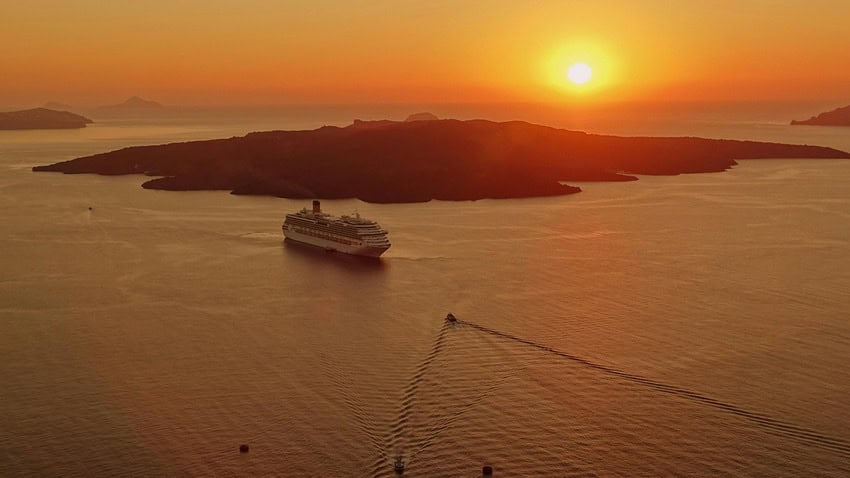
Image generated with Ai
Guernsey’s cruise tourism market is showing a mixed picture in 2026, with roughly 25,000 cruise passengers arriving so far this season, while second-quarter cruise visitors fell 40% year on year. However, the wider tourism economy remains resilient, as total visitor numbers increased 6% and non-cruise arrivals rose 13%, strengthening the case for a more diversified travel strategy that could include smaller expedition vessels and targeted infrastructure investment.
Guernsey’s cruise season delivers a mixed tourism picture
Guernsey is continuing to pursue cruise tourism despite a significant reduction in cruise passenger numbers during the latest quarter, with the island weighing how the sector should evolve as wider travel demand remains comparatively strong. The figures highlight an increasingly important distinction for tourism planners: cruise visitors are declining, but Guernsey itself is attracting more people through other forms of travel, suggesting that the island’s visitor economy is not dependent on cruise ships alone.
Advertisement
Advertisement
In the season to date, approximately 25,000 cruise passengers have disembarked in Guernsey, while 39 of the 46 cruise ships scheduled to visit have actually made their calls. One ship postponed its visit by a week, while the remaining cancellations were linked to weather conditions, producing an attrition rate of about 13%, considerably better than the roughly 20% cancellation level experienced in several recent years.
The improvement in the proportion of scheduled ships completing their visits is encouraging for the island’s tourism industry, but it does not hide the underlying reduction in the number of cruise liners being scheduled for Guernsey. The first two ships of the summer season also cancelled their visits, effectively delaying the beginning of the summer cruise programme by around two weeks and reducing the immediate flow of cruise passengers into local businesses.
Advertisement
Advertisement
Country and market perspective: United Kingdom and Guernsey
Guernsey, Channel Islands: Guernsey remains committed to cruise tourism, but the latest figures show why policymakers are considering a different model for future growth. During the second quarter, the island recorded 7,212 cruise ship visitors, a 40% decline from the 11,982 cruise visitors recorded during the same period in 2025, while the figure was 78% below the 32,819 cruise passengers recorded in the second quarter of 2023.
Advertisement
Advertisement
United Kingdom: From a wider UK tourism perspective, Guernsey’s experience reflects the challenges faced by smaller island destinations that rely on seasonal cruise calls and weather-sensitive port operations. The island’s position also demonstrates how destinations can protect tourism performance by strengthening air and sea travel alternatives, developing experiences for longer-stay visitors and targeting smaller cruise vessels that may be better suited to regional ports.
European cruise market: Guernsey’s proposed focus on smaller expedition ships is particularly relevant to the European tourism market, where cruise itineraries increasingly include destination-focused and specialist experiences alongside traditional large-ship programmes. Smaller vessels can potentially access destinations that are unsuitable for larger ships, while their passenger profiles may also align with visitors seeking cultural, scenic and nature-based tourism experiences.
Cruise passengers now represent a smaller share of tourism
The latest Visit Guernsey Travel and Visitor Accommodation Bulletin provides a clearer picture of the changing role of cruise travel within the island’s tourism economy. Cruise ship day visitors represented 7% of all visitors to Guernsey during the second quarter, compared with 13% during the same period in 2025, underlining how sharply the cruise segment has contracted relative to the wider visitor market.
Advertisement
Advertisement
Yet the broader tourism numbers tell a more positive story, with Guernsey recording 96,045 visitors between April and June, including cruise passengers. That represented a 6% increase compared with the same quarter last year, indicating that demand for the destination has remained healthy even while the cruise segment has weakened.
The strongest indication of this changing tourism pattern comes when cruise passengers are removed from the calculation. Guernsey recorded 88,833 non-cruise visitors during the quarter, representing a 13% year-on-year increase and demonstrating that air travel, ferry travel and other forms of visitor access are providing important support for the island’s tourism economy.
Advertisement
Advertisement
This distinction matters because cruise passengers are typically day visitors, while visitors arriving through other travel channels may stay overnight and spend across hotels, restaurants, attractions, retail businesses and transport services. A balanced tourism strategy therefore needs to consider not only how many visitors arrive, but also how long they stay, how much they spend and how widely their economic contribution is distributed.
Weather remains an important challenge for cruise tourism
Guernsey’s cruise sector also faces a structural challenge that is difficult for local policymakers to control: weather. Cruise ships can alter or cancel port calls when sea conditions, wind or other operational factors make a scheduled visit unsuitable, creating uncertainty for tourism businesses that prepare for passenger arrivals.
The current season nevertheless shows an improvement in the cancellation rate, with about 13% of scheduled calls failing to take place compared with approximately 20% in recent years. That improvement suggests that the operational reliability of cruise calls may be strengthening, although the smaller number of ships scheduled to visit means that a lower cancellation rate does not necessarily translate into higher passenger volumes.
For tourism businesses, this creates a complicated operating environment. Shops, restaurants, guides, attractions and transport operators can benefit significantly when a cruise ship arrives, but the unpredictability of individual calls makes it difficult to build a tourism strategy around cruise passengers alone.
Guernsey considers a new direction for cruise tourism
The island’s tourism leadership is now examining the long-term direction of the cruise sector, including whether substantial infrastructure investment is necessary and whether private-sector capital could contribute to future development. Another possibility under consideration is a greater emphasis on smaller expedition ships, potentially giving Guernsey a more specialised role within the European cruise tourism market.
Advertisement
Advertisement
Deputy Lee Van Katwyk, the States tourism lead, has indicated that Guernsey continues to value the cruise industry and intends to maintain its efforts to attract cruise ships. His comments also point towards a long-term approach in which cruise tourism remains one component of the island’s overall tourism strategy rather than its sole growth engine.
That approach could become increasingly important as cruise lines reassess port calls, itinerary economics and vessel deployment across Europe. For Guernsey, attracting fewer but potentially more suitable ships could provide an alternative to competing directly with larger cruise ports that can accommodate much bigger vessels and significantly higher passenger volumes.
Smaller expedition ships could offer a different opportunity
The expedition cruise segment could provide Guernsey with an opportunity to differentiate itself rather than compete purely on passenger volume. Smaller vessels are often associated with scenic destinations, cultural experiences, nature-based itineraries and ports where large cruise ships cannot operate easily, making them potentially compatible with the island’s scale and visitor proposition.
A strategy centred on smaller ships could also support a more destination-focused form of tourism. Rather than measuring success solely by the number of passengers stepping ashore, Guernsey could target cruise operators whose passengers are interested in local history, heritage, food, landscapes, outdoor experiences and authentic island culture.
The approach would not eliminate the challenges associated with weather, seasonal demand or cruise scheduling. However, it could give Guernsey greater flexibility in shaping its cruise tourism proposition while complementing the growth already being seen in other travel segments.
Advertisement
Advertisement
Tourism growth beyond cruise ships provides reassurance
The most encouraging part of Guernsey’s latest tourism performance is that overall visitor numbers increased despite the major decline in cruise passengers. The 13% increase in non-cruise visitors suggests that the island continues to have strong appeal as a destination for travellers who arrive through other transport channels and potentially remain on the island for longer.
For tourism policymakers, this creates an opportunity to broaden the destination’s marketing strategy around experiences rather than simply passenger volume. Travel trends can change rapidly, and destinations that develop several strong visitor segments are generally better positioned to manage disruptions affecting one particular market.
Guernsey can therefore continue pursuing cruise tourism while simultaneously investing in accommodation, aviation connectivity, ferry services, cultural attractions, food tourism, nature tourism and longer-stay experiences. Such diversification could make the island’s tourism economy more resilient while preserving cruise ships as an important part of its international visitor strategy.
Anup Kumar Keshan highlights Guernsey’s tourism resilience
“Guernsey’s latest visitor figures present a valuable lesson for destinations across the global travel and tourism industry because a decline in cruise passengers does not automatically mean a decline in tourism overall. The island’s 13% increase in non-cruise visitors demonstrates the strength that comes from maintaining a diversified visitor economy, while its continued interest in cruise tourism shows that destinations can adapt rather than retreat. A carefully developed strategy around smaller expedition ships could give Guernsey a distinctive position within the European cruise market, particularly if infrastructure, local experiences and sustainability are aligned. This balanced approach can help the island protect tourism growth, strengthen visitor spending and remain competitive as international travel patterns continue to evolve.”
— Anup Kumar Keshan, Editor-in-Chief, Travel And Tour World
Advertisement
Advertisement
What Guernsey’s cruise strategy means for future travel
Guernsey’s current situation illustrates a broader issue facing island tourism destinations: cruise tourism can deliver significant visitor volumes, but long-term resilience depends on maintaining several complementary travel markets. The latest figures indicate that Guernsey is already benefiting from this diversification, with overall visitor numbers increasing even as cruise arrivals have fallen sharply.
The next stage will be determining what type of cruise tourism best fits the island. Rather than pursuing volume at any cost, Guernsey could potentially focus on cruise operators that value smaller ports, distinctive experiences and expedition-style itineraries, while continuing to strengthen the wider tourism infrastructure that supports overnight and independent visitors.
For travellers, this could eventually mean a more curated Guernsey experience, with cruise tourism increasingly connected to the island’s heritage, landscape, culture and local economy. For businesses, the objective will be to convert visitor growth into sustainable spending and longer-term tourism value rather than relying solely on the number of passengers arriving on a particular day.
Frequently Asked Questions
How many cruise passengers have visited Guernsey this season?
Guernsey has recorded approximately 25,000 cruise passengers disembarking during the season to date, with 39 of 46 expected cruise ships completing their visits.
Why have some cruise ships cancelled Guernsey visits?
Weather conditions have been responsible for several cancellations, while one scheduled visit was postponed by a week. The first two ships of the summer also cancelled, delaying the season by approximately two weeks.
Advertisement
Advertisement
How much did Guernsey’s cruise tourism decline?
The island recorded 7,212 cruise ship visitors in the second quarter, down 40% from 11,982 in the same quarter of 2025 and 78% below the 32,819 recorded during the second quarter of 2023.
Did Guernsey’s overall tourism decline?
No. Guernsey recorded 96,045 visitors between April and June, representing a 6% increase year on year, while non-cruise visitors rose 13% to 88,833.
What is Guernsey considering for future cruise tourism?
Authorities are examining infrastructure investment, potential private-sector involvement and a stronger focus on smaller expedition ships as part of the island’s long-term cruise tourism strategy.
Why are smaller cruise ships important for Guernsey?
Smaller vessels can provide access to specialist itineraries and may be better suited to destinations where large cruise ships face operational or infrastructure limitations. They could also help Guernsey develop a more destination-focused tourism proposition.
Is cruise tourism still important to Guernsey?
Yes. Despite the recent decline, Guernsey continues to regard cruise tourism as an important part of its future tourism industry while recognising the need to strengthen other travel segments and diversify visitor demand.
Advertisement
