

Montenegro Uses Kotor-Lovćen Cable Car to Support Local Communities, Sports and Cultural Tourism

Published
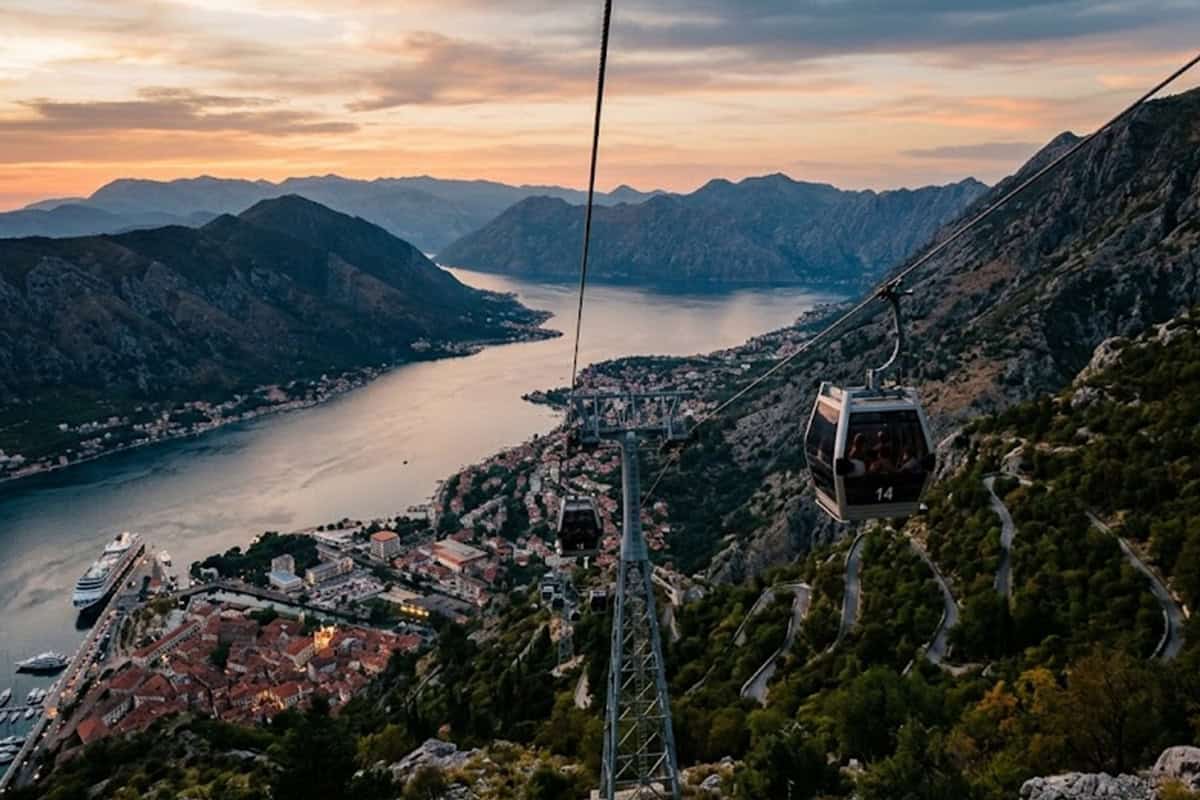
Montenegro’s Kotor-Lovćen Cable Car is highlighting a broader role for tourism infrastructure three years after opening in 2023. Operated by XExperience, the attraction connects the coast with Lovćen through a 3.9-kilometre route, while its wider approach focuses on safety, environmental responsibility, local employment, youth development, cultural programmes and support for tourism across Montenegro.
How Does the Kotor-Lovćen Cable Car Support Responsible Tourism?
The cable car was initially recognised for its engineering scale, including an elevation gain of more than 1,300 metres and a journey of approximately 11 minutes to Kuk, at 1,348 metres above sea level. Its operator, XExperience, is now presenting the project as more than a transport link and visitor attraction.
Advertisement
Advertisement
The company’s approach to corporate social responsibility extends beyond occasional charitable donations. It includes operational safety, responsible management of the natural environment, cooperation with nearby communities, support for children and young people, investment in sports and culture, and promotion of destinations throughout Montenegro.
This approach reflects a wider discussion within tourism about how infrastructure projects can contribute to local development. Attractions can bring visitors to a destination, but their longer-term value also depends on whether residents, businesses and cultural organisations benefit from that activity.
Advertisement
Advertisement
Why Are Safety and Technical Standards Central to the Project?
For infrastructure that transports visitors through mountainous terrain, responsibility begins with the design, construction, operation and maintenance of the system. XExperience works with LEITNER, an international cable-car technology company with experience in mountain, tourism and urban transport systems.
According to the project information, the partnership has been built around European technical and safety requirements and experience gained from cable-car installations internationally. LEITNER’s management systems include environmental management under ISO 14001 and occupational health and safety management under ISO 45001.
Advertisement
Advertisement
Operational responsibility continues after a system opens. Daily checks, preventive maintenance, periodic technical inspections, servicing of critical components and procedures for different weather conditions are all important to safe operations.
The same principle applies to attractions at the upper station, including the Alpine Coaster, Falcon Fly and Aerobar. These experiences depend on controlled operating systems, staff training, clear instructions and checks designed to protect visitors.
Advertisement
Advertisement
For a tourism destination, reliability and consistent safety procedures are fundamental to maintaining public confidence. The objective is not simply to provide an exciting experience, but to ensure that operations remain controlled during busy periods and changing conditions.
How Does the Cable Car Address Environmental Responsibility on Lovćen?
Lovćen is an area of significant natural, cultural and national importance. Development in such a setting requires attention to how infrastructure affects the landscape, how visitors move through the area and how the destination retains its identity.
The cable car operates electrically and produces no direct exhaust emissions during the ride. It also provides an alternative to travelling by car for visitors reaching the mountain. While this does not eliminate all environmental impacts associated with tourism, it can help reduce some road traffic pressure by moving visitors through a shared transport system.
The wider management of the destination remains important. Landscaping, traffic organisation, noise control, trail maintenance and visitor movement all influence how tourism and conservation coexist.
Advertisement
Advertisement
Facilities at the upper station also need to complement the character of Lovćen rather than turn it into a generic entertainment complex. Viewpoints, walking routes, local gastronomy and open spaces can encourage visitors to spend more time in the area while engaging with its natural and cultural setting.
Responsible tourism in this context involves balancing access with the preservation of the landscape. The challenge is to make Lovćen accessible to more visitors without losing the qualities that make it distinctive.
How Does the Project Benefit Local Businesses and Workers?
The cable car connects Kotor with Lovćen, but its economic impact extends beyond the journey itself. XExperience reports that most employees at the lower station come from Kotor, while employees from Cetinje are strongly represented at the upper station.
The operation also relies on outsourced services, including security, parking, hygiene and transport. Catering and retail tenants provide additional business opportunities and employment.
Local procurement is another part of the company’s approach. Where possible, partners, suppliers and subcontractors are selected from Montenegro, particularly from communities connected with the project.
This can help keep part of the economic value generated by tourism within the country. Wages, procurement spending, contracted services and opportunities for smaller businesses can all contribute to the local economy.
Advertisement
Advertisement
The wider significance is that tourism infrastructure can support more than ticket sales. Its economic contribution also depends on the network of workers, service providers and businesses required to operate the attraction and serve its visitors.
What Support Does XExperience Provide to Children, Young People and Sports?
Children and young people are a central part of XExperience’s social programmes. Activities include free or subsidised tickets, support for high-achieving students and cooperation with schools, helping more young people experience Lovćen and access the attraction.
In 2026, the company supported primary-school pupils through the “67 to the TOP” campaign, as well as recipients of the “Luča” diploma and students recognised at national competitions.
These initiatives are intended to recognise achievement and make the destination more accessible to local children. School visits and family experiences can also help young people connect with Montenegro’s natural heritage.
The company has extended its support for young people into sport through a two-year general sponsorship of Lovćen Handball Club. The partnership covers the senior team as well as youth development and the promotion of healthy lifestyles.
Support for local sports organisations can provide more stable resources for training and development across several seasons. It can also help clubs maintain opportunities for children and teenagers to participate in organised sport.
Advertisement
Advertisement
How Does the Cable Car Contribute to Montenegro’s Cultural Tourism?
XExperience’s activities also include partnerships with cultural organisations and events. These include KotorArt, long-term support for the Herceg Novi Comic Strip Festival, cultural programmes in Kotor and Cetinje, and participation in regional initiatives such as the Adriatic Film Awards.
Such partnerships connect the tourism attraction with Montenegro’s cultural life. They can also introduce visitors to local arts and events that they might not otherwise encounter during their stay.
At the upper station on Kuk, an amphitheatre, concerts and art programmes provide opportunities to bring contemporary cultural activities into the mountain setting.
The objective is to treat the destination as more than a scenic viewpoint. By supporting cultural programmes, the operator can help create additional reasons for visitors to stay longer and engage with Montenegro’s creative and cultural communities.
How Does the Initiative Promote Other Municipalities in Montenegro?
One of the company’s initiatives is “Days of Montenegrin Municipalities at the Top”, developed in cooperation with the Union of Municipalities of Montenegro and local tourism organisations.
The programme gives municipalities an opportunity to present their local products, gastronomy, traditional crafts, folklore, cultural heritage and natural attractions to visitors at the cable-car destination.
Advertisement
Advertisement
For smaller tourism areas, this creates a direct platform to reach visitors who might otherwise concentrate their trips on established coastal destinations. It also allows local tourism organisations to showcase experiences across different parts of the country.
Northern municipalities may benefit particularly from this kind of exposure. Many have natural and cultural attractions but do not necessarily receive the same level of international visibility as Montenegro’s coast.
The initiative uses an established tourism attraction to introduce visitors to other destinations, rather than treating each location as a competitor for the same audience. This approach can support more balanced tourism development and encourage travellers to explore beyond the coast.
Can These Activities Become a Measurable ESG Strategy?
Corporate social responsibility programmes can have greater long-term value when they are supported by clear objectives, measurable indicators, assigned responsibilities and transparent reporting.
For XExperience, the next step is to systematise its existing work across several areas: access for local residents, support for families and young people, investment in culture and sport, cooperation with local businesses, promotion of municipalities and responsible management of infrastructure and natural space.
Governance is also part of the process. Safety procedures, system maintenance, risk management and transparent cooperation with institutions and communities all contribute to the way an infrastructure operator builds trust.
Advertisement
Advertisement
Environmental, social and governance principles extend beyond charitable activities. They also concern how a company manages its operations, makes decisions, addresses risks and accounts for its effects on the surrounding community.
For the Kotor-Lovćen Cable Car, the broader test is whether tourism activity creates lasting value beyond the visitor experience. Employment, local procurement, cultural partnerships, youth programmes and responsible environmental management are among the areas through which that contribution can be assessed.
Advertisement
