

Singapore and Thailand Link Arms with Regional Tourism Gateways as Late-Night Airport Transfers Strain Budgets

Published
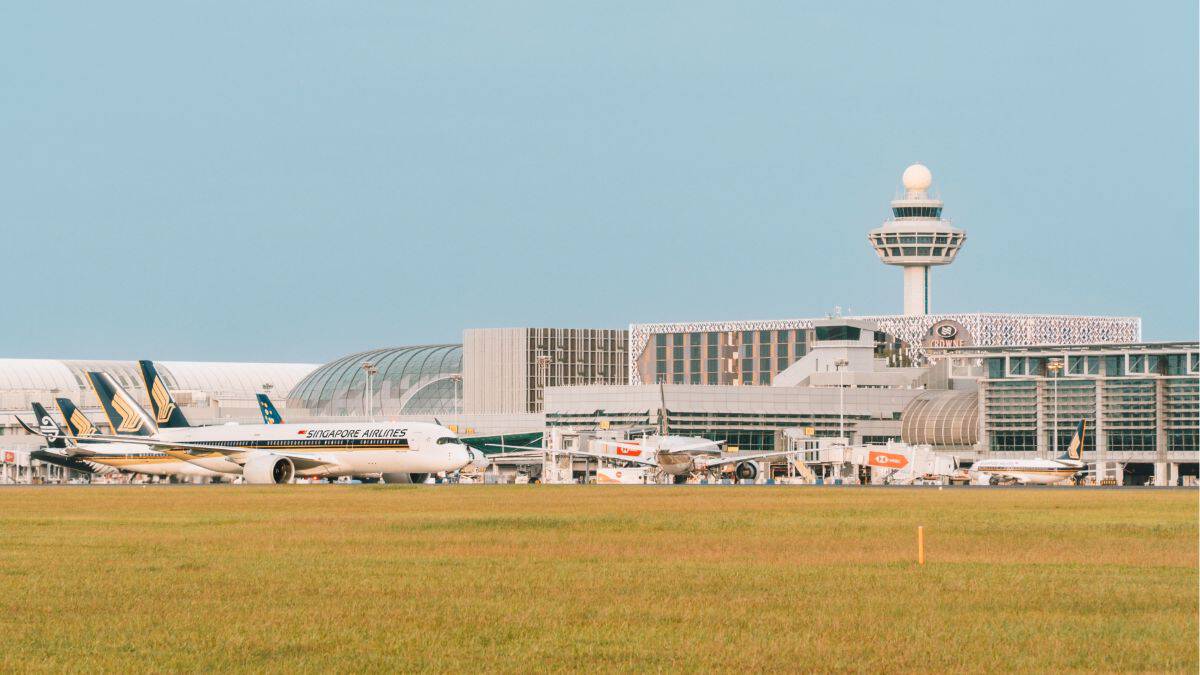
Singapore, South Korea, Thailand and the Philippines present sharply different options for travellers arriving after midnight, when rail services may stop but airport taxis continue operating. Singapore’s Changi Airport applies a 50% midnight taxi surcharge, while Seoul-bound passengers from Incheon can use dedicated overnight buses costing KRW 17,000–18,000 on several routes. Bangkok’s Suvarnabhumi Airport maintains 24-hour public taxi services, although its Airport Rail Link operates only from 05:30 to midnight. Manila’s Ninoy Aquino International Airport relies heavily on road transfers, making advance booking and pickup arrangements particularly important. These differences expose a crucial travel-planning issue: the true cost of a late-night arrival includes transport, waiting time, accommodation and the practicality of reaching a hotel safely.
Why Midnight Landings Create a Hidden Travel Bill
International arrivals do not follow the same timetable as urban transport networks. A flight touching down at 00:30 may leave passengers ready to exit the terminal only after immigration, baggage collection and customs procedures. By then, the last train may have departed, forcing travellers to choose between an overnight bus, a taxi, a ride-hailing service or an additional hotel stay.
This creates a financial burden that conventional airport-transfer comparisons often overlook. A low-cost flight can lose its price advantage when passengers must pay a night surcharge, arrange a private vehicle or book accommodation near the terminal. Consequently, late-night airport connectivity deserves greater attention from travellers, airlines, destination marketers and tourism businesses.
Singapore, South Korea, Thailand and the Philippines provide four contrasting examples. Their airport transport systems differ in rail access, overnight bus provision, taxi pricing and last-mile connectivity. However, a fair ranking requires identical arrival assumptions and comparable hotel destinations, rather than relying on isolated fare quotations.
Advertisement
Advertisement
The Midnight Arrival Test Sets a Fair Benchmark
A useful comparison begins with one standard passenger scenario. Assume a solo international traveller lands at 00:30, carries one checked suitcase and becomes ready to leave arrivals at 01:15. The passenger then needs to reach a centrally located, standard three-star hotel or equivalent accommodation.
The same conditions must apply across Changi, Incheon, Suvarnabhumi and NAIA. Researchers should record the last useful train, overnight bus departures, public taxi charges, ride-hailing quotations, journey times and hotel check-in arrangements. Any fare must include mandatory airport fees, night premiums and applicable tolls.
Advertisement
Advertisement
| Test condition | Standard assumption |
|---|---|
| Scheduled landing | 00:30 local time |
| Ready to leave arrivals | 01:15 |
| Passenger profile | One adult with checked luggage |
| Destination | Central hotel district |
| Main transport test | Cheapest practical door-to-door option |
| Additional cost test | Necessary extra overnight accommodation |
| Secondary tests | Departure from arrivals at 22:30 and 04:30 |
The 45-minute interval is a research assumption, not a guarantee of immigration clearance. Actual processing times vary with nationality, arrival volumes, terminal procedures and baggage delays. The additional scenarios also reveal whether an airport performs well only during certain hours.
Singapore Exposes the Price of Overnight Convenience
Changi offers travellers a comparatively straightforward late-night transfer process, with licensed taxis and app-based private-hire vehicles available from designated terminal pickup points. However, convenience comes with a clearly defined pricing premium. Singapore’s published taxi structure includes a 50% midnight surcharge between 00:00 and 05:59, alongside an airport surcharge of S$6 outside the specified evening period.
The airport’s guidance also lists an S$8 surcharge for taxi journeys beginning between 17:00 and 23:59. Standard taxi flag-down fares range from S$4.40 to S$5.20, while distance, waiting time and operator-specific charges determine the final amount. These figures provide a transparent starting point, but they do not establish a universal fare to central Singapore.
Passengers can also book private-hire vehicles through services including Grab, Gojek, Zig, Tada Mobility, Ryde and Geolah. These options allow travellers to compare app quotations, although availability and prices may fluctuate with demand. The important distinction is that 24-hour road access does not mean 24-hour public transport.
For passengers arriving after the MRT has stopped operating, a taxi or private-hire vehicle may offer the simplest direct journey. Travellers should therefore check the final useful rail connection before departure, particularly when a late landing leaves little time for baggage collection.
South Korea Gives Incheon a Valuable Overnight Bus Alternative
Incheon International Airport demonstrates why late-night transport cannot be assessed through taxi prices alone. The airport publishes dedicated overnight bus services connecting its terminals with several Seoul districts. Routes include N6000 towards Gangnam Express Bus Terminal, N6002 towards Cheongnyangni, and N6701 towards Dongdaemun Design Plaza.
Advertisement
Advertisement
The published adult fare is KRW 17,000 for N6000 and KRW 18,000 for N6701. The airport also lists services at other fare levels, including a KRW 10,000 adult fare for Songjeong Station. Routes, terminal departure points and ticketing arrangements differ, so passengers must verify the correct service before boarding.
| Incheon overnight service | Published adult fare | Main destination |
|---|---|---|
| N6000 | KRW 17,000 | Gangnam Express Bus Terminal |
| N6701 | KRW 18,000 | Dongdaemun Design Plaza |
| Songjeong Station service | KRW 10,000 | Songjeong Station |
These published fares show that an overnight bus can provide a defined alternative to a private transfer. Nevertheless, the bus may not stop near the traveller’s accommodation, creating another expense for a taxi or local transfer. Passengers must also account for the gap between landing, baggage collection and the next scheduled departure.
Taxis remain useful when travellers need a direct journey. Seoul’s published standard taxi tariff lists a base fare of KRW 6,700 for the 23:00–02:00 period, covering the initial 1.6 kilometres. The rate rises with distance and time, while a 40% late-night surcharge applies during those hours. This is a starting tariff, not the total cost of travelling from Incheon to central Seoul.
Incheon therefore offers a meaningful advantage in the form of scheduled overnight buses, but its geographical distance from central Seoul can still make the journey costly. The final comparison should measure the full trip, including any onward connection, rather than treating the airport bus fare as the complete transfer cost.
Bangkok Keeps Taxis Moving After the Rail Network Closes
Suvarnabhumi Airport offers a clear example of the difference between continuous road transport and restricted rail operating hours. The Airport Rail Link operates from 05:30 to midnight, with its station located on Level B1 of the main terminal. A passenger leaving arrivals at 01:15 cannot use that service under the published operating schedule.
Public taxis, however, operate around the clock from Level 1, between Gates 4 and 7. The airport lists starting fares of THB 35 or THB 40, depending on the taxi type, before metered charges. A THB 50 airport surcharge applies, while expressway tolls and applicable baggage charges may add to the final bill.
Advertisement
Advertisement
The low starting fare should not be mistaken for a complete airport-to-hotel quotation. Distance, traffic, tolls and the chosen destination determine the actual amount. Passengers should obtain the official taxi queue ticket and confirm the meter arrangement before beginning the journey.
Grab and airport limousine services provide additional choices, but their quoted prices and availability need to be checked at the time of travel. Airport guidance identifies several transport modes, including public buses and intercity coaches, although their routes and schedules must be checked individually. The presence of a bus service does not establish that it will take a particular passenger to a central hotel at 01:15.
Bangkok’s central challenge is therefore not the absence of transport. It is the loss of a relatively affordable rail option during the overnight period. Travellers can still leave the airport, but they must compare the total road-transfer cost against the convenience of reaching their accommodation directly.
Manila Makes Pickup Logistics Part of the Journey
Manila’s Ninoy Aquino International Airport presents a different problem. With no direct airport railway connection, international passengers depend heavily on road-based transfers to reach accommodation across Metro Manila. The journey also involves several terminals, designated pickup locations and traffic conditions that can complicate arrival planning.
Ride-hailing offers one way to reduce uncertainty around the price. Grab provides advance booking in the Philippines, allowing travellers to reserve eligible rides ahead of their journey. Its published terms also explain that airport pickup adjustments depend on flight-schedule changes and booking conditions. Passengers should therefore check the precise pickup instructions and cancellation rules before relying on a reservation.
A pre-booked ride can be especially useful for travellers unfamiliar with Manila, those carrying substantial luggage and passengers reaching arrivals after midnight. However, advance booking does not remove every risk. Driver allocation, pickup delays and changes to flight schedules can still affect the transfer, making it important to retain the app’s booking details and follow designated airport instructions.
Advertisement
Advertisement
Manila’s road-based model also means that the destination matters greatly. A hotel in Makati, one in Bonifacio Global City and accommodation elsewhere in Metro Manila can produce different journey times and fares. A meaningful comparison must therefore quote each airport transfer to a consistent destination category and use the same pricing method.
The Philippines should not automatically rank worst simply because it lacks a direct rail connection. A readily available, competitively priced vehicle can be more useful than a train requiring multiple changes. The decisive measures are the full fare, pickup reliability, travel time and ease of reaching the hotel.
Four Airports Reveal Different Overnight Trade-Offs
The evidence points to four distinct transport patterns rather than one obvious winner. Changi combines extensive private-hire choices with a defined midnight taxi premium. Incheon provides scheduled overnight buses with published fares, while Suvarnabhumi retains 24-hour public taxi access after its rail service closes. NAIA relies more heavily on road transfers and careful pickup coordination.
| Airport | Rail position after midnight | Alternative transport | Main cost consideration |
|---|---|---|---|
| Singapore Changi | MRT is not an all-night service | Taxis and app-based private hire | 50% midnight taxi surcharge and airport fee |
| Seoul Incheon | AREX is not a substitute for overnight services throughout the night | Dedicated overnight buses and taxis | Bus fare versus long-distance taxi fare |
| Bangkok Suvarnabhumi | Airport Rail Link closes at midnight | 24-hour public taxis and other road services | Metered fare, THB 50 airport surcharge and tolls |
| Manila NAIA | No direct airport rail connection | Taxis, ride-hailing and arranged transfers | Destination-specific fare and pickup logistics |
This table compares the structure of each system, not a final ranking of total costs. The airports serve different urban geographies, and a central hotel in one city may be considerably closer to its airport than a comparable hotel elsewhere. A definitive cost league table requires fresh, matched quotations and verified accommodation rates.
Airport Hotels Can Change the Financial Equation
Transport is only one part of the late-arrival calculation. A passenger who cannot reach a central hotel economically may consider staying near the airport and continuing the journey after public transport resumes. However, this strategy works only when the accommodation accepts late check-in and provides a practical route from the terminal.
The correct comparison includes the airport-area room rate, any shuttle charge, the next-morning transfer and the cost of the central hotel already booked. Researchers must distinguish an additional night required solely because of transport restrictions from accommodation the passenger would have purchased anyway. Otherwise, the comparison risks counting the same hotel expense twice.
Advertisement
Advertisement
A central hotel may be more convenient despite a higher taxi fare, particularly for short visits or early meetings. Conversely, an airport hotel can reduce fatigue after a long flight and provide a more predictable arrival experience. Neither option is automatically cheaper; the result depends on room prices, cancellation conditions and the traveller’s itinerary.
Hotel quotations should use equivalent room standards, booking dates and tax-inclusive prices. The research should also confirm whether reception remains open after 01:00 and whether a shuttle operates at the actual arrival time. A room advertised at an attractive rate offers little practical value if the passenger cannot reach it.
Flight Timing Now Deserves a Place in Trip Planning
The comparison also offers a practical lesson for airlines, destination marketers and travel advisers. A flight arriving shortly before the last useful train can produce a very different experience from one landing after midnight. Travellers should calculate the time they will leave arrivals, rather than relying solely on the scheduled landing time.
A useful booking check begins with the terminal, the last practical public transport connection and the location of the hotel. Passengers should then compare the all-in taxi or ride-hailing quotation, confirm the pickup point and check the accommodation’s reception arrangements. Where the flight is likely to arrive after midnight, a refundable hotel or transfer booking may provide useful flexibility.
Travellers should also check payment requirements before departure. Transport cards, cash, international bank cards and app registration are not interchangeable across all services. Keeping a working mobile connection and the airport’s official transport information available can reduce confusion after a long flight.
For families and small groups, a separate calculation can compare one private vehicle with several individual public transport fares. The per-person cost of a shared taxi may be substantially lower than the solo-traveller result. However, luggage capacity and vehicle size must also match the group.
Advertisement
Advertisement
Better Airport Access Requires More Than Faster Transfers
Late-night connectivity is a tourism issue as well as a transport question. Airports function as the first and last contact points for many international visitors, and difficult overnight transfers can affect perceptions of a destination before the hotel stay even begins. Clear signage, reliable pickup arrangements and published fare information can make that transition easier.
The four markets also illustrate why no single policy can solve every problem. Overnight buses offer Incheon passengers a defined alternative to taxis, while Bangkok maintains taxi access after the Airport Rail Link closes. Singapore’s transparent surcharge rules help travellers anticipate costs, and Manila’s advance-booking options can improve transfer planning. Each approach addresses a different part of the late-arrival problem.
The most useful future improvements would include clearer overnight schedules, better integration between airport transport and hotel districts, accessible pickup areas and transparent fare estimates. These measures would help travellers compare options before booking flights, rather than discovering transport constraints after landing.
What Travellers Should Check Before Booking
The most reliable choice depends on arrival time, hotel location, luggage and the number of people sharing the transfer. Changi’s taxi surcharge, Incheon’s overnight bus fares, Suvarnabhumi’s rail operating window and NAIA’s road-transfer dependence offer useful planning signals. Yet the available official figures do not, on their own, establish which city has the lowest total overnight cost.
A defensible final ranking must use contemporaneous taxi or ride-hailing quotations, equivalent hotel rates and verified service schedules. Until those figures are collected on a consistent basis, declaring one destination the cheapest would create false precision. For travellers, the practical message is clear: check the complete journey, not just the flight fare or the advertised starting taxi price. A few minutes of planning can prevent a late arrival from becoming an expensive and exhausting start to a trip.
Advertisement
