
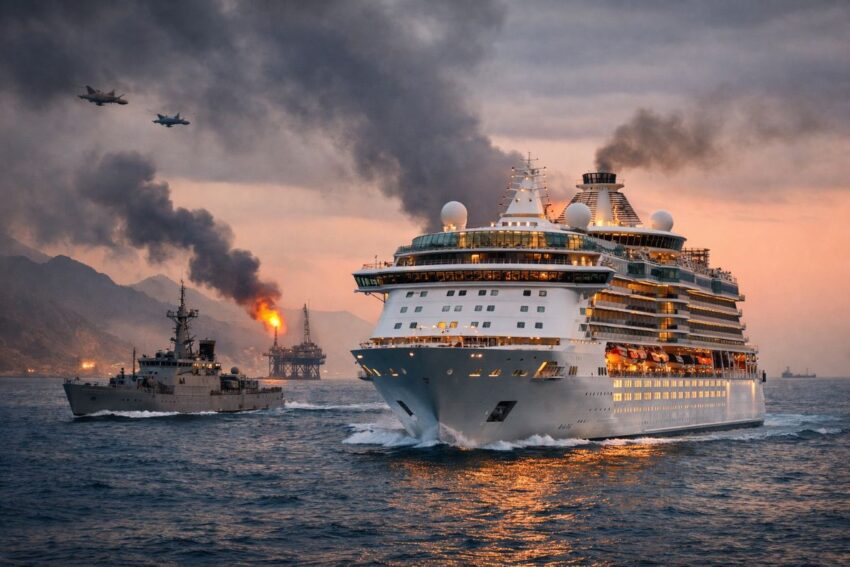
Image generated with Ai
he escalating conflict in the Middle East has sent ripples through the global tourism industry, as several major maritime insurance companies have decided to withdraw war-risk coverage for vessels operating in the Persian Gulf. This decision, effective March 5, is set to increase costs, disrupt travel routes, and complicate oil and gas shipments in the region—ultimately affecting the tourism sector that depends on these critical shipping lanes.
The withdrawal of war-risk coverage by seven of the twelve International Group of Protection and Indemnity (IG P&I) clubs represents a major shift in the global shipping insurance landscape. These insurance clubs, including Gard, NorthStandard, Steamship Mutual, Skuld, American Club, The Swedish Club, and the London P&I Club, are halting their coverage for vessels entering the Persian Gulf, Strait of Hormuz, and Iranian waters, all key maritime routes for tourism and trade.
Advertisement
This change doesn’t affect core P&I liability or hull and machinery coverage, but it does increase the vulnerability of tourism-related shipping. Cruises, ferry services, and cargo transport companies that rely on these routes for both passengers and goods will face higher costs and tighter restrictions. This move could ultimately make popular tourist destinations in the region harder to reach or more expensive for travelers, affecting both leisure and business travel.
The primary cause of the withdrawal is the growing conflict between Iran and Israel, which has escalated tensions in the region. Recent attacks on shipping vessels in the Arabian Gulf, particularly in the Strait of Hormuz, have caused significant concerns about the safety of maritime routes. These risks, combined with ongoing military actions, have prompted reinsurers and insurance clubs to withdraw war-risk coverage in a bid to minimize exposure to these volatile regions.
Advertisement
This move is part of a broader global trend of tightening insurance conditions as insurers become more cautious about offering cover for vessels traveling through high-risk areas. The implications for tourism are significant, as this directly impacts the accessibility of travel to some of the most popular destinations in the Gulf.
The immediate impact on tourism is two-fold. First, travelers visiting the region may face higher prices for their trips. Increased shipping costs, which are likely to rise by 25-50% in the Persian Gulf, could be passed on to consumers, making airfares, cruises, and hotel stays more expensive. Tour operators may also face higher insurance premiums, leading to an increase in the cost of tours and packages for tourists.
Second, the withdrawal of war-risk insurance is likely to cause disruptions in travel schedules. Shipping companies, including cruise lines and ferry operators, may avoid the region entirely or reroute their vessels to alternative routes, which could take longer and be more costly. This could lead to delays in travel and canceled or rescheduled cruises, impacting tourists’ holiday plans.
The Persian Gulf and the Strait of Hormuz are vital for transporting oil and gas, which in turn fuels the global economy, including the tourism sector. Disruptions to energy supply chains could lead to higher global oil prices, which would increase the cost of travel, particularly airfares, which are already facing pressure from fuel surcharges. Tourism-heavy countries that rely on affordable flights to attract international visitors may see fewer arrivals as travel costs rise.
Moreover, the Gulf is home to several high-end resorts, luxury cruise lines, and cultural destinations that cater to tourists from around the world. Disruptions to regional shipping and logistics could affect the availability of supplies, leading to shortages of goods or delays in the construction of new tourism infrastructure. The longer-term effects could threaten the economic stability of tourism-driven regions in the Gulf, with potential job losses and reduced income for local businesses.
As of now, the situation in the Gulf has created uncertainty in the travel sector. Tourists planning trips to destinations such as Dubai, Abu Dhabi, Muscat, and Doha may reconsider their plans due to concerns about the security situation, flight delays, and the higher costs of travel. For travelers seeking peace of mind, the ongoing conflict could lead them to choose alternative destinations in the Middle East or beyond.
On the other hand, some travelers might still be drawn to the Gulf’s luxury offerings, particularly high-end resorts, and shopping experiences. However, for those seeking adventure and cultural tourism, the heightened risk and disruptions could prompt a shift in preferences towards safer destinations.
The Persian Gulf has long been a key player in the global tourism industry, known for its luxurious hotels, opulent shopping malls, cultural experiences, and a growing array of adventure tourism opportunities. As the region continues to develop, tourism authorities in the Gulf countries may need to rethink their strategies to attract travelers during times of geopolitical instability.
While countries like the UAE, Oman, and Qatar have been actively diversifying their tourism offerings and expanding infrastructure, the recent developments in the Gulf could slow this growth. Tourist boards may need to invest more in ensuring safety and providing reassurance to travelers, and tourism providers will need to adapt to changing market conditions, possibly exploring new routes or destinations to offset the effects of insurance withdrawals and rising costs.
As war-risk insurance is withdrawn from the Persian Gulf, the tourism industry faces heightened uncertainty and potentially higher costs. Travelers may experience higher prices for travel, cruise cancellations, and delays, while the economic stability of tourism-driven countries in the region could be at risk. With the increased difficulty of accessing key destinations and rising costs, the Persian Gulf’s tourism market will need to remain adaptable in the face of ongoing geopolitical tensions.
Tourism authorities and businesses in the region will need to monitor the situation closely and adjust their offerings to ensure the safety of travelers while continuing to attract visitors to the Gulf’s dynamic destinations.
Advertisement
Tags: bahrain, cruise cancellations, global tourism impact Geo Tags: United Arab Emirates, gulf tourism, iran
Advertisement
Advertisement













Sunday, September 6, 2026

Saturday, September 5, 2026

Saturday, September 5, 2026

Saturday, September 5, 2026
Saturday, September 5, 2026
Saturday, September 5, 2026

Saturday, September 5, 2026