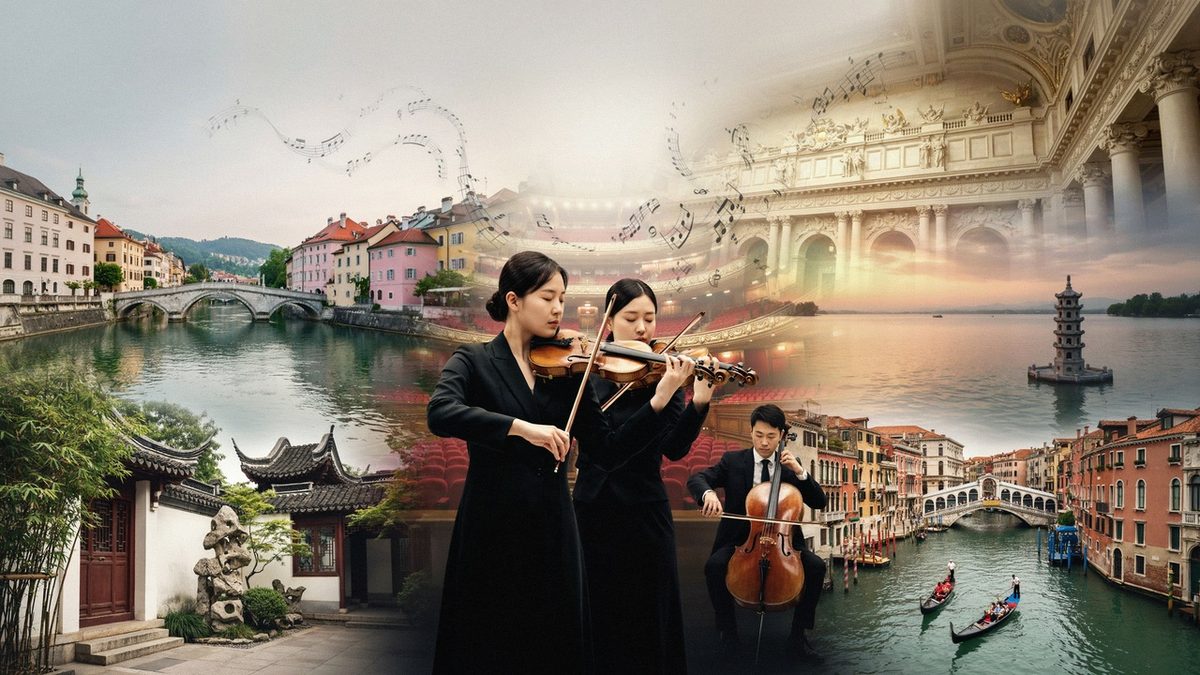
China’s Wuxi Symphony Orchestra has completed a major European cultural tour, bringing the artistic spirit of Wuxi and the beauty of Taihu Lake to some of Europe’s most respected classical music destinations. The 2026 journey connected Slovenia, Austria and Italy through a series of performances that highlighted China’s evolving symphonic identity and growing international cultural presence.
The young orchestra, established only in 2023, used its European appearance to showcase a combination of Western classical masterpieces and contemporary Chinese compositions. The tour demonstrated how music can become a bridge between destinations, communities and cultures while creating new opportunities for cultural tourism.
From historic European concert halls to public street performances, the orchestra presented Wuxi as a destination where tradition, innovation and creativity meet. The performances also introduced international audiences to the cultural landscape of Jiangsu Province, a region known for its waterways, heritage and artistic traditions.
The 2026 European tour represented one of the most significant international achievements for the young orchestra. Between 18 and 27 August 2026, the ensemble travelled across Slovenia, Austria and Italy, performing five concerts at four recognised cultural festivals.
Advertisement
Advertisement
The orchestra appeared at:
Country City/Region Festival/Event Cultural Importance Slovenia Ljubljana Ljubljana Festival One of Central Europe’s major cultural festivals Austria Carinthia region Brahms Festival Celebrates classical music heritage connected with Johannes Brahms Italy Emilia-Romagna Emilia-Romagna Festival Important Italian classical music event Italy Tuscany Tuscany Festival Historic platform for international musical performances
The tour allowed the Wuxi Symphony Orchestra to enter some of Europe’s most established classical music networks. It was also recognised as an important step in strengthening cultural connections between China and Europe.
For Wuxi, the journey carried wider tourism significance. The city used music as a cultural ambassador, promoting its identity beyond traditional attractions and highlighting creativity as an essential part of modern destination branding.
Ljubljana, Slovenia’s capital, provided the opening stage for the orchestra’s European performances. Known for its historic architecture, vibrant arts scene and cultural festivals, Ljubljana has become an important meeting point for international artists.
The orchestra participated in the Ljubljana Festival, an event recognised for attracting performers and audiences from around the world. Its appearance placed Wuxi alongside global cultural destinations and introduced European visitors to a new generation of Chinese musicians.
The Slovenian capital also became a place for wider cultural interaction. Beyond formal concerts, musicians participated in exchange activities designed to encourage dialogue between Chinese and Slovenian communities.
Public performances in Ljubljana added another dimension to the tour. Instead of limiting music to traditional venues, the orchestra brought familiar Jiangnan melodies into city spaces, allowing residents and visitors to experience Chinese culture in an informal environment.
This approach reflects a growing trend in cultural tourism where destinations use live experiences, public art and local engagement to create memorable visitor experiences.
Austria provided another important chapter in the orchestra’s European journey. The country remains one of the world’s most influential centres of classical music, with historic connections to composers including Mozart, Beethoven, Schubert and Brahms.
The orchestra’s participation in the Brahms Festival created a meeting point between China’s contemporary symphonic development and Europe’s centuries-old musical traditions.
The performance demonstrated how classical music continues to evolve internationally. While European audiences have long been familiar with traditional Western compositions, the Wuxi Symphony Orchestra introduced new interpretations and Chinese artistic perspectives.
A central feature of the programme was the combination of international classics with Chinese-inspired compositions. This created a dialogue between different musical traditions rather than presenting them as separate worlds.
The Austrian performances also reflected the wider role of cultural exchange in international tourism. Festivals increasingly attract visitors who travel specifically for concerts, exhibitions and artistic experiences, creating economic benefits for destinations through accommodation, dining and local activities.
Italy marked the final stage of the 2026 European tour, with performances at major cultural festivals in Emilia-Romagna and Tuscany.
Italy’s deep connection with opera, orchestral traditions and historic performance venues made it a symbolic location for the orchestra’s closing concerts.
The performances introduced European audiences to a programme that combined Western symphonic works with Chinese original creations. One of the highlighted works was “Flying Apsaras”, a symphonic composition inspired by Chinese cultural heritage and artistic traditions.
The work reflected an attempt to connect ancient Chinese imagery with modern orchestral expression. Through this approach, the orchestra presented a contemporary vision of Chinese culture that combines historical roots with creative innovation.
Italy’s cultural tourism landscape provided an ideal environment for this exchange. Cities and regions such as Tuscany and Emilia-Romagna attract millions of visitors because of their heritage, architecture, food and arts. Adding international musical performances strengthens their reputation as destinations for cultural discovery.
The orchestra created a programme designed to connect different musical worlds. Instead of focusing only on traditional European compositions, the performances combined famous Western works with Chinese creative expressions.
Musical Element Cultural Meaning Western classical masterpieces Connection with Europe’s musical heritage Chinese original compositions Introduction of contemporary Chinese creativity “Flying Apsaras” symphonic suite Modern interpretation of Chinese cultural stories Jiangnan melodies Representation of Wuxi and Taihu Lake traditions
The inclusion of Chinese instruments and artistic elements added another layer to the performances. Traditional sounds were integrated into orchestral arrangements, creating a distinctive experience for international audiences.
This artistic approach reflects how cultural tourism is changing globally. Travellers increasingly seek authentic experiences that reveal the identity, history and creativity of destinations.
Wuxi has increasingly positioned culture and creativity as important parts of its tourism development strategy. Located in Jiangsu Province near Taihu Lake, the city combines natural landscapes, historic heritage and modern innovation.
The Wuxi Symphony Orchestra has become an important cultural symbol for the city. Since its establishment, the ensemble has focused on professional development, international cooperation and youth talent cultivation.
Key achievements include:
Category Details Establishment 2023 Average musician age Around 28 years International focus Cultural exchange and overseas performances European tour countries in 2026 Slovenia, Austria and Italy Main objective Promote musical innovation and cultural dialogue
The orchestra’s international activities support destination promotion by presenting Wuxi as a city of creativity rather than only a historical or industrial destination.
For modern travellers, cultural identity has become a major reason to visit a place. Concerts, festivals and artistic experiences now influence destination choices alongside landscapes and heritage attractions.
International music tours are increasingly becoming part of destination marketing strategies. They allow cities to reach global audiences through emotional experiences rather than traditional advertising.
The Wuxi Symphony Orchestra’s European journey shows how performing arts can support tourism by:
For European cities involved in the tour, the performances strengthened their reputation as cultural destinations. For Wuxi, the tour created an international platform to introduce its artistic identity.
As travellers continue searching for meaningful experiences, cultural tourism is expected to become an increasingly important part of global travel trends.
The Wuxi Symphony Orchestra is a professional Chinese orchestra based in Wuxi, Jiangsu Province. Founded in 2023, it focuses on international performances, musical innovation and cultural exchange.
The orchestra travelled through Slovenia, Austria and Italy during its 2026 European tour, performing at several major cultural festivals.
Wuxi is known for its Taihu Lake scenery, Jiangnan cultural heritage and growing creative industries. Cultural projects such as international orchestra performances help strengthen its global tourism identity.
The tour focused on connecting Chinese and European musical traditions by combining Western classical works with contemporary Chinese compositions.
Music creates emotional connections between visitors and destinations. International concerts and festivals can encourage travel, increase destination visibility and strengthen cultural relationships.
“Flying Apsaras” represents a modern symphonic interpretation of Chinese cultural heritage, allowing international audiences to experience Chinese artistic stories through orchestral music.
The Wuxi Symphony Orchestra’s 2026 European tour demonstrated the growing power of music as a global cultural connector. By performing across Slovenia, Austria and Italy, the young ensemble introduced international audiences to the artistic energy of Wuxi and the wider cultural richness of China.
More than a series of concerts, the journey represented a meeting of traditions, ideas and communities. It showed how destinations can use creativity to strengthen their global presence and attract travellers seeking authentic cultural experiences.
As Wuxi continues expanding its international cultural footprint, music is becoming a powerful invitation for the world to discover the city, its heritage and its future.
Advertisement
Tags: China cultural tourism, European classical music tour, music diplomacy, Wuxi Symphony Orchestra, Wuxi tourism
Advertisement
Advertisement













Saturday, September 5, 2026

Saturday, September 5, 2026

Saturday, September 5, 2026

Saturday, September 5, 2026

Saturday, September 5, 2026

Saturday, September 5, 2026

Saturday, September 5, 2026