

Colombia’s Medellín Unveils a New Hub to Transform Cultural Travel Experiences in 2026

Updated
Published
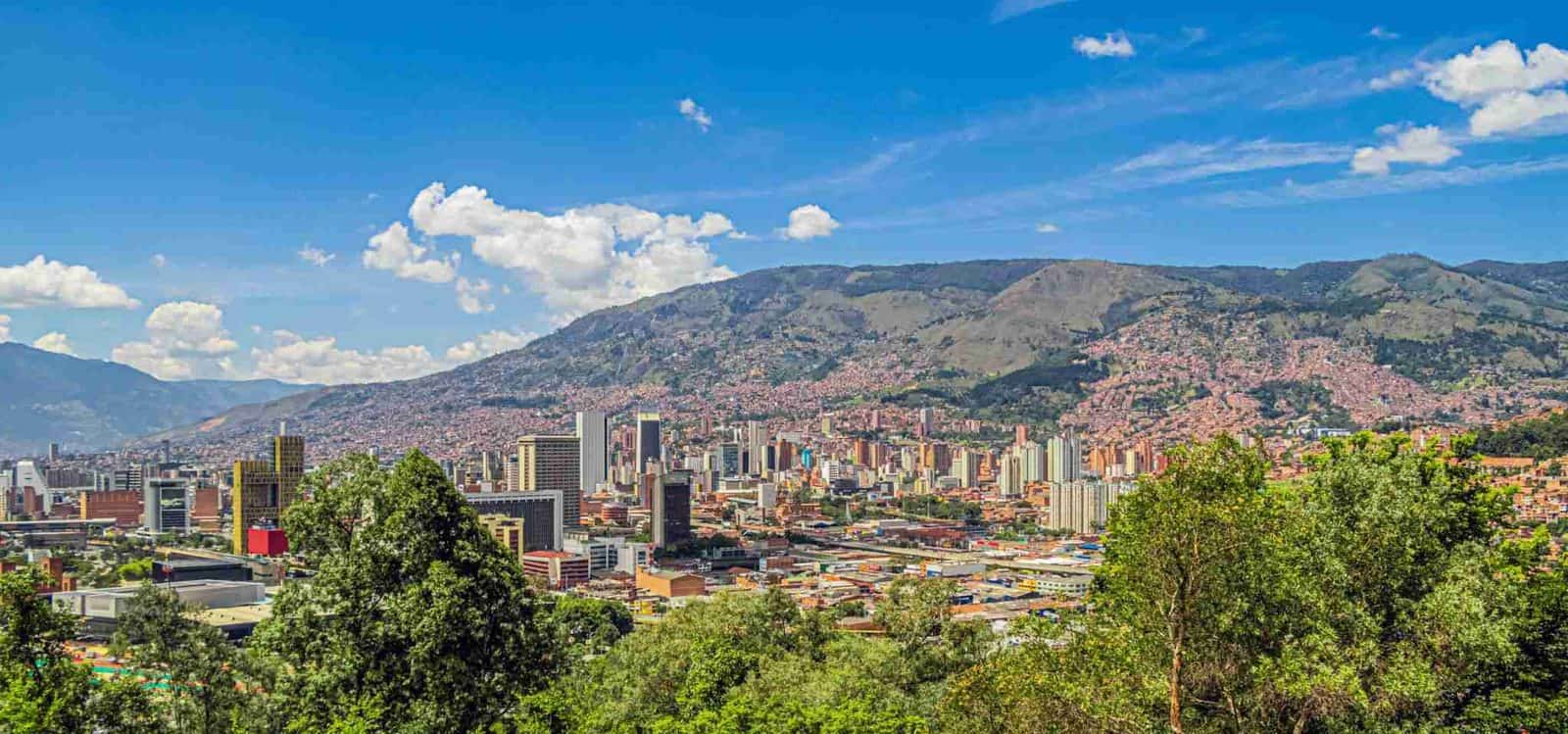
Image Credit: Colombia Tourism
In Medellin city in Colombia, innovations have been adopted within the tourism sector through the formation of a new visitor center. The new visitor center will offer services of transportation from the airport as well as providing education to visitors concerning the culture of the city. The new visitor center that is supposed to be developed within the city of Medellin will offer transportation from the airport and also offer information to the visitors and their luggage in the city. In addition to the efforts that the city has made in relation to the facilitation of transportation services, the city plans to increase the number of tourists through 45 different experiences which will be offered through community and cultural tours which include cultural community tours, creative communities, rural communities, and traditional craft communities.
Medellín Opens COP 300 Million Tourism Hub With Airport Transfers and Traveller Services
The newly launched El Encuentro tourism hub is situated at Centro Comercial Sandiego, where transport infrastructure and visitor services have been brought together inside a commercial complex.
Advertisement
Advertisement
The municipal government announced the opening on 7 October 2026, describing an initiative involving the city administration, transport company Combuses, taxi operator CTM and Centro Comercial Sandiego.
The facility provides visitors with luggage lockers, flight information screens, destination guidance and information about events taking place across Medellín. An urban art gallery featuring work by 11 artists introduces arriving passengers to the city’s cultural identity.
Advertisement
Advertisement
Its airport bus service operates between Medellín and José María Córdova International Airport through Las Palmas and the Túnel de Oriente.
According to the municipal announcement, Combuses provides services around the clock, with an approximate frequency of five minutes and a published fare of COP 20,000 per journey. Passengers can also use the Metro system’s Cívica payment card.
For travellers, the primary advantage is more straightforward journey planning. An airport arrival frequently involves decisions about transport, luggage, accommodation and activities, particularly for visitors unfamiliar with the city.
Providing transport and information in one location can reduce that complexity. Luggage storage may also prove useful for travellers whose flights do not align with hotel check-in or check-out times.
For tourism businesses, the hub establishes another potential point of contact with arriving customers. It could support greater visibility for local experiences, provided the information presented remains current and accessible.
However, the expected daily passenger figure should not be interpreted as additional tourists generated by the development. It describes projected hub usage, not incremental international arrivals.
Advertisement
Advertisement
Medellín’s 45 Verified Tourism Experiences Reveal a Bigger Destination Strategy
Another important development took place in May 2026, when Medellín updated its official catalogue of visitor experiences.
The city evaluated 112 tourism experiences and validated 45 against criteria covering legal compliance, sustainability, safety, service quality and other operational requirements. The selected offerings were organised into five categories designed to highlight different aspects of Medellín’s cultural and geographical identity.
These categories comprise silletera farms, agritourism properties, creative tourism, transformation and historical memory experiences, and design, fashion and shopping.
This offers a significantly different perspective from conventional destination coverage centred on hotels, restaurants and nightlife. It directs attention towards activities where local producers, craftspeople, guides and cultural organisations can participate directly.
The validation exercise also demonstrates that Medellín’s tourism strategy considers product standards important. Only 45 of the 112 evaluated experiences qualified for the updated catalogue. That is a defined selection process, not evidence that the remaining businesses are unsafe.
The municipal authorities said that some experiences which did not qualify were undergoing improvements or further documentation and verification.
Advertisement
Advertisement
For tour operators, the catalogue can serve as a starting point for developing themed itineraries. Travellers can use the official destination platform, Medellín Travel, to investigate participating experiences and contact providers.
Medellín’s Tourism Demand Is Becoming Less Seasonal, Creating Opportunities Beyond Peak Holidays
One of the strongest indicators of the city’s changing visitor economy emerged in a municipal tourism analysis published on 29 September 2026.
Using its Tourism and Entertainment Intelligence System, Medellín reported a 2025 seasonality index of 1.26, the lowest recorded during the 2015–2025 study period.
The analysis found that the quietest month of 2025 recorded 85,256 visitors, compared with 125,778 during the busiest month. That produces a peak-to-trough ratio of approximately 1.47. In 2012, the equivalent ratio stood at 2.43.
Medellín visitor arrivals: busiest versus quietest months
Official municipal figures for the stated years. These are monthly extremes, not full-year totals.
Advertisement
Advertisement
These figures point to two developments. First, monthly visitor volumes have grown substantially between the years compared. Second, the difference between the busiest and quietest months has narrowed relative to the earlier baseline.
This matters because a destination with more consistent demand can potentially support year-round employment, specialised tourism products and steadier use of hospitality infrastructure.
A restaurant offering regional cuisine, a neighbourhood walking-tour business or a small rural tourism operator may benefit from attracting customers outside major holidays. More consistent visitor flows can also make staffing and business planning less dependent on short bursts of activity.
Nevertheless, the seasonality figures do not prove that every business or neighbourhood experiences stable demand. Visitor expenditure, hotel occupancy, booking patterns and local operating conditions may still vary substantially.
The commercial opportunity lies in connecting broader demand with experiences that visitors have not traditionally included in their itineraries.
Community Tourism Brings Medellín’s Lesser-Known Neighbourhoods Into Focus
Medellín’s community tourism programme provides another route into the city’s changing visitor economy. In December 2025, the municipal authorities reported that more than 400 people from Popular, Manrique, Villa Hermosa, El Poblado and Guayabal had participated in training programmes designed to strengthen local tourism initiatives.
Advertisement
Advertisement
The training covered subjects including visitor experiences, storytelling, service quality, pricing, tourism product development and gastronomy. The programme continued into 2026 with support for community-led tourism projects.
This matters because smaller tourism businesses often require more than visibility to become commercially sustainable. They need the capacity to communicate their offer, manage costs, maintain standards and build relationships with customers and distribution partners.
Community tourism can also change how a neighbourhood is represented. Instead of being presented solely through external perceptions, residents gain opportunities to explain their own cultural heritage, traditions and lived experiences.
The programme identifies several distinctive geographical opportunities:
- Manrique: Community narratives, creative expression and neighbourhood heritage.
- Villa Hermosa and Comuna 8: Rural coffee experiences connecting urban and agricultural landscapes.
- Santa Elena: Silletero heritage, farming traditions and rural cultural activities.
- El Poblado: Creative tourism and gastronomy beyond conventional nightlife.
- Guayabal and Popular: Emerging initiatives supported through local training and capacity development.
The initiatives do not establish that every neighbourhood attraction is operating daily or accepting walk-in visitors. Travellers should check the availability of individual experiences with their operators.
Why 215 Tourism Stakeholders Could Shape Medellín’s Next Phase of Growth
In June 2026, Medellín brought together 215 participants at its Community Tourism Meeting. They represented initiatives and projects associated with areas including Santa Elena, San Cristóbal, San Sebastián de Palmitas, Manrique, Villa Hermosa, San Javier and Belén.
Advertisement
Advertisement
The meeting produced a joint declaration of intentions for community tourism covering 2026–2027, with an emphasis on shared governance, equitable distribution of value and environmental, social and cultural sustainability.
The significance extends beyond the number of participants. The declaration establishes a framework for cooperation between public authorities, private businesses and community representatives.
For travel businesses, these relationships could support the development of locally operated experiences that offer something different from standard city tours.
For residents, the potential benefit is greater participation in deciding how their neighbourhoods are represented and how tourism develops.
However, the declaration is a commitment to collaborate, not proof that the intended economic and social outcomes have already been achieved.
The next stage will depend on implementation. Useful measures would include the number of sustainable local businesses created, tourism income reaching community enterprises, employment generated and the satisfaction of participating residents.
Advertisement
Advertisement
Comuna 13 Shows Why Medellín’s Cultural Tourism Needs More Than Spectacular Photographs
Comuna 13 has become an important destination for visitors interested in street art, urban history and neighbourhood transformation. Its murals, public escalators and locally guided experiences provide opportunities to understand an area whose history cannot be adequately explained through photographs alone.
The official Medellín destination guide identifies San Javier Metro station as a principal gateway to the district. It also describes the area’s public escalators and the Metrocable Line J, which provides panoramic views of the surrounding hillside communities.
For travellers, the distinction between viewing the neighbourhood and understanding it is important.
A cable-car journey gives visitors a geographical perspective. A locally guided walking experience can provide historical and social context, highlighting the stories behind murals, community enterprises and public spaces.
The emerging commercial opportunity involves supporting residents who provide these experiences, rather than treating neighbourhood transformation as a spectacle.
Local cultural tourism should also respect the fact that Comuna 13 remains a residential area. Its streets, shops and public spaces serve communities throughout the year, not just visiting groups.
Advertisement
Advertisement
Travellers should choose responsible guides, avoid intrusive photography and respect restrictions around private homes.
Medellín’s Metro and Metrocable Offer Another Route to Nature Tourism
Transport connectivity is central to Medellín’s visitor experience. The integrated Metro system includes rail, cable cars, tram services and buses, helping passengers travel between different parts of the Aburrá Valley.
The Metrocable tourist route to Parque Arví is especially relevant for travellers seeking a natural setting beyond the dense urban landscape.
According to Metro de Medellín, Line L carried approximately 318,000 passengers during 2025. This establishes a substantial existing market for nature-oriented travel connected to public transport.
For 2026, the operator’s published tourist cable-car fare is COP 26,700 per journey for foreign visitors under the general tariff category. Colombian nationals meeting the relevant requirements have a separate COP 11,900 tariff, while eligible local residents and other qualifying users can access a COP 3,900 concession.
The Metro also lists the Cívica Eventual card, intended for tourists and occasional passengers, at COP 12,100 before adding journey credit.
Advertisement
Advertisement
These fares illustrate a practical issue often overlooked in general destination guides: travellers should distinguish between ordinary integrated public transport and the separately priced tourist cable-car service.
The route’s operating schedule is also important. The operator normally closes Line L on Tuesdays for maintenance, subject to adjustments around public holidays.
Visitors planning a forest excursion should confirm operating conditions on the official Metro de Medellín website before travelling.
Medellín’s Travel Costs and Experiences Compared for 2026 Visitors
The city’s newest transport investment, its community tourism programme and established infrastructure serve different travel needs.
The following comparison draws together publicly documented services and verified experience categories. It does not assume that all activities are available at the same price or without advance booking.
| Travel experience or service | Officially established information | Main benefit for travellers |
|---|---|---|
| El Encuentro airport transport hub | COP 300 million-plus investment; approximately 2,800 expected daily users | Airport transfers, information and luggage facilities |
| Combuses airport connection | COP 20,000 each way; published 24-hour service | Transport between the airport and Medellín |
| Cívica Eventual transport card | COP 12,100 card cost, excluding travel credit | Access to integrated public transport |
| Metrocable Line L to Arví | COP 26,700 general foreign-visitor fare per journey | Forest access and mountain scenery |
| Official tourism catalogue | 45 validated experiences across five categories | Structured choice of cultural and rural activities |
| Comuna 13 | Metro access through San Javier and local guided experiences | Urban heritage, artwork and community narratives |
| Santa Elena | Community tourism and silletero heritage | Agricultural traditions and countryside experiences |
Sources: Medellín Mayor’s Office, Metro de Medellín and official Medellín tourism portal. Rates are published 2026 figures; individual tour prices and availability vary.
Advertisement
Advertisement
For holidaymakers, the strongest itinerary may combine urban culture, community-led experiences and the natural surroundings rather than concentrating every day in one area.
Visitors should confirm prices directly and allow sufficient time between attractions. Distances across the valley and surrounding hills can create substantially different journeys even within the same metropolitan area.
Where Medellín Visitors Can Explore the City’s Changing Tourism Landscape
The map highlights five geographical reference points connected with the infrastructure, heritage and community-tourism developments discussed in this report. It is not a recommended driving route or a confirmation of tour availability.
Medellín’s Creative Economy Offers a Strong Alternative to Conventional City Breaks
Cultural tourism is a major component of Medellín’s destination positioning. The city has opportunities to connect established institutions with independent artists, craftspeople, musicians and producers working in its neighbourhoods.
The official tourism catalogue provides an institutional foundation for this approach through its creative tourism and design, fashion and shopping categories.
Travellers interested in Colombia’s contemporary cultural identity can therefore move beyond conventional sightseeing towards experiences built around local production.
Advertisement
Advertisement
For example, a design-oriented itinerary might explore the relationship between regional textiles, independent fashion and changing consumer preferences. A gastronomy-focused experience might examine how ingredients from different Colombian landscapes influence Medellín’s dining culture.
Coffee tourism offers another opportunity. Rather than simply visiting a café, travellers can investigate cultivation, harvesting, processing, roasting and preparation through suitable rural experiences.
The municipal community tourism programme specifically highlights Comuna 8 coffee routes and the agricultural heritage of Santa Elena.
This offers a broader narrative for Medellín tourism: the destination can introduce visitors not only to the final product but also to the people, landscapes and skills behind it.
For tour operators, these activities could support small-group and specialist itineraries. For independent travellers, they provide reasons to spend more time exploring.
Their commercial success, however, depends on reliable delivery, transparent pricing, visitor safety and meaningful participation by the communities involved.
Advertisement
Advertisement
Medellín’s 2026 Tourism Security Plan Makes Responsible Travel a Bigger Priority
Medellín’s visitor economy is expanding alongside greater institutional attention to tourism safety.
In 2026, the city introduced its District Tourism Security Plan for 2026–2030, setting out measures to strengthen oversight, improve visitor information, support coordinated responses and prevent exploitation.
According to the municipal government, José María Córdova International Airport recorded more than two million arrivals by foreign nationals and Colombians residing abroad during 2025. Between January and March 2026, the corresponding arrival figure reached 509,886.
These passenger figures demonstrate the scale of the international travel flows entering through the airport. They should not be interpreted as a direct count of tourists staying exclusively in Medellín, since the airport also serves surrounding destinations.
The security strategy matters for businesses selling accommodation, transfers, nightlife experiences, cultural activities and excursions. Visitors need clear information about providers and procedures when problems occur.
For travellers planning a visit, several precautions remain appropriate:
Advertisement
Advertisement
- Choose properly registered tourism providers and confirm bookings through reliable channels.
- Use recognised transport operators and verify journey prices.
- Check official guidance before visiting unfamiliar neighbourhoods.
- Respect residential communities and the instructions of local guides.
- Keep travel documents and emergency contacts readily accessible.
These recommendations should not be interpreted as evidence that every Medellín neighbourhood carries the same level of risk. Conditions depend on location, timing, individual circumstances and current official advice.
Why Medellín’s Tourism Transformation Matters to Airlines, Hotels and Travel Agencies
For the international travel trade, the most important development is the relationship between destination accessibility and the experiences travellers can purchase after arrival.
Medellín’s newly opened tourism hub creates an additional transport and information facility. Its validated tourism catalogue provides a wider range of cultural and rural activities. Meanwhile, more consistent visitor demand suggests opportunities to develop products across different times of year.
The municipality also announced further work on domestic and international air connectivity during May 2026, reflecting its intention to strengthen the city’s links with other markets.
Airlines can use destination information to improve the relevance of city-break and leisure travel campaigns. Hotels can investigate relationships with suitable local guides and operators. Destination management companies can develop multi-day itineraries incorporating cultural experiences, transport and countryside activities.
Specialist agencies may find opportunities in agritourism, architecture, neighbourhood heritage, gastronomy, independent design and nature tourism.
Advertisement
Advertisement
Nevertheless, the authorities’ infrastructure investment does not guarantee an immediate increase in bookings. Commercial performance will depend on demand, connectivity, product quality, distribution and pricing.
For tourism businesses, the strongest opportunity is to make it easier for visitors to discover and book experiences that previously received less attention.
Travel Analytics: Five Indicators That Will Define Medellín’s Tourism Success
The available official evidence suggests that Medellín’s next tourism development phase should be evaluated through a broader set of indicators rather than international arrival numbers alone.
| Performance indicator | Available evidence | Editorial analysis |
|---|---|---|
| Visitor infrastructure | El Encuentro expects approximately 2,800 users daily | Actual usage and customer satisfaction will determine its effectiveness |
| Experience development | 45 of 112 evaluated experiences validated | A measurable foundation for improving tourism product standards |
| Community participation | More than 400 people received tourism training | Local business outcomes will show whether training generates lasting benefits |
| Tourism seasonality | Peak-to-trough monthly visitor ratio of 1.47 in 2025 | More balanced demand could support year-round operations |
| Nature tourism transport | Arví Metrocable carried 318,000 passengers in 2025 | Indicates existing demand for accessible nature-oriented experiences |
Editorial interpretation of official figures, not an independently conducted impact assessment.
From a travel analytics perspective, the critical question is whether higher visitor expenditure and improved infrastructure translate into broader local economic participation.
Measuring accommodation occupancy, visitor satisfaction, tour bookings and expenditure by neighbourhood would provide a more complete picture of the impact of tourism.
Advertisement
Advertisement
Similarly, evaluating the performance of community-operated experiences would help determine whether these initiatives are creating reliable livelihoods.
The city’s official data provides useful baselines. Longer-term evidence will be needed to demonstrate whether the strategy produces lasting economic and social benefits.
Conclusion: Medellín’s New Tourism Hub Could Change How Visitors Discover Colombia in 2026
Indeed, the creation of a new tourist complex in Medellin is to be regarded as a real discovery regarding the development of tourism in Colombia because of better air connection, necessary facilities provided, and 45 approved experiences supported by the project. Apart from simplifying the process of traveling through the city, this project confirms the intention of the city’s authorities to preserve the cultural heritage of the city with the help of tourism. Apart from tourist infrastructure construction, this project includes both popular places and unique ones such as the history of Comuna 13 and the landscape of Santa Elena. Therefore, in light of the opinion expressed by the editor, it turns out that the project reveals how the infrastructure of the country may take advantage of cultural tourism and develop local business. However, the success of the project depends on many other aspects, especially on the satisfaction of tourists.
Advertisement
