
Thailand Partners with Global Aviation Technology Leaders to Transform Airport Infrastructure, Accelerate Seamless Passenger Journeys, Strengthen Smart Border Processing, and Position the Kingdom as Southeast Asia’s Next-Generation Air Travel Hub
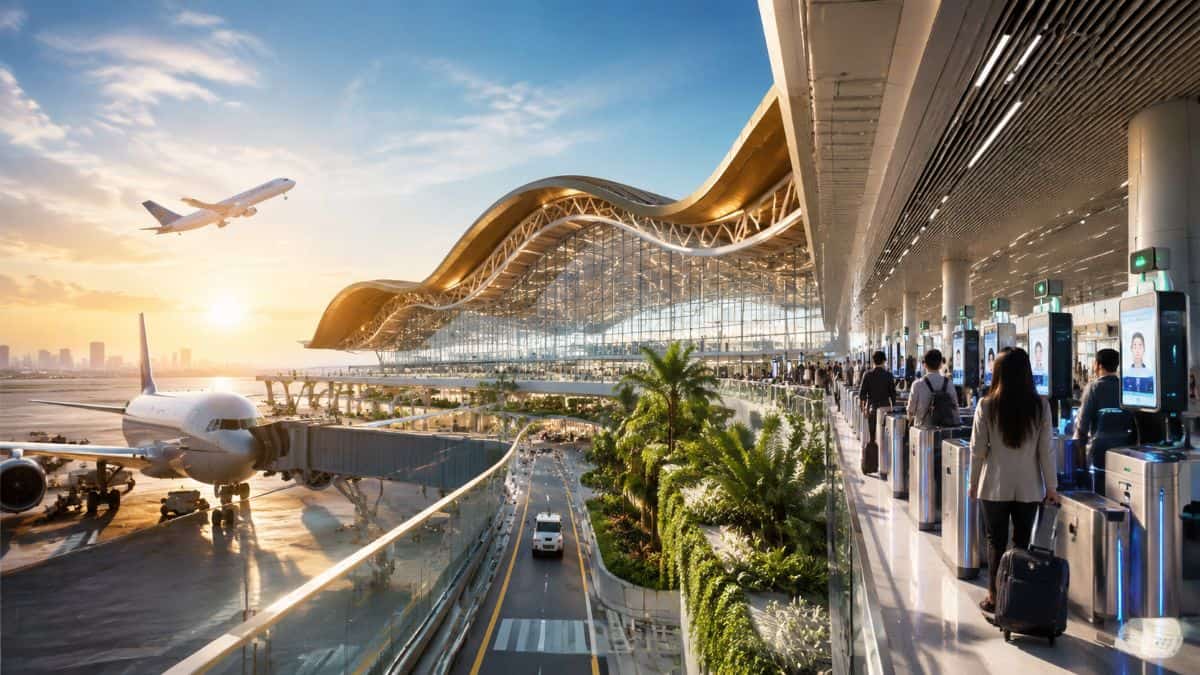
Image generated with Ai
Thailand is taking another significant step toward strengthening its position as one of Asia’s leading aviation and tourism destinations through a strategic collaboration focused on airport modernization. Thai Aviation Industries (TAI), Edgewater Solutions, and Amadeus have signed a Memorandum of Understanding (MOU) that establishes a framework for developing a roadmap aimed at transforming passenger experiences and improving airport operations across Thailand’s international and regional airports.
The agreement arrives at a crucial time as Thailand continues investing heavily in aviation infrastructure to accommodate sustained tourism growth and increasing international air connectivity. With the country’s airports collectively serving approximately 140 million passengers every year, authorities recognize the growing need for smarter technologies, seamless passenger processing, integrated airport systems, and data-driven operational management. The collaboration is expected to explore advanced biometric technologies, digital identity solutions, automated passenger processing, intelligent airport management systems, and integrated operational platforms that will improve efficiency while enhancing security, resilience, and traveler convenience throughout the airport journey.
Advertisement
Advertisement
Thailand Accelerates Airport Digital Transformation
Thailand’s aviation sector continues to experience robust passenger demand driven by international tourism, regional connectivity, business travel, and expanding airline networks. As passenger numbers continue rising, airport operators face increasing pressure to deliver faster processing, reduced congestion, and more efficient operations without compromising security or service quality.
The newly signed Memorandum of Understanding demonstrates a long-term commitment to building smarter airports capable of meeting future travel demands through digital innovation and operational modernization.
Advertisement
Advertisement
| Collaboration Overview | Details |
|---|---|
| Participating organizations | Thai Aviation Industries (TAI), Edgewater Solutions, Amadeus |
| Objective | Develop a roadmap for airport modernization |
| Coverage | International and regional airports across Thailand |
| Focus | Passenger journey enhancement and airport operational efficiency |
| Annual passengers served | Approximately 140 million |
Rather than introducing isolated technological upgrades, the collaboration seeks to create an integrated airport ecosystem where passenger services, airport operations, airline coordination, and digital identity solutions work together through connected platforms.
Advertisement
Advertisement
Smart Passenger Processing to Reduce Airport Congestion
One of the primary priorities under the proposed roadmap is creating a faster and more convenient airport experience from arrival to boarding.
The partners intend to evaluate technologies that streamline multiple airport touchpoints while reducing waiting times and improving passenger satisfaction. Planned areas of cooperation include self-service check-in, automated baggage handling, off-airport check-in capabilities, and real-time baggage reconciliation systems.
These technologies can significantly reduce queues during peak travel periods while giving travelers greater flexibility before arriving at the airport.
| Passenger Experience Technologies | Expected Benefits |
|---|---|
| Self-service check-in | Reduced waiting times |
| Off-airport check-in | Greater passenger convenience |
| Automated bag drop | Faster baggage processing |
| Real-time baggage reconciliation | Improved baggage tracking and operational accuracy |
Such digital solutions have become increasingly important for airports worldwide as passenger volumes continue to recover and expand beyond pre-pandemic levels.
Biometrics and Digital Identity Could Transform Border Processing
A major component of the collaboration involves evaluating seamless identity management technologies that simplify passenger verification throughout the airport journey.
Advertisement
Advertisement
The roadmap includes exploring biometric authentication, e-Gates, identity verification systems, and free-flow passenger processing that reduces repeated document checks.
Instead of requiring travelers to repeatedly present passports and boarding passes at multiple checkpoints, biometric identity systems can securely authenticate passengers using facial recognition or other approved digital identification methods while maintaining regulatory compliance.
| Identity Solutions | Operational Purpose |
|---|---|
| Biometric verification | Faster identity authentication |
| e-Gates | Automated immigration processing |
| Digital identity systems | Secure passenger verification |
| Free-flow processing | Reduced manual document inspections |
These technologies have already demonstrated their effectiveness at several major international airports by improving both passenger convenience and operational efficiency.
Smarter Airport Operations Through Integrated Digital Platforms
Beyond passenger-facing technology, the partnership also aims to modernize the operational backbone supporting airport management.
The proposed roadmap includes evaluating a centralized Airport Operational Database (AODB) that would connect multiple operational systems into a unified platform. Additional areas include airport resource management, flight information display systems, apron management, and ground movement coordination.
Advertisement
Advertisement
Integrating these systems allows airport stakeholders to access real-time operational information, enabling faster decisions during routine operations as well as unexpected disruptions.
| Operational Systems | Function |
|---|---|
| Airport Operational Database (AODB) | Centralized operational coordination |
| Resource management | Optimized allocation of airport assets |
| Flight information displays | Real-time passenger information |
| Apron and ground movement management | Improved aircraft turnaround efficiency |
Integrated airport management systems are increasingly viewed as essential components of future-ready aviation infrastructure.
Real-Time Data Integration Supports Better Decision-Making
Another important objective of the agreement focuses on combining passenger analytics with operational data.
Connected digital platforms allow airports to monitor passenger flows, identify congestion points, anticipate operational bottlenecks, and allocate resources more effectively throughout the day.
Real-time analytics can also support airlines, airport operators, and government agencies by providing accurate situational awareness during changing operational conditions.
Advertisement
Advertisement
Improved data sharing across airport stakeholders contributes to more resilient operations while enhancing the overall passenger experience.
Supporting Thailand’s Growing Tourism Economy
Tourism remains one of Thailand’s most important economic sectors, making airport efficiency a national priority.
Modern airports not only improve traveler satisfaction but also strengthen Thailand’s competitiveness as an international tourism destination and regional aviation hub.
As airlines continue expanding routes into Thailand and visitor numbers increase, investments in digital airport technologies become essential to maintaining service quality while accommodating future growth.
The modernization roadmap also supports broader national ambitions to improve transportation infrastructure, encourage international investment, and enhance connectivity throughout Southeast Asia.
Advertisement
Advertisement
Industry Leaders Highlight Long-Term Vision
Thai Aviation Industries Managing Director Piboon Vorravanpreecha emphasized that Thailand’s airports serve as vital gateways for tourism and international trade. He noted that modernizing airport infrastructure remains central to delivering world-class passenger experiences while strengthening the country’s role as a leading aviation hub in Southeast Asia.
According to the agreement, collaboration with Amadeus and Edgewater Solutions provides access to advanced airport technologies, specialist expertise, and industry knowledge that can enhance passenger journeys while improving operational resilience and efficiency.
Amadeus Asia-Pacific Managing Director Javier Laforgue highlighted that airports worldwide face growing pressure to handle increasing passenger volumes while delivering smoother and more reliable travel experiences. He explained that combining advanced airport technologies, cloud platforms, biometric capabilities, and operational expertise could help shape a more connected, efficient, and resilient generation of airport operations.
Next Steps for the Airport Modernization Roadmap
The Memorandum of Understanding represents the beginning of a collaborative planning phase rather than an immediate technology deployment.
The participating organizations will now work together to define technical specifications, implementation phases, deployment priorities, and solution requirements across the identified modernization areas.
Advertisement
Advertisement
Future developments will determine how these technologies may be introduced across Thailand’s airport network while ensuring compatibility with existing infrastructure and regulatory requirements.
If successfully implemented, the collaboration has the potential to strengthen Thailand’s aviation ecosystem by improving passenger convenience, operational coordination, airport resilience, and digital connectivity across one of Southeast Asia’s busiest air transport networks.
Frequently Asked Questions
1. What is the purpose of the Memorandum of Understanding between TAI, Edgewater Solutions, and Amadeus?
The agreement establishes a roadmap to modernize airport operations and improve passenger experiences across Thailand’s international and regional airports.
2. Which organizations signed the agreement?
Thai Aviation Industries (TAI), Edgewater Solutions, and Amadeus are the three organizations participating in the collaboration.
3. How many passengers do Thailand’s airports currently serve annually?
Thailand’s airports collectively handle approximately 140 million passengers each year.
Advertisement
Advertisement
4. What technologies are being explored under the collaboration?
The roadmap includes biometrics, e-Gates, self-service check-in, automated baggage handling, digital identity verification, Airport Operational Database systems, and real-time data integration.
5. Will biometric technology replace passport checks?
The collaboration will explore biometric identity verification to streamline passenger processing while remaining compliant with applicable security and border regulations.
6. What is an Airport Operational Database (AODB)?
An AODB is a centralized digital platform that integrates operational data to improve airport coordination, resource management, and decision-making.
7. How could passengers benefit from the modernization plans?
Travelers may experience shorter queues, faster check-in, automated baggage processing, smoother security procedures, and improved airport services.
8. Why is airport modernization important for Thailand?
Modern airports support tourism growth, improve operational efficiency, strengthen international connectivity, and enhance Thailand’s competitiveness as a regional aviation hub.
Advertisement
Advertisement
9. Does the agreement mean the technologies will be implemented immediately?
No. The MOU begins a planning process during which the partners will define technical specifications, deployment phases, and implementation priorities.
10. How does this initiative support Thailand’s tourism industry?
More efficient airports improve the overall travel experience, support increasing visitor numbers, strengthen airline connectivity, and reinforce Thailand’s reputation as a leading global tourism destination.
Advertisement
