
Greece Along With Namibia and Other Leading Destinations in Top Golden Hour Travel Spots for 2026

Published
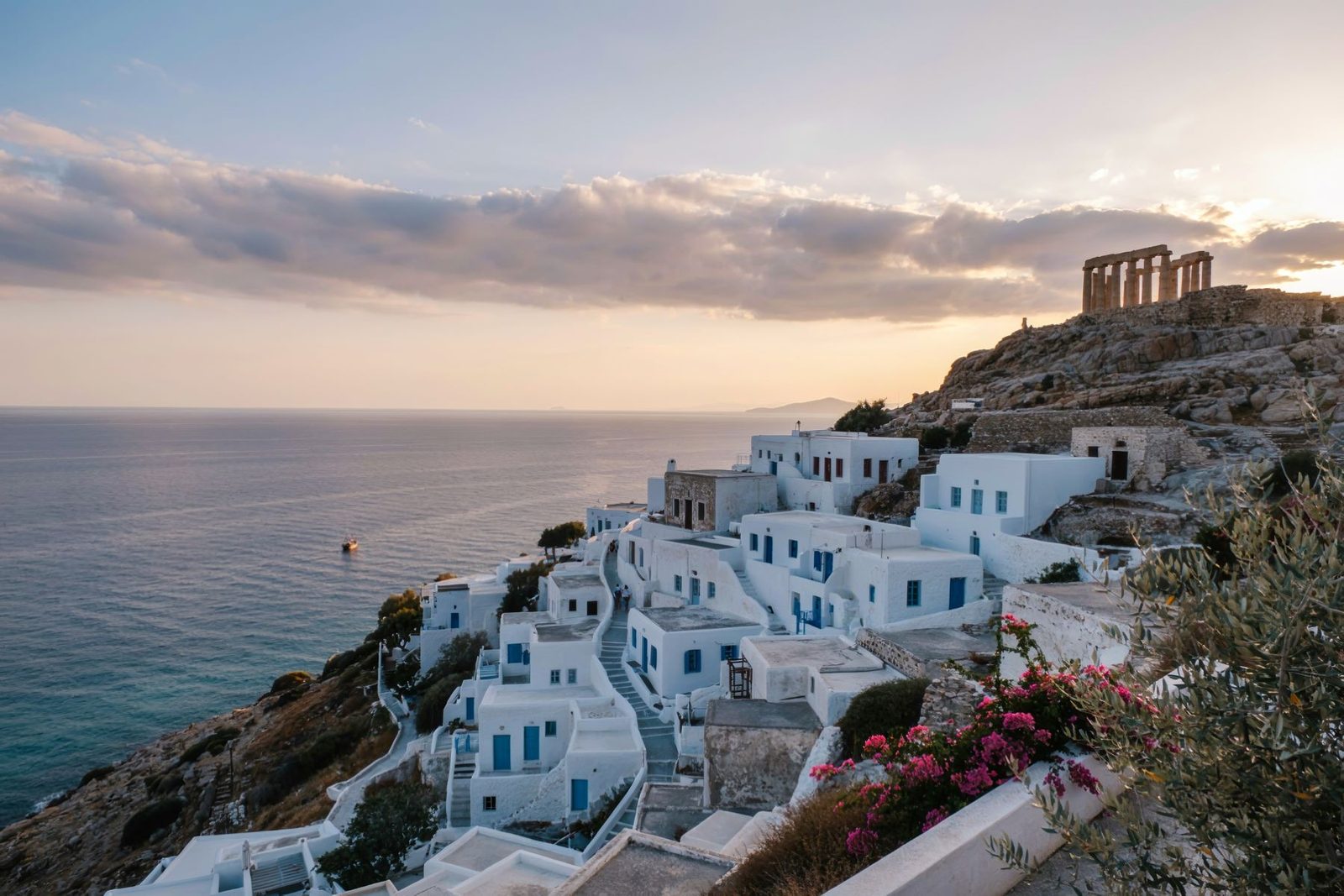
Greece Along With Namibia and other leading destinations in a global spotlight on the world’s best golden hour travel spots, strengthening the connection between photography, landscapes and experience-led tourism. Jordan, Australia and destinations across Africa, Europe, the Middle East and the Americas also feature prominently. The appeal extends beyond photography. Travellers increasingly organise itineraries around sunsets, desert scenery, archaeological landmarks, wildlife and dark-sky experiences. For global tourism, the ranking shows how distinctive evening light can add another dimension to established attractions, encourage longer visitor activity and connect photography-focused travellers with protected landscapes, heritage locations and culturally significant destinations.
Which Countries and Destinations Lead the Global Golden Hour Travel Ranking?
The 2026 Golden Hour Index assessed 165 destinations using six environmental indicators: cloud cover, light pollution, rainfall, artificial brightness, wind speed and average sunset duration. Cloud cover received the greatest weighting, followed by light pollution, rainfall, artificial brightness, wind speed and sunset duration. The resulting ranking strongly favours several dry and low-light landscapes, although wetlands, archaeological attractions and coastal destinations also appear. Greece has the largest number of destinations within the top 20, while Namibia places three destinations inside the top six. Jordan leads the overall ranking through Wadi Rum, one of the Middle East’s most recognised desert tourism destinations.
Advertisement
Advertisement
- Jordan holds the overall number-one position with Wadi Rum.
- Namibia secures three places in the global top six.
- Greece has four destinations in the top 20.
- Australia appears twice in the ranking.
- Desert, wildlife, coastal and heritage landscapes all feature prominently.
World’s Top 20 Golden Hour Destinations
| Rank | Country | Destination | Golden Hour Score |
|---|---|---|---|
| 1 | Jordan | Wadi Rum | 95.92 |
| 2 | Namibia | Sossusvlei | 94.93 |
| 3 | Namibia | Damaraland | 91.83 |
| 4 | Chile | Atacama Desert | 91.23 |
| 5 | Oman | Wahiba Sands | 89.89 |
| 6 | Namibia | Etosha National Park | 88.45 |
| 7 | Botswana | Okavango Delta | 88.37 |
| 8 | United States | San Joaquin Valley, California | 88.22 |
| 9 | Australia | Uluṟu-Kata Tjuṯa National Park | 88.22 |
| 10 | Greece | Lindos Acropolis, Rhodes | 87.97 |
| 11 | Zimbabwe | Victoria Falls | 87.06 |
| 12 | United Arab Emirates | Ras Al Khaimah | 86.96 |
| 13 | Botswana | Chobe River | 86.88 |
| 14 | Australia | Flinders Ranges, South Australia | 86.70 |
| 15 | United States | Sedona, Arizona | 86.27 |
| 16 | Cyprus | Paphos City Centre | 86.23 |
| 17 | Greece | Rhodes Town | 85.58 |
| 18 | Zambia | Livingstone | 85.48 |
| 19 | Greece | Cape Sounion, Athens | 85.47 |
| 20 | Greece | Navagio Shipwreck Beach, Zakynthos | 84.79 |
Why Has Greece Become Europe’s Golden Hour Tourism Leader?
Greece places four destinations in the global top 20: Lindos Acropolis, Rhodes Town, Cape Sounion and Navagio Shipwreck Beach. This concentration gives travellers several ways to combine sunset photography with established tourism experiences. Lindos offers elevated coastal views and archaeology. Rhodes Town combines golden light with historic architecture. Cape Sounion overlooks the Aegean Sea beside the Temple of Poseidon. Navagio offers one of Greece’s most recognisable limestone and coastal landscapes. Together, these destinations demonstrate how Greece can combine heritage, island tourism and scenic evening experiences within the same broader tourism offering.
- Lindos Acropolis ranks tenth globally.
- Rhodes Town provides another golden-hour location on the same island.
- Cape Sounion combines ancient heritage with open Aegean views.
- Navagio remains one of Zakynthos’ most recognised scenic locations.
- Greece has more destinations in the top 20 than any other country.
Greece therefore benefits from having several different destination types within the ranking. Visitors can experience golden hour at archaeological sites, traditional towns, coastal viewpoints and island landscapes rather than travelling to one specific attraction.
Advertisement
Advertisement
Why Does Namibia Have Three of the World’s Six Highest-Ranked Golden Hour Destinations?
Namibia performs exceptionally strongly, with Sossusvlei ranking second, Damaraland third and Etosha National Park sixth. Each offers a distinct tourism environment. Sossusvlei is known for towering dunes, stark clay pans and the dramatic desert scenery of the Namib. Damaraland combines mountains, open landscapes, ancient rock art and desert-adapted wildlife. Etosha National Park introduces a different experience, where evening photography can be combined with wildlife observation around one of Africa’s major conservation landscapes. Namibia’s combination of dry air, broad horizons and low artificial light gives it significant appeal for photographers and landscape-focused travellers.
- Sossusvlei ranks second globally.
- Damaraland holds third place.
- Etosha National Park ranks sixth.
- Namibia combines desert photography with wildlife tourism.
- Low-density landscapes support strong sunset and night-sky experiences.
For Namibia tourism, golden hour complements established demand for self-drive holidays, safari itineraries, desert lodges and nature photography rather than operating as a separate niche.
Advertisement
Advertisement
Why Does Jordan’s Wadi Rum Rank as the World’s Best Golden Hour Destination?
Wadi Rum in Jordan leads the ranking with a Golden Hour Index score of 95.92. Its desert environment provides many of the conditions associated with strong golden-hour visibility, including low rainfall, broad horizons and limited artificial illumination. Wadi Rum is already one of Jordan’s most important tourism landscapes, known for sandstone formations, deep valleys, desert camps and Bedouin cultural experiences. Sunset viewing can therefore form part of a wider itinerary involving guided desert excursions, overnight stays and stargazing. This strengthens Wadi Rum’s position not just as a photography destination but as a complete experiential travel product.
- Wadi Rum ranks first globally.
- The landscape is recognised for its dramatic desert formations.
- Sunset viewing can be combined with camping.
- Stargazing strengthens the destination’s after-dark tourism appeal.
- Cultural and outdoor tourism complement photography experiences.
Jordan therefore gains more than visual recognition from the ranking. Golden hour can encourage visitors to remain in the desert into the evening and extend stays into overnight experiences.
Advertisement
Advertisement
How Does Australia Combine Golden Hour With Indigenous Culture and Ancient Landscapes?
Australia places two destinations in the top 20: Uluṟu-Kata Tjuṯa National Park and the Flinders Ranges. Uluṟu is particularly associated with changing colours around sunrise and sunset, when shifting light transforms the appearance of the sandstone monolith. The national park is also a culturally significant Aboriginal landscape and requires visitors to follow local cultural protocols and photography restrictions. The Flinders Ranges provide another very different setting, where rugged mountains, geological formations and broad inland horizons create strong evening viewing conditions. Together, the two destinations add both cultural significance and geological depth to Australia’s golden-hour appeal.
- Uluṟu-Kata Tjuṯa ranks ninth.
- Flinders Ranges ranks fourteenth.
- Uluṟu is culturally significant to Aṉangu Traditional Owners.
- Designated sunrise and sunset viewing areas support visitor management.
- Flinders Ranges adds a major inland landscape experience.
Australia’s ranking demonstrates that golden-hour tourism can work most effectively when scenic appeal is balanced with cultural respect, conservation and responsible visitor behaviour.
What Makes Chile and Oman Important to the Golden Hour Travel Map?
Chile’s Atacama Desert ranks fourth, while Oman’s Wahiba Sands places fifth, reinforcing the strong performance of dry landscapes. The Atacama is one of the world’s most famous desert environments and attracts visitors for salt flats, high-altitude lagoons, astronomy, volcanic scenery and wide-open skies. Oman’s Wahiba Sands offers an equally distinctive experience through sweeping dunes, desert camps and dramatic sunset views. Both destinations show how golden-hour tourism can complement wider desert itineraries that include adventure, cultural experiences, night-sky viewing and overnight stays in remote environments.
- Atacama Desert ranks fourth globally.
- Wahiba Sands ranks fifth.
- Both destinations benefit from extensive desert horizons.
- Astronomy adds additional appeal in northern Chile.
- Desert camps can extend sunset visits into overnight stays.
Their strong ranking reflects a broader trend within golden-hour travel: arid environments often combine clearer skies with dramatic landscapes and relatively low artificial light.
Advertisement
Advertisement
Why Do Botswana, Zimbabwe and Zambia Strengthen Africa’s Sunset Tourism Appeal?
Southern Africa contributes several destinations beyond Namibia. Botswana places the Okavango Delta seventh and the Chobe River thirteenth. Zimbabwe’s Victoria Falls ranks eleventh, while Livingstone in Zambia places eighteenth. These locations widen the concept of golden-hour tourism by introducing wetlands, rivers, waterfalls and wildlife habitats. In Botswana, evening boat trips and wildlife viewing can naturally align with sunset conditions. Victoria Falls and Livingstone add one of Africa’s most recognised natural attractions, where the Zambezi River, surrounding landscapes and changing evening light create a different visual experience from the deserts that dominate the higher ranks.
- Okavango Delta ranks seventh.
- Chobe River ranks thirteenth.
- Victoria Falls ranks eleventh.
- Livingstone ranks eighteenth.
- Wildlife, river cruises and sunset tourism can work together.
These destinations demonstrate that golden-hour travel is not limited to dry environments. Water, wildlife and open river landscapes can create equally compelling evening experiences.
How Do the United States, UAE and Cyprus Add Variety to Golden Hour Travel?
The United States appears through California’s San Joaquin Valley and Arizona’s Sedona. Sedona is particularly known for red-rock formations that can become visually striking in low evening light. The United Arab Emirates enters the ranking through Ras Al Khaimah, where mountains, desert and coastline create several different sunset environments. Cyprus appears through Paphos City Centre, combining a coastal location with significant archaeological heritage. Together, these destinations expand the ranking beyond classic desert and safari settings and demonstrate that golden-hour tourism can work across agricultural valleys, mountain landscapes, historic cities and coastal tourism centres.
- San Joaquin Valley ranks eighth.
- Sedona ranks fifteenth.
- Ras Al Khaimah ranks twelfth.
- Paphos City Centre ranks sixteenth.
- Each destination offers a different tourism environment.
This diversity makes golden-hour travel relevant to a broader range of travellers, including hikers, heritage visitors, photographers, road trippers and coastal holidaymakers.
How Could Golden Hour Destinations Influence Travel and Tourism Demand?
Golden-hour tourism can influence where visitors spend the final hours of a sightseeing day. Greece, Namibia, Jordan, Australia, Chile, Oman, Botswana, the United States, Zimbabwe, the UAE, Cyprus and Zambia all contain destinations where sunset can complement an established tourism product. Wadi Rum can connect sunset with camping and stargazing. Namibia can incorporate it into safari and road-trip itineraries. Greece can combine evening photography with archaeological attractions and island tourism. Australia links sunset viewing with protected landscapes. Botswana and Zambia can combine evening conditions with river and wildlife activities. These combinations can increase itinerary depth without requiring entirely new tourism infrastructure.
- Evening viewing can extend visitor activity beyond daytime sightseeing.
- Photography can add value to established attractions.
- Guided sunset experiences can support local tourism businesses.
- Overnight stays become more attractive where stargazing follows sunset.
- Responsible visitor management becomes more important at sensitive sites.
Golden-hour travel is particularly relevant to experience-led tourism, where travellers increasingly seek memorable moments rather than simply visiting landmarks.
Advertisement
Advertisement
What Should Travellers Know Before Planning a Golden Hour Trip?
Golden-hour rankings cannot guarantee ideal conditions on every visit. Weather, cloud, dust, rainfall, seasonal changes and local geography can alter visibility from one evening to the next. Travellers should therefore use rankings as planning guidance rather than as a guarantee of a perfect sunset. Access rules also matter. Some sites operate fixed entry hours, protected landscapes may restrict drone use, and culturally sensitive locations can limit photography. Travellers should check current local conditions, sunset times, park regulations and access requirements before travelling, particularly when a visit depends heavily on a specific photography window.
- Check official opening and closing times.
- Confirm the sunset time for the travel date.
- Review weather conditions shortly before visiting.
- Follow photography and drone regulations.
- Respect wildlife, protected areas and cultural restrictions.
Golden-hour travel works best when photography remains compatible with visitor safety, environmental protection and local cultural expectations.
Conclusion
Greece Along With Namibia and other leading destinations as the world’s best golden hour travel spots are revealed, but the wider significance lies in how these places connect natural light with established tourism experiences. Jordan combines desert scenery with stargazing. Namibia links sunsets with wildlife and vast landscapes. Greece blends golden light with archaeology and island tourism, while Australia adds culturally significant protected environments. Together, these leading destinations demonstrate why golden hour has become more than a photography opportunity. For travellers, it offers another way to experience famous landmarks, remote landscapes and major tourism destinations at one of the most visually distinctive times of day.
Advertisement
