
UAE Joins Saudi Arabia, France, United States, Canada, Qatar, Germany, United Kingdom, India in Lebanon Golden Residency Wave as Emirates, Qatar Airways, Lufthansa, Air France, Etihad Watch Investor Travel Surge and Beirut Tourism Reset

Published
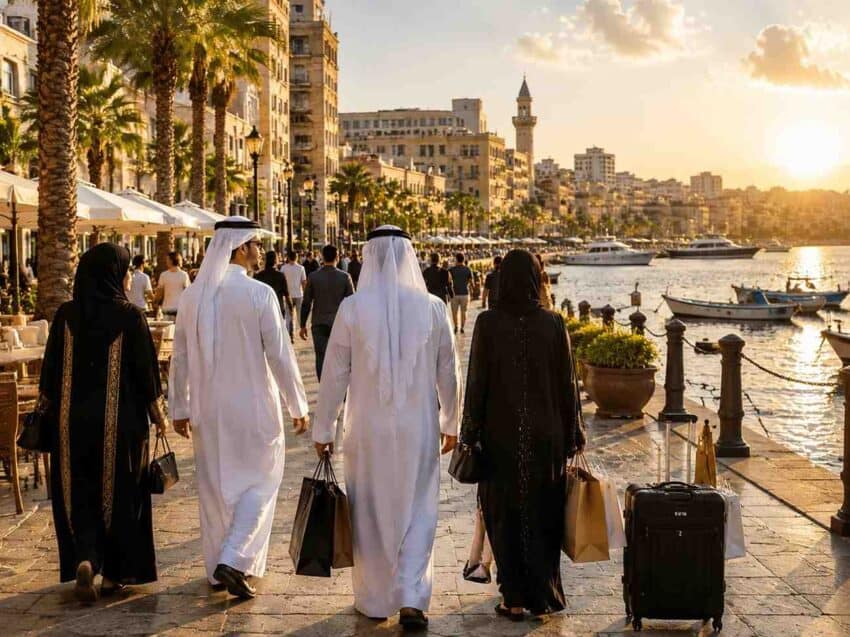
The Lebanon Golden Residency Program Impact on Tourism and Airline Travel Demand is gaining regional attention after Lebanon proposed a $500,000 investment-based residency scheme aimed at attracting foreign capital and diaspora investment. The program positions Lebanon within a growing global competition for investor visas, with interest expected from UAE, Saudi Arabia, France, United States, Canada, Qatar, Germany, United Kingdom, and India. The proposal is still under legislative review, but it is already shaping expectations across aviation, tourism, and hospitality markets.
The initiative could influence premium travel flows into Beirut, especially from high-net-worth individuals and business travelers linked to Gulf, European, and North American markets. Airlines such as Emirates, Qatar Airways, Lufthansa, Air France, Etihad Airways, and British Airways may see shifts in demand patterns if the policy is implemented, particularly in long-stay and investor-class travel segments.
Advertisement
Advertisement
Lebanon Golden Residency Program Impact on Tourism and Airline Travel Demand: What Is Changing
Lebanon’s proposed program requires a minimum $500,000 foreign investment to qualify for residency. The policy is designed to attract external capital inflows during a period of economic restructuring.
Key structural elements include:
Advertisement
Advertisement
- Minimum investment threshold: $500,000
- Eligibility: foreign investors and Lebanese expatriates
- Capital must originate outside Lebanon
- Compliance screening for financial transparency
- Family inclusion with additional annual fees
This positions Lebanon alongside global residency programs in Portugal, Greece, UAE, and Caribbean nations, but at a relatively high entry cost aimed at attracting ultra-high-net-worth individuals.
Lebanon Golden Residency Program Impact on Tourism and Airline Travel Demand: Country-Wise Investor Interest
Investor interest is expected to come primarily from capital-exporting and diaspora-heavy economies.
Advertisement
Advertisement
Expected Country Participation Pattern
| Country | Likely Travel/Investment Role | Expected Impact Level |
|---|---|---|
| UAE | High-net-worth investors, diaspora travel | High |
| Saudi Arabia | Business travel + regional capital flow | High |
| France | Professional investors + diaspora tourism | Medium |
| United States | Lebanese diaspora + private capital | High |
| Canada | Diaspora-driven long stays | Medium |
| Qatar | Regional investment + aviation-linked travel | Medium |
| Germany | Business investment + EU capital inflow | Medium |
| United Kingdom | Financial investors + tourism overlap | Medium |
| India | Limited but growing investor interest | Low–Medium |
This distribution reflects Lebanon’s historical reliance on diaspora-linked travel rather than mass tourism markets.
Lebanon Golden Residency Program Impact on Tourism and Airline Travel Demand: Airline Industry Response
Airlines operating routes into Beirut are likely to experience changes in passenger composition rather than pure volume growth.
Airlines Likely Affected
- Emirates
- Qatar Airways
- Etihad Airways
- Lufthansa
- Air France
- Turkish Airlines
- British Airways
Expected Airline Market Effects
- Increase in premium cabin bookings (business class, first class)
- Growth in long-stay ticket patterns (30–180 days)
- More frequent multi-entry travel for investors
- Higher demand for Gulf–Beirut connecting routes
Aviation Industry Trend Context
Global residency-by-investment programs typically generate:
- 10–25% higher premium passenger share on affected routes
- Increased repeat travel among investor households
- Seasonal spikes aligned with real estate and business cycles
Lebanon Golden Residency Program Impact on Tourism and Airline Travel Demand: Tourism Sector Shift
Lebanon’s tourism model is already heavily influenced by diaspora travel and regional short stays. The new policy may reinforce a high-value tourism shift rather than expand mass tourism.
Expected Tourism Changes
- Growth in luxury hotel demand in Beirut
- Expansion of serviced apartments and long-stay rentals
- Increased corporate travel for investment monitoring
- Higher spending per visitor rather than total arrivals
Tourism Demand Segmentation
- High-income investors: property-linked travel + residency visits
- Diaspora travelers: extended family stays + seasonal visits
- Business travelers: financial and project-based trips
- Leisure tourists: limited impact due to security perception constraints
Lebanon Golden Residency Program Impact on Tourism and Airline Travel Demand: Economic Drivers
The program is part of broader fiscal stabilization efforts in Lebanon, where foreign currency inflows remain a critical economic need.
Key Economic Objectives
- Attract foreign direct investment
- Increase dollar inflows into the banking system
- Support job creation in services and real estate
- Stabilize tourism-linked foreign exchange earnings
Estimated Economic Scale (Comparative Insight)
Based on global residency programs:
Advertisement
Advertisement
- Small programs: $100M–$500M annual inflow
- Medium programs: $500M–$2B inflow
- Lebanon potential (early stage estimate): low hundreds of millions annually
This remains highly conditional on political stability and implementation clarity.
Lebanon Golden Residency Program Impact on Tourism and Airline Travel Demand: Airline & Country Comparison Table
| Country / Airline | Type of Impact | Travel Shift |
|---|---|---|
| Emirates | Premium Gulf traffic increase | Business + investor travel |
| Qatar Airways | Hub-based connectivity boost | Transit + long-stay travel |
| Lufthansa | European investor mobility | High-value business trips |
| Air France | Diaspora + EU travel flow | Seasonal long stays |
| Etihad Airways | UAE investor movement | Residency-linked travel |
| UAE Investors | High participation likelihood | Capital + frequent travel |
| US & Canada Travelers | Diaspora-driven demand | Extended stays |
| France & UK Travelers | Moderate investment flow | Business + leisure mix |
What Travelers Should Do

Travelers considering Lebanon under the new policy environment should prepare for shifting travel and pricing dynamics.
- Monitor visa policy approval updates
- Expect premium accommodation demand increases
- Check airline availability early for Beirut routes
- Plan flexible bookings due to policy uncertainty
- Compare long-stay rental vs hotel pricing in advance
- Track currency fluctuations affecting travel costs
Business and investor travelers may benefit from early positioning if the residency scheme is approved, especially in real estate and service-linked sectors.
FAQs: Lebanon Golden Residency Program Impact on Tourism and Airline Travel Demand
1. What is the Lebanon Golden Residency Program?
It is a proposed $500,000 investment-based residency scheme designed to attract foreign investors and diaspora capital into Lebanon’s economy.
2. Which countries are most likely to benefit from this program?
UAE, Saudi Arabia, United States, France, and Canada are expected to be the primary sources of applicants due to strong diaspora and investment links.
3. How will airlines be affected by this program?
Airlines such as Emirates, Qatar Airways, Lufthansa, and Air France may see increased premium-class demand and more long-stay travel patterns into Beirut.
Advertisement
Advertisement
Author’s Observation
The proposed program signals a strategic attempt to reposition Lebanon within the global competition for investor mobility. However, its real impact on tourism and aviation will depend less on policy design and more on stability, implementation speed, and investor confidence. In its current form, the initiative is more likely to reshape traveler profiles than significantly increase total tourist arrivals.
Call to Action: Travelers, investors, and industry stakeholders should closely track policy developments, as the final structure of this program could materially influence travel flows and regional aviation demand patterns in the Middle East.
Advertisement
