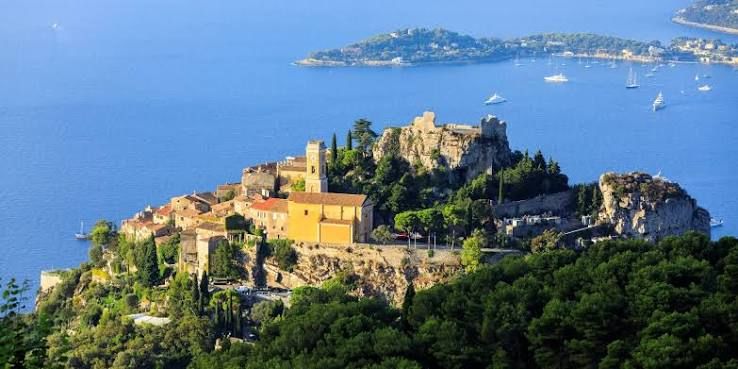
France joins other countries in capitalizing on their flower fields and perfume trail opportunities as the new way to promote tourism, which is sure to radically change the traditional way that the world has been exploring far-off places. Classic sightseeing is becoming a thing of the past as more and more people are seeking only the invisible trails that lead to hidden scents.
This growing trend is generating an entirely new economic opportunity for local communities through such age-old industries as perfume-making and botanicals conservation. Experts predict that this unusual form of ecotourism will soon become a major trend because the world’s travelers are seeking unique and personal experiences, including unique cultural encounters with exotic plants and distinctive plant products.
Advertisement
Olfactory tourism represents a rapidly growing sensory travel sector that replaces traditional visual sightseeing with immersive explorations of scent mapping, indigenous botany, and traditional perfume distillation across global heritage regions. Modern travellers increasingly seek out destination profiles defined by invisible aromatic signatures rather than standard visual landmarks, fundamentally altering how modern holiday itineraries are conceptualised. By following complex scent maps, tourists engage deeply with the historical trade routes, agricultural ecosystems, and ancient anthropological traditions that have shaped regional fragrance economies for thousands of years.
Centred in the hills of the French Riviera, this historic trail focuses on the meticulous harvest of delicate floral crops like the Centifolia rose and Grandiflorum jasmine. Recognized globally on UNESCO’s Intangible Cultural Heritage list, the unique microclimate and mineral-rich limestone soil of Grasse yield flowers with exceptional chemical complexity. Visitors walk terraced fields alongside master growers to observe how hand-harvesting preserves fragile petal structures prior to solvent extraction. These immersive journeys offer rare access to experimental gardens and traditional formulation workshops alongside the renowned International Perfume Museum.
Advertisement
Advertisement
“This groundbreaking shift toward scent-based exploration completely transforms how we understand cultural heritage and destination marketing. When travellers swap crowded monuments for immersive botanical trails and historic distillation workshops, they actively support fragile local ecosystems and centuries-old artisan traditions. By mapping the world through its aromatic signatures rather than visual landmarks, modern tourism discovers a much deeper, more sustainable emotional connection to the destinations it celebrates.”
— Anup Kumar Keshan, Founder and Editor-in-Chief, Travel And Tour World
Deep within southern Oman, the arid Dhofar region tracks the wild harvesting of Boswellia sacra trees along ancient trade routes that have thrived for five millennia. These remarkable trees flourish exclusively on rugged limestone slopes lashed by seasonal monsoon mists that significantly supercharge resin production. Local pastoralists carefully make controlled incisions into the bark using traditional tools to harvest milky sap that hardens into aromatic tears. Travelers navigate historic caravan paths through protected valleys while learning complex resin grading systems and experiencing authentic regional burning rituals.
Positioned along the fertile Ganges plains in Uttar Pradesh, Kannauj functions as a living museum for natural, alcohol-free botanical attar production. Eschewing modern chemical solvents entirely, local artisans utilize the ancient Deg-Bhapka hydro-distillation method to capture pure earth and floral notes. Massive copper stills are meticulously sealed with wet clay over wood fires to drive aromatic steam through bamboo piping into cool water receivers. This timeless craft famously produces Mitti attar, capturing the exact sensory essence of baked Gangetic clay after the first seasonal monsoon rains.
Traversing the dense rainforests and coastal plantations of Sava and Nosy Be decodes the complex agricultural processing behind high-grade Bourbon vanilla and exotic oils. Because native pollination vectors are absent locally, vanilla orchids must be meticulously hand-pollinated flower-by-flower using small wooden needles by skilled farmers. This intensive labor model is paired with intricate curing protocols involving prolonged sweating, precise sun-drying, and slow conditioning inside wooden trunks. Visitors engage directly with smallholder farming communities to understand how sustainable agroforestry protects hyper-endemic ecosystems from over-harvesting.
Ultimately, this sensory revolution will prove that the future of ethical exploration lies in the preservation of age-old botanical traditions as opposed to a mere photographic record of iconic vistas. By supporting your local harvesters, you are not only protecting the fragile habitats but also ensuring that the ancient craft survives for years to come.
Plan your journey through official resources like France.fr and the Oman Ministry of Heritage and Tourism.
The exponential rise in popularity of scent-based travel is none other than the result of modern tourists seeking to forge a deeper connection to the essence of the experience through an immersive, elemental engagement with the destination’s botanical heritage. This particular phenomenon can be seen as a consequence of the worldwide wave of rethought tourism, which has opted for authenticity in experience for the privileged few over the previously widespread tokenism of the masses.
Advertisement
Advertisement
Advertisement












Sunday, September 6, 2026

Saturday, September 5, 2026

Saturday, September 5, 2026
Saturday, September 5, 2026

Saturday, September 5, 2026
Saturday, September 5, 2026

Saturday, September 5, 2026