

Italy Pairs Up With Switzerland And More to Welcome Autumn Tourism Across Alpine Lakes

Published
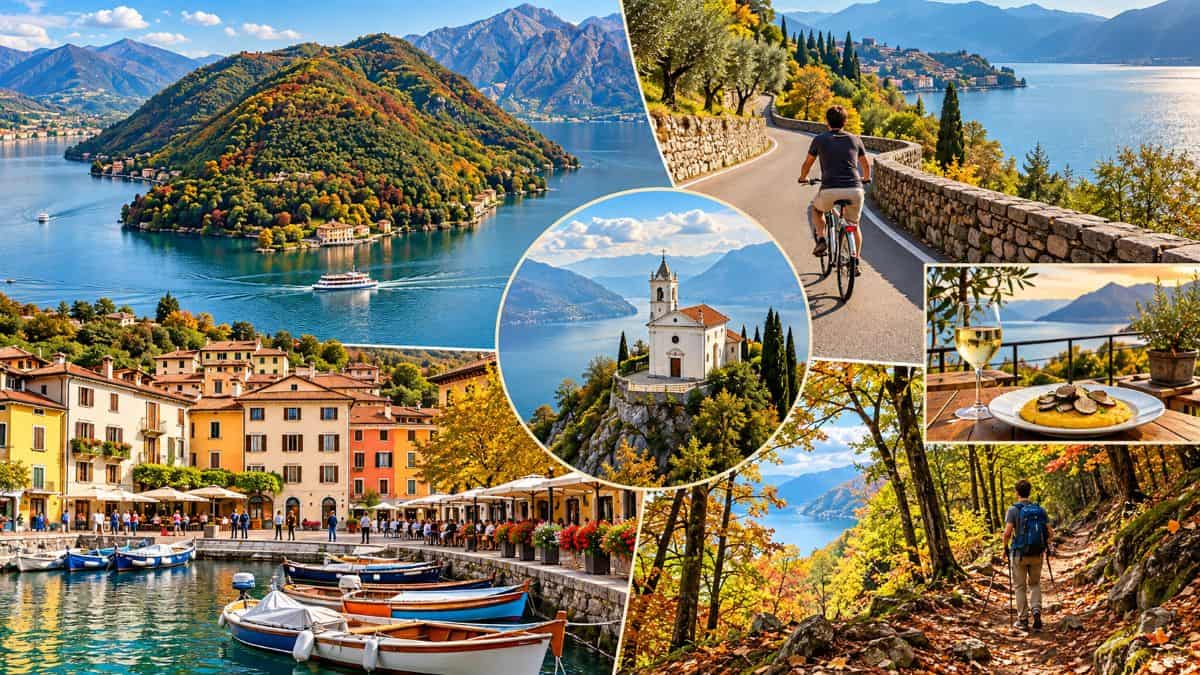
Lake Iseo remains an understated jewel tucked discreetly between the busier shorelines of Lake Como and Lake Garda. Sheltered by Lombardy’s dramatic alpine foothills, this serene expanse provides a rare, undisturbed sanctuary where authentic regional traditions, quiet shoreline hamlets, and sweeping mountain panoramas flourish throughout the golden autumn season.
At its core lies Monte Isola, the largest lake island in southern Europe, celebrated for its strictly preserved pedestrian character. Travellers seeking quiet respite discover tranquil waterfront paths, golden chestnut forests, and artisan heritage, presenting an evocative contrast to northern Italy’s congested destinations while retaining timeless rural charm.
Advertisement
Advertisement
The Untouched Allure of Lombardy’s Hidden Lake
Cradled within the Brescia province, Lake Iseo provides an intimate retreat where seasonal shifts dramatically repaint the surrounding landscape. As autumn progresses, deep ochre and russet tones transform the craggy bluffs, framing crystalline waters that reflect mild Mediterranean sunshine. Unlike neighbouring tourism centres that experience intense seasonal crowding, this body of water maintains a measured pace of life, inviting contemplative exploration. Small fishing boats still populate the harbours, while local olive groves slope gently towards the water, giving visitors immediate contact with an agricultural rhythm that has remained largely intact through centuries of development across northern Italy.
Preserving Island Heritage and Motor-Free Serenity
Monte Isola represents a pioneering example of sustainable community living, shaped by strict vehicular regulations that keep the island practically car-free. Outside of a handful of public utility vehicles, passenger transit relies entirely on bicycles, modest community buses, and foot travel. Visitors arrive via short ferry crossings from Sulzano or Sale Marasino, stepping ashore onto quiet promenades free from standard metropolitan traffic noise. This policy fosters an unhurried atmosphere, enabling novices and seasoned cyclists alike to trace the nine-kilometre perimeter road safely, taking in broad views of neoclassical churches, Venetian archways, and distant terraced slopes.
Advertisement
Advertisement
Artisan Trades and Ancient Netmaking Traditions
Beyond its natural beauty, Monte Isola sustains an ancient industrial legacy that once anchored global commercial fishing networks. In the elevated capital hamlet of Siviano, stone towers and pastel villas stand alongside artisanal facilities where families have handwoven nets since the eighteenth century. Although modern production supplies international sports arenas, local workshops still preserve traditional manual weaving techniques for everyday community use. The village paths, winding between Romanesque stonework and shaded lemon terraces, provide compelling cultural depth for travellers intrigued by working regional heritage rather than purely decorative resort architecture commonly encountered elsewhere in southern Europe.
Exploring Island Terrain and Logistics
| Location or Route | Primary Activity | Notable Feature | Logistics and Access |
| Perimeter Coast Road | Leisure cycling | Olive groves and hamlets | Bike hire at Peschiera Maraglio harbour |
| Santuario Madonna della Ceriola | Forest hill hiking | Panoramic 360-degree vistas | Footpath ascending 450 vertical metres |
| Siviano Capital Hamlet | Heritage walking | Historic netmaking and towers | Accessible via local island connector bus |
| Sensole Shoreline | Waterfront dining | Shaded lakeside promenade | Southern shoreline, walking distance from ferry |
| Carzano Fishing Village | Cultural sightseeing | Baroque architecture and gardens | Northern port with links to mainland docks |
Culinary Legacies of Freshwater Fishing
Dining on the island reflects an austere culinary history directly tied to local waters and historic Venetian trade levies. The signature speciality remains the preserved sardina di lago, a landlocked shad caught using artisanal gillnets, salted, and air-dried on wooden racks before being preserved in local cold-pressed olive oil. Served over warm grilled polenta, this delicacy provides rich, savoury complexity that balances sharply pickled tench and delicate whitefish preparations. Dining al fresco alongside small fishing ports allows guests to experience an unhurried gastronomic ritual, complemented by crisp sparkling wines produced within the nearby hillside cellars of Franciacorta.
Advertisement
Advertisement
Ascending to the Historic Mountain Sanctuary
Reaching the island summit requires walking past medieval stone cottages and ascending through ancient chestnut forests towards the Santuario della Madonna della Ceriola. Rising nearly five hundred metres above the surface of the lake, this thirteenth-century chapel occupies the site of a pre-Christian shrine. The stone path climbs steadily among exposed limestone outcrops, rewarding hikers with panoramic vistas encompassing the southern agricultural plains and northern alpine peaks. Inside, historic frescoes and timber altars preserve centuries of deep spiritual devotion, while the surrounding terrace offers visitors an expansive aerial view over the miniature wake of cruising passenger boats.
Sustainable Autumn Tourism Along Alpine Waters
The appeal of visiting Lake Iseo during autumn lies in the harmony between crisp alpine weather and warm regional hospitality. Lower visitor density encourages respectful interaction with local merchants, olive harvesters, and winemakers who define the authentic character of Lombardy. As morning mists clear above the waters, travellers experience the simple luxury of silence, marked only by the splash of lake waves and the chime of historic church bells. This understated balance between cultural preservation, outdoor recreation, and environmental stewardship demonstrates how historical destinations can thrive through conservation and thoughtful, community-led hospitality.
Advertisement
Advertisement
Geographical Setting and Alpine Microclimate
Tucked between the heavily commercialised shores of Lake Como and Lake Garda, Lombardy’s Lake Iseo maintains a tranquil, undisturbed presence framed by the rolling vine-covered hills of the Franciacorta wine region to the south and sheer alpine peaks to the north. Rising directly from the centre of the emerald water is Monte Isola, Europe’s largest inhabited lake island, characterised by dramatic limestone cliffs, dense sweet chestnut canopies, and silver-green olive groves stepping down to the shoreline. During the shoulder season of autumn, the territory enjoys a notably mild microclimate with average temperatures hovering around 24°C, creating ideal conditions for outdoor exploration while the deciduous woodlands turn to deep shades of rust red, amber, and burnt sienna.
- Positioned within Lombardy as an uncrowded counterweight to northern Italy’s high-traffic lake destinations.
- Borders the internationally acclaimed Franciacorta DOCG sparkling wine region immediately along its southern basin.
- Features diverse topography extending from Mediterranean-style olive groves along the shore to dense alpine deciduous woodlands.
- Displays distinct seasonal autumn colours across its steep ridgelines, free from the heatwaves and heavy tourist footfall of midsummer.
Sustainable Island Mobility and Environmental Preservation
Monte Isola operates under one of Europe’s most stringent vehicle management systems, enforcing an almost total ban on private passenger automobiles to preserve its tranquil rural atmosphere and historic infrastructure. Only three core civic figures—the local physician, the parish priest, and the municipal mayor—hold official clearance to operate cars on the island, leaving residential transport largely to light mopeds and a small municipal fleet of compact shuttle buses. Mainland visitors arrive via quick, five-minute passenger ferry crossings from Sulzano or Sale Marasino, after which movement is conducted entirely on foot or aboard rental bicycles. To prevent overcrowding along the delicate nine-kilometre perimeter route, transport authorities enforce strict weekend restrictions prohibiting passengers from bringing mainland bicycles onto the ferries.
- Strict municipal prohibition on private motor vehicles, with driving exemptions restricted to the doctor, priest, and mayor.
- Efficient ferry connectivity linking mainland ports like Sulzano to the port village of Peschiera Maraglio in five minutes.
- Weekend ferry regulations banning mainland bicycles to maintain trail safety and prevent pier congestion.
- Extensive dockside bicycle hire starting from €4 per hour, catering to recreational and novice cyclists.
Centuries of Architectural Heritage and Netmaking Industry
Human habitation across Monte Isola extends back to the Roman era, with its architectural identity profoundly shaped during the fifteenth and sixteenth centuries under the governance of the Venetian Republic. Lakeside hamlets such as Peschiera Maraglio, Carzano, and the elevated civic capital of Siviano feature stacked pastel facades, stone arcades, and defensive medieval towers that directly mirror the historic fishing settlements of the Veneto. By the late eighteenth century, the island established a globally renowned cottage industry in precision netmaking, which continues to operate out of family-run workshops like Retificio La Rete Srl. Craftsmen still weave commercial fishing nets alongside heavy-duty sports nets for soccer and basketball goals, blending historic manual craftsmanship with modern export manufacturing.
- Architectural legacy shaped by Venetian rule, evident in stone archways, historic villas, and fortified watchtowers.
- Distinct settlement layout spanning working fishing ports at water level to sleepy administrative villages high on the bluffs.
- World-renowned netmaking heritage active since the late eighteenth century, maintaining traditional handweaving alongside modern exports.
- Cultural landmarks including the Romanesque and Baroque churches of Santi Faustino e Giovita and San Giovanni Battista.
Freshwater Culinary Customs and Medieval Traditions
The gastronomic traditions of Lake Iseo reflect centuries of resourceful preservation methods developed by local freshwater fishermen living under Venetian fiscal rule. The defining culinary staple is sardina essiccata di lago, which is not a marine sardine but rather landlocked twaite shad caught using traditional gillnets, sun-dried on open-air timber racks, salted, and preserved for months in local extra-virgin olive oil before being served hot over grilled slices of polenta. This preservation technique originated as a necessity during the Middle Ages, when islanders lacked coinage and paid their Venetian tax tributes directly in barrels of cured shad. Modern menus across the island balance this savoury dish with pickled freshwater tench, thinly shaved chub carpaccio, and chilled flutes of Franciacorta sparkling wine.
Advertisement
Advertisement
- Core culinary tradition centred on dried lake shad (sardina di lago), sun-cured and preserved in regional olive oil.
- Historical role of salted fish as an official taxation currency paid to Venetian administrators during the medieval era.
- Freshwater menus featuring cold pickled tench, chub carpaccio, and traditional grilled yellow polenta.
- Direct pairing with dry, bottle-fermented sparkling wines sourced from nearby Franciacorta hillside estates.
Pilgrimage Routes and the Mountain Sanctuary
The island’s recreational centrepiece is the challenging pedestrian ascent from the lakeside quays to the summit of the Santuario della Madonna della Ceriola, rising 450 vertical metres above Lake Iseo’s surface. The rocky footpath winds out of the cobbled alleyways of Peschiera Maraglio, traversing ancient sweet chestnut groves where conkers carpet the forest floor and steep switchbacks offer breaks in the tree line overlooking mainland peaks and the private fortress of Isola di Loreto. At the summit, the white thirteenth-century chapel stands on the historic foundations of a pagan temple and early Christian hermitage. Inside, visitors encounter detailed Renaissance frescoes and an ornate gilded altar, surrounded by an open terrace providing 360-degree views across the entire lake basin.
- Steep hiking trail ascending 450 vertical metres through mature sweet chestnut woods and limestone outcrops.
- The 13th-century Santuario della Madonna della Ceriola, erected upon the structural remains of an ancient pagan shrine.
- Rich sacred art collections within the chapel, containing historical gold altarpieces, ex-voto offerings, and wall frescoes.
- Unobstructed panoramic views of the entire alpine basin, mainland ports, and the private islet of Isola di Loreto.
| Item | Observation | Practical Impact on Travel & Local Ecology |
| Mobility & Transit | • Private car ban strictly enforced • Only 3 cars permitted (doctor, priest, mayor) • Ferry crossing takes 5 minutes (€2.60 each way) • Weekend bans on mainland bikes aboard ferries | Eliminates automotive emissions and vehicle noise, ensuring safe cycling corridors while managing visitor density on narrow trails. |
| Geography & Climate | • Summit elevation: ~450 m above lake level • Sub-Mediterranean to alpine transition zone • Mild autumn temperatures (~24°C) • Bordered by Franciacorta wine terraces | Offers a comfortable shoulder-season window for physical recreation without summer heat exhaustion or heavy commercial crowds. |
| Artisan Industry | • Industrial netmaking hub since late 1700s • Historic facility: Retificio La Rete Srl • Production spans fishing gear to global sports netting | Maintains an authentic working-class economy alongside tourism, protecting the island from becoming a hollow resort museum. |
| Culinary Heritage | • Cured freshwater shad (sardina di lago) on polenta • Pickled tench (tinca) and raw chub carpaccio • Medieval taxation paid in preserved fish barrels | Preserves an ancient, zero-waste freshwater culinary identity deeply distinct from marine Italian coastal food traditions. |
| Sacred Architecture | • 13th-century Santuario della Madonna della Ceriola • Built over pre-Christian pagan ruins • Venetian-era pastel villas in Siviano and Carzano | Preserves layered historical and religious milestones, drawing low-impact hikers and cultural travellers to the island interior. |
Conclusion
Lake Iseo and Monte Isola stand as an inspiring blueprint for sustainable, slow-paced alpine tourism. By pairing strict vehicle limitations and pedestrian-first infrastructure with the careful preservation of centuries-old maritime and culinary traditions, the island shields its local identity from the commercial pressures seen across neighbouring lakes. Whether explored through quiet autumn cycling circuits, woodland pilgrimage paths, or waterfront dining rooted in regional heritage, the destination proves that safeguarding environmental and cultural integrity creates a richer, more enduring travel experience.
Frequently Asked Questions
How do visitors travel to Monte Isola from the mainland?
Passengers access the island using scheduled passenger ferries that depart frequently from mainland lakeside towns such as Sulzano and Sale Marasino, with crossings taking five to ten minutes.
Are private cars permitted on Monte Isola?
No, private automobiles are forbidden on the island, with road access strictly limited to emergency services, local medical practitioners, the parish priest, and small public transport minibuses.
Advertisement
Advertisement
What is the best way to travel around the island?
Visitors primarily explore the island on foot or by hiring bicycles directly from rental agencies located near the main ferry arrival piers in Peschiera Maraglio.
Can tourists take their own bicycles on the ferry?
Bicycles can be transported on ferries during weekdays, but weekend restrictions frequently apply to control pedestrian congestion, making on-island rentals the most reliable option for travellers.
What is the traditional culinary speciality of the island?
The most renowned local dish is sardina essiccata, a freshwater lake shad that is salted, sun-dried, cured in olive oil, and served alongside freshly grilled polenta.
Advertisement
Advertisement
How long does it take to cycle around the perimeter?
The nine-kilometre circular lakeside route takes approximately one hour of gentle pedalling, though additional time is recommended for visiting coastal villages, cafes, and historic monuments.
What is the distance and difficulty of the summit hike?
The walk to the Santuario della Madonna della Ceriola climbs roughly 450 vertical metres from the harbour, taking around an hour of moderate to strenuous uphill walking.
Which wine region is situated nearest to Lake Iseo?
The internationally celebrated Franciacorta sparkling wine district lies immediately south of the lake, offering extensive vineyards, historic estates, and cellar tastings.
Advertisement
Advertisement
What is the historic industry associated with Monte Isola?
The island has been globally recognised since the eighteenth century for artisan netmaking, producing commercial fishing nets as well as sports nets for international athletic venues.
When is the most suitable season to experience Lake Iseo?
Autumn is widely considered ideal due to comfortable temperatures, vibrant forest foliage, reduced visitor numbers, and active culinary harvesting across the olive and grape growing sectors.
Advertisement
