
Iran Issues Warning to US Naval Vessels as Strait of Hormuz Tensions Raise Travel Security Concerns

Updated
Published
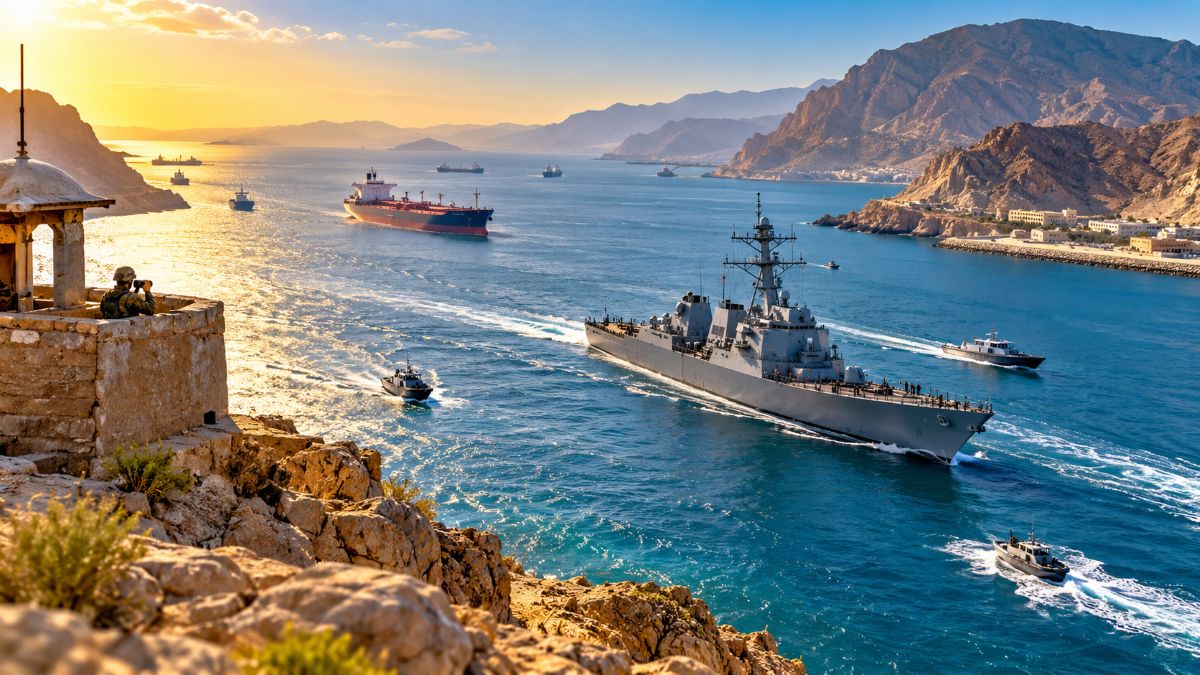
Iran’s latest warning to United States warships over entering the Persian Gulf has drawn attention to the security of the Strait of Hormuz, one of the world’s most strategically important maritime passages. The reported confrontation comes amid renewed threats of military action, competing statements from Washington and Tehran, and uncertainty surrounding commercial oil shipments. Although the immediate dispute concerns military access and maritime control, its implications could extend to international shipping, energy markets and regional travel confidence. For tourism businesses, airlines, cruise operators and travellers, the principal concern is whether rising tensions translate into verified restrictions, disrupted transport services or changes to official travel advice.
The situation requires careful distinction between confirmed developments, statements made by government officials and allegations that have not been independently verified. Iranian military representatives have claimed control over the waterway and warned American naval vessels against entering the Persian Gulf. The report also describes allegations involving two oil supertankers and the possibility of further strikes. These developments do not automatically establish that passenger travel or tourism services have been disrupted. Nevertheless, the strategic importance of the waterway means that any sustained deterioration in maritime security could have consequences for transport planning, operating costs and confidence across parts of the Gulf region.
Advertisement
Advertisement
Strait of Hormuz Remains Central to Maritime Security
The Strait of Hormuz connects the Persian Gulf with the Gulf of Oman and the wider Indian Ocean. Its narrow shipping lanes provide a critical route for international energy transportation, making the passage important to oil-producing countries, importing economies and commercial shipping companies. Any restrictions, military encounters or credible threats to vessels using the strait can introduce uncertainty into maritime operations.
Iran’s assertion of control must be understood as a statement by its military authorities rather than independent confirmation of unrestricted authority over every vessel movement. The practical situation depends on security conditions, applicable international law, military activity and the ability of commercial ships to navigate safely. For the travel industry, the central question is whether the developing situation produces measurable effects on passenger transport, port operations or established travel routes.
Advertisement
Advertisement
Iran’s Warning to US Warships Raises Escalation Concerns
The reported warning from Iran‘s military leadership against the entry of US warships into the Persian Gulf highlights the potential for further confrontation. The report attributes the warning to Major General Ali Abdollahi and describes a wider atmosphere of uncertainty surrounding possible American military action.
Statements about prospective strikes must be distinguished from confirmed military operations. A warning, prediction or diplomatic threat does not establish that an attack has taken place. Similarly, reports of negotiations do not demonstrate that an agreement has been reached or that the risk of escalation has disappeared.
Advertisement
Advertisement
For international travellers, the significance lies in how the situation develops. Military escalation could prompt governments to revise travel advisories, airlines to reassess flight paths, shipping companies to review vessel movements and insurers to reconsider their exposure to risk. However, these are potential consequences rather than confirmation of widespread travel disruption.
Oil Tanker Allegations Add to Shipping Uncertainty
The report describes an Iranian military claim that two supertankers carrying more than 4.5 million barrels of crude oil combined struck naval mines while attempting to use a route described by Iranian authorities as unauthorised. Such an allegation is significant because damage to large commercial vessels could affect crew safety, cargo movements, insurance arrangements and the availability of shipping capacity.
Advertisement
Advertisement
The allegation should not be treated as independently established without corroborating evidence from reliable maritime authorities, vessel operators or other credible sources. The precise identities of the ships, the circumstances of the reported incidents and the extent of any damage require verification before definitive conclusions can be drawn.
For travel and tourism businesses, tanker incidents matter primarily through their possible wider economic effects. If shipping risks increase, freight rates, fuel costs and insurance premiums could rise. These pressures can influence airline operating expenses, transport prices and the costs faced by hotels and tour operators. The scale of any eventual impact would depend on the duration of disruption, the availability of alternative arrangements and developments in international energy markets.
How Rising Gulf Tensions Could Affect Travel and Tourism
The Persian Gulf is connected to an international network of airlines, seaports, hotels, cruise itineraries and business travel services. A security incident in one part of the region does not necessarily interrupt these services elsewhere. Nevertheless, prolonged instability can affect planning decisions when authorities or transport operators consider a destination, airspace or maritime route unsafe.
Airlines may review flight paths if airspace restrictions are introduced or if security assessments change. Such decisions can increase journey times, fuel consumption and operating costs. Passengers may then face schedule adjustments, longer connections or changes to itineraries, depending on the routes involved.
Advertisement
Advertisement
Cruise operators and tour companies also assess port security, passenger welfare and the feasibility of planned itineraries. A change to one port call does not necessarily mean an entire cruise programme will be cancelled. Operators may consider alternative ports or revised schedules when circumstances permit.
Tourism demand can also respond to uncertainty. Some travellers may postpone trips, purchase more flexible tickets or seek additional information before booking. However, the effect on visitor numbers cannot be established from military statements alone. Reliable assessments would require evidence from airlines, tourism authorities, accommodation providers and booking data.
Potential Implications for International Travellers
| Travel sector | Possible consequence | What needs verification |
|---|---|---|
| Commercial aviation | Flight rerouting or schedule changes if restrictions are imposed | Airline notices and official airspace advisories |
| Cruise tourism | Changes to port calls or itineraries where security assessments require them | Cruise operator announcements and port notices |
| Oil transportation | Delays, higher insurance costs or changes to vessel routing | Maritime authority updates and shipping reports |
| Hotels and tour operators | Booking changes or altered customer demand | Reservation data and business statements |
| Business travel | Revised itineraries and additional contingency planning | Employer guidance and government advisories |
| Regional tourism | Changes in visitor confidence if instability persists | Tourism statistics and destination-level reporting |
These are potential impacts, not a declaration that all the listed sectors are currently experiencing disruption. The consequences will depend on the location of any incident, its duration and the measures introduced by the relevant authorities and operators.
Energy Markets Could Influence Travel Costs
The Strait of Hormuz is an important route for global oil shipments. Consequently, a credible threat to the movement of tankers can influence market expectations even before a sustained interruption is confirmed. Energy prices may respond to anticipated supply risks, while shipping companies may face changes in insurance costs and operational planning.
For airlines, fuel is a significant operating expense. A sustained rise in fuel prices could place pressure on operating margins and, depending on commercial conditions, affect fares or surcharges. The relationship is not automatic, however. Airlines may have fuel-hedging arrangements, competitive pressures and pricing policies that influence how much of a cost increase reaches passengers.
Hotels, coach operators, tour companies and other tourism businesses can also be affected by higher energy and transport expenses. The eventual effect on holiday prices would depend on the scale and duration of the increase, local market conditions and contractual arrangements.
Advertisement
Advertisement
It is therefore important not to predict immediate fare increases or a regional tourism downturn without supporting economic evidence. Market reactions, actual supply disruptions and their consequences for travel businesses are separate developments that should be reported individually.
Diplomatic Efforts Remain Important to Regional Stability
The report refers to diplomatic discussions involving regional actors, including Pakistan and Qatar, against the backdrop of tensions between Iran and the United States. Diplomatic engagement can provide channels for communication, reduce misunderstandings and create opportunities to address disagreements. Its existence alone does not guarantee a settlement.
For maritime operators and tourism businesses, clarity about the security environment is particularly important. Companies need dependable information to determine whether vessels can continue operating, whether scheduled services remain feasible and whether additional precautions are required.
Governments also play a significant role by issuing travel advice, communicating airspace restrictions and providing updates when security conditions change. Travellers should distinguish between general warnings about regional instability and specific instructions affecting a particular destination, airport, port or route.
The situation may evolve rapidly. Any report of a new strike, a shipping incident or a diplomatic breakthrough should be assessed against current, independently corroborated information rather than assumed to represent the full regional picture.
What Travellers Should Monitor Before Visiting the Gulf
Travellers planning trips to Gulf destinations should review official government travel advice before departure and again closer to their travel dates. Advice should be specific to the intended destination, as conditions can differ between countries and even between areas within the same country.
Advertisement
Advertisement
Passengers should check their airline’s latest operational notices and confirm whether their flights remain scheduled. Those travelling on connecting itineraries should review minimum connection times and understand the terms governing rebooking if a disruption occurs. Travellers with cruise reservations should consult their operator for confirmed changes rather than relying on speculation about possible port closures.
Travel insurance also deserves attention. Policies vary in their treatment of armed conflict, government restrictions, cancellations and travel against official advice. Customers should read the applicable terms and contact their insurer when the coverage is unclear.
There is no basis for assuming that every Gulf destination is unsafe simply because tensions have increased around the Strait of Hormuz. Equally, the absence of a confirmed disruption should not be interpreted as a guarantee that conditions will remain unchanged. Decisions should reflect current official guidance and the actual circumstances affecting the intended journey.
Outlook for Gulf Tourism and Maritime Connectivity
The longer-term implications for tourism will depend on whether the confrontation remains a series of warnings or develops into sustained disruption affecting commercial shipping and regional transport. A short-lived episode may have limited effects on passenger services, while a prolonged crisis could create more substantial operational and economic pressures.
Gulf destinations differ in their dependence on particular transport corridors, energy revenues, visitor markets and international flight connections. These differences make broad predictions about regional tourism unreliable without destination-specific evidence. Operators may also have contingency plans that reduce the consequences of individual disruptions.
For now, the most defensible conclusion is that Iran’s warning has renewed attention on a strategically important maritime passage at a time of heightened geopolitical uncertainty. Its significance for travel and tourism will depend on verified developments, official decisions and observable changes to transport operations.
Advertisement
Advertisement
Frequently Asked Questions
1. Why is the Strait of Hormuz important to international travel?
The Strait of Hormuz is a major maritime passage linking the Persian Gulf with the Gulf of Oman and the wider Indian Ocean. Its importance to energy shipments means that disruptions can affect shipping costs, fuel markets and, indirectly, the travel industry.
2. What has Iran said about US warships entering the Persian Gulf?
According to the report, Iranian military representatives claimed control over the Strait of Hormuz and warned US warships against entering the Persian Gulf. These statements should be understood as Iranian claims rather than independent confirmation of complete control over the waterway.
3. Have the reported oil tanker incidents been independently confirmed?
The report attributes the claim that two supertankers struck naval mines to Iranian military authorities. The allegation should not be presented as an established fact without independent corroboration from reliable maritime sources.
Advertisement
Advertisement
4. Could the tensions affect flights to Gulf destinations?
Flights could be affected if airlines change routes, authorities introduce airspace restrictions or security assessments require operational adjustments. Specific disruptions must be confirmed through airline notices and official aviation information.
5. Does the situation mean Gulf holidays are unsafe?
Not necessarily. Conditions differ between destinations, and tensions around a maritime passage do not automatically make every country in the region unsafe. Travellers should consult current official advice for their specific destination.
6. Could cruise itineraries change because of the tensions?
Cruise operators may revise port calls or itineraries if security conditions or official restrictions affect planned routes. Any changes should be confirmed through the relevant cruise company.
Advertisement
Advertisement
7. Could oil prices influence international airfares?
A sustained rise in oil prices could increase airline fuel expenses and potentially place pressure on ticket prices. The eventual effect depends on market conditions, airline pricing policies and other operating costs.
8. What should travellers do if their flight is disrupted?
Travellers should contact their airline or booking provider, check rebooking options, retain relevant receipts and review their insurance terms. They should follow official instructions if a security incident affects their location.
9. How can travellers verify reports about the Strait of Hormuz?
They should compare official government statements, maritime security notices, aviation authority updates and corroborated reporting from reputable news organisations. Unverified social media claims should not be treated as established facts.
Advertisement
Advertisement
10. What will determine the impact on Gulf tourism?
The main factors will be the duration and severity of any escalation, actual shipping or aviation restrictions, energy prices, government travel advice and changes in visitor demand. Tourism impacts should be assessed using verified operational information and reliable industry data.
Advertisement
