
Jammu Railway Division Starts First Cement Freight Rail Link to Anantnag Boosting Kashmir Valley Supply Network

Published
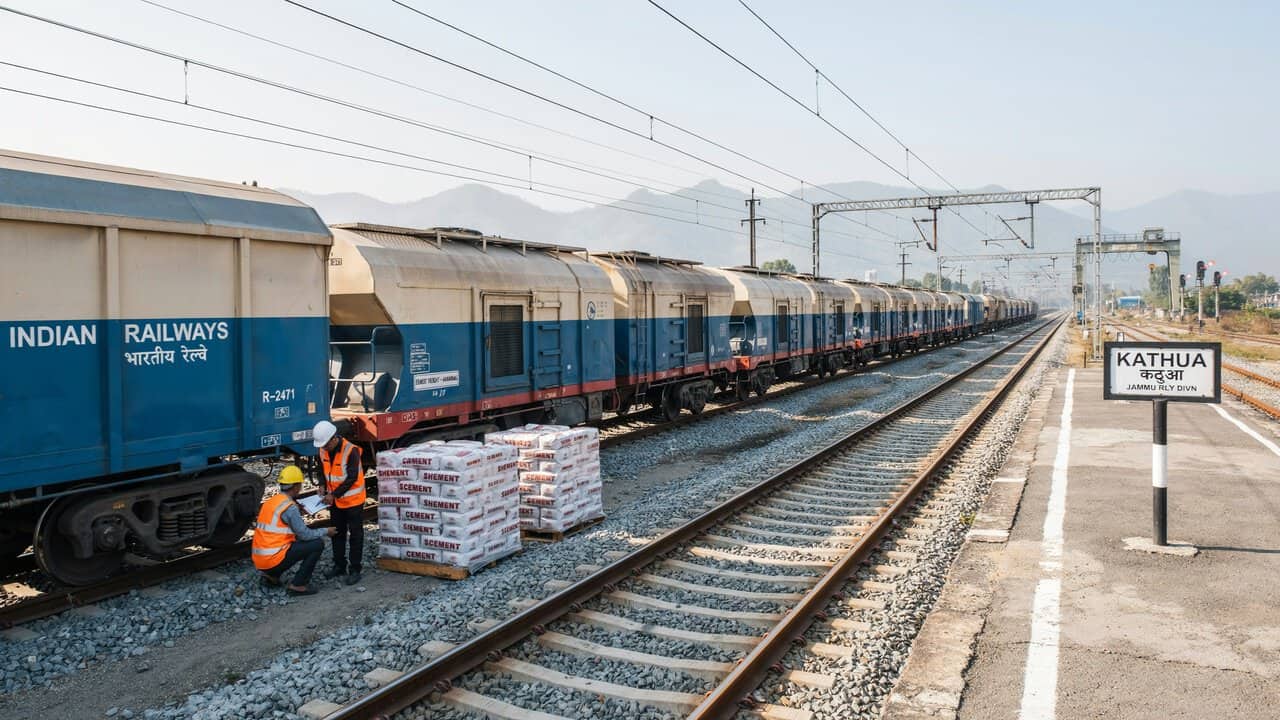
Jammu Railway Division has made a remarkable achievement in freight transport through the commencement of its first internal cement rail movement from Shaheed Captain Sunil Kumar Choudhary Kathua Railway Station to Anantnag Railway Station Goods Shed in Kashmir Valley.
This first shipment was shipped on 14 September 2026 as the start of a new freight route in Jammu Railway Division. It consisted of about 66 tons of cement in about 1,320 bags, which was loaded into BCN freight wagon booked by Ganpati Cement, Kathua.
Advertisement
Advertisement
This is important because the cement shipment to Kashmir Valley has been done through road networks in the past. This development thus opens up a new logistics channel for shipment of construction material and gives rise to a new O-D freight route for Jammu Railway Division.
Though it is a case of freight movement without any new passenger service introduction, it has a greater implication in terms of development, infrastructure improvement and future connectivity in Jammu and Kashmir.
Advertisement
Advertisement
Railway sources said that this will serve as a cheaper, safer and eco-friendly means of shipment of construction material.
Why This Matters for Travellers and Jammu Kashmir’s Development
The Jammu Railway Division cement freight movement represents more than a goods shipment. It reflects the growing role of railways in supporting economic activity, infrastructure development and regional connectivity.
Advertisement
Advertisement
Construction materials such as cement are essential for residential projects, commercial developments, public infrastructure and tourism-related facilities. A stronger supply chain can support faster movement of essential goods into the Kashmir Valley.
For travellers, better logistics infrastructure can indirectly improve the travel ecosystem by supporting the development of hotels, roads, tourism facilities and other services that depend on reliable material supplies.
Advertisement
Advertisement
The new freight connection creates benefits across multiple sectors
| Sector | Potential Impact |
|---|---|
| Construction industry | More reliable supply of cement for projects |
| Logistics companies | Additional rail transport option |
| Kashmir Valley economy | Improved movement of essential materials |
| Railway freight network | New business opportunity for Indian Railways |
| Environment | Greater use of rail-based transportation |
The initiative also supports Indian Railways’ broader objective of attracting more industries and businesses towards freight transportation.
By creating new freight routes, railway divisions can reduce dependence on road-only transportation and provide businesses with additional logistics choices.
What Has Changed With the First Internal Cement Rail Movement
The latest development marks the first time that cement has been transported by rail from one station to another within Jammu Railway Division.
Previously, cement traffic connected with Jammu and Kashmir railway facilities was mainly handled as incoming freight. The new movement introduces outward loading of cement from Kathua towards Anantnag.
Advertisement
Advertisement
Key details of the new Kathua-Anantnag cement freight route
| Category | Details |
|---|---|
| Railway Division | Jammu Railway Division |
| Commodity Transported | Cement |
| Starting Point | Shaheed Captain Sunil Kumar Choudhary Kathua Railway Station |
| Destination | Anantnag Railway Station Goods Shed |
| Freight Type | Intra-division movement |
| Consignment Size | Around 66 tonnes |
| Quantity | Approximately 1,320 cement bags |
| Wagon Type | BCN freight wagon |
| Company | Ganpati Cement, Kathua |
| Dispatch Date | 14 September 2026 |
The route creates a new freight connection inside the division and demonstrates the potential for expanding rail-based cargo movement within Jammu and Kashmir.
How Rail Freight Could Transform Kashmir Valley Supply Chains
The introduction of cement transportation by rail could change how construction materials reach the Kashmir Valley.
Road transport has traditionally played a major role in moving goods across the region. However, rail freight provides businesses with another option that can help diversify transportation methods.
Advantages of transporting cement through rail
- Ability to move larger quantities through organised freight operations.
- More structured logistics planning for businesses.
- Reduced dependence on road-based supply chains.
- Potentially improved reliability for long-distance movement.
- Support for environmentally focused transportation.
Railway officials said the company has indicated that the cement traffic could continue in larger quantities depending on market demand in the Kashmir Valley.
This creates the possibility of a longer-term freight relationship between industries in Jammu and railway logistics services.
Business Development Efforts Behind the New Freight Route
The new freight service was developed through efforts by the Business Development Unit (BDU) of Jammu Railway Division, which worked with industry stakeholders to identify new cargo opportunities.
Advertisement
Advertisement
Railway officials said the division conducted multiple discussions with Ganpati Cement, Kathua, encouraging the company to move its products to the Valley through rail transportation.
Steps that helped establish the new freight movement
- Engagement with local industries.
- Identification of potential freight customers.
- Development of a new O-D pair.
- Coordination between railway officials and businesses.
- Promotion of rail as a cost-effective logistics option.
Creating new freight routes is an important part of railway expansion because it connects more industries with the national rail network.
What Travellers Should Know About This Railway Development
The cement movement is a freight initiative rather than a passenger railway service. Travellers will not see immediate changes to passenger train schedules because of this announcement.
However, the development provides insight into how railway infrastructure is expanding beyond passenger connectivity.
Before Planning Travel
- This is a goods freight movement, not a passenger service.
- Existing passenger train operations continue separately.
- Travellers should check official railway sources for passenger updates.
- Improved freight infrastructure can support long-term regional development.
- Tourism facilities may benefit indirectly from stronger supply networks.
The expansion of freight capabilities is an important part of building a more complete railway ecosystem in Jammu and Kashmir.
Wider Impact on Tourism and Regional Economy
Jammu and Kashmir remains one of India’s most important tourism regions, attracting visitors for destinations including the Kashmir Valley, religious sites, mountain landscapes and adventure experiences.
Advertisement
Advertisement
Tourism growth depends not only on passenger connectivity but also on supporting infrastructure.
Hotels, restaurants, transport facilities and construction projects require reliable supplies of essential materials.
How improved freight connectivity can support tourism
| Area | Possible Benefit |
|---|---|
| Hospitality sector | Better access to construction supplies |
| Infrastructure projects | Improved material movement |
| Local businesses | More transport options |
| Regional development | Stronger economic activity |
The new freight route demonstrates how railway development can contribute to broader economic growth beyond passenger travel.
Industry Impact of Expanding Rail Freight in Jammu Railway Division
The successful cement movement strengthens Jammu Railway Division’s position as a growing freight hub.
Railway officials said the division aims to connect more traders and organisations with rail freight services, offering businesses a reliable and environmentally friendly transportation option.
Future opportunities for freight expansion
- More construction material shipments.
- Additional industrial cargo movement.
- Increased participation from local businesses.
- Stronger railway-based logistics networks.
The initiative also reflects a wider shift across Indian Railways, where freight growth is becoming a major focus alongside passenger services.
Advertisement
Advertisement
Frequently Asked Questions
What is the Jammu Railway Division cement freight movement?
It is the first internal cement freight movement within Jammu Railway Division, transporting cement from Kathua to Anantnag.
How much cement was transported?
The first shipment carried around 66 tonnes of cement, packed in approximately 1,320 bags.
Which company booked the cement consignment?
The shipment was booked by Ganpati Cement, Kathua.
Does this introduce a new passenger train service?
No. The initiative is a freight movement for construction material and does not change passenger train services.
Why is this route important?
It creates a new rail logistics connection for the Kashmir Valley and provides another option for transporting construction materials.
Closing Update
It is quite significant that there is the first ever freight service in cement from Kathua to Anantnag for Jammu Railway Division.
Advertisement
Advertisement
With the introduction of yet another new railway route for freight traffic, Indian Railways have yet again paved one more way to facilitate the movement of essential materials to Kashmir Valley region.
Even if passengers do not get to see any immediate change in schedules, it may prove useful for regional development in the long run.
Advertisement
