
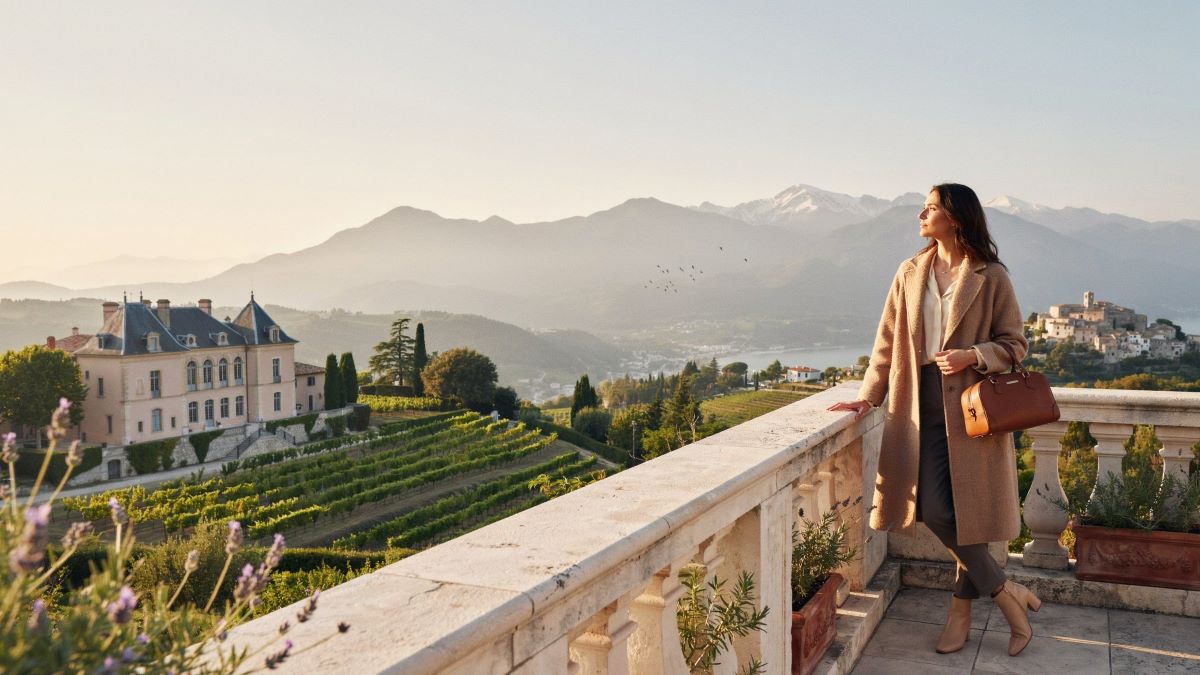
Image generated with Ai
Europe’s luxury tourism boom is entering a new era as high-spending travellers move beyond Paris, Rome and London to discover exclusive destinations across France, Greece, Italy, Spain, Switzerland, Austria, Portugal, Croatia and Slovenia. With international arrivals to Europe rising 5% and overnight stays increasing 4.8% in 2026, travellers are choosing quieter, experience-rich escapes over crowded hotspots. From French vineyards and Greek islands to Alpine retreats and historic villages, Europe’s luxury travel revolution is being driven by a growing demand for privacy, culture, wellness and unforgettable journeys.
Europe’s luxury tourism industry is entering a powerful new phase. The continent’s most valuable travellers are changing the way they explore Europe — moving away from crowded capitals and towards hidden villages, private islands, Alpine retreats, wine regions and exclusive cultural destinations.
The biggest shift is not about where luxury travellers are going. It is about what they expect when they arrive.
Today’s high-spending visitor is searching for more than a premium hotel room. They want access to experiences that feel rare, personal and impossible to replicate.
Advertisement
The new European luxury traveller is choosing:
Europe remains one of the strongest global tourism regions. International arrivals increased by 5% year-on-year in 2026, showing continued confidence in European destinations despite changing economic conditions and evolving traveller expectations.
The result is a major transformation: luxury tourism is no longer concentrated only in famous capitals. It is spreading across Europe’s most authentic and exclusive regions.
Luxury travel has changed significantly. For many years, premium tourism was closely linked with famous addresses, prestigious hotels and well-known attractions.
Today, affluent visitors are placing greater importance on the quality of the overall journey.
Modern luxury travellers increasingly value:Travel Priority What Visitors Are Looking For Privacy Smaller properties, private settings and quieter locations Personalisation Tailor-made itineraries and specialist guides Culture Local traditions, heritage and authentic communities Nature Landscapes, wellness and outdoor experiences Exclusivity Experiences unavailable to mass tourism
This change explains why smaller European destinations are becoming increasingly attractive. A historic village, family-owned vineyard or mountain retreat can now compete with major cities by offering something rare: a sense of discovery.
Governments and tourism authorities across Europe are also encouraging this movement because spreading visitors beyond overcrowded locations helps support regional economies, protect heritage sites and create more sustainable tourism models.
France remains one of the world’s strongest luxury tourism destinations, but its appeal is expanding far beyond Paris.
The French capital continues to attract visitors through fashion, museums, gastronomy and cultural landmarks. However, many premium travellers are now adding regional destinations to their itineraries to experience a more authentic side of the country.
Key luxury destinations include:Region Premium Travel Appeal Provence Countryside estates, gastronomy and scenic landscapes Bordeaux Wine tourism and private vineyard experiences Loire Valley Historic castles and heritage stays French Alps Mountain resorts and wellness tourism Côte d’Azur Coastal luxury and exclusive retreats
France welcomed around 102 million international visitors and maintained its position as the world’s leading tourism destination. Tourism authorities have increasingly focused on improving visitor value, encouraging travellers to explore destinations beyond major gateways.
For luxury travellers, France’s greatest attraction is increasingly its ability to transform heritage into personal experiences — from private château stays to exclusive culinary and wine journeys.
Greece is strengthening its position as one of Europe’s leading luxury destinations by expanding beyond its most famous islands.
Santorini and Mykonos remain internationally recognised, but travellers seeking more privacy and cultural depth are increasingly exploring alternative destinations.
Growing luxury locations include:Destination Main Attraction Crete Gastronomy, beaches and ancient heritage Corfu Historic character and premium resorts Rhodes Culture and coastal experiences Peloponnese Archaeology, nature and boutique stays Smaller Aegean islands Seclusion and authentic island life
The Greek luxury market is increasingly focused on experiences rather than simply accommodation.
Visitors are choosing:
According to the Bank of Greece, tourism receipts have remained a major contributor to the national economy, supported by strong international demand and visitor spending.
The next stage of Greek tourism growth will depend on attracting visitors throughout the year through culture, wellness and nature-based travel.
Italy’s global luxury appeal has traditionally centred around Rome, Venice, Florence and Milan. However, the country’s countryside and smaller regions are becoming increasingly important for premium travellers.
Popular emerging luxury destinations include:Region Luxury Opportunity Tuscany Wine estates, villas and culinary tourism Puglia Coastal villages and traditional culture Sicily Heritage, food and landscapes Umbria Rural retreats and historic towns Italian Lakes Scenic luxury escapes Dolomites Mountain experiences
The attraction of these regions lies in their ability to provide a slower, more immersive style of travel.
Visitors are looking for:
Italy demonstrates how cultural heritage can become a premium tourism asset when destinations focus on quality rather than volume.
Spain is expanding its luxury tourism offer beyond Madrid and Barcelona by promoting destinations that combine culture, nature and lifestyle.
High-value tourism is growing across:
Spain’s competitive advantage comes from its diversity.Strength Luxury Appeal Gastronomy World-class cuisine and regional products Islands Premium resorts and coastal escapes Heritage Historic cities and traditions Nature Landscapes and outdoor activities Wellness Health-focused retreats
Spain remains one of Europe’s strongest tourism markets. Eurostat data places Spain among the EU’s leading destinations for international overnight stays.
The country’s next challenge is managing demand while encouraging visitors to discover more regions and support local economies.
Switzerland and Austria are redefining Alpine tourism by moving beyond traditional winter holidays.
Mountain destinations are increasingly attracting visitors throughout the year through:
| Country | Luxury Tourism Strength |
|---|---|
| Switzerland | Premium hospitality, landscapes and rail experiences |
| Austria | Wellness, culture and Alpine villages |
The appeal of Alpine destinations reflects a broader change in luxury travel behaviour. Many affluent travellers now view wellbeing, tranquillity and natural surroundings as essential parts of a premium holiday.
Mountain regions are no longer only winter destinations. They are becoming places for relaxation, health and year-round exploration.
The movement beyond traditional capitals is creating opportunities for several smaller European tourism markets.
Luxury growth areas include:
The country attracts premium visitors through:
Croatia is developing a strong luxury position through:
Slovenia is gaining attention through:
These destinations show that luxury tourism growth is no longer limited to Europe’s largest economies. Smaller markets can compete by offering distinctive experiences and strong local identity.
The future of European luxury tourism will be shaped by a simple principle: travellers want memories that cannot be copied.
The strongest growth areas will include:
Visitors increasingly expect travel designed around personal interests.
Historic buildings, traditions and local communities are becoming premium attractions.
Health, relaxation and outdoor experiences are becoming central to luxury holidays.
High-value travellers are increasingly interested in destinations that protect culture and nature.
Europe’s competitive advantage is its extraordinary diversity. Few regions can offer centuries-old cities, Mediterranean islands, Alpine landscapes, world-class cuisine and cultural heritage within one continent.
France, Greece and other European destinations are proving that luxury tourism is moving beyond famous capitals.
The future traveller is not abandoning Paris, Rome or London. Instead, they are adding new destinations to their European journeys — places where culture, nature and exclusivity come together.
The next generation of luxury tourism will belong to destinations that offer something increasingly valuable: authenticity.
From French vineyards and Greek islands to Italian villages and Alpine retreats, Europe’s luxury tourism revolution is expanding the map and creating a more diverse, experience-driven future for global travellers.
In conclusion, France joins Greece and other destinations as Europe’s luxury tourism boom moves beyond famous capitals as travellers with higher spending power look beyond iconic cities for more meaningful journeys. Wherever you turn the pages of this luxury travel map of Europe, you will find your heart being captivated by the vineyards of France, the heritage estates, the islands of Greece, the villages of Italy, the escapes of Spain, the retreats of Switzerland and Austria, the landscapes of Portugal, the coastline of Croatia and the sustainable experiences of Slovenia. It is simple: the travellers of today have a desire for privacy, culture, nature and personalized experiences rather than mass culture, and hidden destinations are the new emblem of high-quality European travel.
Advertisement
Tags: Europe luxury tourism, hidden European destinations, luxury travel destinations Europe, Premium Travel Experiences
Advertisement
Advertisement












Friday, September 4, 2026
Friday, September 4, 2026

Friday, September 4, 2026

Friday, September 4, 2026

Thursday, September 3, 2026

Wednesday, September 2, 2026

Friday, September 4, 2026

Friday, September 4, 2026


