
India’s Domestic Tourism Boom Builds New Travel Shield as Overseas Costs and West Asia Risks Rise

Published
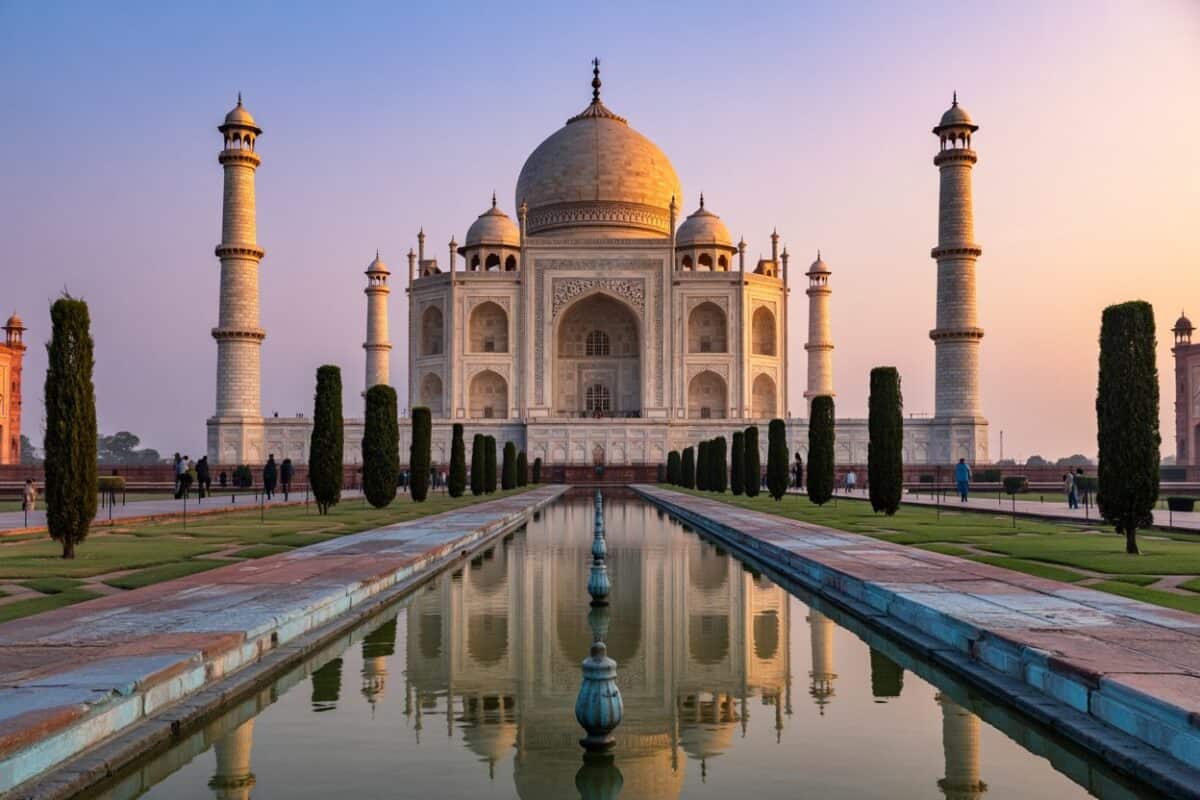
Image generated with Ai
India’s enormous domestic tourism economy is emerging as an increasingly important source of stability for the country’s travel industry as international journeys face pressure from expensive airfares, currency movements and geopolitical uncertainty across West Asia. Industry projections have placed the potential value of India’s domestic travel market at around ₹35 trillion by 2029, although that figure is not an official Government of India forecast.
What government statistics do confirm is the extraordinary scale of travel taking place within India.
Advertisement
Advertisement
The Ministry of Tourism’s latest annual reporting recorded approximately 4.13 billion domestic tourist visits in 2025. The ministry’s live tourism data portal subsequently reported an even higher revised figure of around 4.29 billion visits for the year.
That scale gives India’s tourism industry something relatively few countries possess: a huge home market capable of supporting hotels, airlines, railways, attractions and local businesses even when international travel conditions become more difficult.
Advertisement
Advertisement
Domestic Tourism Becomes India’s Powerful Travel Engine
Domestic tourism is no longer simply a supporting part of India’s visitor economy.
Advertisement
Advertisement
It is one of its foundations.
Government figures show how quickly the market has expanded. India recorded approximately 2.51 billion domestic tourist visits in 2023.
That increased to about 2.95 billion in 2024, representing year-on-year growth of 17.51 per cent, according to the Ministry of Tourism’s India Tourism Data Compendium.
The latest government data indicates another major increase during 2025.
This growth means millions of Indians are travelling between states and Union Territories for holidays, religious journeys, family visits, business, wellness and other purposes.
Advertisement
Advertisement
Unlike outbound travel, these journeys keep a large proportion of tourism expenditure within the Indian economy.
Hotels, restaurants, transport companies, guides, attractions and small tourism enterprises can all benefit.
International Travel Faces a More Complicated Environment
The strength of domestic travel becomes especially significant when overseas journeys face uncertainty.
International holidays depend on several factors beyond a traveller’s control.
Airfares can change quickly. Currency movements can increase accommodation and daily expenses abroad. Geopolitical events can affect flight schedules and traveller confidence.
Advertisement
Advertisement
West Asia is particularly important because the region contains major aviation hubs connecting India with Europe, Africa and the Americas.
Any serious regional disruption can therefore have implications extending beyond travellers whose final destination is in West Asia.
However, government tourism statistics do not establish that geopolitical instability alone has caused India’s domestic tourism expansion.
The domestic boom was already developing over several years.
It is therefore more accurate to view international uncertainty as a factor that can strengthen the attractiveness of domestic alternatives, rather than the sole reason Indians are travelling more within their own country.
Advertisement
Advertisement
India Gives Travellers an Enormous Range of Alternatives
One of domestic tourism’s biggest advantages is India’s geographical diversity.
Travellers looking for mountains can head towards Himachal Pradesh, Uttarakhand, Jammu and Kashmir or the Northeast.
Beach holidays can take them to Goa, Kerala, Karnataka, Odisha or the country’s island territories.
Rajasthan offers forts, palaces, deserts and heritage experiences. Madhya Pradesh combines wildlife and history. Tamil Nadu provides major temples alongside coastal and cultural attractions.
Religious and spiritual tourism adds another enormous layer of demand.
Advertisement
Advertisement
Destinations such as Varanasi, Ayodhya and pilgrimage centres across the country attract substantial domestic visitor flows.
This variety means an Indian traveller postponing an overseas holiday does not necessarily have to give up the type of experience they were seeking.
There are domestic alternatives across multiple price ranges and tourism segments.
Uttar Pradesh and Tamil Nadu Demonstrate the Scale
Government statistics reveal just how concentrated domestic tourism can become in India’s largest destination states.
In 2024, Uttar Pradesh recorded approximately 646.81 million domestic tourist visits, making it the country’s leading state by this measure.
Advertisement
Advertisement
Tamil Nadu followed with around 306.84 million.
The figures demonstrate the importance of religious, cultural and heritage tourism alongside conventional leisure holidays.
India’s domestic market is therefore fundamentally different from tourism economies heavily dependent on beaches or seasonal international arrivals.
Domestic demand comes from many sources and operates throughout the year.
Festivals, pilgrimages, weddings, school holidays, business travel, family journeys and short breaks can all generate tourism activity.
Advertisement
Advertisement
That diversity can provide a degree of resilience during periods of international uncertainty.
Government Investment Is Strengthening Domestic Destinations
India is also investing heavily in tourism infrastructure.
The Ministry of Tourism has been developing destinations through programmes including Swadesh Darshan 2.0 and the PRASHAD scheme.
Swadesh Darshan 2.0 focuses on developing sustainable and responsible tourism destinations.
PRASHAD concentrates on pilgrimage and heritage destinations.
Advertisement
Advertisement
Better infrastructure can have a direct effect on domestic travel.
Improved roads and transport links make destinations easier to reach. Better visitor facilities can encourage families to travel. Digital services can simplify planning, while improved last-mile connectivity can open destinations that previously appeared difficult to access.
NITI Aayog has also emphasised the need for states to develop world-class destinations and encourage longer visitor stays, particularly within domestic and religious tourism.
Domestic Tourism Supports Millions of Jobs
The economic significance extends far beyond visitor numbers.
Government estimates show that India’s travel and tourism sector supported approximately 84.63 million direct and indirect jobs during 2023–24.
Advertisement
Advertisement
Tourism’s total contribution to national GDP was estimated at 5.22 per cent during the same period.
These numbers explain why domestic tourism matters to economic policy.
When an Indian family takes a holiday within the country, its expenditure spreads through several layers of the economy.
Money may go towards trains or flights, taxis, hotels, restaurants, attraction tickets, guides, handicrafts and shopping.
Tourism can therefore support livelihoods far beyond large hotel chains and airlines.
Advertisement
Advertisement
Small businesses and communities can benefit significantly when visitors travel beyond established metropolitan destinations.
Religious Tourism Gives India Another Powerful Advantage
Religious and spiritual travel represents one of India’s most resilient tourism segments.
Pilgrimage is not always dependent on the same economic motivations as a conventional holiday.
People may continue travelling for religious reasons even when discretionary leisure spending becomes more cautious.
The government recognises the importance of this segment through destination-development initiatives and infrastructure investment.
Advertisement
Advertisement
India’s enormous number of temples, pilgrimage circuits, sacred rivers, monasteries, mosques, churches and other religious sites generates travel across state boundaries throughout the year.
This creates another layer of protection for the domestic visitor economy.
India Is Measuring Domestic Travel Spending More Closely
The government is also working to understand how Indians spend money while travelling.
The National Sample Survey is conducting the Domestic Tourism Expenditure Survey 2025–26, covering every state and Union Territory.
The survey examines overnight domestic journeys and measures spending across accommodation, transport, food and drink, shopping, recreation, religious activities, culture, sport and health-related travel.
Advertisement
Advertisement
This work is particularly important because visitor counts tell only part of the tourism story.
Two destinations can receive similar numbers of visitors while generating very different levels of economic activity.
Understanding expenditure will allow policymakers to see which types of travel create the greatest economic value and where tourism infrastructure needs improvement.
₹35 Trillion Projection Shows the Market’s Potential
Industry projections suggesting India’s domestic tourism market could reach around ₹35 trillion by 2029 illustrate the enormous commercial expectations surrounding the sector.
However, the figure should be treated as an industry estimate rather than an official government target.
Advertisement
Advertisement
Government evidence already provides a powerful growth story without relying on projections.
Domestic tourist visits have expanded dramatically. Tourism supports tens of millions of jobs. States are investing in destinations, while infrastructure and digital connectivity continue to improve.
The fundamental drivers are therefore already visible.
Rising household incomes, improved transport, easier online booking, social media discovery and growing interest in short breaks can all support further domestic tourism development.
India’s Home Market Creates a Powerful Tourism Buffer
International travel will remain important to India. Indian travellers continue to form a major outbound market, while overseas visitors generate valuable foreign exchange and support the country’s international tourism profile.
Advertisement
Advertisement
But domestic tourism provides something different: scale and resilience.
When overseas holidays become more expensive or uncertain, Indian travellers have an enormous domestic market available to them.
From Himalayan escapes and Rajasthan’s heritage cities to Kerala’s landscapes, Goa’s beaches, Tamil Nadu’s temples and Uttar Pradesh’s pilgrimage centres, the country offers alternatives across almost every major travel segment.
The West Asia crisis, currency movements and expensive international flights may influence individual travel decisions, but India’s domestic tourism boom is much deeper than any single geopolitical event.
With billions of domestic tourist visits already recorded and infrastructure investment continuing across the country, India’s strongest tourism safety net may increasingly be its own travellers exploring their own country.
Advertisement
