
Auvergne Volcanic Tourism Turns France’s Ancient Volcanoes Into a Powerful Year-Round Travel Draw

Published
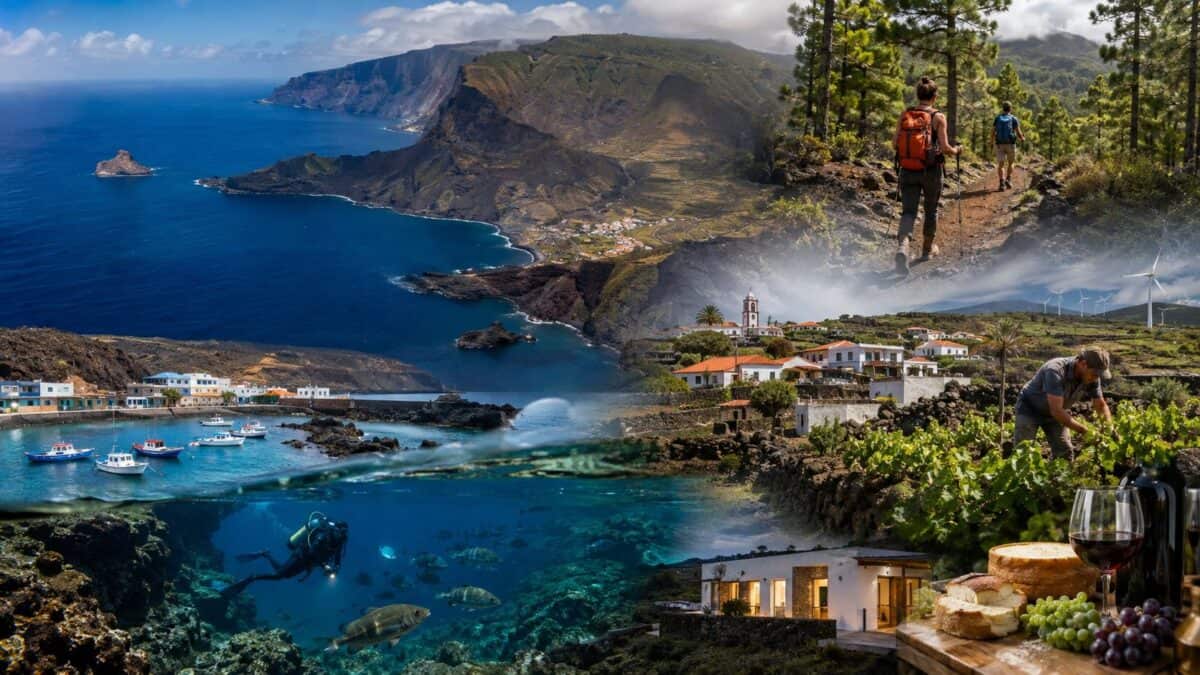
Image generated with Ai
With its distinctive combination of UNESCO Geosites, recreational mountains, wellness tourism, and rural cultures, Auvergne is a unique place created by ancient volcanoes. Volcanoes make perfect alternatives to France’s overcrowded cities and resorts. Chaîne des Puys–Limagne fault is an area of about 24,223 hectares and is a part of UNESCO’s World Heritage Site. Auvergne’s choice of tourism is a unique geological site featuring about 80 volcanic zones in a fairly concentrated area of natural tourist sites. Auvergne-Rhône-Alpes recorded 285.03 million overnight stays in 2024, an increase of 3.2 percent compared to 2023. Volcanic tourism in the Auvergne region has established a market that has a great deal of potential.
Ancient Volcanoes Become a New Travel Currency
Auvergne volcanic tourism offers something increasingly valuable in European travel: a destination with a clear natural identity. Rather than relying on a single monument, Auvergne can build itineraries around an entire geological landscape.
Advertisement
Advertisement
The Chaîne des Puys forms the centrepiece. UNESCO describes the landscape as an exceptional illustration of continental rifting. The geological system developed following the formation of the Alps around 35 million years ago. The property combines the Limagne fault, volcanic alignments and the inverted relief of Montagne de la Serre.
For travellers, that science translates into accessible experiences. Visitors can hike volcanic slopes, climb viewpoints and explore crater landscapes. They can also combine geological sites with villages, lakes, farms and regional food.
Advertisement
Advertisement
This creates an important distinction. The volcanoes are not merely attractions. They are the framework for the entire destination.
Advertisement
Advertisement
| Volcanic asset | Traveller relevance | Tourism opportunity |
|---|---|---|
| Chaîne des Puys | Hiking and landscape viewing | Geotourism |
| Puy de Dôme | Panoramic sightseeing and walking | Signature attraction |
| Puy de Sancy | Mountain adventure | Four-season tourism |
| Thermal towns | Spa and wellness stays | Health and wellbeing |
| Vulcania | Family learning | Educational tourism |
| Volcanic villages | Heritage and gastronomy | Slow travel |
Why Auvergne Has a Geotourism Advantage
Geotourism remains a relatively specialised travel niche, yet Auvergne has an unusually strong proposition. The destination allows visitors to understand landscape formation while experiencing it directly.
The UNESCO property covers 24,223 hectares, with a further 16,307-hectare buffer zone. Its geological significance comes from the visible relationship between faulting, uplift and volcanic activity. That scale gives the region more depth than a conventional volcano viewpoint.
The Chaîne des Puys also provides visual variety. Conical volcanic forms rise across the landscape, while surrounding plateaux and valleys create changing perspectives.
From the summit of Puy de Dôme, visitors can see the volcanic chain spread across the horizon. The regional tourism authority identifies about 80 volcanoes within the Chaîne des Puys landscape.
For travel businesses, this matters because geotourism can lengthen a stay. A visitor does not need to see everything in one afternoon. Trails, viewpoints, museums and geological sites can become separate itinerary components.
Advertisement
Advertisement
Puy de Dôme Anchors the Volcanic Itinerary
Puy de Dôme is arguably the most recognisable gateway into Auvergne volcanic tourism. It combines geological significance with panoramic sightseeing and relatively straightforward access.
Travellers can reach the summit on foot or use the rack railway. The destination therefore serves different visitor profiles. Families, older travellers and less experienced hikers can access the landscape without committing to a demanding mountain ascent.
The summit also adds a cultural dimension. Educational resources around the site cover volcanism, sporting history and the ancient Temple of Mercury. This makes the mountain more than a photographic viewpoint.
The result is a useful model for destination management. Accessibility allows geological tourism to reach beyond specialist hikers.
Puy de Sancy Extends the Adventure Season
Further south, Puy de Sancy changes the tone of the experience. At 1,886 metres, it is the highest point of the Massif Central and the highest volcanic-origin summit in metropolitan France.
Advertisement
Advertisement
The mountain supports a broader outdoor proposition. Visitors can hike, use mountain lifts and explore surrounding landscapes. Winter brings another tourism dimension through nearby ski areas.
That four-season potential strengthens Auvergne’s case against highly seasonal destination models. Summer can focus on walking and scenic exploration. Winter can introduce snow-based recreation. Shoulder seasons can support hiking, wellness and cultural itineraries.
For international visitors, this creates a compelling reason to consider a longer stay rather than a short excursion from Paris.
Vulcania Makes Volcanoes Family-Friendly
Auvergne’s volcanic story also extends beyond outdoor recreation. Vulcania transforms earth science into an interactive tourism experience for families.
The science and theme park opened in 2002 in the heart of the Chaîne des Puys. Its official figures state that the attraction has welcomed more than 8 million visitors since opening.
Advertisement
Advertisement
Its proposition has evolved through exhibitions, immersive experiences, scientific activities and large-format films. In 2025, Vulcania introduced four new experiences, including an interactive volcanic immersion area and a film centred on volcanologists Maurice and Katia Krafft.
That development illustrates an important tourism trend. Educational attractions can convert natural heritage into repeatable visitor experiences.
Families can therefore combine outdoor exploration with structured learning. This broadens the destination’s audience considerably.
Thermal Waters Add a Wellness Layer
The volcanic landscape also provides a natural bridge into wellness tourism. Auvergne-Rhône-Alpes operates one of France’s major thermal tourism networks, giving Auvergne another reason to attract visitors outside peak hiking periods.
The region recorded 94,709 medical thermal cures in 2025 across 23 thermal stations. That represented about 20% of France’s curists. However, activity remained 21% below the region’s 2019 level.
Advertisement
Advertisement
Several important thermal destinations sit within the wider Auvergne area. Le Mont-Dore recorded 8,286 cures in 2025. Royat-Chamalières recorded 5,082. Châtel-Guyon recorded 4,306, while La Bourboule recorded 2,374.
| Wellness destination | 2025 medical cures | Tourism significance |
| Le Mont-Dore | 8,286 | Mountain and thermal combination |
| Royat-Chamalières | 5,082 | Spa tourism near Clermont-Ferrand |
| Châtel-Guyon | 4,306 | Thermal and heritage stays |
| La Bourboule | 2,374 | Family and wellness positioning |
| Chaudes-Aigues | 1,984 | Thermal heritage |
The figures show why wellness should not sit separately from the volcanic narrative. Geology, thermal water and mountain recreation can form one integrated travel proposition.
Rural France Gives the Story More Depth
Auvergne volcanic tourism becomes more distinctive when travellers move beyond the major geological sites. Rural villages, religious heritage, farms and local craftsmanship create the cultural layer.
The Auvergne VolcanSancy tourism territory promotes village visits, farms, castles, religious buildings, crafts and educational trails. Its destination network includes 27 municipalities, linking natural and cultural attractions.
Food adds another reason to stay. The region promotes five protected-designation cheeses, including the internationally recognised Auvergne cheese tradition. This creates opportunities for farm visits, culinary itineraries and rural accommodation.
Advertisement
Advertisement
Such experiences matter because travellers increasingly seek destinations where scenery connects with local life. A volcanic landscape becomes more memorable when visitors can associate it with food, architecture and communities.
Tourism Data Shows a Larger Opportunity
Auvergne’s opportunity sits within a substantial regional tourism economy. Auvergne-Rhône-Alpes recorded 285.03 million overnight stays in 2024, representing a 3.2% increase over 2023.
The region’s accommodation market also shows strong demand. Hotels recorded 24.5 million overnight stays in 2025, while campsites reached a record 14.3 million. Foreign visitors generated 30% of hotel overnight stays and 34% of camping nights.
Puy-de-Dôme itself recorded 1.808 million hotel nights in 2025. Foreign visitors accounted for 13.5% of hotel nights. The department also recorded 1.289 million camping nights.
| Indicator | Latest figure | What it signals |
| Auvergne-Rhône-Alpes tourism nights, 2024 | 285.03m | Large regional demand |
| Regional hotel nights, 2025 | 24.5m | Stable accommodation market |
| Regional camping nights, 2025 | 14.3m | Strong outdoor demand |
| Puy-de-Dôme hotel nights, 2025 | 1.808m | Significant local market |
| Puy-de-Dôme camping nights, 2025 | 1.289m | Outdoor tourism relevance |
| Regional thermal cures, 2025 | 94,709 | Major wellness base |
The data also reveals a strategic opportunity. Puy-de-Dôme has a meaningful domestic market but a comparatively modest foreign share. That leaves room for stronger international promotion of volcanic tourism.
Advertisement
Advertisement
Slow Travel Finds a Natural Home Here
Auvergne fits the emerging preference for slower, experience-led travel. The destination does not depend on a single landmark or compressed sightseeing circuit.
Travellers can spend several days moving between volcanic viewpoints, mountain villages, thermal towns and culinary experiences. They can also build itineraries around walking rather than constant transfers.
The regional tourism offer increasingly links outdoor recreation with wellbeing. Its 2025 tourism indicators specifically identify outdoor activities, wellness, thermalism, gastronomy and sustainable tourism among its key areas.
This creates a broader proposition than traditional volcano tourism. Auvergne can sell immersion rather than simply sightseeing.
Practical Planning for Travellers
The best strategy is to treat Auvergne as a multi-day destination. Clermont-Ferrand works as a practical urban gateway, while smaller towns provide closer access to volcanic landscapes.
Advertisement
Advertisement
Visitors should check weather conditions before mountain excursions. Conditions can change quickly at higher elevations. Trail difficulty also varies considerably, particularly around Puy de Sancy.
Transport planning matters because rural attractions are dispersed. The Auvergne VolcanSancy tourism office identifies road access through the A89 and nearby A71, A72 and A75 motorways. It also provides information for rail, bus and local mobility.
Travellers should also verify seasonal opening hours. Some attractions, lifts and outdoor facilities operate differently across summer and winter. The tourism office specifically advises visitors to check opening arrangements before travelling.
For official destination planning, travellers can consult the Auvergne VolcanSancy Tourist Office and the UNESCO World Heritage Centre profile for the Chaîne des Puys.
A Different French Tourism Proposition
Auvergne should not be positioned as a substitute for Paris, Provence or the French Riviera. Its advantage lies elsewhere.
Advertisement
Advertisement
The destination offers a lower-intensity, landscape-led French experience. Its strongest assets are geology, mountain scenery, wellness, rural culture and outdoor recreation.
That distinction could become increasingly valuable as established European destinations confront congestion and pressure on infrastructure. Auvergne’s volcanic landscape allows tourism growth to centre on dispersed experiences rather than a single urban attraction.
The challenge will be managing that growth carefully. UNESCO recognition brings prestige, but it also demands responsible stewardship of sensitive landscapes. Visitor flows, trail erosion, transport emissions and local community benefits will increasingly shape the destination’s tourism strategy.
Why Auvergne Can Stay Relevant
Auvergne’s volcanic tourism proposal is built to last with a unique geological foundation that provides a platform for growth.
Auvergne has both UNESCO Heritage sites and thermal wellness, mountainous adventure, family education and gastronomy. It also has a functioning tourism economy, evidenced by good accommodation statistics.
Advertisement
Advertisement
The next challenge is international marketing. auvergne can shift from being an under-developed rural region in France to being one of the most unique volcanic travel destinations in all of Europe.
For the traveler who wants a different kind of France, this would be an excellent identity to have. Ancient geology, coupled with modern day draw, allows volcanoes to be transformed into hiking routes, science and wellness draw, and rural travel. This provides Auvergne with a seasonal evergreen advantage to tourism.
Frequently Asked Questions
What Is Auvergne Volcanic Tourism?
Auvergne volcanic tourism centres on the ancient volcanic landscapes of central France. It combines geological attractions with hiking, mountain recreation, wellness, gastronomy and rural tourism.
Why Is Auvergne Important for Volcanic Tourism?
Auvergne contains the Chaîne des Puys–Limagne fault tectonic arena, a UNESCO World Heritage site covering 24,223 hectares. The landscape includes around 80 volcanic formations and provides an unusually extensive setting for geotourism.
What Are the Main Volcanic Attractions in Auvergne?
The Puy de Dôme and Puy de Sancy are among the region’s best-known volcanic destinations. The Chaîne des Puys, crater landscapes and surrounding mountain valleys also offer extensive opportunities for exploration.
Advertisement
Advertisement
Is Auvergne Suitable for Year-Round Travel?
Yes. Summer supports hiking, cycling and sightseeing, while winter brings snow-based mountain activities. Thermal spas, cultural attractions, gastronomy and indoor experiences such as Vulcania provide additional reasons to visit during shoulder seasons.
What Makes Puy de Dôme Special?
Puy de Dôme rises to approximately 1,465 metres and offers expansive views across the Chaîne des Puys. Travellers can reach the summit by hiking or using the Panoramique des Dômes rack railway.
Can Families Enjoy Auvergne’s Volcanic Attractions?
Yes. Vulcania is particularly suited to family travel, combining interactive science experiences with immersive attractions focused on volcanoes, Earth science and natural phenomena.
Does Auvergne Offer Thermal Wellness Tourism?
Yes. Thermal tourism is an important part of the region’s travel economy. Destinations including Le Mont-Dore, Royat-Chamalières, Châtel-Guyon and La Bourboule combine spa experiences with mountain and rural tourism.
Is Auvergne Good for Slow Travel?
Auvergne is particularly well suited to slow travel because its attractions are spread across rural landscapes. Travellers can combine hiking, villages, local food, thermal experiences and geological sites over several days.
Advertisement
Advertisement
When Is the Best Time to Explore Auvergne’s Volcanoes?
Late spring through early autumn generally offers favourable conditions for hiking and landscape exploration. Winter can appeal to visitors seeking snow activities, while thermal towns and cultural attractions remain relevant beyond the main outdoor season.
How Can Travellers Reach Auvergne?
Clermont-Ferrand is the principal urban gateway for the region. Travellers can also use France’s wider rail and motorway networks before continuing towards individual volcanic and rural destinations.
Is the Chaîne des Puys a UNESCO World Heritage Site?
Yes. UNESCO inscribed the Chaîne des Puys–Limagne fault tectonic arena on the World Heritage List in 2018, recognising its outstanding geological importance.
Why Could Auvergne Become a Major Geotourism Destination?
Auvergne combines a rare geological landscape with established tourism infrastructure, outdoor recreation, thermal wellness, family attractions and regional gastronomy. That combination gives Auvergne volcanic tourism a distinctive proposition for travellers seeking an alternative to France’s better-known destinations.
Advertisement
